Unknown's avatar

About anentrepreneurswords

R. Lee Harris grew up in Manhattan, Kansas and has lived in the Kansas City area since 1977. A 1975 graduate of Kansas State University, Harris began his career with Cohen-Esrey, LLC as an apartment manager two weeks after he graduated. Now president and CEO, he is involved in apartment management, development and investment; construction and tax credit syndication on a nationwide scale. Over the course of his career Harris has overseen the management of more than 27 million square feet of office building, shopping center and industrial space and nearly 60,000 multi-family units. He has started dozens of business enterprises over the past 40+ years. In 1991, Harris wrote a book entitled, The Customer Is King! published by Quality Press of Milwaukee. In 2012 he authored the book, An Entrepreneur's Words to Live By. He has mentored a number of business people over the years and has been a long-time participant in the Helzberg Entrepreneurial Mentoring Program. He and his wife Barb have two grown daughters and one grandson. They are active in their church, community and university.

Just the Facts Ma’am

Question: I have become increasingly concerned about the tone of e-mails that I have been receiving lately. And I find that people aren’t responding to my e-mails in a timely manner. Why aren’t people more courteous?

Answer: E-mail is a wonderful medium. It’s hard to remember what it was like before the days of “You’ve Got Mail.” We’ve become so accustomed to popping off an e-mail every time we feel like it that we take for granted this amazing tool. And now we don’t have to be sitting at a computer to send an e-mail – we can do it from our phones or an electronic tablet. All this makes for a high level of efficiency – wouldn’t you agree?

But we are paying a price with this advancement. We sit in our offices and send an e-mail to a colleague who may be less than 10 feet away. We send text messages to family members sitting in the same room. We send messages via Facebook and Twitter. So what don’t we do? We don’t talk to each other anymore. What I’ve come to learn is that e-mail is a great one-dimensional form of communications. It is perfect for conveying factual information. But all too often we use e-mail to express emotion and sometimes this can be misinterpreted by others.

I remember as a kid how a neighbor’s German shepherd would sometimes chase me into my house while nipping at my heels. Once inside, I’d turn around and scold the dog through the screen door – knowing he couldn’t bite me because I was safe inside. We may have the tendency to say things in an e-mail that we wouldn’t say in person. I call this “talking tough behind the locked screen door.” How easy it is to fire off an e-mail that expresses our feelings about something – especially if those feelings aren’t totally positive. Yet the recipient cannot see our eyes or the expression on our face. He or she cannot hear the intonation in our voice.

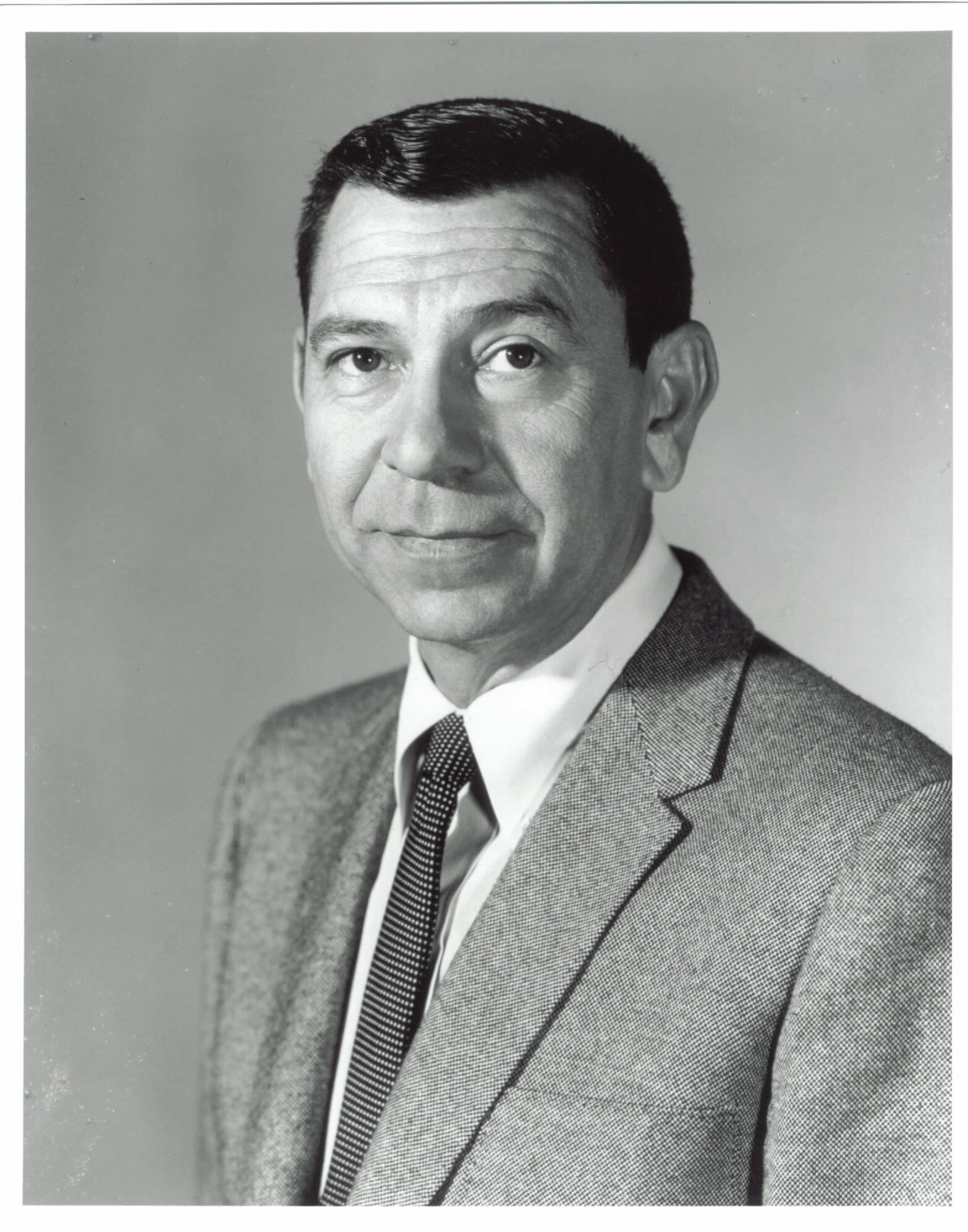
We should consider reserving e-mail for what I call “just the facts ma’am” communications. Remember how that was the trademark line from Sgt. Joe Friday of the old TV program, Dragnet? When there is a chance that something slightly contentious needs to be discussed, the best way is in person or at least by phone. I find that when I do this, I’m more likely to be sensitive of the other person’s feelings and talk about the issue in a more positive manner.

E-mail makes our business and personal lives more productive. Good old-fashioned, eyeball-to-eyeball encounters protect relationships, and enable us to maintain our personal connections with others.

This blog is being written in tandem with my book, “An Entrepreneur’s Words to Live By,” available on Amazon.com in paperback and Kindle (My Book), as well as being available in all of the other major eBook formats.
Armor Plated

Question: I have worked for years with a particular client and he never shows me one single sign of appreciation. The results I have produced for this client have been terrific by any standard. Why won’t he recognize my efforts?

Answer: I’ve certainly experienced the same thing over the course of my career. And I’ve learned several things that may be helpful in understanding this sort of situation. First, some people are just not wired to show appreciation to others. Second, there may be the belief that we are being paid for the services we provide and that is enough of a demonstration of appreciation. Third, if the business arrangement is recurring and requires the renewal of a contract the client may feel that the continuation of the relationship is sufficient proof of appreciation. Fourth, some people may believe that showing appreciation is reserved for personal relationships and not business situations. And finally, it’s possible that a client doesn’t express appreciation because he isn’t satisfied with the product or service being provided.

I’ve come to realize that none of these reasons is necessarily right or wrong. What’s more important is how we feel and react. We have no control over how others act but we do make a choice as to how we respond. Do we allow ourselves to feel hurt and victimized? Do we choose to become resentful and irritated?

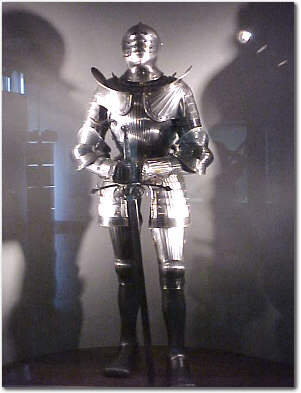
Feeling unappreciated can actually be turned into a positive experience. We can make the choice not to allow how we are treated by others to affect the way we see ourselves. This is akin to developing a suit of armor that enables us not to even give a second thought to what may be perceived or real sleights on the part of others. But the bigger win is to observe what we consider to be the less desirable traits and tendencies of others and do just the opposite. If someone is not showing appreciation, rather than allowing this to upset us we can make an extra effort to show appreciation to others.

Life is full of opportunity. Almost every situation that we might consider negative has a positive side. The choices we make will determine whether or not we live a happy and vibrant life. How others act toward us need not have any bearing on this truth.

This blog is being written in tandem with my book, “An Entrepreneur’s Words to Live By,” available on Amazon.com in paperback and Kindle (My Book), as well as being available in all of the other major eBook formats.
The RPM Game

Question: I’m finding that I’m becoming less patient as I get further into my career. Sometimes my impatience doesn’t serve me well. Any tips on how to be more patient?

Answer: I’m right there with you . . . I hate to wait. As a matter of fact my sense of urgency is off the charts – my colleagues can certainly attest to that! It’s the worst when I’m in my car. I think that once upon a time a wicked witch put a stoplight curse on me because I seem to hit every red light known to man. In my world, things need to happen right now and right away. I have a perspective that life is a fleeting moment in the overall scheme of things and there is too much that I want to accomplish in a short period of time. So I’m not very tolerant of things that slow me down.

Yet, I actually have become more patient in many respects. What I’ve learned is that my impatience at times has caused me to try and muscle through situations where a more patient and finessed approach would have been much more effective. My sense of urgency remains as high as ever, but I’ve become more intuitive at backing off and being a bit more gentle and methodical in moving forward. At some point in the past I realized that my impatience with the people around me wasn’t helping them advance the cause. Instead it was frustrating and flustering them. That quite literally gave me pause.  

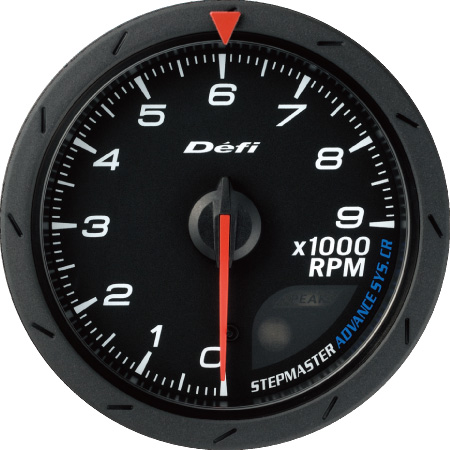
My sense of urgency is now tempered with my willingness to slow down and make sure that the people around me have clarity and understanding about the situation at hand. If they don’t, it’s my obligation to patiently take the time to help them gain a clear perspective. I liken this to the simple act of shifting gears in a car. In a lower gear the engine revs up and runs harder. When shifting into a higher gear, the RPMs drop and the engine doesn’t have to work as hard. The more impatient we become the harder our engine has to work.

Slowing down long enough to ensure that others have a clear picture of the road ahead is in itself, a practice in patience. And this actually allows us to shift into a higher gear and go even faster.

This blog is being written in tandem with my book, “An Entrepreneur’s Words to Live By,” available on Amazon.com in paperback and Kindle (My Book), as well as being available in all of the other major eBook formats.

No and Yes

Question: An attorney friend of mine is working with me on an apartment acquisition and suggested that I write this blog. In particular the negotiations have been interesting and offer some life lessons.

Answer: As part of the due diligence process our team inspected every single unit on the apartment community we are purchasing. We determined that there was considerably more deferred maintenance than had been anticipated. The cost to repair all items identified was far more than we had projected and as a result we found it necessary to go back to the seller and ask for a price adjustment. The seller was initially only willing to reduce the price by approximately one-third of the amount we requested. We subsequently told him that he should move forward with a different buyer. However, the next day his broker contacted us and we ended up finalizing a deal that gave us the price reduction we were seeking.

When negotiating something of significant magnitude it is important to remember a key tenet. Always try to avoid any sort of emotional investment in that which is the focus of your negotiation. This not only applies to a business transaction but also to personal matters such as the purchase of a home, a car or even a piece of artwork. Every one of us feels emotion – that’s a fact of life. Smart business people know that playing to a person’s emotions can convince him or her to say “yes” to whatever transaction is being contemplated. The trick is to learn how not to act on our emotions when that is precisely what others want us to do.

So how can we avoid falling victim to making an emotional decision when it comes to a major purchase? When we do our homework and know the value of what we are about to buy, we are in a much better position to avoid being swept up in the emotion of the moment. Of course we wanted to acquire the apartment property but when we did our homework we realized that the value was diminished by the defects we discovered. And then we were willing to say “no” and walk away unless the price adjustment was granted. I maintained the perspective that there were plenty of other apartment properties we could purchase and we did not have to complete this deal for our acquisition program to succeed.

Remember that there is nothing wrong with emotion. But the real test of strength is being able to control emotion when making important decisions. When this happens you will find that you can easily say “no” just as easily as you can say “yes.”

This blog is being written in tandem with my book, “An Entrepreneur’s Words to Live By,” available on Amazon.com in paperback and Kindle (My Book), as well as being available in all of the other major eBook formats.
Undefeated

Question: Someone told me that arrogance and complacency are one in the same. How does one avoid falling into this trap?

Answer: Here’s my challenge to you and everyone – entrepreneur or not. What are you doing today that makes you better than you were yesterday? This is a beautifully simple calculus. Take a look at your life. Do you have a purposeful intent to improve yourself every single day that you walk on this planet? Do we want to waste one precious day of our lives failing to do so?

Purposeful intent is the key to continual improvement. To get started, make an appointment with yourself to catalog the various aspects of your life that you would like to improve – personally and professionally. This needs to be a substantive process driven by a sufficient dose of introspection and reflection. Then spend a moment when you get out of bed each morning and identify at least one thing you will do to move the improvement needle in those key areas you contemplated.  

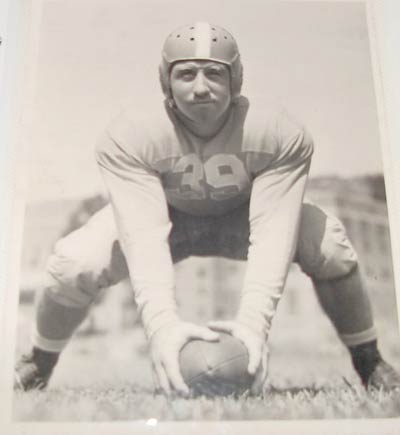
Do you feel as though you are at the top of your game? Are you a success in your business? You can do better. Are you successful at being a parent? You can do better. Consider this sports metaphor. Suppose we participate on a football team that has an undefeated season and wins the national championship. We might assume that we have reached the mountaintop. But, did we win every game by keeping the other team from scoring a single point? Probably not. So, we can do better. If we actually did accomplish a shutout against every team, did we score a touchdown on every single play we ran during every game of the season? If not, we can do better. You see, there’s always another step we can take to be better and do better.

When we settle for what we have achieved we may become a victim of our own success. We all know that whether in sports or business, teams that rest on their laurels eventually lose. The same is true with life. As long as we sincerely aspire to always do better, our success will continue for improvement is the mortal enemy of complacency. Thus, we’ll remain undefeated if we maintain an attitude of “I can always do better.”

This blog is being written in tandem with my book, “An Entrepreneur’s Words to Live By,” available on Amazon.com in paperback and Kindle (My Book), as well as being available in all of the other major eBook formats.

At the End of the Rainbow

Question: You blogged recently about fear and I understand that it’s necessary to deal with fear on a long-term basis. But what can I do about moments of sheer panic?

Answer: Entrepreneurs frequently find themselves in situations where there is an opportunity to panic. It could be a situation where we must speak publicly. Or it might be an e-mail from our largest customer telling us that they are taking their business elsewhere. And it could be a personal situation – that phone call from the hospital telling us that a loved one has been injured. Of course we want in the worst way to avoid feelings of panic. We will try our darnedest to refrain from showing anyone else that we are in distress. But regardless, the feeling is there and at the time, it is the worst feeling in the world. Which brings us back to the original question – what do we do when we feel the wave of panic?

Just take a breath. Seriously. Taking slow deep breaths is the first order of business. Focus on breathing from the diaphragm. We’ve all heard this but may forget to do it when it’s most important. Getting oxygen to the brain is critical to helping us sort things out and think clearly. Next, move into a grounding exercise that has been powerful for me. Have you ever heard of ROY G. BIV? Here’s how old Roy works. Sit with your feet flat on the floor and your hands unclenched in your lap. Close your eyes and visualize the most brilliant colors of the rainbow – one at a time. Start with the color red, and see it slowly traveling from the center of the earth and running up your left leg; across your harrow point (just below your navel); then running down your right leg and back to the center of the earth. Follow this with each of the remaining colors orange, yellow, green, blue, indigo and violet – hence the acronym ROY G. BIV.

Earlier this year I injured my left knee and left shoulder and had two successive MRIs. The MRI for the knee was no big deal but the shoulder was a different story. Though the machine was “open” it certainly didn’t feel that way for me. I made the mistake of realizing how close to my face this massive imaging machine was positioned and felt an enormous wave of panic. I felt like I was wedged between two giant rocks in a cave. This wasn’t simply a case of butterflies but real, honest-to-goodness terror. I did my breathing and that helped. I went through the Roy G. Biv exercise which also helped. But I knew that I was stuck in this machine for another 35 minutes and resolved that I would NOT succumb to the panic and call off the procedure. Instead, I replayed in my mind each day of a wonderful vacation trip that we had taken a few weeks earlier. I visualized my wife, my children and my grandson. It probably took at least 15 minutes for my heart to slow down to the point that it didn’t feel like it was going to explode. But I made it through the procedure and conquered the panic.

By remaining centered, we can manage our minds and bodies if and when panic occurs. Focus. Breathe. Relax. Visualize.

Batter Up

Question: I am very competitive and want to win in the worst way. It depresses me when I lose. Are these feelings healthy?

Answer: The world is more competitive than ever before. Companies are competing for customers. Individuals are competing for jobs, promotions, more compensation, better assignments – it never ends. And yes . . . competition is healthy. It makes us better at what we do. It makes us stronger, tougher and more innovative. But this can only happen if we are willing to embrace competition in a positive and constructive way.

How do we embrace competition and why would we want to? It comes down to something I mention quite often – mindset. We can either fear and resent competition, or we can view it as an opportunity for growth. And we know that fear and resentment are negative energy. How then can we win with negative energy? Instead, we can look at competition with an attitude of what we can learn. Moreover, we should take the opportunity to accentuate our strengths and shore up our weaknesses.  

I used to obsess over the competition. I would incessantly study the win-loss records of our competition and try and figure out their every move. When they won and I lost, it was devastating and I would move through a series of emotions from second-guessing myself to believing that they somehow cheated. Finally at some point I realized that I was so focused on the competition that I was failing to focus on my own performance. Could this have been the reason they were winning and I was not? Going forward I opted to create a game plan that was different and began to focus on executing that game plan to perfection. I stopped obsessing about the competition because it was apparent that I was giving away my power when I did so.

As a kid I loved to play baseball. I can still hear the coaches drilling the words, “keep your eye on the ball” into my brain. The analogy certainly fits in a competitive context. Fixating on my competitor causes me to take my eye off the ball. When I watch the pitch, I hit home runs. Today the only reason I watch the competition is to find something I can use constructively to incorporate into my own game plan. And then I hit even more home runs. Batter up.  

This blog is being written in tandem with my book, “An Entrepreneur’s Words to Live By,” available on Amazon.com in paperback and Kindle (My Book), as well as being available in all of the other major eBook formats.

Clouds

Question: I’ve made great progress toward becoming successful but I find myself feeling a great deal of fear at times. I know that I’m afraid of failure and all the consequences associated with it and I know it is holding me back. How do I overcome this fear?

Answer: Fear kills. It kills dreams, creativity, and entrepreneurial spirit. Fear can be paralyzing. You are wise to declare that you want to overcome it. Some people say that fear can be motivating – that having a bit of fear is a good thing. I don’t subscribe to that philosophy. I can find plenty of positive things to motivate me and the negativity of fear is not one of them. Removing fear from our consciousness is a process and should be treated as such. I realize that this may sound somewhat clinical but I’ve found that gaining a thorough understanding of the root of a fear is an important first step.

Over the years I’ve heard entrepreneurs discuss a myriad of fears including public speaking, losing a big client, encountering poor health, financial issues, entering into a romantic relationship – you name it and I’ve heard it. But overcoming these fears has one thing in common. The root cause of the fear must be identified before it can be resolved. Doing this may require some introspection and more than a few uncomfortable moments.

Thirty years ago I found myself flying on airplanes every week. I had a young family at the time and developed a severe fear of getting on a plane. My stomach was tied up in knots; I began to sweat; I’d feel faint, and my heart was pounding out of my chest. It was all I could do to force myself to walk down the jet way. I was convinced that the odds were against me and plane was going to crash. After months of trying to fight the anxiety I finally began to search for the root cause. I realized I was afraid of leaving my small children without a father – and to some extent I was afraid of death itself. I worked with my minister to understand where this came from and gradually the fear disappeared. Having always been fascinated with airplanes I began studying the mechanics of flight, started taking flying lessons and eventually bought a plane of my own. How’s that for turning the tables on fear?

My dad had a terrific saying, “Your troubles are like the clouds. Tomorrow they will be gone.” Our fears can also be like dissipating clouds if we don’t try to fight or suppress them. Instead we must go inward and find the source of our fear. Then gently and easily we release it to be replaced with confidence and faith.   

This blog is being written in tandem with my book, “An Entrepreneur’s Words to Live By,” available on Amazon.com in paperback and Kindle (My Book), as well as being available in all of the other major eBook formats.

The Rose Colored Glasses

Question: Sometimes it seems like the deck is stacked against me. I’m pretty sure I’m doing everything right but I just can’t win. Do you believe in bad luck?

Answer: I’m sure that you already know that there’s really no such thing as luck – good or bad. But I certainly understand how it can seem that way. Actually, what we think of as luck is simply the foundation that we lay for ourselves every single day. How? Through our thoughts, words and deeds we are creating a pattern of cause and effect, also known as the Law of Attraction.

Here’s the reality of it all. The little things that we think and the little actions that we take are recorded in our psyche. How many times have you thought to yourself, “there’s no way I could (fill in the blank here)?” How many times have you said something like, “I should call that CEO who just announced a major expansion in his company, but he probably wouldn’t return my call?” These may seem like they are harmless and fleeting thoughts . . . but they aren’t. What we really are doing is affirming a pattern of negativity in our lives.

Metaphorically speaking, we entrepreneurs live a rough-and-tumble life. There are plenty of knocks and countless challenges. Why make things tougher than they already are with negative thought patterns? In my company I am often teased for what many think is my rose-colored view of the world. That used to bother me. I guess I equated it to naiveté. The older and wiser I’ve become I realize that what some consider a rose-colored view is actually a reflection of the choice I’ve made to try and look at everything in positive terms. In so doing, I’ve patterned my psyche to draw positivity into my life. What a liberating feeling it is to not recognize bad luck because it does not exist for me! Do I encounter obstacles along the way? Of course – but I have chosen not to see them as bad luck or insurmountable. Instead they are opportunities for creativity and growth.

So, you too can start the process of seeing the world through rose-colored glasses. Begin by catching yourself every time you notice a negative thought creep into your mind or a negative word cross your lips. Remind yourself that you are on a different mission now. Replace it with a positive thought. The more you can do this the more your “luck” will change for the better. And eventually you won’t want to ever remove your rose-colored glasses.

This blog is being written in tandem with my book, “An Entrepreneur’s Words to Live By,” available on Amazon.com in paperback and Kindle (My Book), as well as being available in all of the other major eBook formats.

Once and For All

Question: I have some less-than-desirable habits that I’d like to change. I’ve tried before but somehow I run out of gas. Is there a secret to gaining self-discipline?

Answer: Welcome to the club. Like everyone else, we entrepreneurs have things we’d like to change about our lives. Our challenge is to make certain that our bad habits don’t get in the way of our success. Obviously some habits are of more concern than others. Gambling, drugs, alcohol, infidelity – these are issues that can prevent or destroy success. Getting professional help to solve them may be the right move. But there are other habits that we can deal with. Do you want to exercise more or quit smoking? How about losing weight or even something as simple as not interrupting someone else when they are talking?

I wish I could tell you that the answer is simple, and actually . . . it is. What it all boils down to is making a choice. We fail so often at changing things in our lives because we aren’t ready to make the “once-and-for-all” choice. I enjoyed smoking pipes and cigars for many years but one day more than eleven years ago I decided that it would be healthier not to smoke. So I quit cold turkey. I was just ready to make the “once-and-for-all” choice. Something clicked for me. It was a realization that I was having a ball living my life and my smoking habit might someday interrupt all that fun – as in my early demise.

Until we have the epiphany that results in a “once-and-for-all” choice, we’ll never eliminate the bad habit we want to break or launch that great new habit we want to start. Becoming self-disciplined is a process. As entrepreneurs we know that much of the success in our businesses comes through a dedication to process. Start this process by taking inventory. If there are habits you’d like to eliminate (or good habits you want to start), make a list of them. Decide which is most important and focus on it only. As the saying goes, the only way to eat an elephant is one bite at a time. If you try to tackle everything at once it may be an overwhelming experience. Think hard about what you expect to gain from making the change you want to make. Write down everything that comes to mind. When the “aha moment” arrives you’ll know you are ready to make the change. If you try to force yourself to become more self-disciplined it is likely that you’ll be frustrated when this approach doesn’t work. Only when that “aha” spark occurs will you make the “once-and-for-all” choice. And then the change that happens will be permanent.

This blog is being written in tandem with my book, An Entrepreneur’s Words to Live By, available on Amazon.com in paperback and Kindle (My Book), as well as being available in all of the other major eBook formats.