
The Entrepreneur Under Siege

Consider this. One of your key employees just gave her two-week notice. Your company didn’t win a major contract for which it was bidding. The vice-president of production just informed you that delivery of a key component for manufacturing a product that is 30% of your sales has been indefinitely delayed. Your company website was hacked last night and decorated with cyber graffiti. Cash flow is a bit tight right now. Oh, and you haven’t been able to squeeze in a workout for a week. How does all of this feel right about now? Certainly, being under siege might be one way to describe it.

Let me assure you that similar situations like this are experienced by many entrepreneurs every single day. Perhaps some of it is preventable. But more importantly – how do you handle it? Are you able to stay calm, smile and find your way through the minefield? Or is it meltdown time and maybe a visit to the local tavern after work? The key is how we choose to view and respond to such events. If we see all that I’ve described as a crisis, then we may react with fear and panic. However, if we simply see this as a “Confluence of Events,” we may be a bit more sanguine about it. Let’s look at some of the reactions I’ve witnessed over the years when I see entrepreneurs encounter a “Confluence of Events.”

  1. The Beginning of the End – those who go here lay awake at night conjuring images of complete and total disaster and destruction. They are convinced that their company is going down the tubes; they’ll personally go broke, and they’ll end up living under a bridge. They go to the office and try to slug it out, but they have this feeling of impending doom. Sometimes this becomes a self-fulfilling prophecy.
  2. Deny and Hide – others utilize the Deny and Hide approach. They refuse to acknowledge that something needs to be done and go play golf, take a “business” trip or find some other distraction. Rather than face the issues at hand, they rationalize their reaction by positing that “others need to step up and show leadership” to solve the problems.
  3. Focus, Focus, Focus – I’ve watched leaders with the best of intentions sharpen their focus . . . in over-the-top ways! They tend to jump in and micro-manage a particular situation to the exclusion of everything else that is occurring. By plunging in this way, they believe that they are being productive – except that the rest of the issues that need solving are languishing.

These are just three of the reactions I’ve observed, and each demonstrates the classic fight or flight response. There is another way.

When the “siege” begins, and a Confluence of Events is in sight, the first thing we can do is take a deep breath. Seriously. Spending several minutes to become quiet will help clear the mind. There’s plenty of time to deal with the issues at hand and becoming centered will make the process easier. Next, we write down the specific facts surrounding each challenge that we’re facing. This helps move us away from dwelling on the emotional elements. I’ve found that when I push out emotion, things generally aren’t as bad as they seem. Finally, we map out how we are going to tackle each situation that is contributing to our Confluence of Events. We identify the priorities and start working our way through them. At no time do we feel victimized or defeated. We show leadership by maintaining an even keel and demonstrating that no matter what the situation, there’s always a resolution.

A confluence of problems in our business and personal lives may seem insurmountable. Avoiding a siege mentality begins with remaining calm and unemotional. Then we’re able to methodically and successfully work through or around the obstacles we are facing.

This blog is being written in tandem with my book, “An Entrepreneur’s Words to Live By,” available on Amazon.com in paperback and Kindle (My Book), as well as being available in all of the other major eBook formats.


The Opportunity-Seeking Entrepreneur

Knock-knock. Who’s there? Problem. Problem who? This childhood riddle is emblematic of a common perspective that many of our daily encounters present problems for us. But are they really problems? I’m sure that an argument can be made that anything a bit perplexing or where a less-than-favorable outcome is realized, could be considered a problem. But why do we choose to believe this so often? Some of us by nature are problem-solvers (I’ve been known to fall in this category) and so we may see situations as problems to be solved. But I submit that there is a different way to look at this.

For the last many years, I’ve become more and more inclined to be an “opportunity-seeker.” And what a difference it makes to see things as less problematic and more opportunistic. Obviously, this is a subtle shift in mindset – does it really matter what we call it? I believe that it does because of how we tend to react internally to problems versus opportunities. Some of our natural feelings when facing a problem may be dread, fear, surprise, fatigue, victimization, overload, resignation, procrastination and apathy. All of these feelings are cloaked in negativity. Of course, there are positive ways to view problems and many of us may do so; but I’ll bet that the natural tendency is to focus more on the negative perspective.

On the other hand, becoming an “opportunity-seeker” is a proactive and positive way to move through challenging situations. Notice my language here. I didn’t talk about “facing” a problem. I didn’t talk about a “resolution.” Instead, I used the words “move through challenging situations.” This sounds effortless but it’s not. However, the process of “moving through challenging situations” does not have to be filled with our own emotional downside drama. And there’s one component to being an “opportunity-seeker” that makes it all worthwhile in my view. We get to unleash our creativity.

Creativity is one of the most positive energies that we can experience. It’s much more expansive than just figuring out how to fix something. Metaphorically speaking, creativity enables us to make things bigger and better. I’m sure you’ve felt the frustration of trying to put together a puzzle where you simply can’t find the right piece. We just want to “fix” the situation by finding the missing piece and moving on – right? Contrast this with taking a pile of Lego® pieces and building an object right out of our minds-eye. That’s the difference between being a problem-solver and an opportunity seeker. Some situations will always require finding the right piece to the puzzle no matter how creative we want to be. But we can find a way to harness our creativity in every situation. In the literal case of the puzzle, perhaps we can become more imaginative in the way we sift through the pieces to find the right one. Or maybe we make a game out of it.

The office lease for our company’s space recently expired. Even though we’re a commercial real estate company we always leased space rather than owned it. In the past we were able to secure the leasing and management of an office building by offering to be a tenant and pay a market rent. After we sold the commercial side of our business to focus on apartments, we no longer needed to rent our corporate office space. We began the search for new office space nearly a year ahead of our lease expiration. Several buildings were possibilities and we got serious enough about one such building to make an offer to purchase it. In retrospect, it was a blessing that the seller was unwilling to come anywhere close to the price we wanted to pay, and the deal stalled. This building would have quickly been too small, and we would have been spread across three floors.

Then, I woke up in the middle of the night and the image of another building popped into my head. It wasn’t on the market, and I had had a long relationship with the building owner. We reached out and lo and behold – the owner was willing to sell. We completed a private transaction several months thereafter and now occupy beautiful space in a much larger (and more attractive) building, with plenty of room to grow, and in a much better location. I am so glad that we didn’t try to “force” the opportunity we were seeking with the other building. The problem we faced regarding where to re-locate was solved with relative ease and grace.

When we choose to stop seeing challenging situations as problems, we cease to limit ourselves to being only problem-solvers. Moving through challenging situations by looking for opportunities to be creative opens the way for feelings of joy, accomplishment, euphoria, happiness and satisfaction. Knock-knock. Who’s there? Opportunity!

This blog is being written in tandem with my book, “An Entrepreneur’s Words to Live By,” available on Amazon.com in paperback and Kindle (My Book), as well as being available in all of the other major eBook formats.
The Adversity-Beating Entrepreneur

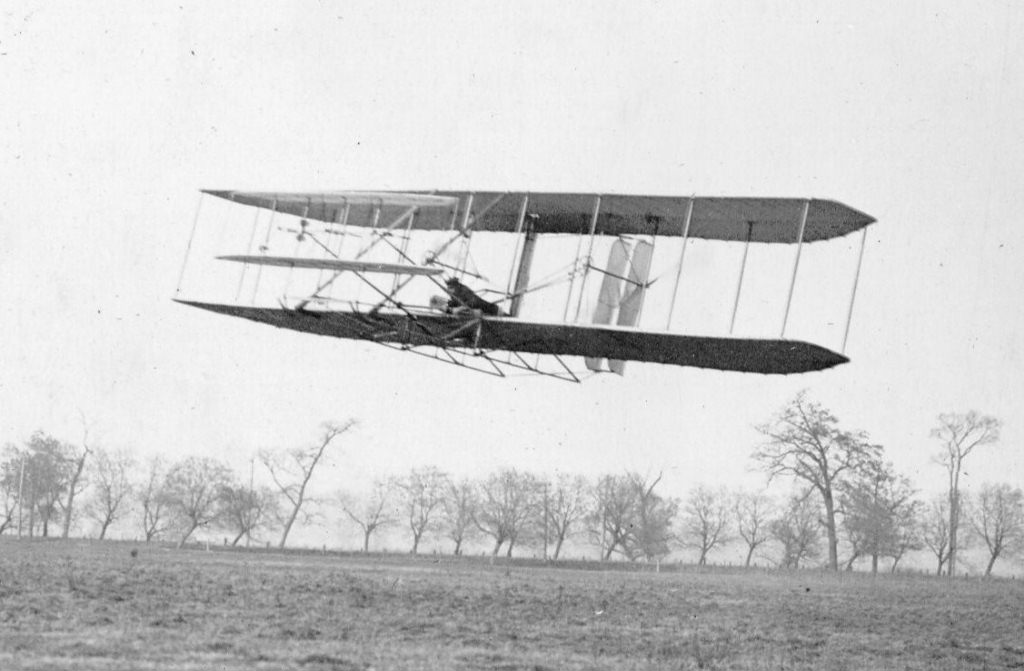
An airplane wing gains lift by taking off into the wind. This then causes the airplane to defy gravity and fly . . . an entrepreneurial metaphor if ever there was one. Interestingly, in my pilot days I once experimented with a downwind takeoff (on a very long runway) and could barely get off the ground. I quickly put the plane back on the runway and ended the experiment!

To build a muscle we exercise it regularly adding more weight and repetitions. Members of the military become elite Seals, Green Berets, Delta Force and Rangers by undergoing rigorous training involving obstacles that severely test the physical and psychological strength of a human being. In Kenya, long distance runners often wear no shoes as they traverse inhospitable terrain, toughening the soles of their feet in the process. I think you can probably see the lessons here.

Adversity can be an entrepreneur’s best friend if we allow it to be. If success comes without challenge, it’s easy to become complacent. We’re also robbed of growth opportunities that result from what we learn as we work through various hardships on the road to achievement. No one says we must like adversity. But avoiding it and fighting it does not work. I’ve found that the most constructive approach is to actually embrace it. For me this means relaxing and easing into adversity. It means establishing a positive mindset and expecting that much good will comes from the experience. We’ve all heard the term “silver linings” and used it many times. Often, we look back on what has transpired and almost as a consolation prize, we identify the silver linings. Looking for them in advance can give us the lift that we need to fly through the clouds.

In addition to the tangible benefits that come from overcoming adversity in specific situations, there are numerous more global wins that can occur. Think about the last time you had a tough puzzle to solve. Perhaps one of the outcomes was that of heightened creativity and innovation. When faced with the prospects of failure our creative instincts kick in and the results can be amazing. We also find that collaboration and teamwork increases reinforcing the notion that two heads are better than one. While I thrive on making sense of complexity and solving tough problems, I find that doing it with others is more productive and builds a stronger organization.

Suppose a professional basketball team plays a game against the best high school team in the country. There’s no doubt about which team will win. Now, imagine that the same NBA team plays against the reigning world champion NBA team and beats them. Which win do you suppose offers a greater sense of accomplishment? We need to feel like we are doing something really worthwhile which can be difficult when we prevail without any struggle whatsoever.

Adversity helps us to identify weaknesses within our company as well as with our strategy. When we aren’t tested and succeed anyway, we don’t really know what could happen if our feet were held to the fire. Challenges and obstacles also allow us to develop resilience and perseverance – both individually and organizationally. I truly hated those first few months of my career when I was an apartment manager. I was kicked in the teeth, the rear, and every other part of my body – I was totally miserable. But something finally clicked, and I figured it out. Quitting wasn’t an option for many reasons – thank goodness! Now I look back and understand how valuable the tough times were in teaching me how to get off the ground and back on the horse.

When we embrace adversity, we can make it work for us like an airplane uses the wind to take off. Then it can become a powerful tool in the entrepreneur’s toolbox.

This blog is being written in tandem with my book, “An Entrepreneur’s Words to Live By,” available on Amazon.com in paperback and Kindle (My Book), as well as being available in all of the other major eBook formats.

The No-Struggle Entrepreneur

How many times have you heard that entrepreneurship is a struggle? Heck, we’ve all heard how life in general can be a struggle. But is it really? I think it’s worth exploring the notion of “struggling.” Various definitions of the word “struggle” reference adversaries, opposing forces, bodily effort, fight, conflict, or contest. I’m just not feeling it.

Let’s paint a picture. Three years ago, Entrepreneur Ed launched his new enterprise. He has encountered many interesting issues along the way. There have been untimely resignations of key team members; nail-biting moments when it was questionable whether he would make payroll; a patent infringement lawsuit; shortages of raw materials that were critical in producing Ed’s product; brutal competition resulting in a price war; cancellation of a liability insurance policy, and the loss of a key customer. Many might say that the last three years have been a “struggle” for Entrepreneur Ed, after all, it appears that he has faced a great deal of adversity. But Ed doesn’t see it that way.

Here is Ed’s perspective. What others see as negative experiences Ed sees as puzzles to solve. Challenging – sure! But Ed believes that what doesn’t kill him will make him stronger and smarter. The utopian view would have us sail along on calm seas growing our businesses from 8 to 5, then going home to play with the kids and spend weekends at the beach. Uh, sorry, it doesn’t work that way. What matters most is the mindset we have as we move through the course of each day. Do we feel like we’re on a perpetual treadmill, grinding away and being attacked from all sides? Do we wonder when the proverbial “other shoe” is going to drop? Perhaps we have become totally overwhelmed to the point of depression. It doesn’t have to be.

Here’s the antidote to the “struggle.” We know we’ve signed on for an adventure – both in the entrepreneurial world and for life in general. That adventure is going to be whatever we make it. If we are fearful and expect disaster . . . we’re likely to find ourselves with a front row seat on the deck of the Titanic as it slowly sinks into the North Atlantic. However, every challenge does not need to end in catastrophe.

We have been rapidly scaling our companies for the past few years. There have been many moments when someone looking in from the outside might believe we were seconds from colliding with a massive iceberg (sorry, I can’t seem to shake out of the Titanic metaphor). I have never believed for a moment that we were on the wrong course. I’ve seen each challenge as a positive opportunity for creativity and growth. And guess what? It’s working! Every time we think we’re flirting with disaster we seem to pull a rabbit out of a hat – except there’s really nothing magical about it at all. Instead, we have a well-thought plan, and we have an extremely positive mindset. We know there will be detours along the way. Sometimes we’ll have to backtrack to find the trail, but we are never lost, and we are always focused on our vision.

As I write this, it’s worth noting that I’ve been with the same company and on the same quest for nearly 49 years. I can now look back and realize how incredible the ride was. Did it ever seem like a struggle? There definitely were times early in my career where I wondered if we were going to survive. But the older (and maybe wiser) I’ve become, the more I’ve come to understand that success comes from within us. While there may be some external influences, it’s really all about how we see the world when we get up in the morning; how we choose to look at each experience throughout the day, and the impression with which we are left when our head hits the pillow at night. In other words, we’ll struggle if we believe we are struggling. Or we’ll see the incredibly short time we are riding this planet as a golden opportunity for experimentation, innovation, mastery, and joy.

We throw off the chains of “struggle” when we embrace a life filled with positive energy and gratitude. And then we can pursue our purposeful vision with confidence.

This blog is being written in tandem with my book, “An Entrepreneur’s Words to Live By,” available on Amazon.com in paperback and Kindle (My Book), as well as being available in all of the other major eBook formats.

The No-Fault Entrepreneur

There’s a game we learned how to play as children. Remember this? Parent – “Who tracked this mud into the house?” Children (pointing fingers) – “Freddy did it!” Then there was always that one kid who did this. Tattle-Tale Kid – “Miss Flanders, Jimmy knocked over the globe in the back of the room after recess and broke it.” As we got older and started our careers, how many times did we hear conversations like this? “We lost the Smith account. It was because John Doe didn’t pull his weight and let us down.” Ah yes, we all know about the “blame game.”

Why is it that human nature drives us to deflect blame and make sure everyone knows “I didn’t do it?” Is this a self-confidence thing? Maybe it’s reflective of the fact that none of us want to disappoint others. Whatever the case, the blame game is unproductive in any entrepreneurial environment. And it signals a flaw in an organization’s culture when the game is played regularly. Perhaps those who make mistakes are so severely held accountable that everyone is afraid to be tagged with a flub.

Entrepreneurial leaders should shun the blame game and adopt a different mindset. It’s a mindset that goes like this – “It may not be my fault, but it is my problem.” And here’s where the real leadership begins. Rather than reacting with “whose fault is this,” the enlightened leader says instead, “Houston, we have a problem. Let’s talk about how we’re going to fix it.” Thus, the first step is identifying the problem and working with the team to find a solution. When we make this the go-to response every single time, the fear of blame among our teammates is dissipated. But solving the problem doesn’t mean that we’re finished with the issue.

Once the smoke clears and the problem has been fixed, it’s critical that we move to the second step. This is where we look at the various facets of the problem and figure out how it can be prevented in the future. It might be that we need to re-design a system or process. Maybe more training would be helpful. It’s also possible that the roles and accountabilities for the team members involved weren’t as clear and precise as necessary. All of this can be accomplished without playing the blame game.

Let’s apply these principles to a real-life scenario.

Old Way – Boss says to his employees, “We were just fired by a customer because the product he ordered wasn’t delivered on time. I want to know who is at fault here, and that person needs to be standing in my office before 4:30 this afternoon.” What happens next? The blame game starts, and someone invariably is singled out to be the sacrificial lamb. They know that there are going to be harsh repercussions, and no one wants to be anywhere close to the boss’s office at 4:30.

Better Way – Entrepreneur says to the team, “We were just fired by a customer because the product he ordered wasn’t delivered on time. I have apologized to him on behalf of our organization and told him that not only is there no charge for his product, but to convince him to give us another chance, we’ll give him a 50% discount on his next order.”

Later in the day the customer agrees to give the company another chance at which point the entrepreneurial leader says to the team, “Congratulations! Our customer has agreed to give us another chance. Let’s meet at 4:30 to talk about how we can make sure that our systems and processes are modified to ensure that our products are always delivered on time.”

The team members at the first company are fearful and aren’t the least bit interested in dealing with the problem. They just want to avoid the wrath of the boss. The team members at the second company are focused on fixing the problem and then figuring out how to keep it from happening again. There is no fear because their leader subscribes to a no-fault, work-the-problem philosophy.

Our entrepreneurial endeavors are much more likely to flourish when our team members can focus on fixing problems that arise as opposed to being on the defensive and looking over their shoulders in fear. The premise is a simple yet powerful one.

This blog is being written in tandem with my book, “An Entrepreneur’s Words to Live By,” available on Amazon.com in paperback and Kindle (My Book), as well as being available in all of the other major eBook formats.

The Hard Times/Happy Times Entrepreneur

The entrepreneurial experience produces emotions of all sorts, often extending across the positive to negative spectrum and all in the same day! Most entrepreneurs will attest to the fact that there have been hard times at different points in their careers. These hard times may be the result of personal challenges, professional challenges, or both. They run the gamut from aging parent issues, marital strife, divorce, rebellious children, lawsuits, financial pressures, unfair competition, loss of market share/customers, and a multitude of other mole hills and in some cases, mountains – really big mountains. Through it all, there’s a central question that we grapple with. How do we make hard times into happy times? Is it even possible?

Let’s start with the whole notion of happiness. Are you happy overall? Where do you land on the happiness scale? Are you happy some of the time but not always? Are you moderately happy or are you ecstatically happy? When you encounter hard times, are you able to maintain your level of happiness or does it slide down (or off) the scale? Obstacles are a part of life. They’ll always be there. When we sign on to be an entrepreneur, we also understand that we’re signing up for a roller-coaster ride. Our gut check determines if we can be happy while we’re riding the roller-coaster, the bucking bull or whatever metaphor is chosen to represent the challenges we inevitably will face.

Over the course of my nearly 70 years I’ve learned many things about happiness. Allow me to share them with you.

  1. Happiness is a choice. First and foremost, I’ve come to understand that my happiness is 100% my choice. Where I land on the happiness scale is totally my choice. This concept may not be easy to grasp when we’re in the throes of a crisis. But I’ll be darned if I’m going to let what is happening around me determine whether or to what degree I’m going to be happy. Some may say that this sounds like a Pollyanna type of response – after all the world is crumbling around us and we’re going to choose to be happy? Yes, that’s exactly what I’m saying. It may not be as easy to dial up happiness when we’re getting punched in the gut . . . but it definitely is a choice that we make.
  2. Go to bed with a clear conscience. My wife is constantly shaking her head. When my head hits the pillow at night, I’m fast asleep within 30 seconds or so. One of the reasons is the fact that I go to bed every night with a clear conscience. I know that my integrity is intact, and I haven’t intentionally stepped on anyone’s toes. A sure-fire way to unhappiness is breaching the trust of others. There may be other problems that crop up along life’s road, but this isn’t going to be one of them.
  3. Be grateful. Gratitude is one of the keys to happiness. I find that when I am grateful to someone and express it, I feel an endorphin rush. And because it feels so good to express gratitude, I try to do it every single day. I have found that being grateful helps to create a balance in my life that pushes up the happiness meter.
  4. Serve others. Years ago, I discovered that getting out of myself was a major factor in being a perpetually happy person. Rather than dwelling on my own inadequacies, mistakes, and failures, I found that serving others produced those same endorphins I felt when I was in gratitude. When I could make others happy it became infectious and made me happy as well. I volunteered at a children’s hospital; have served as a mentor to aspiring entrepreneurs; created a scholarship program for young people studying to be teachers, and many other examples.
  5. Turn the tables. Look, I said it before. Hard times are inevitable. But we can use them to learn and grow. We can use them to stimulate creativity and innovation. I have come to thrive on complexity and challenges that some might find would push them over the edge. Instead, I say, “bring on the tough stuff!” I’m not about to be defeated by hard times because they present an opportunity to excel and move to even higher levels of performance. And that’s just as applicable in my personal life as it is in my business.

Hard times and happy times can coexist. We need to recognize that happiness is a choice, and it can be realized when we operate in integrity, express gratitude, serve others and use our challenges as opportunities for growth.

This blog is being written in tandem with my book, “An Entrepreneur’s Words to Live By,” available on Amazon.com in paperback and Kindle (My Book), as well as being available in all of the other major eBook formats.

The Victimized Entrepreneur

I listened to a fascinating business podcast recently. The host was interviewing an entrepreneur who apparently has faced many challenges throughout her career. What struck me the most was her statement that she has a “chip on her shoulder.” We’ve all heard this phrase before, and often it’s portrayed in a positive light. The thesis is that a person has faced adversity and come away from the experience stronger and tougher. I downloaded the transcript of this interview (which lasted for nearly an hour) and read it carefully. What I pieced together led me to question how positive a “chip on the shoulder” notion actually is. When does it veer into victimization territory?

For starters, let’s look at some phrases that I excerpted from the transcript. “Not everybody had a fair shake.” “In another way the industry is biased, and the numbers are terrible and bleak.” “I will say that it took an embarrassingly long time to get anyone to take me seriously, so that’s where the insult is.” “Some of these barriers are just insulting.” “One person has to climb the mountain and another’s gotta climb a fence.” “The person across the table has to get a fighting chance.” “I don’t play well with others.” “I’ll tell you this honestly, our goal post has moved – it’s also there is a microscope on what I’m doing and what my company is doing, that is not on other companies.” And how about this gem? “Back to the theme that it’s a meritocracy except you have to work five or ten times harder than everybody else which is the opposite of a meritocracy.” Other words were used like “dignity,” “gut punch,” “injustice” and “really screwed me over.”

This entrepreneur shared her journey of the past two or three years, and while she’s clearly made some progress with her business, a case could be made that she ought to be farther along. She obviously believes that the reason that she is not is due to external forces that have conspired against her. I don’t think I’ve listened to someone sound more like a victim in a long time. Unfortunately, the podcast host played the part of enabler and sympathizer. He egged her on and attempted to validate her claims. Yet, she presented very little concrete evidence to support her mindset.

I can’t begin to know all the experiences encountered by this entrepreneur. Undoubtedly there have been some trials and tribulations along the way – however, the world is not selective about this! The entrepreneur from the podcast has chosen to develop a “chip on her shoulder,” advocating that the deck has been stacked against her and others have stood in the way of her success. The result appears to be a bitter self-fulfilling prophesy.

What if this entrepreneur took a different path? What if this entrepreneur looked at the obstacles as opportunities rather than conspiracies? What if she believed in her heart that every failure meant that something even bigger and better was in store? What if she could visualize abundance and possibility instead of lack and limitation? Over the course of my career, I’ve always found that embracing optimism and positivity begat the desired results far more often than wallowing in pessimism and negativity.

For me, a “chip on the shoulder” is a cynical mindset. It is typified by wariness, suspicion, skepticism, and distrust. Entrepreneurs that wrap themselves in a “chip on the shoulder” cocoon will have a much tougher time receiving the good which they are pursuing. Here’s an indisputable fact. The adversity we experience directly shapes our mindset. But we make a choice as to what shape it takes. When we dwell on “being screwed over,” “gut punches” and “not playing well with others,” we are setting that shape as a giant chip that rests on our shoulder. And what a weight that chip can become!

We can avoid a “chip on the shoulder” mentality by following the positive path to our success. This enables us to work through, around, over and under the obstacles that we face and see them as opportunities to grow.

This blog is being written in tandem with my book, “An Entrepreneur’s Words to Live By,” available on Amazon.com in paperback and Kindle (My Book), as well as being available in all the other major eBook formats.

The Smarty Pants Entrepreneur

Think about the most brilliant people you know. Do they own or run a company, or do they work for someone else? Chances are that they fall into both categories. For many years I have been trying to hire people who are smarter than am I. Fortunately I have succeeded several times and it certainly pays big dividends.

Across the business landscape you will find many employers who simply will not hire scary-smart people. You will hear a wide range of excuses – they are too high maintenance, they will stick around for a short period of time and then they will leave, and others in the organization will resent them. For the most part this is simply code for, “I feel threatened when I have to deal with someone smarter.” Politicians are the worst offenders. Many of them have egos that are so big that they always want to be the smartest people in the room. That is why we see so many blunders and missteps in our political and legislative process. If really smart people in much greater numbers were advising our elected officials, perhaps things might be better in the public arena.

In the entrepreneurial world we can see the result of not hiring the smartest people simply by looking at the politicians and their staffs. To begin with, we must avoid the ego trap that does not allow us to admit that there are people who have great ideas . . . maybe even better than ours! Once we get this out of the way it is a downhill run from there. The word gets around that we are looking for the best and brightest and they beat a path to our door. Right? Well, maybe, but there is more work to be done for this to happen.

First, we must truly value the opinions of others. I can tell you that I went through a period in my career where I would seek the input of others but was not convincing that I really wanted it. Rather than incorporate the suggestions of others, I simply went ahead and did things the way I wanted. I was not doing this intentionally – I just did not know how to take such input and do anything with it. Together with this problem was the fact that I was way too controlling in the decision-making process. So, not only was I not valuing the opinions of others, but I was also shutting them out when it came to deciding what to do.

Smart people want to take real responsibility. They want to be coached – not told what to do. They want to believe that they are valuable to an organization and not just another cog in the wheel. Smart people need to understand our vision for the future and what role they will play along the way. They need to be challenged. Woe be to the entrepreneur who allows smart people to become bored! Keep piling on the challenges at a manageable pace and do not stop. Above all, show gratitude on a regular basis, but do not hesitate to provide constructive criticism when necessary. Most of this advice applies for every member of the team, but it is especially critical for the high achievers.

When we get our ego out of the way, we open a world of possibilities in terms of hiring amazingly gifted talent. In so doing, we create organizations that are better able to compete and win at an extremely high level.

This blog is being written in tandem with my book, “An Entrepreneur’s Words to Live By,” available on Amazon.com in paperback and Kindle (My Book), as well as being available in all of the other major eBook formats.

The “We Can” Entrepreneur

The space shuttle had approximately 2.5 million moving parts. There are 100,000 miles of blood vessels in the human brain. There are approximately 2,300,000 stone blocks weighing from two to 30 tons each in the Great Pyramid of Giza. The Chinese Tianhe-2 supercomputer is purportedly the fastest in the world with 33.86 quadrillion of FLOPS (floating-point operations per second).

“That’s really going to be hard.” “I don’t know if we can do that.” Ever heard someone utter these phrases? Sometimes we struggle to get our head around a difficult project or initiative and our default thinking goes to seeing the obstacles rather than the opportunity. This may be especially true for those who are linear thinkers. The obvious cliché here is that of “staying inside the box.” We are stuck in traditional thought patterns and are unable to immediately see the multiple options that exist with nearly every decision that must be made. It does not have to be this way – witness the amazing feats described in building the space shuttle, performing complicated brain surgery, constructing the Great Pyramid and creating the supercomputer.

Every organization needs a combination of linear and abstract thinkers to provide a healthy balance of ideas. Those of us who are extremely creative and can dream in a big way need down-to-earth team members with whom we test our ideas. That said, I am an advocate for the notion that the organizational mindset should be “how we can” as opposed to “why we can’t.”

Here is an example of the “how we can” philosophy. Let’s say that Company A manufactures a particular type of fastener. Business has been growing and then the CEO receives a call from a prospective customer, Company B, indicating that it would like to place an order for fasteners that represents 35% of the company’s production. Company A is operating at full capacity and cannot divert any product away from its steady customers. But the CEO in typical entrepreneurial fashion, isn’t about to tell Company B that he can’t supply the fasteners. When he pulls his team together he could hear a lot of “why we can’t,” or he can challenge his team members to tell him how Company A can meet the current production requirements and also increase production by 35%.

Instilling the “how we can” mindset is not a walk down Pollyanna lane. Instead it involves convincing a team to develop a default perspective of looking around, over and under the obstacles and figuring out what steps can be taken to achieve the goal. We start by creating the path to success. Then we work backwards and look at the risks involved and how to manage them. Perhaps Company A cannot add a second shift to produce the extra fasteners because it does not want to risk having excess labor capacity after the order is filled. But as an alternative, maybe Company C that is not a direct competitor, could “white label” the fasteners and produce them under the watchful eye of Company A. While the profitability may be less by using Company C, Company A may be able to win a new customer in Company B, whose repeat business results in a permanent expansion of production capacity.

It is also important that the entrepreneur not send the signal to his team that “we’re going to make this work come hell or high water.” The danger with plowing ahead is that the more skeptical and cautious members of the team may simply acquiesce rather than express their true opinions. And those who are the natural risk takers may run toward the cliff at full speed without realizing that there’s real pain 400 feet down!

We want to inspire team members to build a “how we can” enterprise. And simultaneously we thoughtfully measure risk and return on investment. The endgame is a dynamic organization that always pushes the boundaries to grow in a healthy fashion.

This blog is being written in tandem with my book, “An Entrepreneur’s Words to Live By,” available on Amazon.com in paperback and Kindle (My Book), as well as being available in all of the other major eBook formats.

The Adversity-Beating Entrepreneur

An airplane wing gains lift by taking off into the wind. This then causes the airplane to defy gravity and fly . . . an entrepreneurial metaphor if ever there was one. Interestingly, in my pilot days I once experimented with a downwind takeoff (on a very long runway) and could barely get off the ground. I quickly put the plane back on the runway and ended the experiment!

To build a muscle we exercise it regularly adding more weight and repetitions. Members of the military become elite Seals, Green Berets, Delta Force and Rangers by undergoing rigorous training involving obstacles that severely test the physical and psychological strength of a human being. In Kenya, long distance runners often wear no shoes as they traverse inhospitable terrain, toughening the soles of their feet in the process. I think you can probably see the lessons here.

Adversity can be an entrepreneur’s best friend if we allow it to be. If success comes without challenge, it’s easy to become complacent. We’re also robbed of growth opportunities that result from what we learn as we work through various hardships on the road to achievement. No one says we must like adversity. But avoiding it and fighting it does not work. I’ve found that the most constructive approach is to actually embrace it. For me this means relaxing and easing into adversity. It means establishing a positive mindset and expecting that much good will comes from the experience. We’ve all heard the term “silver linings” and used it many times. Often, we look back on what has transpired and almost as a consolation prize we identify the silver linings. Looking for them in advance can give us the lift that we need to fly through the clouds.

In addition to the tangible benefits that come from overcoming adversity in specific situations, there are numerous more global wins that can occur. Think about the last time you had a tough puzzle to solve. Perhaps one of the outcomes was that of heightened creativity and innovation. When faced with the prospects of failure our creative instincts kick in and the results can be amazing. We also find that collaboration and teamwork increases reinforcing the notion that two heads are better than one. While I thrive on making sense of complexity and solving tough problems, I find that doing it with others is more productive and builds a stronger organization.

Suppose a professional basketball team plays a game against the best high school team in the country. There’s no doubt about which team would win. Now, imagine that the same NBA team plays against the reigning world champion NBA team and beats them. Which win do you suppose offers a greater sense of accomplishment? We need to feel like we are doing something really worthwhile which can be difficult when we prevail without any struggle whatsoever.

Adversity helps us to identify weaknesses within our company as well as with our strategy. When we aren’t tested and succeed anyway, we don’t really know what could happen if our feet were held to the fire. Challenges and obstacles also allow us to develop resilience and perseverance – both individually and organizationally. I truly hated those first few months of my career when I was an apartment manager. I was kicked in the teeth, the rear and every other part of my body – I was totally miserable. But something finally clicked, and I figured it out. Quitting wasn’t an option for many reasons – thank goodness! Now I look back and understand how valuable the tough times were in teaching me how to get off the ground and back on the horse.

When we embrace adversity, we can make it work for us like an airplane uses the wind to take off. Then it can become a powerful tool in the entrepreneur’s toolbox.

This blog is being written in tandem with my book, “An Entrepreneur’s Words to Live By,” available on Amazon.com in paperback and Kindle (My Book), as well as being available in all of the other major eBook formats.