
Vacuum Cleaners and Movies

“If you think life is magical or life is hard, either way you are right. Your thoughts are the source of reality.” I love this quote by Dr. Debasish Mridha, an American physician and philosopher. And here’s a phrase that is toxic to the entrepreneurial mindset – “It’s too hard.” Why? Because it’s an affirmation – and a powerful one at that. There’s nothing wrong with acknowledging that the mountain in front of us may be huge. But we can easily tip over into defeatist territory if we say something is “too hard.” Often that’s a signal that it’s time to give up. Au contraire!

Conquering something difficult and maybe even insurmountable is a true entrepreneur’s dream, much in the same vein as climbing Mount Everest or something less daring like public speaking. I want to “run to hard” and embrace it. I do so because I know that many others have run away from it. “Too hard” is an opportunity to blend innovation and creativity into a solution. It’s an opportunity to witness the power of a positive attitude. It’s an opportunity to learn how tough we are and how able we are to persevere.

There are examples all around us of how “too hard” really wasn’t. Think how hard it must have been to put a man on the moon in 1969 before the technological advancements we have today. The first heart transplant must have been amazingly hard – yet someone did it. And how hard was it for swimmer Michael Phelps to win 28 Olympic medals over the course of his career? There’s no doubt that someone uttered the “too hard” phrase with each of these accomplishments. And that someone was obviously dead wrong.

Here’s what I’ve learned. A leader must be the eternal optimist. He or she must absolutely and totally believe in the goal or objective. This belief must be authentic and genuine – not playacting for the team. There’s confidence on steroids at work here. But more than sheer willpower is necessary to generate the desired result. The effort must be strategic and smart.

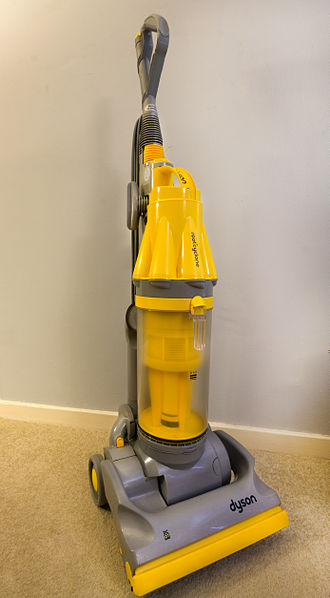
Hoover, Electrolux and Oreck seemed to have a corner on the vacuum market for years. Then along came James Dyson with a revolutionary idea in the late 1970s.  He created 5,127 prototypes over five years and the G-Force Dual Cyclone was born. Dyson has since become a worldwide market leader with 2015 sales of more than $2 billion. Here’s another example. Blockbuster had 2004 revenue of $6 billion while Netflix brought in $500 million. Today, Netflix has more than 75 million streaming subscribers and Blockbuster is out of business. What happened to “too hard” with Dyson and Netflix?

Dyson revolutionized vacuum cleaner design and eliminated the need for a bag. It was clearly a disruptor in its industry. Its swivel ball technology also made it easier to use a vacuum cleaner in tight spaces – something the incumbent makers had failed to do. Netflix was all about convenience for its customers. I remember having to drive to the Blockbuster store to rent a movie. Meanwhile Netflix was sending them through the mail. Ultimately, the company figured out that streaming was the future and rode the wave in handsome fashion. “Too hard” was transformed into stunning success through innovation, creativity, perseverance, resilience and above all a “can’t lose” mindset.

How do these stories apply to us? If nothing else, it’s imperative that we learn how to convert too hard into let’s do it.” We must first convince ourselves that we can do whatever we set out to do. Then we must persuade our team to believe the same way. I know that this sounds like a lot of rah-rah. But the formula is a pretty simple one. Yes, there will be risks – but we figure out how to manage them. Yes, there will be failure – but we use it to learn what works and what doesn’t. And yes, there will be periods where progress seems painfully slow – but we keep moving forward until we break through.

You can also listen to a weekly audio podcast of my blog. What you hear will be different than what you read in this blog. Subscribe on iTunes or wherever you get your podcasts. You can also click on this link – Click here to listen to Audio Episode 22 – Yin and Yang

This blog is being written in tandem with my book, “An Entrepreneur’s Words to Live By,” available on Amazon.com in paperback and Kindle (My Book), as well as being available in all of the other major eBook formats.
vacuum_cleaner

The Anatomy of an Entrepreneur

As entrepreneurs exactly who are we? What makes us tick? Is there some sort of DNA gene that we can point to? I’ve thought a lot about some of the exceptional entrepreneurs I’ve known over the past four decades and have identified some of their traits and tendencies that stand out.

Let’s start with creativity and innovation. Entrepreneurs use their creative powers to innovate and find a better way to do something. Elon Musk has to be one of the most prolific entrepreneurs when it comes to innovation – Tesla Motors, SpaceX, Pay Pal and Solar City come to mind to name a few. Often, creative entrepreneurs are also visionaries. They have an uncanny ability to see into the future and understand what their customers will want and how their company needs to be designed to win. GoPro CEO Nick Woodman, is one of the foremost visionaries in America today. Who could ever have imagined a series of high definition video cameras that are small, durable and light enough to capture our daily adventures – daring and mundane? And successful entrepreneurs understand risk. Rather than taking risk they are adept at managing it.

When they get knocked down, great entrepreneurs get back up – over and over and over. They are amazingly resilient and don’t see failure . . . only opportunity. Walt Disney was fired by his employer, the Kansas City Star, because he supposedly lacked creativity. That didn’t seem to impact his storied career. When things don’t work out as planned they are flexible and know how to adapt and make the best of every situation. Top flight entrepreneurs are persuasive and can convince others to say yes. They do so through the power of their passion. Does Steve Jobs come to mind? Look what he convinced us to buy! Along with their persuasive powers, successful entrepreneurs are strong communicators in both verbal and written formats.

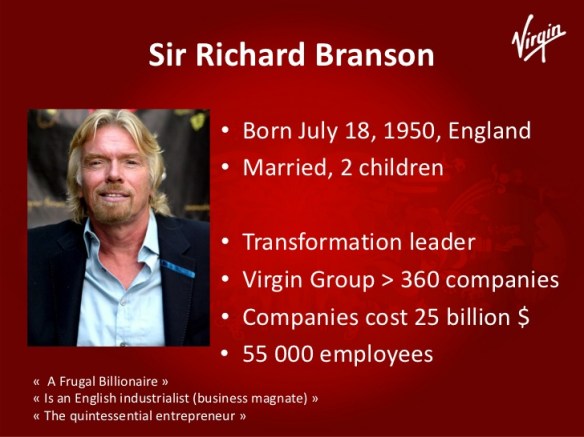
Entrepreneurs are assertive – the great ones are less aggressive than assertive. They have a healthy degree of empathy and are sensitive to the feelings of others. Entrepreneurs at the top of their game have a certain amount of charisma. They can be sociable and gregarious – even if those aren’t their core tendencies. Without charisma an entrepreneur will find it tougher to raise money, develop important relationships and influence others. Billionaire entrepreneur Sir Richard Branson is one of the most charismatic leaders on the planet. And he has woven his charisma into a tapestry of empathy and caring about other people.

Culture King is another descriptor for the cream-of-the-crop entrepreneur. Ben Chestnut is the founder and CEO of MailChimp fits into this category in the ways he has empowered the 500+ members of his team. Hand-in-hand with a strong culture is a smart entrepreneur’s ability to delegate. According to a 2013 Gallup survey of Inc. 500 CEOs, an average three-year growth rate of 1,751% was realized where the CEO had a high Delegator talent. Entrepreneurs typically have a high sense of urgency and tend to be very self-structured – there’s no way anyone is going to tell them what to do! Entrepreneurs simply don’t want to be a cog in someone else’s machine. Most entrepreneurs also have the ability to juggle many things at once and in fact need to feel the rush and excitement of pursuing multiple projects and initiatives simultaneously. Finally, ultra-successful entrepreneurs are generally positive and optimistic people. They don’t dwell on mistakes and never play the victim.

Remember the DNA thing I mentioned at the beginning of this blog? Well, there may be something to it. A February 17, 2016, research paper published in the Austin Journal of Molecular and Cellular Biology reported on the Dopamine Receptor D4 Gene and concluded that entrepreneurs have a higher tolerance for risk-taking in part, due to this gene (Link to research publication.). Apparently genetics govern approximately 30% of what makes one an entrepreneur. But that leaves 70% to a wide range of personality traits and tendencies.

There are many such traits and tendencies that are identified with entrepreneurs. No one person possesses them all, but the more to which we lay claim the closer we come to attaining world class status.

You can also listen to a weekly audio podcast of my blog. What you hear will be different than what you read in this blog. Subscribe on iTunes or wherever you get your podcasts. You can also click on this link – Click here to listen to Audio Episode 2 – The When Affliction.

This blog is being written in tandem with my book, “An Entrepreneur’s Words to Live By,” available on Amazon.com in paperback and Kindle (My Book), as well as being available in all of the other major eBook formats.

richard-branson-as-a-leader-4-728

Blah, Blah, Blah, Bzzzzzzzz

“I need to stop and get milk on the way home from the office. I wonder how that new employee we just hired is going to work out. Wow, it’s hot in here! I’m hungry. This paragraph I’m reading makes no sense. Boy it’s sure hard to concentrate right now. The stock market is way down today. Man I’m really hungry. Note to self – pick up wife’s birthday present. Must also remember to follow-up with Smith on the Franklin contract. Blah, blah, blah, buzz, buzz, buzz . . .”

Does this sound like what is going on in an entrepreneur’s mind ALL THE TIME?! Do you recognize the pattern? If you are like me, you have a million thoughts crossing your mind at warp speed and on a continual basis throughout the day. There are all kinds of statistics to be found, but the National Science Foundation provides a range of 12,000 to 50,000 thoughts per day for each of us. Even on the low end, that’s a lot of thoughts. As a result it’s easy to become overwhelmed by our own minds. We are constantly bombarded with massive amounts of stimuli – much more so than ever before. I believe that the Internet and technology in general has enabled us to be connected with a multitude of people and things that contribute to this trend. Think about a farmer in the 1800s. He might read a newspaper every once in a while. Beyond that, he wasn’t really in touch with the world outside his own small community. He worked hard physically. His mental challenges were pretty much limited to providing for and taking care of his family.

How hard would it be to just to sit quietly for 30 minutes and think of absolutely nothing? I don’t know many people who can actually do this. And yet, we need to be able to clear our minds of the clutter that accumulates throughout the day. A friend of mine has some wonderful advice. He says, “Listen deeply into the silence behind the noise.” Yes, much of what we think is just noise. Have you ever tried to talk on the phone with someone while a very loud conversation is occurring within earshot? Have you ever tried to focus and concentrate when there’s a loud television blaring in the background? This is exactly what is happening in our minds with all the thoughts competing for attention. So what to do?

To listen deeply into the silence behind the noise means that we must clear and quiet our minds. There’s probably nothing harder for us entrepreneurs than to slow down and turn off our thoughts. But I think you’ll agree that when this is accomplished the flow of creative energy becomes even greater than before. And of course creativity leads to better products and services; a more acute awareness for solving problems, and stronger interpersonal relationships. Whether you meditate, practice yoga, take long walks, or engage in some other daily mind-clearing activity the important thing to remember is to be present. Most of us are either thinking thoughts about the past or the future. When I take a walk I try and focus on where I am and what I’m experiencing in the moment. I observe the color of the sky, the shape of the clouds, the birds I’m seeing in the trees and the sounds that are cascading around me. Above all, I’m able to push all of the thoughts about past and future out of my head and live for the moment during the time I’m taking my walk.

We must be intentional about clearing our minds of the clutter that accumulates. Only then will our creative energy be heightened in positive and rewarding ways.

 This blog is being written in tandem with my book, “An Entrepreneur’s Words to Live By,” available on Amazon.com in paperback and Kindle (My Book), as well as being available in all of the other major eBook formats.

yoga

The Enemy?

Evil, dirty, underhanded, devious, conniving, despicable, dishonest, cutthroat, backstabbing, snobbish, arrogant, lying and cheating. These are terms I’ve heard applied to competitors over the last 40 years. Without a doubt I’ve missed some. What emotions are evoked when you think about your competitors? Some entrepreneurs I know have pure hatred for the competition and others display a great deal of fear. Why do we associate such negativity to our competition?

The amateur psychologist in me believes it has something to do with our childhood (don’t all of our issues?). On the playground we engaged in competitive duels involving kickball, dodge ball, four-square and other gladiator-like activities. Losers were vanquished with taunts and teasing. When we were older, competition for relationships with the opposite sex was intense. When a sought-after girl or boy chose someone else, we were crushed and dejected. Fast forward to today and it’s no wonder that we often see our competition as the enemy.

But do we really benefit from viewing our competitors in this manner? Competition is actually a wonderful thing. Let’s look at several of the reasons why.

  • Competition stimulates creativity and innovation. Every day we know that our competitors are working overtime to develop new products or services. To keep from being left behind we do the same. New discoveries are made out of this process that may generate greater profits and capture a larger market share.
  • Best practices emanate from a competitive environment. Let’s face it; we don’t have all the answers. So, observing how others do things and testing our approach accordingly can lead us to implement better systems and processes. Without competition what would be the incentive to improve?
  • An inefficient market is the byproduct of competition. Some competitors are stronger and some are weaker. If every competitor was equally strong how would anyone win? The concept of winners and losers is critical to a healthy yet inefficient market.
  • Hand-in-hand with the inefficient market theory is the opportunity for differentiation. This is good for the consumer and it’s outstanding for the entrepreneur. Why? Because we have the opportunity to create a level of variety that may appeal to more customers. It’s not just about “better;” it’s also about “different.” If every boutique sold the same black dress, doesn’t it stand to reason that a boutique selling a purple skirt might win a few more customers than the black dress sellers?
  • Competition helps to broaden the talent pool. It provides career paths for the workforce into which we as entrepreneurs can tap. We can create cultures where people want to work, giving them the chance to grow and advance their careers. And in the process we get to attract the best and the brightest.

For years we’ve enjoyed good relationships with our competitors. We view them with respect and in some cases, admiration. Other terms come to mind as well; friendship, collaboration, empathy and gratitude. Collaboration you say? Yes, we’ve often referred customers to our competitors when we couldn’t meet their needs and they’ve done the same for us. In 2008 a Maine portable restroom business owned by Jeff Bellino burned to the ground. Who came to the rescue? Bellino’s competitors! They provided portable restrooms, toilet tissue and chemicals so that he could keep going while he rebuilt his operation. Competition is at its healthiest when competitors have each other’s backs in a time of need.

When we embrace the notion of strong and healthy competition we enhance our chances for success. There’s no doubt that competition makes us better entrepreneurs in every respect.

This blog is being written in tandem with my book, “An Entrepreneur’s Words to Live By,” available on Amazon.com in paperback and Kindle (My Book), as well as being available in all of the other major eBook formats.

gladiators

Curious?

How curious are you? This may seem like a curious question (pun intended) for me to be asking. But follow along. Remember when we were in elementary school how the world looked so huge? We were in awe and wonderment of all there was to learn. When my daughters were young the phrase I heard the most was, “Daddy, why ______” – then fill in the blank. Why does the sun come up in the east instead of the west? Why do dogs bark but chickens cluck? And the list goes on forever. The point is, as children we were curious about nearly everything.

As we get older our curiosity changes and our questions are generally more mature. Naturally we’ve learned a lot over the years and sometimes it’s easy to get stuck in a “learning dearth” rut. In other words, we ask fewer questions and seek fewer answers. If we’re not careful we can become very one-dimensional, wrapped in our comfortable cocoon and drifting along on the river of life. I’m not being critical, but as entrepreneurs, we can be more effective and accomplish more if we maintain our curiosity. Asking why often leads to innovation. Why do certain processes exist within our organization? How could a particular product be improved? What could we do to provide better customer service?

There are a number of things that we can do to maintain the curiosity bug. Reading different publications (not just business books) on a regular basis is stimulating. This might include such topics as human interest, hard news, politics, religion, travel, philosophy, humor and sports. The Internet is today’s version of the World Book Encyclopedia – on steroids! Sometimes I’ll simply surf an obscure site just to see what’s there. A walk through Home Depot serves the same purpose. Frequent conversations with friends and colleagues are invaluable in stoking curiosity. Attend sporting events, the theater, concerts, seminars and other live activities. For me, I’m constantly asking the why, what, how, where and when questions in the context of everything I see and do.

We can become more creative and innovative by being intentional about arousing our curiosity. Blend this with some quiet, meditative time, and we find new ideas pouring into our consciousness. This quiet time is critical for it gives us the opportunity to empty our minds of all the clutter that accumulates through the course of the day. And the vacuum that is created opens the way for solutions to problems to emerge and for new opportunities to be born. But curiosity is the beginning of this winning formula.

If you feel like you’ve become a bit stale in the curiosity department, I recommend that you keep a simple journal for a few weeks. Record the things you do each day to stimulate your curiosity. Write down any new ideas that you have. See how many why, what, how, where and when questions you can ask . . . and answer. Don’t forget the quiet time that is needed each day to allow your curious mind to make sense of all of this.

Curiosity, creativity and innovation go hand-in-hand. We’re never too old to recapture that childlike curiosity that we experienced when we were seven.

This blog is being written in tandem with my book, “An Entrepreneur’s Words to Live By,” available on Amazon.com in paperback and Kindle (My Book), as well as being available in all of the other major eBook formats.

encyclopedias

The Enemy

As entrepreneurs we place a great deal of value on flexibility, creativity and efficiency. We thrive on developing new ideas and managing risk. Our fires are stoked when we find ourselves in situations where we must be quick and nimble. We succeed because we are positive, optimistic and passionate, and because we persevere. So what could possibly rain on our parade?

Bureaucracy is the enemy of entrepreneurship and innovation. It doesn’t matter if it’s government bureaucracy or corporate bureaucracy – both are stifling and unrelenting. We entrepreneurs are in a constant struggle with bureaucracy and our frustration grows by the day. Bureaucracies are inflexible, inefficient and slothful. While entrepreneurship is a dream catcher, bureaucracies are dream-killers. So what is an entrepreneur to do?

Government bureaucracy is a subject unto itself. Entrepreneurs can do two things to combat government bureaucracies. One is to figure out how to maneuver and work-around them. I’ve made the mistake of trying to fight government bureaucracy in the past and it was always a losing battle – primarily because they have no accountability. Rather than fight, we can choose to become innovative involving not only our business initiatives, but also in the way we interact with a government bureaucracy. And of course the other thing we can do is support political candidates who believe in streamlining and/or eliminating bureaucracies.

Corporate bureaucracy is almost as maddening as the government variety. They generally exist as a result of the implementation of systems and processes that are cobbled together over an extended period of time. Many corporate bureaucracies are never intended to be so. They simply evolve. In the absence of a well-defined strategy a vacuum exists. Business people tend to do a lot of “firefighting,” constantly reacting to issues that are presented on a daily basis. The sum total of this reactionary approach to doing business; the vacuum that is present with the absence of a strategy, and the hodge-podge of solutions that are produced, equals a greater and greater entrenched bureaucracy. Conversely, a well-thought corporate vision wrapped in strong strategy and precision tactics, does not allow this vacuum to see the light of day.

To ensure that innovation and entrepreneurship flourish we must focus on creating a roadmap that is clearly defined for everyone on our team. When we see “firefighting” beginning to occur this is our danger signal that bureaucracy will ensue. This is our opportunity to step back and re-examine our vision and our strategy. It’s a time when we can tweak and modify our operations to be totally aligned with our entrepreneurial spirit.

For the sake of our customers, our team members and everyone who comes into contact with our enterprise, it should be our goal to avoid the establishment of bureaucracy at all costs. When we succeed, we’ll enjoy an abundance of happy customers, happy team members and prosperity at all levels.

This blog is being written in tandem with my book, “An Entrepreneur’s Words to Live By,” available on Amazon.com in paperback and Kindle (My Book), as well as being available in all of the other major eBook formats.

firefighting

Sliced Bread

Question: I’ve been working for the past two years on bringing my dream idea to fruition. And it seems like it’s two steps forward and three steps backwards. When do I know it’s time to throw in the towel?

Answer: This question really resonates with me. Over the course of the past 40 years I can’t tell you how many dream ideas I’ve pushed, prodded, cajoled, coaxed and dragged, trying to get them across the finish line. Fortunately I’ve succeeded more often than I’ve failed, but there definitely have been a number that succumbed along the way.

Something I learned may surprise you. I’ve discovered that becoming emotionally invested in an idea can be dangerous. You may rightly ask, “How can we work to realize our dream without emotion and passion?” And here’s where the distinction comes for me. I am very passionate about the process of creating an idea and taking the steps necessary to implement it successfully. But I try and avoid becoming emotionally attached to the idea itself. By doing so, I can pursue an idea up to the point that it appears to be no longer viable and then discard it, moving on to the next idea.

Here’s what happens when we take a “this is my baby” approach to nurturing an idea. The process of birthing the idea takes on an emotional dimension that can blind us to things that we may not want to see. As a result we may not maintain our objectivity and might even miss some critical signals that would otherwise steer us in a different direction. We tend to have tunnel vision, believing that our idea is the best thing in the world since sliced bread. Yet others may not see what we think we see. So we start trying to sell people on our idea . . . rather than helping them buy it. When we don’t get the response we’re looking for we may begin to put pressure on ourselves to push the idea over the top. Then the frustration builds to the point that we’re ready to scream. By now our creative flow of energy has been blocked by our frustration and there is no way we’re going to succeed.

What works for me is to remove the emotion from the idea and replace it with a process. This process includes milestones and metrics that help me determine if I’m making progress in developing an idea. I’m also more receptive to pivots that may be necessary – that is, changes in direction that I need to take to ensure that the idea succeeds or is enhanced. More than anything, it’s liberating to know when an idea needs to be thrown on the scrap heap. I can now do this with ease, knowing that I did what was reasonable to make it work and recognized when it wasn’t meant to be.

Becoming emotionally invested in our dreams may actually hinder our success. Having passion for the process of realizing a dream will help us relax and maintain our creative flow.

This blog is being written in tandem with my book, “An Entrepreneur’s Words to Live By,” available on Amazon.com in paperback and Kindle (My Book), as well as being available in all of the other major eBook formats.

sliced bread

Impresario of Improv

Question: I’m a planner and I work my plan. But every once in a while things don’t go according to plan and I don’t handle it very well. What can I do to stay on track?

Answer: One year when I was on vacation my wife’s suitcase didn’t make it onto the plane. Compounding the problem was the fact that we were scheduled to take a ferry to our final destination and get on a sailboat charter the next morning. And to top it all off, our final destination was in another country! What a mess. My wife was pretty upset about all of this and it dawned on me as to why. She felt totally powerless to solve the problem that wasn’t her fault at all. Fortunately she had packed some extra clothes in her carry-on, purchased some toiletry items and was able to make do until the bag arrived two days later (we had to sail back to port to pick it up).

The lesson here is two-fold. When things go awry we must first and foremost discard any feelings of victimization. Clearly my wife was a victim. The airline screwed up and so did the ferry operator once the suitcase was in its possession. But wallowing in the victim mentality solves nothing (and to be clear, my wife did not wallow). It’s natural to feel a bit helpless in such situations but critical that we move beyond such feelings as quickly as possible. Do you remember the story of “The Little Engine That Could?” I have used this silly childhood story when I have a momentary feeling of helplessness. For me it’s a trigger that helps me get out of the defeated mental state I may be in at the time. Simply saying, “I think I can, I know I can” is enough to start the rally.

Once we clear our head the next step in this process is to improvise. My wife didn’t realize it, but she had already begun to improvise when she packed some clothes in her carry-on. Over the years we’ve learned from experience that this is a good idea. For my wife, improvising was not that big of a deal. But there are plenty of situations when something goes wrong where we need all of the MacGyver skills we can muster. We step back assess the whole situation. We look around and see what resources we might be able to cobble together that will solve the problem and get us back on track. Our creativity must be called upon at this point. I choose to turn this into a process that I write down on paper. I state the problem in writing; identify the resources in writing and lay out the deployment of those resources – in writing. This is the way my brain works to improvise and solve a problem. We each need find a way that works best for us.

When the metaphorical train runs off the rails, removing the emotion of victimization is critical. Then we can get down to the business of solving the problem through improvisation. “I think I can, I know I can.”

This blog is being written in tandem with my book, “An Entrepreneur’s Words to Live By,” available on Amazon.com in paperback and Kindle (My Book), as well as being available in all of the other major eBook formats.

Macgyver198

MAS

Question: I am very goal-oriented and set very specific objectives for myself. I meet my goals fairly consistently but I just don’t think I’m making the kind of progress personally or professionally that I desire. Any suggestions on how to step up my game?

Answer: Conventional wisdom says that we should always set goals. We’re also told to set “stretch” goals – that is, we need to set objectives that may be attainable but with considerably more effort than normal. Setting goals and achieving them – especially stretch goals, can produce a very satisfying feeling. But think about this for a moment. Is it our goal to simply be satisfied? Or do we want to accomplish amazing things?

Setting and meeting goals doesn’t usually allow us to accomplish amazing things. Let me clarify something here before you get the wrong idea. There is nothing wrong with setting goals and in fact, it’s a necessary process in business and in our personal lives. The differentiator is the mindset we hold about our goals. When we focus only on achieving the goal . . . we probably will. But if we use the goal as a minimum standard for achievement we open ourselves to the possibility that we might accomplish something even bigger and better.

I have been practicing this concept for a number of years and the results are not incremental. Let me explain. Earlier in my career I spent a lot of time visualizing the results I was pursuing. And most of the time those results were realized. But after doing this for a while, I came to understand that by only working to achieve my goals I was actually limiting myself. So I began setting goals in a manner I called Minimum Achievable Standards (MAS). This didn’t mean I set minimal goals – a very important distinction. I made sure that the objectives were realistic and sometimes even of the stretch variety. But then my focus became on how I could become more creative and innovative to perform the task at hand. I really didn’t worry about the goal at that point because I knew it would be achieved. The real question became how far beyond the goal could I go. The results have been exponential ever since.

Goals can be inspirational or perspirational. We can work very hard to achieve our goals. Or we can use goal setting as a springboard to soar to amazing new heights and beyond.

This blog is being written in tandem with my book, “An Entrepreneur’s Words to Live By,” available on Amazon.com in paperback and Kindle (My Book), as well as being available in all of the other major eBook formats.

jetman

Soaring

Question: I’d like to become more imaginative and creative. What suggestions do you have?

Answer: I’ve heard theories that imagination and creativity are innate – you either have it or you don’t. I’ve also heard some people state, “I’m just not a creative person.” In my opinion, everyone is born with imagination and creativity. With some people it’s “closer to the surface” than with others, but it’s still present within every one of us. The key is what we do to bring it into reality.

As entrepreneurs, we tend to spend a lot of time in a left brain mode. We’re analyzing, planning, verbalizing, logical and detail-oriented. But imagination and creativity emanate from the right brain. And if we don’t spend much (if any) time in a right brain mode, how then can we develop our ability to imagine and create the good that we seek? There certainly are things we can do that are outside our comfort zone. What might they be?

I used to read business books and magazines all the time. Nothing else was in my library. Growing up I loved to read, but as I began my career it was all about learning everything I could about business methods, theories and case studies. I participated in education sessions and seminars to obtain a professional designation – all related to my industry. I wrote articles for trade publications. Again, they were all focused on the business of my business. After a few years it became clear to me that my one-dimensional approach to reading, learning and writing wasn’t doing anything to make me more creative or innovative. There is no doubt that I was becoming an expert in my field, but so what? Who wants to be a boring expert? And I noticed that solving problems wasn’t as easy or as fun as it was when I first started my journey.

A course correction was in order for me. I began reading a wide variety of publications. I actually began reading fiction books! Rather than allowing my whole life to revolve around business and more particularly, my business, I decided it was time to be much more curious about a whole lot of things. As a kid, I remember rainy Saturday mornings spent with World Book encyclopedias. I would pore through them in fascination. Somehow I had moved away from exercising my right brain. Living a more varied life was a gradual thing. But I found that the more I got out of my comfort zone and did things unrelated to my business, the more creative and imaginative I became. Today I believe that my levels of creativity and imagination are at an all-time high because I touch everything that I can – music, literature, spirituality, philanthropy, social studies, psychology, sports and the list goes on.

In order for our imaginations to soar we must step out of the forest and into the sunlight. Then we can look around and see beyond our limits. When we become curious about and interested in an infinite number of things, our creativity and intuition will become stronger and new ideas will flow effortlessly.

This blog is being written in tandem with my book, “An Entrepreneur’s Words to Live By,” available on Amazon.com in paperback and Kindle (My Book), as well as being available in all of the other major eBook formats.

soaring