Strategic Retreat

Question: I know that you often quote Winston Churchill’s statement, “Never, ever, ever give up.” But it seems that there are situations where it’s clearly better to step away and move on. Please help reconcile this with your “never quit” philosophy.

Answer: There’s actually no conflict at all. But there is a difference. A bit confused, are you? Giving up means quitting in defeat. That’s a mindset. Strategic adjustments are also a mindset but there’s still a purpose. The difference is that giving up and quitting often comes with a sense of resignation and lost hope. Usually there’s an element of finality involved – perhaps even failure.

I was talking to a friend who told me the story of one of his twenty-something sons. The young man had done very well for himself financially at an early age by investing in rental properties at bargain basement prices. One day he went to his father and said he was giving it all up and selling everything. He didn’t like the fact that he was becoming obsessed with material possessions. Then he took his money, invested it in more liquid assets and went to a foreign country to do charitable work. At first I thought that he was quitting and running away. But as my friend talked further I realized that his son had simply made a strategic adjustment. He hadn’t failed at all but simply wanted to re-purpose his life.

In my entrepreneurial career I’ve made many strategic adjustments including some that might be deemed as strategic retreats. But they always fit into a bigger picture. Never once do I believe that I ever gave up or quit on anything. Never did I think that I had failed or was defeated. There were a number of business ventures that did not follow the plan and as such, could not be defined as successful. After tinkering with them and making adjustments, I eventually surmised that our efforts (and capital) could be deployed more wisely and profitably in other areas. This led to the shutdown or sale of those ventures.

How do we know when it’s time to make a strategic retreat? The decision is one that can be made by answering three simple yet powerful questions. Is the endeavor I’m evaluating meeting my expectations, goals and objectives? If the answer is no, then I ask, have I made all adjustments that could reasonably be made to make the endeavor succeed? If the answer is yes, then I ask my final question. Have I allowed enough time for all of the adjustments to produce the desired results? If I answer yes, then it’s time to move on.

The less we allow our emotions to cloud the decision to make a strategic retreat, the less likely we will be to see it as quitting or giving up. This will give us the strength and confidence to make more such decisions in the future and move us ever closer to our ultimate vision.

This blog is being written in tandem with my book, “An Entrepreneur’s Words to Live By,” available on Amazon.com in paperback and Kindle (My Book), as well as being available in all of the other major eBook formats.

White-Flag

Transformers

Question: Some entrepreneurs seem to be able to take an unexpected and difficult situation and turn it into success. How do they do it?

Answer: The skill to which you are referring is very simply the ability to adapt to a particular situation. And as with so many other things in life, it all starts with mindset. Have you ever created a plan that didn’t work perfectly when implemented? How did you feel? I can remember times in the past when I would become very upset and frustrated when my carefully crafted plan seemed to go up in flames. Other people always messed things up for one reason or another.

Recently we had an historic building we wanted to develop but needed a state agency to approve affordable housing tax credits in order to move forward. We submitted the project twice to the state agency and both times did not win an award. Of course this was immensely frustrating and we very easily could have given up and moved on to another project. Instead, we figured out a different (and even more complicated) structure for the deal and have been able to put the train back on the track, so to speak.

Being adaptable means having a mindset of flexibility. But there’s one more element that really unlocks the secret. It requires being able to anticipate that when something goes awry, it’s an opportunity. An opportunity to be creative, change direction – slightly or a lot – and make things even better than originally foreseen. I’ve reached the point where I expect to have such opportunities. This isn’t negative thinking by any stretch. Instead it’s a mindset of looking for ways to improve upon a situation. When something isn’t working quite right that’s a signal to me that there’s a better way.

You’ve probably seen the kids’ toys called Transformers. The basic premise is a toy that transforms from a seemingly mundane robot into a much more powerful object. Optimus Prime was the original hero in the Transformers franchise – a robot that transforms into a Kenworth truck cab containing a powerful ion blaster. Sounds silly, right? But that’s exactly what we entrepreneurs want to have happen. We want our good ideas to transform into great ideas. Sometimes this takes some twisting and turning, but eventually we prevail.

Problems lead to solutions. But be careful what you believe for what you believe creates the world in which you live. If you believe that problems are an opportunity to adapt and improve, your world will be filled with outcomes that are better than you ever imagined.

This blog is being written in tandem with my book, “An Entrepreneur’s Words to Live By,” available on Amazon.com in paperback and Kindle (My Book), as well as being available in all of the other major eBook formats.

Optimus Prime

The Legacy

Question: I work hard every day and have achieved success along the way. But sometimes I wonder if this is all there is. Why am I not completely satisfied?

Answer: Some entrepreneurs are wired a bit differently than other members of society. We always want more. More success; more out of life; more challenges – the next mountain to climb. There are those who might describe us as restless. This is actually what drives us to excel. But as the years go by and we continue to succeed; live life more fully; overcome the challenges and climb the next mountain, we become less energized by playing the “game.”

What more is there? At the end of the day are we just flesh and bones? What is our legacy? The whole concept of legacy is important to us as entrepreneurs. It requires a great deal of thought and self-reflection. And it isn’t something that we can know for certain early in our careers. Our perception of legacy evolves over time. But by intentionally seeking our legacy in our 20s, 30s, 40s, etc., it will become a part of who we are and help to shape us as human beings.

I have spent more time as I have gotten older considering my legacy though I wish I’d focused on it more when I was younger. Nevertheless, it has become crystal clear that my legacy is all of the good things I can do for other people. My life has become less about me winning and more about helping others win in their lives. When I am gone, do I want to be remembered as a conquering captain of industry? Or do I want to be remembered as someone who helped make the lives of others more special?

The opportunity to serve others plays perfectly into an entrepreneur’s success mantra. I’ve mentioned before that positive energy draws great good to us. And serving others certainly generates massive amounts of positive energy. I’ve found that the more I give of my time, talent and treasure, the more good things come into my life. The beauty of this equation is that it happens without any calculation whatsoever. For example, I have been part of an entrepreneurial mentoring program for a number of years. The business men and women whom I have been fortunate enough to mentor seem to benefit from my ideas and counsel. But I too have been the beneficiary in many ways. Besides establishing some amazing friendships, the time I spend with them has resulted in stimulating new ideas that I can implement in my own businesses.

It took a while for me to realize that a legacy of materiality was much less important to me than a legacy of hundreds or even thousands of other people whose lives were improved as a result of something I was able to do for them. And guess what? Material abundance has become even greater for me with this realization! It’s yet another manifestation of the Law of Attraction.

What will your legacy be? Give this question some deep thought and challenge yourself to explore the multitude of options. Whatever you decide will be right for you.

This blog is being written in tandem with my book, “An Entrepreneur’s Words to Live By,” available on Amazon.com in paperback and Kindle (My Book), as well as being available in all of the other major eBook formats.

sunset

The Bond

Question: I’ve noticed that some people aren’t following through and doing what they say they’ll do. Does it seem like this has become more of a problem over the years?

Answer: What you are describing has been occurring for time in memoriam so I wouldn’t necessarily say that it’s become worse. And it’s not only a crucial issue for entrepreneurs but for everyone else as well. At the root of this is a simple word . . . commitment.

I’m an old school kind of guy and believe that a commitment is the same as a promise. It’s about trust and a my-word-is-my-bond mindset. How we deliver on our commitments to others begins with how we deliver on commitments to ourselves. My parents instilled in me a deep sense of discipline and pride when I was growing up. I had a wide range of chores – some of which I did not particularly like. I practiced the piano for 30-minutes at 5:30 AM on weekdays. I wasn’t given the option of scrapping a practice session. I know I was driven not to disappoint my parents – but in the process they taught me to take pride in what I did and not to disappoint myself. Thus, I learned how to make commitments to myself and keep them.

How can we learn to make meaningful commitments to ourselves? It starts with simple things. Perhaps we say, “I’m going to commit to an exercise program five days a week.” How seriously do we take such a commitment? If we exercise for a couple of weeks and then fall off the wagon, we undoubtedly may rationalize quitting. But are we being true to the bond we’ve created with ourselves? If we can’t even keep the commitments we make to ourselves, how will we fare when we make commitments to others – commitments that others trust and count on us to keep?

If we say to ourselves, “I will try,” or “I think I can,” that’s not really a commitment. When we say “I will,” it is. When we frame commitment to “my word is my bond” and “I will,” we can now set clear standards of accountability for ourselves. I can ask myself, did I keep my word when I said “I will?” This is a very easy question to answer – it’s either yes or no.

Finally, are we prepared to go above and beyond our “legal” obligation to deliver on a commitment? In other words, do we say we’ll do something and if we fail, do we point to the “fine print” and say we’ve measured up anyway? Years ago, one of our sales associates ran into financial difficulties. We loaned him some money and told him to pay us back when he got back on his feet. He was very appreciative and assured us that he would do so. We chose not to put anything in writing and instead operated on the basis of trust. A year later, this associate was closing transactions and making good money. Not once did he ever acknowledge his commitment to pay us back. Because we had no formal contract with him, I suppose the case could be made that he had no legal obligation to pay us back. We never really defined what it meant for him to be “back on his feet.” But he knew what it meant and so did we.

We make commitments only when we are intentional about delivering on them 100%. And when we meet the obligations we commit to ourselves, we are then ready to take the sacred step of honoring the trust placed in us by others.

This blog is being written in tandem with my book, “An Entrepreneur’s Words to Live By,” available on Amazon.com in paperback and Kindle (My Book), as well as being available in all of the other major eBook formats.

commitment

Super-Duper Extended-Life Batteries

Question: When I take a vacation I can’t seem to stop thinking about work. We go to fun places but my mind is in overdrive about work things and I don’t really enjoy my downtime. How do I change this?

Answer: It sounds like I used to be you. I can remember a number of vacations early in my career where I would actually feel guilty for being gone. We’d be engaged in vacation activities and I’d have to stop and call the office to see what was “blowing up.” I would worry whether or not something so monumental might happen that I’d be fired the moment I jumped back in the trenches. My vacations weren’t particularly fun because I would return with my stomach tied up in knots. As a result, I took fewer vacations because I thought I’d score points with my boss and I wouldn’t have to deal with the agony of being gone. Sounds messed up – right?

I don’t think anyone will argue with the fact that we need time to re-charge our batteries periodically. But our batteries aren’t like those of a car. When a car is being driven, the battery is being continuously charged. Our batteries are like that of a small appliance. Plug us in; charge us up; unplug us, and we’ll go for quite a while. And think about the car analogy for a moment – eventually the car battery wears out and simply dies. Then it has to be replaced. We don’t have the luxury of replacing our “batteries” because we die too.

Life balance is the key. Of course it’s the new buzzword but it’s absolutely a valid concept. We simply cannot do our best and be the best that we can be if our lives are one-dimensional. Vacations are critical to helping develop the balance we need. It doesn’t matter if it’s a series of short mini-vacations or a few longer ones, the whole point is to get away from the regular routine. I take several vacations each year where I spend time on the computer and phone but put it all on hold for a fun activity of some sort during the course of each day. Then once a year I “drop out” for a couple of weeks. We go to a tropical island and just play. No phone, no computer, no TV, no newspaper – just sun, fun and togetherness time with my bride. And the minute I sit down on the airplane, I turn off all aspects of work.

To get the most of a vacation we need to give ourselves permission to have fun. Think about this. As entrepreneurs we’re driven all of the time. So it’s time to lighten up and enjoy!

This blog is being written in tandem with my book, “An Entrepreneur’s Words to Live By,” available on Amazon.com in paperback and Kindle (My Book), as well as being available in all of the other major eBook formats.

batteries

Spike It

Question: I see people who appear to be very successful that have very large egos. How much ego is too much?

Answer: I remember one of the best football players to ever play the game was Marcus Allen. He was a running back for the Oakland Raiders and later, the Kansas City Chiefs. Every time he scored a touchdown (145 of them) he simply handed the ball to the referee and trotted off the field. I never saw him spike the ball in the end zone or do some sort of “look at me” dance that is so prevalent today. It seems like professional athletes in most sports celebrate in ways that may indicate ego issues.

Perhaps ego displays in the business world don’t equal the level that we see on the gridiron or hardwood courts, but they are on display nonetheless. There are those who will say that this is really about demonstrating one’s pride. Nilton Bonder, a Brazilian rabbi said this, “Many people believe that humility is the opposite of pride, when, in fact, it is a point of equilibrium. The opposite of pride is actually a lack of self-esteem.”

Have you heard the term “ego drive?” Ego drive has been defined as the inner need to persuade others as a means of gaining personal gratification. It’s all about getting someone else to say “yes” and the satisfaction derived from this act. Ego drive is generally a healthy trait as opposed to egotism which is closely related to narcissism.

I’ve always believed that the “bigger” you become the more humble you should be. With success comes the need for less arrogance; less pomposity; more sensitivity and more empathy. Here’s a small way you can practice this. Every time you compose an e-mail or verbally speak to someone else, see how often you can eliminate the reference to “I” and “my” and replace them with “we” and “us.” The more we can think in terms of crediting others with helping us achieve success the more humility we gain.

To the extent that we can be comfortable with who we are on the inside, the more likely it is that we will become a genuinely humble person. And at that point the respect and admiration of others will come naturally and effortlessly because it will have been truly earned.

This blog is being written in tandem with my book, “An Entrepreneur’s Words to Live By,” available on Amazon.com in paperback and Kindle (My Book), as well as being available in all of the other major eBook formats.

Football Spiking

The Ear and the Brain

Question: I’m struggling to communicate with a co-worker. How do I get him to listen to me?

Answer: This question sure hits home. The mind of an entrepreneur is racing at 100 miles per hour. We juggle balls of all shapes and sizes. Frequently we are on the move at warp speed. People think we listen . . . and WE think we listen. But sometimes there are complicating factors.

If I say “hello” to you, usually you will say “hello” back to me. Does that mean that I listened to you? Maybe. But it’s for certain that I heard you. Listening is more complicated than the simple act of hearing. Let’s assume that you come into my office and tell me that there’s an issue with a particular client. You describe a course of action that you want me to approve to resolve this issue. I nod. I may murmur, “uh-huh.” And you leave believing that you have my consent. A week later you tell me that the matter was taken care of although there was some fallout with the client. I give you a blank stare at which point you say, “I told you about this last week!” You get another blank stare from me at which point I might suggest how you could have resolved the issue without the fallout. In the end you are irritated because of this outcome. What happened here?

This is a real life classic example of hearing and not listening. Members of my team who read this are nodding their heads so hard right now that they’re going to get whiplash. When you came into my office I had just finished a phone conversation and was still processing the gist of it. A thought also popped into my head about a related matter, and I needed to leave for a lunch meeting. I certainly heard you but didn’t have the presence of mind to slow down and listen to what you were saying.

There are several solutions. The easiest is to make certain that I am in a listening mode. Ask me if now is a good time to chat. I may ask if we could do it later and set an appointment with you. Or, if I have time, I’ll talk then. After you are finished telling me what you have to say, ask me for specific feedback – pros and cons or other thoughts I might have. Once a course of action is determined, ask me to summarize what I understand is going to happen. This can be done by you simply saying, “I want to make sure I do this the way we have agreed. Would you mind summarizing what you understand that I am to do?”

We all know that clear communications is paramount to success. It’s critical that we make certain that the people with whom we are communicating are truly listening to us and not just hearing what we say. Ultimately it’s our responsibility to make this happen.

This blog is being written in tandem with my book, “An Entrepreneur’s Words to Live By,” available on Amazon.com in paperback and Kindle (My Book), as well as being available in all of the other major eBook formats.
ears

The High-Wire Act

Question: What do you think about employment contracts and non-compete agreements?

Answer: My perspective on this subject has changed over the years. Earlier in my career I believed in these documents and what they represent. I also looked for ways to create “golden handcuffs” for employees and associates which are basically incentives for keeping people from leaving. No longer.

I have now adopted the philosophy that I don’t want to coerce anyone to work in our various companies. They either want to be there or they don’t. No longer do I obsess over whether people come and go. I decided that I need to do everything possible to create value for our team – so much value that team members can’t go anywhere else and receive as much. Gone are the employment contracts and non-competes. We do use employment letters and independent contractor agreements to simply provide a written record of compensation and other important elements that need to be clearly understood. Non-disclosure agreements also seem reasonable if there is highly proprietary information at stake.

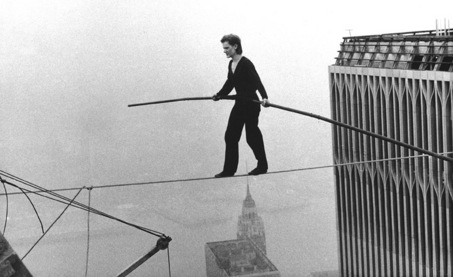
The whole premise of creating value for the team has produced a high-wire act for me – one which I wholeheartedly embrace. I can’t spend one minute resting on my laurels or kicking into a coasting mode. Instead, I must constantly be creative and innovative. I have to constantly be a coach and a mentor. I have to be strategic and visionary on a daily basis. Doesn’t this create unbelievable pressure? NO! It pushes me to be better every minute of every day. If I fail to perform, my teammates will look to see if there is a better value proposition elsewhere. And I don’t blame them.

I’ve been asked what prevents someone from coming on board with the intent to ultimately leave and start his or her own business. And my response is . . . so what? I revert to my initial statement. I’m passionate about providing more value for our team than they can get in another venue – including their own. Perhaps we can accommodate someone who has a goal of owning/running their own business; after all we have eight companies under our umbrella. We’ll happily partner with a budding entrepreneur in our midst that has a good solid idea for a business venture. And if someone has his or her heart set on striking out on their own, we have made a great friend; received value from that individual during their tenure, and may have an opportunity to cross paths again.

The high-wire act requires a great deal of confidence and a complete lack of fear. It has taken me years to get there, but I can testify to the amazing results that are being produced from this mindset.

This blog is being written in tandem with my book, “An Entrepreneur’s Words to Live By,” available on Amazon.com in paperback and Kindle (My Book), as well as being available in all of the other major eBook formats.
NY100445

Time Masters

Question: I am so busy I meet myself coming and going. There isn’t a spare moment for anything. I need more hours in the day!

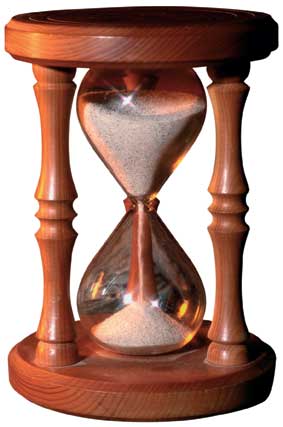
Answer: Each one of us has the same number of hours in the day. And yet some people seem to get more done with less hassle. Their secret isn’t on the face of a clock. The key to stretching the day starts in the mind.

When we make the statement, “there just isn’t enough time,” we are making a powerful affirmation of limitation. This becomes a mindset – a belief actually. I’ve said many times that what we believe in our minds will become reality and I’ve proven this to myself over and over. Thus, I have expunged this statement from my vocabulary – I want to create a “limitation-free zone” around myself.

I have found that once I establish a positive mindset about time, the rest comes fairly easily. Every evening before I go to bed, I plan my next day. Getting older means we’ve accumulated more mind clutter. To keep everything straight I maintain a comprehensive task list of everything that I have to do. The items to which I need to attend the following day are prioritized for that day. I use my task list and my calendar in tandem – both are electronic which makes it so much easier to function in today’s fast-paced world. The process of spending a few moments reviewing my calendar; my task list, and plotting a course of action for the next day gives me total peace of mind. I don’t wake up in the middle of the night wondering what I’m forgetting that is important.

Armed with a plan, I’m able to move through each day with a clear purpose. I block out certain times for phone calls, reviewing e-mails, and other routine functions. There’s a little sense of victory every time I’m able to “check off” a task as complete which keeps me upbeat about the progress I am making.

To become time masters, we must start with the right frame of mind and avoid putting limitations on ourselves. Then with a combination of process, purpose and focus, we move effortlessly through each day, savoring the fact that we are able to enjoy every second of it.

This blog is being written in tandem with my book, “An Entrepreneur’s Words to Live By,” available on Amazon.com in paperback and Kindle (My Book), as well as being available in all of the other major eBook formats.

Hourglass

Why?

Question: I was asked recently to explain why my company does what it does. The answer I gave was somewhat superficial but got me to thinking about this question. How would you answer if asked, “why?”

Answer: A friend of mine loaned me a terrific book by Simon Sinek called Start With Why. Sinek’s premise is that the leaders of too many companies don’t have a real clear idea why their companies exist. Of course they’ll say that the WHY is to provide outstanding customer service or to deliver great value to their shareholders. But how inspiring is that? He cites companies like Apple and Southwest Airlines that built their business around the WHY.

Customers can be inspired to buy a product. Employees can be inspired to work for a company. In both cases the source of this inspiration is a genuine understanding of WHY. Many companies stress the WHAT or even the HOW, but not the WHY. An excellent example of a company that epitomizes the WHY is TOMS Shoes. TOMS is a phenomenal success story about Blake Mycoskie, a young entrepreneur who visited Argentina and liked the simple shoes he saw so much that he made a deal with local craftsmen to make a supply of them in a variety of colors and styles. Then he brought them to the United States and sold them. Sounds good, right? But the most important part of the story is the WHY. Mycoskie’s business plan from the start in 2006 was to donate a pair of shoes to a poor child in another country for every pair of shoes that was sold. Through 2012, TOMS has given away more than one million pairs of shoes.

People who buy shoes from TOMS like the design, simplicity and the reasonable cost. But there are many shoe companies that sell shoes that are attractively designed, simple and reasonably priced. The difference-maker for TOMS’ customers is the WHY – the fact that a for-profit company is actually willing to give away its product to children in need, and at the same ratio as what it sells.

Whether you own your own business, or are an aspiring entrepreneur working for someone else, see if you can answer the WHY question. Sinek says that the WHY is just a belief. The HOW is the action you take to realize that belief. And the WHAT is the result of those actions – everything you say and do; your products, services, marketing, PR, culture and whom you hire.

When we are able to answer the WHY question about our businesses and even ourselves; our customers, employees and everyone with whom we associate will be more inspired to become enthusiastic advocates for us.

This blog is being written in tandem with my book, “An Entrepreneur’s Words to Live By,” available on Amazon.com in paperback and Kindle (My Book), as well as being available in all of the other major eBook formats.

question marks