
The Fulfillment-Focused Entrepreneur

I don’t want our customers to be satisfied. Put another way, customer satisfaction is not our objective. I also don’t want our team members to be satisfied. There, I have said it. I will bet you are thinking that there is a punchline somewhere in all of this. And yes, there is. But let’s dig a bit deeper before getting to the bottom line.

When we serve others, we certainly want them to be satisfied – right? This seems like a perfectly rational objective because we all know what happens when a customer or team member is dissatisfied. So, when a customer (or team member) makes a request, we do our best to satisfy that request. We generally believe that when someone is satisfied, they are happy. Here is an interesting dilemma. Suppose we have done everything we can to satisfy our customer; they tell us they are happy, but then they quit anyway. What is up with that? 

One of our companies is involved in managing apartment properties for our own account and for third-party clients as well. I can remember several times over the past many years that a long-time client told us he was perfectly satisfied with our service, only to make a change and hire another firm. We were assured that we had done nothing wrong and other circumstances stimulated the change. In some cases, the client was consolidating the management of all his properties with a national property management firm. In another instance we were told that the client had a relationship with another company and though he was satisfied with our performance, he thought he might do better with the other firm. Naturally, there is a strong level of disappointment when we hear that someone is satisfied and yet they are still making a change. What in the world are we to do?

OK, here comes the punchline. Customer satisfaction is not enough. Team member satisfaction is not enough. Customers and team members leave even when they are completely satisfied. Attempting to achieve customer and team member satisfaction is a siren song that will lure us into the rocks and sink our ship. Instead, we need to focus on fulfillment. Fulfillment is a much higher state than satisfaction. It is a concept that is like exceeding expectations but is even more than that. Trust me – you will not get any help from the dictionary on this one. It says that to fulfill is to satisfy. I think the dictionary’s definition misses a very important nuance here.

Suppose an apartment resident calls and reports that her kitchen faucet is dripping. If our maintenance technician goes to her apartment and completes the repair, then he has satisfied her request. However, if he goes and fixes the faucet, and then checks several other physical elements in her apartment and fixes other items that he finds, then we are moving toward a level of fulfillment for the customer. Total fulfillment comes when there is nothing else a customer could possibly want or need, even if he or she has not articulated it. In other words, we have anticipated every possible scenario that could impact the customer, and we have taken all the steps we could to resolve unforeseen issues and create an over-the-top experience. This was what was missing when we lost a client who told us he was satisfied. We had not gone above and beyond to create the over-the-top experience that achieved total fulfillment.

Customers and team members leave or quit all the time when they are satisfied. Usually, it is because they are not aware of a better alternative. But when that better mousetrap is presented to them it is not hard to understand their motivation for making a change. Changing our focus from satisfaction to fulfillment increases the odds in our favor that we possess the better mousetrap.

Achieving fulfillment for our customers and team members requires a combination of commitment, innovation, understanding, vigilance, appreciation, and gratitude. Fulfillment is the best mousetrap in today’s highly competitive entrepreneurial environment.

This blog is being written in tandem with my book, “An Entrepreneur’s Words to Live By,” available on Amazon.com in paperback and Kindle (My Book), as well as being available in all of the other major eBook formats.

The Exhilarated Entrepreneur

Here’s a simple test. Do you wake up in the morning and can’t wait to tackle the day ahead? Does your brain function in overdrive with an idea a minute? Are you ever bored? Are you able to stay in “the zone” from a productivity standpoint for long periods of time? Do you experience endorphin rushes at times other than when you are exercising? Are you almost always in an upbeat mood no matter what? If you answered “yes” to all these questions except for being bored (and answered it “no”) then you are experiencing the “E” Factor.

The E Factor is a major ingredient in the recipe for the success of an entrepreneur (and everyone else for that matter). The E Factor is . . . Exhilaration! Exhilaration is the energizing excitement that puts an exclamation point on our lives. There’s no drudgery in Exhilaration. There’s no exhaustion in Exhilaration. There’s no negativity in Exhilaration. There’s nothing boring about Exhilaration. Exhilaration is all about positivity, optimism, the glass is overflowing (as opposed to half full), fireworks-on-the-4th-of-July, the sun is always shining and everything WOW!

From personal experience I can tell you that my life is so much richer and fuller because of reaching and staying in a state of Exhilaration. The little setbacks along the way that might throw others for a loop are mere speed bumps for me. My existence goes far beyond my vocation and has become totally holistic in nature. I know this may sound corny, but I truly am in love with life and life is in love with me.

How do we reach and stay in a state of Exhilaration? There are three steps that have worked for me. First, we must make serious choices about how we think. If you read my blogs regularly, you know that I constantly talk about how much of a difference our mindset can make. We all know this for the most part, but it’s not always easy to remember. Maintaining a positive state of mind is absolutely and totally critical to the E Factor. We must recognize when we are starting to veer into negative thinking; stop and release the negative thought and replace it with a positive thought. I have found that a positive affirmation said over and over is a perfect replacement for a negative thought. 

Second, we deserve to live our passion. I realize that sometimes there needs to be a ramp-up process to reach this passion. My passion isn’t just what I do for a living. My passion is the way I live. It’s filled with many things for which I have a passion including my relationships, my philanthropy, my health, my creativity, my faith and many more elements. I’ve said numerous times that passion is what allows us to see in color. Just because we may not be totally passionate about our careers now doesn’t mean that there aren’t many other aspects to our lives for which we can have passion. And with respect to our careers – we should have a step-by-step plan that provides the light at the end of the tunnel for when our career does become our passion.

Finally, we must practice intense gratitude. Being grateful for what we have and what we receive keeps the energy channel open for us to receive greater good in our lives. When I think back over the years about all the wonderful people who have done wonderful things for me, my gratitude needle explodes off the meter. Saying thank you isn’t enough. Doing good things for other people is an expression of our gratitude that recognizes what others have done for us. It’s a bit of a pay-it-forward mentality.

We can live in a state of Exhilaration if we choose to do so. It’s as simple as that. And to achieve the E Factor we must be positive, passionate and grateful. Enjoy the fireworks show!

This blog is being written in tandem with my book, “An Entrepreneur’s Words to Live By,” available on Amazon.com in paperback and Kindle (My Book), as well as being available in all of the other major eBook formats.

The Hard Times/Happy Times Entrepreneur

The entrepreneurial experience produces emotions of all sorts, often extending across the positive to negative spectrum and all in the same day! Most entrepreneurs will attest to the fact that there have been hard times at different points in their careers. These hard times may be the result of personal challenges, professional challenges, or both. They run the gamut from aging parent issues, marital strife, divorce, rebellious children, lawsuits, financial pressures, unfair competition, loss of market share/customers, and a multitude of other mole hills and in some cases, mountains – really big mountains. Through it all, there’s a central question that we grapple with. How do we make hard times into happy times? Is it even possible?

Let’s start with the whole notion of happiness. Are you happy overall? Where do you land on the happiness scale? Are you happy some of the time but not always? Are you moderately happy or are you ecstatically happy? When you encounter hard times, are you able to maintain your level of happiness or does it slide down (or off) the scale? Obstacles are a part of life. They’ll always be there. When we sign on to be an entrepreneur, we also understand that we’re signing up for a roller-coaster ride. Our gut check determines if we can be happy while we’re riding the roller-coaster, the bucking bull or whatever metaphor is chosen to represent the challenges we inevitably will face.

Over the course of my nearly 70 years I’ve learned many things about happiness. Allow me to share them with you.

  1. Happiness is a choice. First and foremost, I’ve come to understand that my happiness is 100% my choice. Where I land on the happiness scale is totally my choice. This concept may not be easy to grasp when we’re in the throes of a crisis. But I’ll be darned if I’m going to let what is happening around me determine whether or to what degree I’m going to be happy. Some may say that this sounds like a Pollyanna type of response – after all the world is crumbling around us and we’re going to choose to be happy? Yes, that’s exactly what I’m saying. It may not be as easy to dial up happiness when we’re getting punched in the gut . . . but it definitely is a choice that we make.
  2. Go to bed with a clear conscience. My wife is constantly shaking her head. When my head hits the pillow at night, I’m fast asleep within 30 seconds or so. One of the reasons is the fact that I go to bed every night with a clear conscience. I know that my integrity is intact, and I haven’t intentionally stepped on anyone’s toes. A sure-fire way to unhappiness is breaching the trust of others. There may be other problems that crop up along life’s road, but this isn’t going to be one of them.
  3. Be grateful. Gratitude is one of the keys to happiness. I find that when I am grateful to someone and express it, I feel an endorphin rush. And because it feels so good to express gratitude, I try to do it every single day. I have found that being grateful helps to create a balance in my life that pushes up the happiness meter.
  4. Serve others. Years ago, I discovered that getting out of myself was a major factor in being a perpetually happy person. Rather than dwelling on my own inadequacies, mistakes, and failures, I found that serving others produced those same endorphins I felt when I was in gratitude. When I could make others happy it became infectious and made me happy as well. I volunteered at a children’s hospital; have served as a mentor to aspiring entrepreneurs; created a scholarship program for young people studying to be teachers, and many other examples.
  5. Turn the tables. Look, I said it before. Hard times are inevitable. But we can use them to learn and grow. We can use them to stimulate creativity and innovation. I have come to thrive on complexity and challenges that some might find would push them over the edge. Instead, I say, “bring on the tough stuff!” I’m not about to be defeated by hard times because they present an opportunity to excel and move to even higher levels of performance. And that’s just as applicable in my personal life as it is in my business.

Hard times and happy times can coexist. We need to recognize that happiness is a choice, and it can be realized when we operate in integrity, express gratitude, serve others and use our challenges as opportunities for growth.

This blog is being written in tandem with my book, “An Entrepreneur’s Words to Live By,” available on Amazon.com in paperback and Kindle (My Book), as well as being available in all of the other major eBook formats.
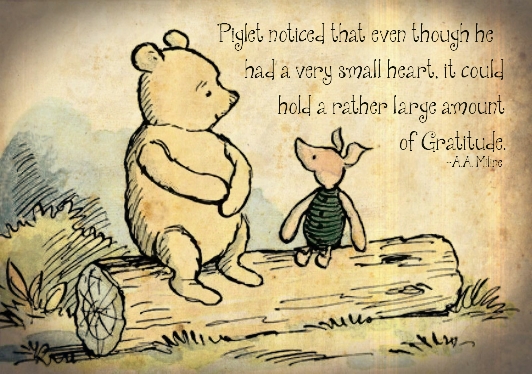
The Grateful Entrepreneur

When I was a young lad in my formative years there was a hard and fast rule set for my sister and me. As soon as the Christmas or birthday wrapping paper was discarded, we went to our respective rooms and began writing thank-you notes. It didn’t matter how insignificant the gift (or whether it was something we wanted) a thank-you note was written. And writing something like, “Dear Grandmother – thank you for the sweater you sent for Christmas,” was wholly insufficient. Mom expected something more in the order of, “Dear Grandmother – thank you for the lovely sweater you sent me for Christmas. I can’t wait to wear it at my upcoming band concert. I’ll send you a picture of me wearing the sweater after the concert. We miss you and wish we could see you more often.” And by golly, I wore that sweater at the band concert and sent a follow-up note with the photo.  

Our daughters were subjected to the same practice when they were young though I’m not sure that our grandchildren have adopted the ritual . . . which is unfortunate. It sometimes seems that expressing gratitude is becoming a lost art. I’ve written before about how living in gratitude makes our lives so much richer and rewarding. It opens the flow of positive energy that allows us to thrive in any situation. I’ve advocated for keeping a gratitude journal in which we write daily, making note of the various people and things for which we are grateful each day. I know that when I hit a rough spot in my life, focusing on that for which I am grateful always centers me and puts me back on track.

Here’s the thing. Entrepreneurs have endless reasons to be grateful. Who among us hasn’t been encouraged by someone along the way? Who among us hasn’t received a helping hand from a kind soul who selflessly made our way smoother? Who hasn’t been the beneficiary of opportunities that were created by someone else? Do we truly feel grateful for these actions, or do we take them for granted? Perhaps we have even rationalized a sense of entitlement . . . which would be unfortunate. “I know my company has assigned me some terrific projects that have been very helpful to my career, but I work long hours to make these projects successful.” What is not said (but maybe thought) is, “I don’t need to express gratitude to anyone because I go above and beyond to do my job.”

What is the proper way to express gratitude to others? First and foremost, it needs to be heartfelt. Simply going through the motions (like I did with my sweater letter) is not true gratitude. We need to think specifically about what others have done for us. This is where a gratitude journal can be helpful. It establishes a practice whereby we focus on our bounty – material or otherwise – and identify the source that facilitated it. This doesn’t take anything away from our own accomplishments. It simply completes the circle of gratitude. We acknowledge that source as well as being proud of what we ultimately accomplished.

When our gratitude is coherent with our head and our heart, we can offer an outward expression of it. Perhaps it takes the form of looking someone in the eye and telling them how much their support has meant and how appreciative we are. Maybe it’s a handwritten note of thanks. Possibly it takes the form of a gift of some sort. Regardless of the method, intentionality is the key and will be felt by the recipient.  

Learning how to be grateful and expressing gratitude to others is a practice that is critical to living an amazing entrepreneurial life. And I want to say thank you to my mom in heaven for instilling in me the foundational elements of gratitude.

This blog is being written in tandem with my book, “An Entrepreneur’s Words to Live By,” available on Amazon.com in paperback and Kindle (My Book), as well as being available in all of the other major eBook formats.

The Sandwich Savoring Entrepreneur

On October 30, 2002, David Letterman hosted the last appearance of Warren Zevon, an American rock singer-songwriter and musician. You may remember a couple of his most notable hits – Werewolves of London and Lawyers, Guns & Money. Zevon had appeared numerous times on Letterman’s show and the two had become fast friends. Recently, Zevon had been diagnosed with terminal lung cancer and Letterman spent an entire hour talking openly and frankly with Zevon about his plight. I watched the YouTube video of the show and was amazed at the humor and grace that Zevon displayed. One of the simplest of things he said was so profound, “You’re reminded to enjoy every sandwich.” Of course, he went on to talk about enjoying every minute of playing in his band and playing with his kids. But the notion of enjoying something so mundane as a sandwich struck a chord with me. Tragically Zevon died on September 7, 2003, at the age of 56.

We entrepreneurs are in a constant state of hyper-drive. We all know that we should stop and smell the roses. We also know that we need to maintain work-life balance. And yet we can often find it difficult to carve time out of a packed schedule to do these things . . . or so we think. Part of the problem is the fact that we are so passionate about what we do. We’re obsessed with building our business. And I know for a fact that any entrepreneur who doesn’t have this obsession will either fail or be only marginally successful. But the passion and obsession does not mean that we can’t “savor the sandwich.”  

What if we treated every interaction we have with others as though it would be the last time we would see them? What if every activity – professional or personal – was treated in a similar fashion? The thought of this may seem somewhat morbid and maybe even hard to comprehend. But, what if . . . ? We all have a terminal diagnosis. We just don’t know whether it’s far into the future or right around the corner.

While this has been a difficult subject for me to get my head around, I’ve thought about it quite a bit the older I’ve become. I find that I prioritize differently. I want to make absolutely certain that the most important things on my to-do list are always finished. And at the same time, I have become more and more thankful for the little things in life. I revel in the warm sunshine and find moments of wonder gazing at a full moon. An early morning walk is no longer just exercise, but now a time for inspiration. Dinner at a favorite restaurant with my bride has become less about checking e-mail and social media, and more about the pinch-me feeling that is the result of nearly five decades together. No longer do I quickly scan through photos of my grandkids, but instead take in the twinkle in their eyes and the look of pure joy on their faces. During a meeting, I look around the room and think about how proud I am of the team we have assembled and what they are accomplishing. Of course, there are obstacles that are faced every single day – but the endorphins are going full blast with the anticipation of how we will creatively overcome them together.

Savoring the sandwich means being present in every moment of every day. It means eliminating the “taking things for granted” syndrome that plagues each one of us to some degree. I have worked hard to develop the ability to compartmentalize the challenges we face in our enterprise. In so doing, I’m able to have greater appreciation for the little things that are happening around me. I am more obsessed than ever with scaling our various business initiatives. But I’m equally obsessed with seeing all of life in color. There’s no question that both can be done at the same time. Lending a helping hand to others and expressing appreciation and gratitude to them is also part of the equation.

We can savor each sandwich as though it will be our last. And it doesn’t have to take the diagnosis of a terminal illness to unlock this ability.

This blog is being written in tandem with my book, “An Entrepreneur’s Words to Live By,” available on Amazon.com in paperback and Kindle (My Book), as well as being available in all of the other major eBook formats.

The Insomniac Entrepreneur

How well are you sleeping? I know many entrepreneurs who aren’t. The reasons are many. A friend of mine has been struggling with this for a while. He has started going to bed earlier each evening because he knows he is going to wake up around 3:30 or 4:00 and won’t be able to go back to sleep. So, he has resorted to getting up at that time and working for a few hours from home before heading to his office.

My friend explains that he is awakened because his mind starts churning. The frustrating thing for him is the fact that he knows he’s obsessing over small stuff – sometimes it’s infinitesimally small stuff. Most of the time the thoughts he is having are about things going on in his business that he shouldn’t even be worrying about. I certainly understand what he’s going through – I’ve been there many times myself. So, what’s the solution?

For starters, my friend knows he needs to delegate. There are others in his organization who should be handling the issues that are keeping him awake. Thus, the first step in fixing his slumber problem is to make sure that he has people on his team who are responsible for handling the nitty-gritty items so that he can focus at working on his business rather than in it.

The next step in my friend’s process is physical activity. He is used to working out but there are days where he blows it off. Physical exercise produces endorphins which help reduce stress and generate positive feelings. A brisk walk or run along with lifting weights for 30 minutes or more each day will do the trick. If I miss a day due to travel, I find myself craving my workout regimen. Generally, I find that physical activity first thing in the morning gets my day started off right. My friend has re-committed to doing the same.

In addition to daily exercise, it’s critical that we spend time becoming centered through meditation. This practice enables us to clear our minds of the clutter that tends to accumulate. My friend has attested to the benefits he enjoys when he meditates for 15 minutes each day. He finds that meditation lowers his blood pressure and pulse rate. He feels calmer as his anxiety melts away.

Journaling is another technique that has been helpful for my friend. He is working to become more disciplined at recording the various aspects of his day in a journal. Notes are made about the high points and the low points – he can then look for patterns that shed light on what might be working in his subconscious to keep him from sleeping.

Each of us has much for which to be grateful. My friend acknowledges this and is working on starting and ending each day in gratitude. I would like to take this a step further. Before making any phone call or entering a meeting, I try to hold a thought of gratitude in my mind. It may just be an image of one of my daughters, my wife, or my grandchildren. But whatever the thought or image, it sets the tone for my encounters with others, and it keeps a smile on my face throughout the day.

I gave my friend another piece of advice that works consistently for me. One way I avoid becoming too wrapped up in daily frustrations is to “get out of myself.” What does this mean? Very simply, I find that when I am doing something for someone else, I forget about my own troubles. There are so many ways to do this – large and small. Turning the focus away from ourselves and onto others can be a powerful sleeping pill. We go to sleep with the satisfaction that we helped make a difference in someone else’s life.

My friend is amazing at creating trust and building relationships with others. His whole face shone as he professed that the high point of his day is when he can make a sales presentation or interact with a prospective customer. I told him that he ought to program his schedule so that he can do this at least once a day. We should all make sure that we are doing what we love and enjoy every single day.

Entrepreneurial insomnia can be cured by a cocktail of physical activity, meditation, maintaining a journal, living in gratitude, getting out of ourselves and dose of doing something we love each day. I guarantee that if you follow this recipe you’ll sleep like a baby. Sweet dreams.

This blog is being written in tandem with my book, “An Entrepreneur’s Words to Live By,” available on Amazon.com in paperback and Kindle (My Book), as well as being available in all of the other major eBook formats.

The “Footprints in the Sand” Entrepreneur

My mother used to cite an old saying, “you catch more flies with honey than with vinegar.” We entrepreneurs should heed Mom’s advice. One of the most challenging aspects of building a business is interacting with our team members. There are people extremely committed and dedicated. Others are sleepwalking through the day for the sole purpose of collecting a paycheck. And there are many more who are somewhere in between.

As frustrating as it may be at times, I’ve come to realize that the “honey” approach is the most productive. Helping build people up is much more gratifying and yields far better results than tearing them down. Let’s focus for just a moment on the notion of “tearing them down.” It’s obvious that a boss who yells, screams, and belittles his employees is “tearing them down.” But there are also other behaviors that fall into this category even though they are less apparent. For example, triangulating about another person can be just as destructive as making derogatory remarks to their face. Triangulation in this context means talking with someone in a negative manner about another person. This does nothing to advance the cause and can likely get back to the person who is the subject of the conversation. Another example is an act of omission. This is where we know someone could perform better if we offered our assistance, but we decline to do so. Finally, the entrepreneur who is constantly critical about everything someone does is certainly not building them up.

The central premise for how we go about building others up is quite simple. We think about how we would want to be treated and then do so for the other person. If we keep this foundational element front and center, we will be well on our way to being a positive force in the development of our team. Often this will require keeping our emotions in check. When things go off the rails do, we automatically look for someone to blame? Or do we take a deep breath and look for the opportunity to coach? An added benefit is something else I’ve discovered. When members of the team don’t have to live in fear of making a mistake, they are much more likely to own it when they make one and much more inclined to share bad news in a timely and truthful manner.

Somewhere I read that we should offer five compliments for every one criticism. I’m not sure of the scientific basis for this ratio, but the intent makes sense. People always value feedback – especially when it’s positive. My middle school grandson is a case in point. All children at this stage of life tend to be insecure. I spend a great deal of time praising him for his accomplishments and encouraging him when he fails. Rather than be critical of his shortcomings I ask him how he might do something differently the next time. I make sure he knows that I believe in him and know that he can accomplish whatever he sets out to do. I’ve watched as he’s become more and more confident as he gets older.

The concept is no different with our adult team members. The more positive approach we take, the more likely we are to realize the right kind of results. This is particularly true with Millennial team members. We’ve found that Millennials place a high value on coaching and mentoring. This is a clear signal that the command-and-control managerial style of the past does not work for them. They are looking for a collaborative relationship with their teammates as well as their managers. And what a terrific opportunity this is for us to learn how to work on our “build them up” skills.

“Building them up,” means asking permission to offer constructive suggestions. It means making recommendations rather than issuing orders. It means explaining the bigger picture when assigning a project and it means making certain that the team member understands what value his or her participation brings to the overall effort. Accusations are out. Clear and direct communications are in. Brutal honesty is out, and warm candor is in. Celebrating success and constantly expressing gratitude are definitely in.

When we look for ways to build others up our lives are enriched and our enterprises will thrive. This is perhaps the greatest gift we can give to others and will leave permanent footprints in the sand that represent the time we spend walking this planet.

This blog is being written in tandem with my book, “An Entrepreneur’s Words to Live By,” available on Amazon.com in paperback and Kindle (My Book), as well as being available in all of the other major eBook formats.

The Culture of Tang

What in the world? Are we talking about the iconic breakfast drink called Tang that was launched in 1959 by General Foods? No, this is a blog about an amazing man named Jerome Tang. Never heard of him? No surprise – most people haven’t.

Jerome Tang was born in Trinidad in 1966 and moved with his parents to St. Croix in the U.S. Virgin Islands. He was the head basketball coach for the Heritage Christian Academy in Cleveland, Texas. In 2003 he was hired as an assistant coach for the Baylor Bears basketball team where he served for the next 19 years. In March 2022, Tang was named head coach of the Kansas State Wildcats where the basketball program was suffering successive losing seasons. The team was in such despair that only two players were left when he arrived – the remaining players had transferred to other schools. Pre-season polls unanimously picked Kansas State to finish last in the Big 12 conference. Fast forward to March 2023. Kansas State claimed third place in the conference; was a number three seed in the NCAA Tournament; beat blue-blood teams including Kentucky and Michigan State; and lost in an Elite Eight contest by three points, finishing the season with a 26-10 record.

This is an incredible “rags to riches” story about how Jerome Tang created a winning culture – instantly. And it has profound implications for entrepreneurs. With only two players waiting for his arrival, Tang turned to the transfer portal and was successful at bringing together a group of young men who wanted to win. He spoke often about how he wasn’t there to rebuild the basketball program – he intended to elevate it. He told the players that his goal the first year was to win the NCAA Championship (something Baylor accomplished in 2021). Big Hairy Audacious Goal? You bet. But why not?

Kansas State happens to be my alma mater, so I had a close-up view of how this man built a winning culture so quickly. He did it with joy. Jerome Tang was always smiling. It was obvious that he was having the time of his life. Before games, the team would sit in the locker room and dance to a rap song. Guess who was leading the clapping and swaying? Jerome Tang. Bramlage Coliseum had been coined as the Octagon of Doom in earlier days but the fan base had slipped over the years. Tang preached joy from the moment he set foot on campus. During the 2022-2023 season, the Wildcats won all but one game at home and the fans came roaring back. Tang did not disappoint. After each game he would jump into the stands and dance with the band or the students. At the conclusion of the last home game the entire team went into the stands and danced.  

Along with joy came a positive attitude. Coach Tang set the tone and the players responded to the positivity. When the Wildcats lost their final game in the NCAA Tournament, Tang met every player as they entered the locker room and congratulated them with a hand slap and a “head up” exclamation. Star player, Markquis Nowell explained, “he said if this is the worst thing that we have to go through, then our life will be pretty damned good. There are some people really going through some hard things in life, and I just lost a basketball game.” Earlier in the season, the fans were engaging in a derogatory chant about archrival, the Kansas Jayhawks. Tang grabbed the microphone at the end of the game and encouraged everyone to cheer for K-State and not against another team. He then led the crowd in a K-S-U chant that became the standard at the games thereafter.

Jerome Tang led by example in the off-season and throughout the regular season. He is a man of deep faith and did not hesitate to thank God for his blessings. Many of the players embraced his proclamations of faith – something he called Crazy Faith – and did the same during press conferences and media interviews. He was the epitome of humbleness and never took credit for himself. His players did the same – always pointing to the team effort. Clearly the players loved each other and celebrated each other’s success.

Tang was also a most gracious man. Thirty-three minutes before the start of the Michigan State game in the Sweet Sixteen, Coach Tang dialed a stranger in Wichita, Kansas to offer his condolences to a couple who had tragically lost their daughter (a K-State student) days earlier in a car accident. The grieving mother said, “He didn’t do it for it to become public, so if anything comes from this, we would want it to be a beautiful example of how Christians not only treat each other, but how Christians treat other people.” After the final game in the Elite Eight when the Wildcats lost in heartbreaking fashion, Tang made a trip to the opposing team’s locker room and told them that they were the “toughest sons of guns we’ve played all year.” He congratulated the opposing players and urged them to stay together and not get distracted and told them how proud he was of them. The opposing team! And, in his opening statement at the press conference after the game he said, “If we can’t be grateful in these times, then all the love and joy that we talk about is fraud. And we’re not frauds.”

Jerome Tang has a bountiful future ahead as the charismatic head coach of the Kansas State Wildcats basketball team. The legacy he is building is something for which every entrepreneur should take notice. A Winning Culture can be built with Joy, Positivity, Grace, Humbleness, Faith, and Love. And it can happen quickly.

This blog is being written in tandem with my book, “An Entrepreneur’s Words to Live By,” available on Amazon.com in paperback and Kindle (My Book), as well as being available in all of the other major eBook formats.

The ‘Life is Terrible’ Entrepreneur

Jordan Peterson is a renowned Canadian clinical psychologist and psychology professor who wrote the bestselling book, 12 Rules for Life. I listened to an interview with him on one of my favorite podcasts, Econtalk with Russ Roberts. During the conversation, Peterson makes the following statement. “Life is fundamentally tragic, and ridden with suffering, and touched with malevolence and evil; and that goes for you and everyone around you.” And while Dr. Peterson may be highly respected and says much with which I agree, I must respectfully disagree with the preceding statement. Vehemently.

If we entrepreneurs bought into the premise that Life is Terrible, we’d never get out of bed in the morning. In fact, I believe just the opposite. Life is full of wonder and excitement. Life is full of joy and happiness. Life has far more upside than downside. And life offers unlimited opportunities for great and amazing things. This is not to ignore the fact that there are terrible things that do happen in life. But is life fundamentally tragic as Peterson posits? I think not.

I think it all boils down to perspective. If we choose to believe that Life is Terrible, it will be. Similarly, if we choose to believe that Life is Great, it will be. I’m not naïve enough to suggest that subscribing to the latter means that there will never be mountains to climb and challenges to overcome. But think about this. If we believe that Life is Terrible, those mountains are much harder to climb and the challenges much more difficult to overcome. It’s like adding a 75-pound weight to our back. What’s the point?

By now you know that I am the poster boy for optimism and positive thought. I attribute this mindset to the success I’ve realized over the course of my career. One of my mantras has always been, “What I think in my mind will become reality.” Because I only want Good in my life, I’m going to do my darndest to only think in positive terms.

We entrepreneurs have a lot to worry about . . . if we choose to worry. We could obsess over market share, customer reviews, rising labor costs, cash flow (or lack thereof), sales increasing too slowly, sales decreasing too quickly, government regulation, competition, legal issues, succession planning, production issues and whether we remembered to close the garage door when we left home this morning. Whew! Just thinking about all this wears me out. But with all this worry, concern, and obsession, what exactly has been accomplished?   

Being a Type A personality and maintaining a “chill pill” attitude isn’t the easiest thing in the world. Over the years I’ve discovered that concentrating my energies – mental and otherwise – on taking positive and productive steps leads to positive and productive results. There’s a surefire method that I use to measure my stress factor in this regard. I use a wrist cuff and take my blood pressure and pulse every day. I record it on a log including the time of day as well as notations as to what might have been occurring just prior to the reading. This single act is enough to serve as a reminder to remain calm. I’ve found that each year, my average systolic and diastolic readings have gradually decreased.

I’ve also trained myself to live in gratitude as much of the day as possible. When I am outwardly grateful to others for all of the good they do for me, a form of armor is created that protects me from the Life is Terrible syndrome. I’ve also found that there’s always a solution for just about every difficulty we may encounter. Somehow things just seem to always work out. I don’t think this is by accident. By maintaining focus on positive outcomes and really believing that we are entitled to them, they ultimately manifest. No longer do I blow a gasket when something doesn’t happen as planned. No longer do I wake up in the middle-of-the-night with cold sweat and a feeling of impending doom. No longer do I experience free-floating anxiety.

Jordan Peterson’s “Life is Terrible” philosophy is dangerous for entrepreneurs to adopt. A “Life is Great” mindset opens the way for a rich and full experience every single day.

This blog is being written in tandem with my book, “An Entrepreneur’s Words to Live By,” available on Amazon.com in paperback and Kindle (My Book), as well as being available in all of the other major eBook formats.

The Up and to the Right Entrepreneur

Damon is an entrepreneur. He runs a small but growing company that recycles old computer equipment. Damon is very frustrated right now. Stephanie is a stay-at-home mom. She has two small children under the age of five and produces marketing materials for three companies, working from a spare bedroom. Stephanie is very frustrated right now. Why are Damon and Stephanie so frustrated?

Damon’s company has been growing at a rate of 25% a year for the past three years. He’s doubled the size of his team and his margins are increasing. If you looked at a graph depicting his business, the line would be up and to the right.

Stephanie has two beautiful and healthy children. Her husband is a physician, and the family is financially secure. Her marketing venture is flourishing. She’s landed a new client each of the last three years and the type of work has become much more substantive. By all measures, Stephanie’s graph looks the same as Damon’s – up and to the right.

Why in the world would these two individuals be so frustrated? Damon has chosen to reinvest a major portion of his profits back into his company. As a result, he hasn’t seen his personal cash flow increase in any meaningful way. Intellectually he knows he’s doing fine, but it still rankles him that his bank balance has remained fairly static.

Stephanie loves her marketing business, and she is ecstatic over motherhood. She worries that her two primary roles may someday collide (at times they already do) and she feels guilty that she may fail to do justice with either. Stephanie wonders how she can possibly achieve her personal and professional goals with the juggling act that she is managing. 

Here’s a simple but powerful truth. Damon and Stephanie have not yet learned how to celebrate their success. To those of us looking in from the outside these two are ideally situated. Everything seems “up and to the right” for them and yet they are frustrated. Damon and Stephanie are trapped in the tunnel of limited thinking. They have set lofty expectations for themselves – both in terms of what they want to achieve and how quickly this will happen. How many entrepreneurs and non-entrepreneurs do you know who are suffering the same plight? What can be done to break this negative-mind cycle?

If we were coaching Damon and Stephanie, we would tell them to become quiet for a few minutes and clear their minds. Then we would suggest that they “go to gratitude.” That would involve creating an inventory of all that in their lives for which they are grateful. Going to gratitude helps them get out of themselves and see beyond the tunnel walls of their frustration. And it’s a way to re-set the mind in a positive manner. In fact, we would advise Damon and Stephanie to use the gratitude exercise in the future whenever they feel frustration welling up.

As armchair coaches we would next encourage Tyler and Stephanie to discover how to celebrate their successes – no matter how large or small. Sometimes we tend to singularly focus only on the BHAGs – Big Hairy Audacious Goals – that we have set, and we fail to see the progress we are making along the way. Damon and Stephanie need to re-pattern their thinking to be able to see the smaller achievements that occur every day and intentionally celebrate them. One of Damon’s team members earned a difficult industry certification. Damon celebrated this success with a pizza party and some congratulatory remarks. When his company recycled its 10,000th CPU, he walked into the middle of the warehouse and rang a big brass bell. He left the bell there to be used as future milestones are realized.

When Stephanie’s four-year-old daughter read her first book Stephanie took her out for a special lunch and lavished her daughter with praise and encouragement. One of Stephanie’s clients entered her brochure in a regional marketing contest, and it won first place. Stephanie celebrated her accomplishment by laminating the brochure cover onto a plaque along with her award. She hung it in her home office to remind her that she does really fine work.

We all need to learn to celebrate our successes no matter the size. And going to gratitude helps us to break out of the tunnel of limited thinking. This puts us on the path to appreciate each and every day as one filled with joy and promise.

This blog is being written in tandem with my book, “An Entrepreneur’s Words to Live By,” available on Amazon.com in paperback and Kindle (My Book), as well as being available in all of the other major eBook formats.