
The Incremental Entrepreneur

The drive from New York to Los Angeles covers 2,791.8 miles. Or put another way, that is 176,888,448 inches. And to show you that I am not playing favorites – for those of you who prefer the metric scale, the New York to LA trip spans 449,295,541.2 centimeters. Why the obsession with inches (or centimeters)? Simply put, it is about progress. Totally confused? Let me explain.    

We all know that progress is “a movement toward a goal or to a further or higher stage,” according to most dictionaries. We entrepreneurs hold a steadfast belief that progress is the Holy Grail, and wheel spinning will send us spiraling into a major funk. Even progress that seems too slow to us can cause great anxiety. I certainly stand before you guilty as charged! But here is what I have learned. Sweeping change may not last. Here is an example. Suppose that our business begins to grow at a very rapid pace. Year-over-year our top line revenues (fueled by sales) increase from 35% to 50%. What a wonderful problem to have – right? Well, rapid growth comes with a price. Often, there is not time to lay a solid foundation of systems and processes. We are just go-go-go all the time. And success masks over the rickety infrastructure that may have been installed in haphazard fashion.

Let us look at another example. We are negotiating a new contract with a vendor that has proposed taking over our entire human resources function. There could be substantial savings involved. But this is a big leap, and what if it does not work? How do we rebuild our HR operation? Would making a change force us to hire another outsource provider because re-starting our internal HR department would be too difficult? 

There is something to be said for embracing incremental change. I am not saying that taking the inch-by-inch approach is right for every situation. There is no doubt that there are situations where making a big, honkin’ impact is the right thing to do. But I know that too often I want everything at once in nearly every circumstance. And of course, this leads to mounting frustration when it does not happen to my liking. I have written before about patience – a gene that is absent for most entrepreneurs. Embracing incremental change is not all about patience, however.

Incremental change can be plain smart business. Take the example of the outsourcing of the HR function. Perhaps there would be a way to dip our toe in the water with the vendor. Maybe we outsource a portion of the HR function on a test basis and evaluate the results. If after sufficient time we feel comfortable, maybe we move another portion of the HR function (or even the rest of it). Maybe rather than grow at 50% per year we throttle back to 25% or 30% and intentionally invest resources in building a solid infrastructure. Instead of rolling out an entirely new sales training program, we prioritize our weakest areas and develop training around them. The ultimate goal would be to implement a new sales training program, but over the course of 18 to 24 months.

As much as we want everything to happen right now, sometimes we are better served by making change inch-by-inch. We take what the market will give us. We take the gains that our team can generate. Sure, it is nice to score a touchdown with a 103-yard punt return in 11 seconds. But we score the same seven points when we grind out positive yards. Yes, sometimes we achieve a first down with just an inch or two to spare. If we are in it for the long haul, the incremental approach may even be more rewarding because our wins are not the result of a fluke or a lucky break. We know how to win.

This blog is being written in tandem with my book, “An Entrepreneur’s Words to Live By,” available on Amazon.com in paperback and Kindle (My Book), as well as being available in all of the other major eBook formats.

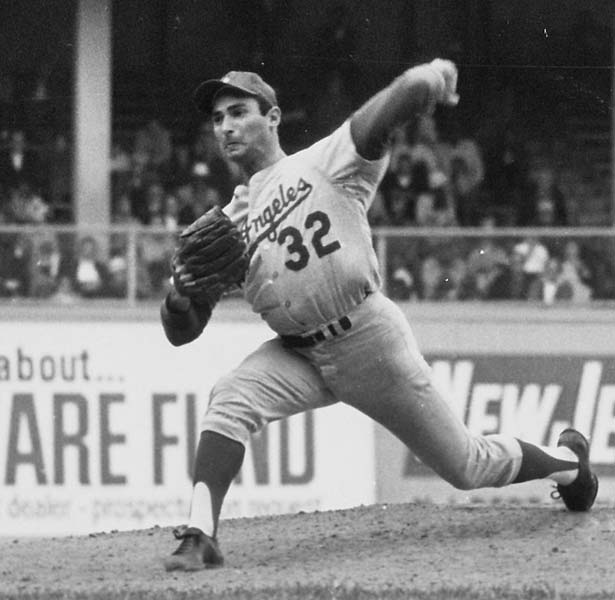
The Hall of Fame Entrepreneur

“Just concentrate on throwing the ball over the plate rather than breaking the sound barrier and be more varied and selective with your pitches.” That is the advice catcher Norm Sherry gave to future Hall of Fame pitcher, Sandy Koufax, in 1961. Prior to that Koufax had labored through several seasons of mediocre pitching. Once he solved his control problem, he became nearly unhittable, striking out 2,396 batters in his relatively short career. Koufax retired from the game in 1967 at age 30. Without a doubt, he went out as a winner.

When we think of winning, what comes to mind? Most of us would say that we have achieved the success of victory – that is the obvious answer. But when we’re asked how we won the answer becomes a bit murkier. So, exactly how do we win? Do we simply throw the ball harder than anyone else? Or is there something deeper?

As we study great winners in sports and other walks of life, one thing becomes abundantly clear. Great winners are fanatical about the basics and fundamentals of what they do. We have all heard how the basics and fundamentals are the foundational elements to success. And yet many times we just want to swing hard and hit the ball into the left field seats. The result is that we often strike out. Lesson #1 – we’ll strikeout less and win more if we pay attention to how well we are executing the basics and fundamentals of our game. In business, perhaps we have enjoyed a winning streak lately. Human nature may cause us to take our foot off the accelerator and start enjoying the ride. What happens then? Maybe our winning streak comes to an end. We have not spent the time and energy continuing to cultivate relationships. We are not making the follow-up calls that we used to make. And we aren’t doing the homework necessary to understand what our customers really need and want.

Sandy Koufax would be an anomaly in today’s sports environment. He shunned the spotlight and stayed out of the public eye. He loved violin music – it is said that Mendelsohn was one of his favorite composers. He chose not to chase the money and quit the game rather than risk further injury to an ailing arm. He was his own man which is a special mindset. Lesson #2 – ignoring the noise in the world around us and maintaining our focus puts us on the path to winning.

Winning is seemingly about competing – right? Well, yes and no. If we are out to “beat” someone else the chances are higher that we won’t. In other words, if we become fixated on how to beat the competition, we are really ceding our power to someone else. Why? Because our focus has shifted away from what we need to do to execute in the necessary fashion, and we are now conjuring a methodology that we think will give us a competitive advantage. Unfortunately, we have forgotten that the way we win is to ignore the noise around us and execute our game plan in a flawless manner. Lesson #3 – don’t allow our competition to dictate the terms and conditions for winning.

Zig Ziglar famously said, “You were born to win, but to be a winner, you must plan to win, prepare to win, and expect to win.” I used the term “special mindset” in this blog. The only thing special is the absolute, 100% core belief that we deserve to win, and we will win. But there is one more piece to this puzzle. We must relax into winning. If our intensity is too great, we can easily deviate from the basics and fundamentals and overcompensate. I have seen terrific baseball pitchers that start losing because they are so amped up that they try to “throw” the ball and over-control it, rather than relaxing and “pitching” the way they know how. Lesson #4 – to win, we must believe that we will, and we must remain relaxed while doing so.

Winning is a relatively simple formula that involves always executing the basics and fundamentals; ignoring all the noise that is going on around us; playing our game and not trying to beat the competition and believing without any doubt that we’ll win. Oh, and yes, relax. Putting it altogether ensures that we all will be Hall of Famers in our own right.

This blog is being written in tandem with my book, “An Entrepreneur’s Words to Live By,” available on Amazon.com in paperback and Kindle (My Book), as well as being available in all of the other major eBook formats.

The Doubting Entrepreneur

There’s one thing which I’m certain . . . I think. Have you ever had this kind of feeling? We entrepreneurs are a pretty confident lot. We are scrappy and tough. There’s nothing we can’t do including leaping over tall buildings in a single bound. Throw us a challenge and we’ll whip it with one hand tied behind our back and blindfolded to boot. Right? Well, maybe. And most of the time.

Entrepreneurs have several “thought enemies,” one of them being gnawing and nagging doubts. Here’s a not-so-fictional example. Let’s say that things have been going pretty well in our business and we’ve had some nice wins along the way. Then we hit a little speed bump – perhaps a contract doesn’t get signed that we thought we had in the bag. Or an important customer stops doing business with us. In other words, we get knocked off our game a bit. That part we can handle with aplomb as we go on to sign another contract or we fix the problem with our important customer. It’s what happens next that can be perplexing.

After we’ve been bucked off the horse so to speak, we begin to have feelings of doubt. For example, we are ready to introduce a new product or service, but we wonder if it might flop. In the past, we would have launched without any trepidation, but now it feels different. Could something else go wrong that might cause everything to come unraveled? We know that these gnawing and nagging doubts aren’t healthy and could become self-fulfilling prophecies. Yet still they are there and hard to push out of our mind.

Why is our confidence shaken, and doubts have entered the picture? I’ve thought about all the times this has happened in my life and believe it centers on a rather recent failure in the past. The earlier example that I gave where the contract or customer was lost illustrates this notion. Coming off a failure makes us wary and more sensitive. As entrepreneurs we have winning in our DNA. Failure is for losers. And yet we do fail, and we do lose. Sure, we’re resilient, but we can’t ignore what it felt like to fail and lose, and we don’t want to experience it again. And so, we’re vulnerable to doubt and uncertainty. Subconsciously we’re thinking, “I’m sure what I’m doing now is going to work, but if it doesn’t, I don’t want to be hurt again.” We find ourselves moving forward but wondering . . . always wondering when the other shoe will drop.

Here’s what I’ve learned about myself when these insidious doubts start creeping into my consciousness. I step back and take inventory of all the positive successes that I know lay in front of me. I may have just lost a deal, but there are ten more that I believe with all my heart will succeed. Now here’s the key – even if only half of the ten deals actually succeed, I’m still way, way ahead. In other words, I’m not looking at the glass half full, but I’m looking at multiple glasses and every one of them is overflowing. Immediately my mindset changes and all is right with my world again. I’ve accepted the fact that I had a prior setback. I’ve accepted the fact that I’ll have more setbacks in the future. But I know that the pluses will always far outweigh the minuses, and the winning score will be in my favor – overwhelmingly!

Gnawing and nagging doubts are usually a product of a recent failure. We get past such feelings by looking at the scoreboard and realizing that we are way ahead in the game. Ultimately this makes us unbeatable.

This blog is being written in tandem with my book, “An Entrepreneur’s Words to Live By,” available on Amazon.com in paperback and Kindle (My Book), as well as being available in all of the other major eBook formats.

The Second Place Entrepreneur

I was talking to a woman a few years ago who told me that she had interviewed for a position that she really wanted but came in second. Her statement got me thinking that sometimes second place is the best outcome. We’re conditioned that winning is the only outcome for which we should strive. After all, who runs a race with a goal of coming in second? But what if second place really turns out to be first place? Let me explain.

I have always believed that there’s always a reason that things work out the way they are supposed to. It’s not fate – it’s simply the way the world works. Here’s my story. When I was about to become a newly minted college graduate, I interviewed for a job managing a shopping center in a medium-sized Midwestern city. I pulled out the stops to prepare for the interview and dazzled the owner’s representative with my charm and good looks because I had no experience! But alas, the owner opted to hire someone else that did have experience. Naturally I was disappointed. But had I won that job, who knows where my career path might have led? Instead, I have been blessed with the most incredible opportunities to live my passion over the past 49+ years. In the end, I definitely ended up in first place!

Some may see this as a Pollyanna sort of mindset. After all, who really thinks that they’ve won when they’ve lost? But there’s a method to this madness. The key is to truly believe the notion that something better is always in store for us. When we succeed, it’s a reflection of this reality. When we are unsuccessful it’s a signal that what we wanted wasn’t meant to be . . . because we’re destined for something better. If we doubt that the latter is true, then it’s highly unlikely that we’ll experience that “something better.” We all know the power of the mind. And yes, it’s powerful enough to block and deny positive outcomes when we aren’t open to all possibilities.

It’s hard not to be disappointed when we take second place. But with practice we can learn how to quickly replace the feeling of disappointment with feelings of excitement and anticipation. I’ve reached an interesting point in my life. When I expend extreme effort, work smart and am innovative but still come up short, my heart pounds a little faster and I think to myself, “OK, something pretty amazing must be in store and I can’t wait to find out what it is.” I may even work with some positive affirmations at this point to ensure that I am open and receptive to however the script is about to be re-written.

Here’s a current example of how this worked for us. My wife and I spend a lot of time in Florida (where it’s much warmer than in Kansas City). Years ago, we decided to stop renting and purchase a condo. We found what we thought was the perfect unit and made an offer which was countered by the seller. We submitted a counteroffer to the seller’s counter and then heard nothing. I was certain that another buyer had emerged, which turned out to be the case. But rather than being disappointed, we chose to truly believe that something better was about to happen. And boy did it! A magnificent unit we had previously seen in another building came back on the market. Right after we had initially looked at this unit it went under contract. Apparently, the buyer backed out at the last minute, and we quickly bought the unit. It has exceeded our wildest expectations. Had we wallowed in despair over the first unit we didn’t get, I’m absolutely convinced that we wouldn’t have connected with the unit we ended up purchasing.

By being open and receptive that something bigger and better is waiting to be revealed, our losses can become spectacular wins. Clearly there is no downside to embracing this mindset.

 This blog is being written in tandem with my book, “An Entrepreneur’s Words to Live By,” available on Amazon.com in paperback and Kindle (My Book), as well as being available in all of the other major eBook formats.

The World’s Winningest Entrepreneur

We entrepreneurs are winners at heart. Every day is like the Super Bowl or the World Series for us. It kills us when we lose on a last second shot. We train like we’re going into battle. We sweat and bleed and play through the hurt if there’s a chance to score a touchdown. We endure winning streaks that we are convinced will never end and losing streaks that create the lowest of lows. Whenever possible we want the deck to be stacked in our favor. Here are some ideas for doing exactly that.

  1. Admit mistakes. I’ve always said that mistakes are simply unfinished experiments in the laboratory of life. But this can be a trap for entrepreneurs. Why? Because false pride and arrogance can sometimes prevent us from quickly admitting our mistakes. We simply refuse to be wrong. And when it’s painfully obvious to others, we lose our credibility. The moral of the story is this. We admit our mistakes immediately, learn whatever there is to learn and move on. Doing so also garners more respect from our team when they see us take on this mantle of vulnerability.
  2. Always do the right thing. We always do the right thing – even when it’s to our disadvantage. This is all about integrity, which is doing the right thing when no one is looking or will ever notice. This is all about looking in the mirror at the end of each day and knowing that we don’t have any regrets about how we treated other people.
  3. Show appreciation for others. Here’s another trap for us entrepreneurs to avoid. There are times when we can tend to believe that we are all important and singlehandedly carry the day. In the process we may be seen by others as being arrogant. Very rarely is there a situation where the Lone Ranger effect is a reality. Instead, our success is almost always the result of a team effort. As such, it is incumbent upon us to express gratitude and appreciation for the many things that others have done to contribute to our success.
  4. Be humble. I’ve always said that the bigger we become in terms of success and personal profile, the humbler we should be. While showing appreciation for others is part of this, there is much more to it. We do our best to shine the spotlight on others. We are as gracious as we can possibly be. Rather than crashing around with our Type A personalities, we try and walk as softly as we can – almost to the point that others aren’t even aware we are there. We have enough self-confidence and self-awareness to know that we don’t have to be the center of attention to be highly successful.
  5. Always have a positive mindset. I have never encountered a situation where negativity produced a viable solution for anything. Positivity is contagious and is ours to model. When our team members see us remaining truly positive in the face of great adversity, they may be more inclined to do the same. Positive energy propels – negative energy repels. Who among us wants to be around a negative person? When we can adopt the belief that what seems like failure in the moment is an opportunity for something bigger and better, we are well down the road to continued success.
  6. Persevere. The entrepreneurial game is a tough one. We get knocked down a lot. There are plenty of times that nothing seems to be going our way. But we always have a choice. We can throw in the towel, or we can live by Winston Churchill’s famous quote, “Never give in, never give in, never, never, never, never – in nothing, great or small, large or petty – never give in to convictions of honor and good sense.” Endurance becomes our ability to outlast every challenge that comes our way.
  7. Laugh and have fun. We don’t always have to be so serious . . . and we don’t have to take ourselves seriously either. Entrepreneurship is not a life sentence to drudgery and misery. We should savor every breath we take as we walk this incredible planet. Laugh, laugh, and laugh some more. And when we can laugh at ourselves that’s even better. The more our entrepreneurial journey can be fun, the more likely we are to be living our passion.

When put it altogether – admitting mistakes, integrity, appreciation, gratitude, humility, positivity, perseverance, and laughter – we are clearly stacking the deck in our favor. This “extra edge” then sets us up for the success that is ours to claim.

This blog is being written in tandem with my book, “An Entrepreneur’s Words to Live By,” available on Amazon.com in paperback and Kindle (My Book), as well as being available in all of the other major eBook formats.

The Insecure Entrepreneur

Let’s go exploring. Let’s explore the mind of an entrepreneur. What types of thoughts are entrepreneurs thinking? The answer may surprise you. Many people see entrepreneurs as self-confident, assertive individuals who always have it “all together.” Look at the roster of famous entrepreneurs – Sir Richard Branson, Mark Cuban, Steve Jobs, Bill Gates, Jeff Bezos, and Mark Zuckerberg. Certainly, no shrinking violets in this bunch!

So, we’re all like this star-studded list of entrepreneurs – right? Well . . . maybe not so much. All that moxie and nerves of steel gives way to self-doubts and uncertainty. Am I a fake? Am I not good enough? What if I fail and lose all my money? No one likes me or my idea. These thoughts are insidious and destructive. And yet we think them anyway.

We’ve all heard the “fake it till you make it” mantra. This implies that an entrepreneur is continuing to perfect his or her product/service while still pulling out the stops to sell it. Products and services are iterative and there will always be newer and better models. Our entrepreneurial insecurities emerge when we worry that there may be flaws in the current version that cause such a strong level of customer dissatisfaction that our whole enterprise bombs. This is where the “fake it” part of the equation can spill over into our psyche and cause us to question whether we really know what we’re doing.

“What if I’m not good enough?” Often, we’ll see other entrepreneurs who seem to be riding the wave. Everything is going right for them, and we surmise that they are on top of the world. Perhaps we’ve just suffered a setback of some sort. We look at the competitive landscape and begin to wonder if we’re losing the race. This feeling intensifies as this cycle persists – others seem to be winning and we aren’t.

It’s 3:00 AM and we wake up in a cold sweat. Our hearts are pounding and we’re a bit disoriented. We’ve just launched a major project that by our assessment, involves more risk than we’re used to taking. Then the mind games begin. We see the endeavor cratering which will cost us a lot of money . . . not to mention reputation. This is followed by the thought that we’re losing our mojo and our business will eventually fail. Ultimately, we declare bankruptcy, lose our house, are divorced by our spouse, and end up living under a bridge!

Finally, some of us may be feeling rejected. Again, we may have been told “no” so many times that we begin to wonder what is wrong with us. Is there something about our personality, the way we look, the things we say or the way we act? Maybe it has something to do with where we live, the car we drive, the people who are our friends or even where we went to school. Our natural reaction is to feel hurt and maybe even victimized.

Entrepreneurial insecurities are understandable but unproductive. It’s important that we recognize them; resolve them as quickly as possible and move on. Allowing them to fester can be a slippery slope to some serious career or life-threatening behaviors. Drug and alcohol abuse, deteriorating health, extramarital affairs, gambling, physical and psychological abuse of loved ones and even suicidal tendencies are some of the more prevalent examples.

We entrepreneurs thrive when we have a healthy self-image. Developing great resilience is critical to our success in this arena. Smoothing out the ups and downs of our fast-paced lives is also a step in the right direction. Earlier in my career I would experience the euphoria of winning to the fullest. But similarly, I would experience the depression of losing to the fullest as well. These wild emotional swings would result in my feeling on “edge” much of the time. The feeling of victory was fantastic, but I always wondered when the other shoe was going to drop.

I’ve learned to moderate my emotions. When I am part of a winning experience, I know I’ve been there before. And it’s the same with the losses. I know what it takes to achieve victory and I know what to do to avoid defeat. Some of this is simply age and experience. But I believe most of it is the mindset I have chosen for myself. The key word in the previous sentence is “choice.”

We can avoid the pitfalls and traps that are set when we have entrepreneurial insecurities. This is accomplished by celebrating our success not by spiking the ball in the end zone, but through understanding exactly how we won and replicating it over and over. Steadfastly focusing on our vision for the future is paramount to warding off negativity and self-doubt. Above all, we build our resilience by maintaining our optimism and positive attitude, no matter what.

This blog is being written in tandem with my book, “An Entrepreneur’s Words to Live By,” available on Amazon.com in paperback and Kindle (My Book), as well as being available in all of the other major eBook formats.

The Second Place Entrepreneur

I was talking to a woman the other day who told me that she had recently interviewed for a position that she really wanted but came in second. Her statement got me thinking that sometimes second place is the best outcome. We’re conditioned that winning is the only outcome for which we should strive. After all, who runs a race with a goal of coming in second? But what if second place really turns out to be first place? Let me explain.

I have always believed that there’s a reason that things work out the way they are supposed to. It’s not fate – it’s simply the way the world works. Here’s my story. When I was about to become a newly minted college graduate, I interviewed for a job managing a shopping center in a medium-sized Midwestern city. I pulled out the stops to prepare for the interview and dazzle the owner’s representative with my charm and good looks because I had no experience! But alas, the owner opted to hire someone else who actually did have experience. Naturally I was disappointed. But had I won that job, who knows where my career path might have led? Instead, I have been blessed with the most incredible opportunities to live my passion over the past 45+ years. In the end, I definitely ended up in first place!

Some may see this as a Pollyanna sort of mindset. After all, who really thinks that they’ve won when they’ve lost? But there’s a method to this madness. The key is to truly believe the notion that something better is always in store for us. When we succeed, it’s a reflection of this reality. When we are unsuccessful it’s a signal that what we wanted wasn’t meant to be . . . because we’re destined for something better. If we doubt that the latter is true, then it’s highly unlikely that we’ll experience that “something better.” We all know the power of the mind. And yes, it’s powerful enough to block and deny positive outcomes when we aren’t open to all possibilities.

It’s hard not to be disappointed when we take second place. But with practice we can learn how to quickly replace the feeling of disappointment with feelings of excitement and anticipation. I’ve reached an interesting point in my life. When I expend extreme effort, work smart and am innovative but still come up short, my heart pounds a little faster and I think to myself, “OK, something pretty amazing must be in store and I can’t wait to find out what it is.” I may even work with some positive affirmations at this point to ensure that I am open and receptive to however the script is about to be re-written.

Here’s a current example of how this actually worked for us. My wife and I have been spending time each winter in Florida (where it’s much warmer than in Kansas City). We decided to stop renting and purchase a condo. We found what we thought was the perfect unit and made an offer which was countered by the seller. We submitted a counteroffer to the seller’s counter and then heard nothing. I was fairly certain that another buyer had emerged which turned out to be the case. But rather than being disappointed, we chose to truly believe that something better was about to happen. And boy did it! A magnificent unit we had previously seen in another building came back on the market. Right after we had initially looked at this unit it went under contract. Apparently, the buyer backed out at the last minute and we quickly bought the unit. It has exceeded our wildest expectations. Had we wallowed in despair over the first unit we didn’t get, I’m absolutely convinced that we wouldn’t have connected with the unit we ended up purchasing.

By being open and receptive that something bigger and better is waiting to be revealed, our losses can become spectacular wins. Clearly there is no downside to embracing this mindset.

 This blog is being written in tandem with my book, “An Entrepreneur’s Words to Live By,” available on Amazon.com in paperback and Kindle (My Book), as well as being available in all of the other major eBook formats.

Winning

“Just concentrate on throwing the ball over the plate rather than breaking the sound barrier and be more varied and selective with your pitches.” That’s the advice catcher Norm Sherry gave to future Hall of Fame pitcher, Sandy Koufax, in 1961. Prior to that Koufax had labored through several seasons of mediocre pitching. Once he solved his control problem, he became nearly unhittable striking out 2,396 batters in his relatively short career. Koufax retired from the game in 1967 at age 30. Without a doubt, he went out a winner.

When we think of winning, what comes to mind? Most of us would say that we have achieved the success of victory – that’s the obvious answer. But when we’re asked how we won, the answer becomes a bit murkier. So, exactly how do we win? Do we simply throw the ball harder than anyone else? Or is there something deeper?

As we study great winners in sports and other walks of life one thing becomes abundantly clear. Great winners are fanatical about the basics and fundamentals of what they do. We’ve all heard how the basics and fundamentals are the foundational elements to success. And yet many times we just want to swing hard and hit the ball into the left field seats. The result is that we often strikeout. Lesson #1 – we’ll strikeout less and win more if we pay attention to how well we are executing the basics and fundamentals of our game. In business, perhaps we have enjoyed a winning streak lately. Human nature may cause us to take our foot off the accelerator and start enjoying the ride. What happens then? Maybe our winning streak comes to an end. We haven’t spent the time and energy continuing to cultivate relationships. We aren’t making the follow-up calls that we used to make. And we aren’t doing the homework necessary to understand what our customers really need and want.

Sandy Koufax would be an anomaly in today’s sports environment. He shunned the spotlight and stayed out of the public eye. He loved violin music – it’s said that Mendelsohn was one of his favorite composers. He chose not to chase the money and quit the game rather than risk further injury to an ailing arm. He was his own man which in itself is a special mindset. Lesson #2 – ignoring the noise in the world around us and maintaining our focus puts us on the path to winning.

Winning is seemingly about competing – right? Well, yes and no. If we are out to “beat” someone else the chances are higher that we won’t. In other words, if we become fixated on how to beat the competition, we’re really ceding our power to someone else. Why? Because our focus has shifted away from what we need to do to execute in the necessary fashion, and we’re now conjuring a methodology that we think will give us a competitive advantage. Unfortunately, we’ve forgotten that the way we win is to ignore the noise around us and execute our game plan in a flawless manner. Lesson #3 – don’t allow our competition to dictate the terms and conditions for winning.

Zig Ziglar famously said, “You were born to win, but to be a winner, you must plan to win, prepare to win, and expect to win.” I used the term “special mindset” in this blog. The only thing special is the absolute, 100% core belief that we deserve to win, and we will win. But there’s one more piece to this puzzle. We must relax into winning. If our intensity is too great, we can easily deviate from the basics and fundamentals and overcompensate. I’ve seen terrific baseball pitchers that start losing because they are so amped up that they try to “throw” the ball and over-control it, rather than relaxing and “pitching” the way they know how. Lesson #4 – to win, we must believe that we will and we must remain relaxed while doing so.

Winning is a relatively simple formula that involves always executing the basics and fundamentals; ignoring all the noise that is going on around us; playing our game and not trying to beat the competition and believing without any doubt that we’ll win. Oh, and yes, relax. Putting it altogether ensures that we’ll be Hall of Famers in our own right.

This blog is being written in tandem with my book, “An Entrepreneur’s Words to Live By,” available on Amazon.com in paperback and Kindle (My Book), as well as being available in all of the other major eBook formats.

Driven or Driving?

There’s a Netflix series that I am enjoying entitled, “Better Call Saul.” It’s about a scummy low-life ambulance-chasing Albuquerque lawyer named Jimmy McGill. Spoiler alert – in one episode, McGill becomes a minor celebrity when he rescues a man hanging from a billboard. A wealthy eccentric rancher sees the local newscast video of the rescue and calls McGill for a meeting. The rancher proceeds to announce that he and his multi-thousand acre ranch are going to secede from the United States. He needs a lawyer and offers Jimmy $1 million to handle the case – $500,000 up front and the other $500,000 when secession is final. You can see McGill sitting in the rancher’s living room – about to burst into a massive happy dance. The rancher goes to his safe and brings back a tray with bricks of 100 dollar bills. Wait for it . . . when McGill takes a look at one of the bricks, the bills are emblazoned with the face of the rancher! Perfectly legal tender portends the rancher, in his newly formed country. The scene ends with McGill driving away from the ranch in his beaten-up two-tone Suzuki Esteem.

You may be wondering what this television episode has to do with entrepreneurship. Jimmy McGill was clearly “opportunity-driven.” In other words, opportunity knocked and he answered. You may also be wondering what’s wrong with this – why wouldn’t every entrepreneur grab opportunities as they emerge? And that’s just the problem. Being opportunity-driven is effectively allowing external factors to shape our businesses and lives. Sometimes we win and sometimes we end up with a brick of fake 100 dollar bills.

There’s a great temptation for young organizations (and young people) to “grab” opportunities as they see them. This is certainly understandable. Perhaps we don’t have a lot of traction or credibility yet and need to pay the bills. The entire career of many entrepreneurs is stuck in the opportunity-driven mode. I call it the “Jim Rockford-$200-a-day-plus-expenses” approach. Those of you old enough to remember James Garner’s Rockford Files television series from 1974 – 1980 can relate to this. As a private investigator, Jim Rockford would do anything (mostly legal) for $200 per day plus expenses. I loved that show, but it taught me a great lesson – the lesson of personal limitation. Rockford would pretty much take any case that came his way and limited himself to a fixed amount of compensation and lived hand-to-mouth in a trailer on the beach.

There is another way. It’s called “opportunity-driving.” The difference between being opportunity-driven and opportunity-driving is rooted in strategy. The entrepreneur that is opportunity-driving is operating on a very strategic basis. He or she has a winning aspiration; knows where to play; knows how to win; has developed core capabilities and resources, and has created the necessary systems and processes. Utilizing this approach, the entrepreneur is focused on creating opportunities that fit the strategy.

I can relate this concept to my own business interests. In the earlier days of our organizational evolution, we would take pretty much any business that dropped in our lap. Our property management operation handled all sorts of properties – apartments, condominiums, office buildings, shopping centers, industrial facilities, and even a golf course at one point in time. We rationalized accepting assignments of all types by positing that we were in the property management business. It’s true that we developed enough critical mass with these various types of properties, but I know for a fact that not all of the business was profitable. In fact, we lost money on certain assignments. We also claimed that we were taking assignments to develop relationships that could grow into something bigger and yes, profitable. Once in a while that happened. More often than not, it didn’t.

Today, we are much more targeted with what we do. Our different business units are disciplined to handling projects that are strategically aligned. And yes, we once again are involved with a golf course, but only because it came with the 612-unit apartment community that we acquired as part of a strategic initiative. Fortunately, we found a competent operator to whom we have contracted the golf course operations since this specialty is outside our wheelhouse.

Being an opportunity-driving entrepreneur will almost always produce better results than being opportunity-driven. To accomplish this we must be strategic and disciplined.

You can also listen to a weekly audio podcast of my blog. What you hear will be different than what you read in this blog. Subscribe on iTunes or wherever you get your podcasts. You can also click on this link – Click here to listen to Audio Episode 95 – Hedges.

This blog is being written in tandem with my book, “An Entrepreneur’s Words to Live By,” available on Amazon.com in paperback and Kindle (My Book), as well as being available in all of the other major eBook formats.
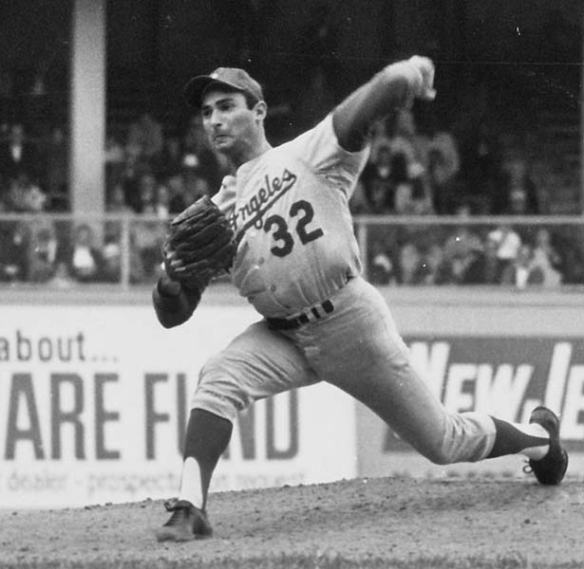
Hall of Famer

“Just concentrate on throwing the ball over the plate rather than breaking the sound barrier, and be more varied and selective with your pitches.” That’s the advice catcher Norm Sherry gave to future Hall of Fame pitcher, Sandy Koufax, in 1961. Prior to that Koufax had labored through several seasons of mediocre pitching. Once he solved his control problem he became nearly unhittable striking out 2,396 batters in his relatively short career. Koufax retired from the game in 1967 at age 30. Without a doubt, he went out a winner.

When we think of winning, what comes to mind? Most of us would say that we have achieved the success of victory – that’s the obvious answer. But when we’re asked how we won, the answer becomes a bit murkier. So, exactly how do we win? Do we simply throw the ball harder than anyone else? Or is there something deeper?

As we study great winners in sports and other walks of life one thing becomes abundantly clear. Great winners are fanatical about the basics and fundamentals of what they do. We’ve all heard how the basics and fundamentals are the foundational elements to success. And yet many times we just want to swing hard and hit the ball into the left field seats. The result is that we often strikeout. Lesson #1 – we’ll strikeout less and win more if we pay attention to how well we are executing the basics and fundamentals of our game. In business, perhaps we have enjoyed a winning streak lately. Human nature may cause us to take our foot off the accelerator and start enjoying the ride. What happens then? Maybe our winning streak comes to an end. We haven’t spent the time and energy continuing to cultivate relationships. We aren’t making the follow-up calls that we used to make. And we aren’t doing the homework necessary to understand what our customers really need and want.

Sandy Koufax would be an anomaly in today’s sports environment. He shunned the spotlight and stayed out of the public eye. He loved violin music – it’s said that Mendelsohn was one of his favorite composers. He chose not to chase the money and quit the game rather than risk further injury to an ailing arm. He was his own man which in itself is a special mindset. Lesson #2 – ignoring the noise in the world around us and maintaining our focus puts us on the path to winning.

Winning is seemingly about competing – right? Well, yes and no. If we are out to “beat” someone else the chances are higher that we won’t. In other words, if we become fixated on how to beat the competition we’re really ceding our power to someone else. Why? Because our focus has shifted away from what we need to do to execute in the necessary fashion, and we’re now conjuring a methodology that we think will give us a competitive advantage. Unfortunately we’ve forgotten that the way we win is to ignore the noise around us and execute our game plan in a flawless manner. Lesson #3 – don’t allow our competition to dictate the terms and conditions for winning.

Zig Ziglar famously said, “You were born to win, but to be a winner, you must plan to win, prepare to win, and expect to win.” I used the term “special mindset” in this blog. The only thing really special is the absolute, 100% core belief that we deserve to win and we will win. But there’s one more piece to this puzzle. We must relax into winning. If our intensity is too great, we can easily deviate from the basics and fundamentals and overcompensate. I’ve seen terrific baseball pitchers that start losing because they are so amped up that they try to “throw” the ball and over-control it, rather than relaxing and “pitching” the way they know how. Lesson #4 – to win, we must believe that we will and we must remain relaxed while doing so.

Winning is a relatively simple formula that involves always executing the basics and fundamentals; ignoring all the noise that is going on around us; playing our game and not trying to beat the competition, and believing without any doubt that we’ll win. Oh, and yes, relax. Putting it altogether ensures that we’ll be Hall of Famers in our own right.

You can also listen to a weekly audio podcast of my blog. What you hear will be different than what you read in this blog. Subscribe on iTunes or wherever you get your podcasts. You can also click on this link – Click here to listen to Audio Episode 6 – A Right Way and a Wrong Way.

This blog is being written in tandem with my book, “An Entrepreneur’s Words to Live By,” available on Amazon.com in paperback and Kindle (My Book), as well as being available in all of the other major eBook formats.

sandy-koufax