
An Entrepreneur’s Guideposts

Here are 13 concepts by which I live. They are my guideposts and serve as an Entrepreneur’s Primer. They’ve worked well for me, and I’d like to share them with you.

  1. Live today like you’re going to die tomorrow. It’s impossible to know when our “number” will be called. Why waste a single moment on that which is unproductive? And make sure to appreciate those whom you love – you will have regrets after they are gone if you take them for granted.
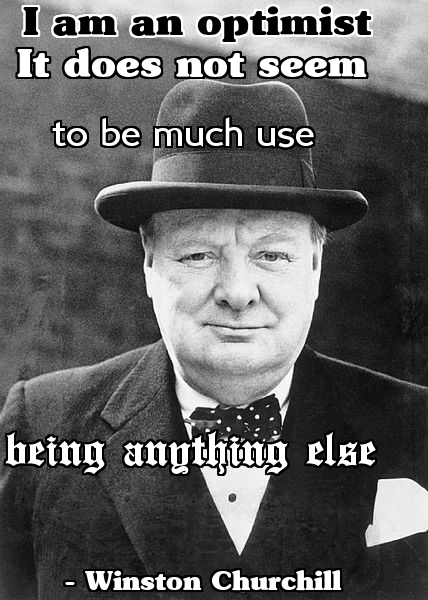
  2. What you think, will become reality. People who always have a positive mindset produce positive results and live a happy life. We can stack the deck in our favor if we train ourselves to reject negativity. Just as importantly, we don’t allow negative people to be a part of our lives. Our mind is more powerful than we can imagine, and we can use it to shape an amazing present and future.
  3. Never, ever, ever, ever, ever, ever give up. These are the famous words of Winston Churchill, and they ring true as much today as they did in the darkest hours of World War II. The key to perseverance is to make constant tweaks and pivots until what we are striving to accomplish manifests.
  4. Don’t take risk . . . manage risk. Taking risk is like gambling. Our businesses and our lives are too valuable to be betting the farm on Red 32. Instead, we identify the risks and create strategies to contain and mitigate them. Then we can proceed to launch new initiatives without fear.
  5. Laugh every chance you get . . . especially at yourself. It has been proven scientifically that laughter is healthy. Laughing many times every day is good for establishing a positive mindset. When we laugh at ourselves and can be self-deprecating, we show others that we are comfortable in our own skin.
  6. What you give will come back to you in amazing ways. We give because it makes others feel good and us too. And when we give without quid pro quo for the simple joy of giving, our life is fuller and richer. We also remember that gratitude is part of this equation and express our thanks to many people as often as we can.
  7. March to your own tune but do so with purpose. We avoid the herd mentality and are proud of our individuality. But we don’t do so simply to be different. We do so because we have a strong set of core values and a clear vision for our future. We aren’t worried about what others think so long as we aren’t stepping on their toes.
  8. Mistakes are simply the unfinished experiments in the laboratory of life. I love this one! There’s no way to know if we are on the right track unless mistakes are made. If everything is too perfect, then it’s likely we aren’t stretching ourselves to be better. Rather than obsess over our mistakes, we figure out what there is to learn from them and then start a new experiment.
  9. Creativity is a way to express your passion. And passion allows you to see in color. Each of us has a creative streak – it may be buried deeper in some of us, but we all can innovate in some way. Amazing and wonderful things can come about because of the creative process and it’s likely that our passion will be stoked. Life is full of sunshine and light when our creativity is off-the-charts.
  10. The success of a career can be measured in the number of lasting relationships that have been collected and nurtured. I see relationship building as an opportunity to serve. When we are always looking to help others in a genuine manner without the thought of receiving anything in return, we move beyond the transactional aspects of an acquaintance into a true relationship. Putting Good out into the world through service is the Law of Attraction – and in turn, we will attract Good into our lives.
  11. Balance your life – emotionally, intellectually, financially, physically, spiritually and with your family. This one can be tough, especially if we really, really love our entrepreneurial adventure. Here’s a secret. Having this sort of balance has a giant payday. It helps us to avoid burnout and sets the foundation for greater stimulation of our creativity. Besides, who wants to be around a one-dimensional person anyway?
  12. Help others buy your ideas. Do we sell our products and services, or do we help others buy them? There is a massive distinction between the two. Helping someone buy is “customer-centric” and selling to someone is “product-centric.” We will have much more success if we focus on the customer and his or her needs. It’s quite possible our product or service isn’t right for him/her – and that’s just fine. We can then move on to help someone else with the buying decision.
  13. You can’t do this all by yourself. Develop a support network of colleagues, friends, and family. Being an entrepreneur can be a lonely proposition. Being able to share success and failure with others is important to our mental and emotional health. Our friends and family provide safe refuge to which we can turn whenever needed. There is nothing gained by being the macho Lone Ranger . . . except loneliness.

This blog is being written in tandem with my book, “An Entrepreneur’s Words to Live By,” available on Amazon.com in paperback and Kindle (My Book), as well as being available in all of the other major eBook formats.

The Tunnel Vision Entrepreneur

During the days when I was flying an airplane, I learned a very important entrepreneurial lesson. I’d be approaching a large airport and the situation became very busy. I had Approach Control giving me vectors and altitudes which required regular attention to the instrument panel. I had a landing checklist to review. If there were passengers, I needed to make sure they were buckled in, and loose objects were secure in the cockpit. I also had to dial in the radio frequency for the airport tower to be ready for the hand-off from Air Traffic control. Whew! With all this activity it was easy to forget to do one very critical thing – and that was to get my head up and look outside the airplane. Pretty obvious, right? You have no idea how even the most experienced pilots can make this mistake. We’re focused on everything else – and yes, we are looking straight out in front of us to line up with the runway. But there are other objects in the sky – aircraft that might be unaware of our presence, radio towers, drones, birds, etc. I quickly came to understand (under the penalty of death) that I needed to avoid Tunnel Vision at all costs.

What does Tunnel Vision look like in the entrepreneurial world? Here’s a hypothetical example. Jeff owns a three-year old company that provides IT services to small and medium-sized businesses. He has 27 members on his team and his top line has been growing at 60% annually. Jeff is crazy busy right now. He’s up at the crack of dawn and after a quick workout he heads to the office. Many nights he’s not home until after 9:00. At work he’s consumed with an endless stream of team members who catch him for a wide variety of reasons. He attends meeting after meeting. E-mails pile up and phone messages go unanswered. During the few moments Jeff has to breathe he wonders why time is flying by so fast and why it seems that he has accomplished so little.

You probably already know the rest of the story. Jeff and his team are so consumed with trying to keep up with their meteoric growth that a competitor sneaks in and steals some of their best clients. Instead of focusing on the customer, Jeff and his company have fallen victim to Tunnel Vision – and what they are seeing are systems, processes, recruiting, hiring, training, HR issues, accounts receivable, accounts payable – everything except the customer.

There are several ways we can be vigilant about keeping Tunnel Vision at bay. First, we need to make certain that every member of the organization has well defined written Roles and Accountabilities – let’s call them R&As. The R&As need to be of sufficient detail to identify all the areas on which each of us should be focused. It’s kind of like a position description on steroids. Next, we should regularly review our R&A. I recommend that this be done at least once each week. Perhaps we have an “accountability buddy” with whom we review our respective R&As. I have gotten into the habit of doing this at least weekly and can see how easy it is to fall into a rut by just paying attention to one or two specific roles, sometimes to the exclusion of others. Part of this review is determining what I’m going to do during the coming week that involves each of my R&As. This helps keep me from falling into the ruts in the road.

As leaders, we must model how to avoid Tunnel Vision. After doing this for ourselves, we then need to encourage others to follow the same process. Often when Tunnel Vision is prevalent, I hear the same refrain – “there’s just not enough time in the day!” What this means is that we have lost control of our schedule and are allowing ourselves to be pushed and pulled by others. Tunnel Vision is inevitable when this is happening. Regaining control of our schedules is paramount and can be accomplished by planning what we are going to do rather than reacting. Ultimately, this planning initiates the R&A review and subsequent determination of our actions to be juggled in all areas.

Tunnel Vision can have fatal consequences for an organization. It can be avoided by reviewing Roles and Accountabilities at least once a week, and planning action steps that impact all areas for which we are accountable.

This blog is being written in tandem with my book, “An Entrepreneur’s Words to Live By,” available on Amazon.com in paperback and Kindle (My Book), as well as being available in all of the other major eBook formats.

The Up and to the Right Entrepreneur

Damon is an entrepreneur. He runs a small but growing company that recycles old computer equipment. Damon is very frustrated right now. Stephanie is a stay-at-home mom. She has two small children under the age of five and produces marketing materials for three companies, working from a spare bedroom. Stephanie is very frustrated right now. Why are Damon and Stephanie so frustrated?

Damon’s company has been growing at a rate of 25% a year for the past three years. He’s doubled the size of his team and his margins are increasing. If you looked at a graph depicting his business, the line would be up and to the right.

Stephanie has two beautiful and healthy children. Her husband is a physician, and the family is financially secure. Her marketing venture is flourishing. She’s landed a new client each of the last three years and the type of work has become much more substantive. By all measures, Stephanie’s graph looks the same as Damon’s – up and to the right.

Why in the world would these two individuals be so frustrated? Damon has chosen to reinvest a major portion of his profits back into his company. As a result, he hasn’t seen his personal cash flow increase in any meaningful way. Intellectually he knows he’s doing fine, but it still rankles him that his bank balance has remained fairly static.

Stephanie loves her marketing business, and she is ecstatic over motherhood. She worries that her two primary roles may someday collide (at times they already do) and she feels guilty that she may fail to do justice with either. Stephanie wonders how she can possibly achieve her personal and professional goals with the juggling act that she is managing. 

Here’s a simple but powerful truth. Damon and Stephanie have not yet learned how to celebrate their success. To those of us looking in from the outside these two are ideally situated. Everything seems “up and to the right” for them and yet they are frustrated. Damon and Stephanie are trapped in the tunnel of limited thinking. They have set lofty expectations for themselves – both in terms of what they want to achieve and how quickly this will happen. How many entrepreneurs and non-entrepreneurs do you know who are suffering the same plight? What can be done to break this negative-mind cycle?

If we were coaching Damon and Stephanie, we would tell them to become quiet for a few minutes and clear their minds. Then we would suggest that they “go to gratitude.” That would involve creating an inventory of all that in their lives for which they are grateful. Going to gratitude helps them get out of themselves and see beyond the tunnel walls of their frustration. And it’s a way to re-set the mind in a positive manner. In fact, we would advise Damon and Stephanie to use the gratitude exercise in the future whenever they feel frustration welling up.

As armchair coaches we would next encourage Tyler and Stephanie to discover how to celebrate their successes – no matter how large or small. Sometimes we tend to singularly focus only on the BHAGs – Big Hairy Audacious Goals – that we have set, and we fail to see the progress we are making along the way. Damon and Stephanie need to re-pattern their thinking to be able to see the smaller achievements that occur every day and intentionally celebrate them. One of Damon’s team members earned a difficult industry certification. Damon celebrated this success with a pizza party and some congratulatory remarks. When his company recycled its 10,000th CPU, he walked into the middle of the warehouse and rang a big brass bell. He left the bell there to be used as future milestones are realized.

When Stephanie’s four-year-old daughter read her first book Stephanie took her out for a special lunch and lavished her daughter with praise and encouragement. One of Stephanie’s clients entered her brochure in a regional marketing contest, and it won first place. Stephanie celebrated her accomplishment by laminating the brochure cover onto a plaque along with her award. She hung it in her home office to remind her that she does really fine work.

We all need to learn to celebrate our successes no matter the size. And going to gratitude helps us to break out of the tunnel of limited thinking. This puts us on the path to appreciate each and every day as one filled with joy and promise.

This blog is being written in tandem with my book, “An Entrepreneur’s Words to Live By,” available on Amazon.com in paperback and Kindle (My Book), as well as being available in all of the other major eBook formats.

The Remote Entrepreneur

OK – this is an interesting and somewhat touchy subject. I’m going to tackle it anyway. There is a lot of buzz right now about remote work. During COVID-19, we learned that it’s possible for many people to work from home (or elsewhere) and be reasonably productive. In some instances, employees were more productive than when they were at their place of employment – and there are other examples of where this was not the case. Now that society is gradually returning to a state of normalcy there is much discussion about employees who want to continue working remotely. Many large companies are reducing their office footprint and even offering remote work as a perk. I have some concerns about this trend.

We have had a rather unique experience with remote work over the past 50+ years. Our organization has multiple business units that are engaged in the development, acquisition, and management of apartment communities – an operation that now spans 20 states and growing. Development Directors and Development Managers are scattered across different locations by design. They need to be on the ground in the regions where they are researching and identifying development sites. Ditto for Regional Managers in our property management unit. Our headquarters team works from our corporate office though there are a handful of team members who work in a hybrid fashion due to the nature of their positions. Now, here’s where it gets more challenging. At any given time, we have 90 to 100 apartment communities that we manage throughout the country. These properties could be small with only two team members, or they could be very large with as many as 12 to 14 team members. They are all “remote” relative to our headquarters operations.

Several years ago, we became much more intentional about our culture and have worked tirelessly to build an environment where we empower people to thrive. This entails a set of core values, collaboration, celebrating success, and holding each other accountable. The corporate office culture is very strong and is usually hitting on all cylinders. Getting a two-person team in Kentucky or Wisconsin to integrate with our overall corporate culture has been a tougher mountain to climb. Our properties typically have developed their own cultures which we support and attempt to mirror with the overall culture. Video conferencing is helpful but not the end all – and we have been video conferencing for many years – long before COVID. We do everything we can to weave our culture throughout the various business units and properties, but some days it’s two steps forward and three steps back.

This brings me to the issue at hand and my biggest concern about remote work. How do companies maintain their culture (assuming they have an intentional and positive culture in the first place) when many if not all their employees are working remotely? I fully understand the desire by many who wish to work from home. There are childcare issues, skyrocketing gas prices, the prohibitive cost of living in some parts of the country, long commutes, etc. And yet, the question still remains – how does a company build a strong culture when a team is not physically together?

We have recently had a few members of our team depart because they went to companies that offered remote work (and a significant boost in pay). I am very concerned for them. They met each other in the first place because they physically were together in our corporate office. Working remotely, how are they going to differentiate themselves going forward? How will they fare over the long haul without the kind of social interaction they would experience in an office? When the day comes that their company needs to layoff employees will they be more vulnerable because they are essentially faceless cogs in the corporate wheel? And how will they stand out to gain future promotions in this faceless environment they have chosen?

Remote work is not a panacea from the perspective of both employer and employee. A company that chooses to go in this direction needs to have a serious plan in place to maintain and strengthen its culture in this new dimension. Most companies are simply reacting to the marketplace rather than adapting in a thoughtful way that will have long-term benefits for all parties. Entrepreneurs will be well served to be very cautious and strategic as they create remote-work policies.

This blog is being written in tandem with my book, “An Entrepreneur’s Words to Live By,” available on Amazon.com in paperback and Kindle (My Book), as well as being available in all of the other major eBook formats.