Unknown's avatar

About anentrepreneurswords

R. Lee Harris grew up in Manhattan, Kansas and has lived in the Kansas City area since 1977. A 1975 graduate of Kansas State University, Harris began his career with Cohen-Esrey, LLC as an apartment manager two weeks after he graduated. Now president and CEO, he is involved in apartment management, development and investment; construction and tax credit syndication on a nationwide scale. Over the course of his career Harris has overseen the management of more than 27 million square feet of office building, shopping center and industrial space and nearly 60,000 multi-family units. He has started dozens of business enterprises over the past 40+ years. In 1991, Harris wrote a book entitled, The Customer Is King! published by Quality Press of Milwaukee. In 2012 he authored the book, An Entrepreneur's Words to Live By. He has mentored a number of business people over the years and has been a long-time participant in the Helzberg Entrepreneurial Mentoring Program. He and his wife Barb have two grown daughters and one grandson. They are active in their church, community and university.

A Positive Rₓ

Question: Some of my friends and co-workers seem to be sick all the time. I don’t have time to have the flu or whatever else is going around. How much illness is in a person’s head?

Answer: More than you might imagine. But first, understand that this is too complex of a subject to generalize. It’s tough to see how some infirmities are anything less than real. But you’ve heard it said many times before how powerful our minds can be. And I do believe that the mindset we have makes a big difference in whether we are sick or not.

Here’s the simplest way that I can boil it down. How often do we respond when someone asks how we’re doing, “I’m OK though I’ve been fighting this cold for the past few days?” In some cases we might even tell ourselves or someone else that we’re sick. This may reflect how we feel at the moment, but it goes a lot deeper than that. What we are actually doing is affirming sickness. So when we say, “I’m sick,” guess what – we may eventually become sick or continue being sick if we truly are. So you say, “But I’m just stating the obvious!”

Here’s where it gets interesting. When we affirm something – and really believe it – the probability increases for our affirmation to become a reality. Why then, would we want to increase the probability for our reality to include being ill? Words have power and our thoughts are even more powerful. When we speak words that come from our thoughts we are giving a great deal of power to what we say and what we believe.

As an entrepreneur, I’ve been blessed with a very positive mindset. I’ve noticed over the years that the healthier my lifestyle has become, my attitude has become more positive as well. Good health and a positive frame of mind are two extremely important traits for entrepreneurs. I’ve lost weight by changing my eating habits which has transformed into a new lifestyle. I stopped smoking pipes and cigars years ago. I’ve become addicted to a six-day-a-week physical fitness routine. And I meditate on a daily basis. The result is that I feel better than I have in many years; my outlook is almost always positive, and I won’t allow sickness and disease into my body.

You may think that this sounds a bit woo-woo, and maybe it does. But I’m a walking testament to what can happen when we affirm good health and really believe it. An apple a day keeps the doctor away. And so does our mind.

This blog is being written in tandem with my book, “An Entrepreneur’s Words to Live By,” available on Amazon.com in paperback and Kindle (My Book), as well as being available in all of the other major eBook formats.


apple

Buy or Sell?

Question: I see people use essentially the same sales techniques, but some are successful and some are not. How can this be?

Answer: There are so many books about selling that it would be impossible to read all of them in a lifetime. And there are so many different techniques that it makes our heads spin. So what does it all boil down to? I can simplify it fairly easily. A successful salesperson does not sell anything. Nothing at all. Nada. Instead, he or she helps a customer buy something.

The distinction between buying and selling is huge. And it can be the difference between success or failure. Let’s examine what all this means. Old-school salespeople do the schmooze with the customer. They use techniques such as asking questions that get the customer to answer with the word “yes.” They attempt to close at least seven times with different methods. They try and create a sense of urgency – i.e. the price is going to increase tomorrow, or there is only one left. I’m not quarreling with the fact that these methods may have worked in the past. But people are more sophisticated in today’s world and they don’t respond to manipulation as they may have in an earlier era.

Rather than selling to someone, I submit that helping someone buy can be as effective as old-school salesmanship – maybe even more so. This starts from a premise of respect in that we want to help meet the needs of a customer – notice the mindset is accentuated by the words “respect” and “help.” Understanding the needs of a customer means asking a lot of questions; usually many more than a customer is typically asked. In the process, there is an opportunity to build a relationship with the customer. Working with someone on a relationship basis is part of the “help” to which I’ve referred. Think about this for a moment. Are you more or less inclined to buy from someone who has genuinely tried to understand your needs and at the same time you are both able to get to know each other better?

Of course you need to be completely knowledgeable about your product or service in order to answer the questions raised by the customer. And you’ll certainly want to demonstrate the features and how they translate into benefits. But I think the sale is won or lost in the first few seconds of the encounter based upon how well you connect with the customer. Will this happen with manipulation and pressure? Or is the connection made through the process of thoroughly understanding needs and building relationships?

To be successful at sales simply practice the Golden Rule. In all likelihood, helping someone buy is the way you would want it to be when you are the customer.

This blog is being written in tandem with my book, “An Entrepreneur’s Words to Live By,” available on Amazon.com in paperback and Kindle (My Book), as well as being available in all of the other major eBook formats.

cardealerscarsalesman

Disorderly Conduct

Question: Sometimes entrepreneurial environments become wild and crazy. How do I keep from getting sucked in and swallowed up by all this confusion?

Answer: Don’t you just love it? The environment you describe is typical of a dynamic, fast-paced organization. Meetings and phone calls – one right after another; multiple deals and projects to be tended; and e-mails flying at a dizzying speeds, all add up to only one thing. Chaos. Personally, I am energized by such situations. But it wouldn’t be hard for everything to tip over and fall into the abyss, metaphorically speaking.

Managing chaos is a test in multi-tasking; thinking three-dimensionally; practicing patience; maintaining composure; having a sense of humor; demonstrating physical and mental stamina; being flexible; staying positive; thinking creatively, and communicating effectively. Whew! Seems like a pretty tall order, doesn’t it? Wouldn’t it be more productive if there was more of an orderly flow within an organization? Maybe, but chaos can produce some amazing results.

When things become chaotic, entrepreneurial leaders find out who in an organization can step up and produce results. They see clearly who wilts and who thrives under the pressure. And out of chaos can actually emerge some of the best ideas. One of the finest examples is the Empire State Building. Imagine this. Construction began in January 1930, just when the Great Depression was settling over the country. More than 3,400 workers swarmed the site and built the tallest building in the world – 1,250 feet and containing 2,248,355 square feet (the size of 47 football fields) – and they completed it in 410 days! Imagine the enormity and complexity of this project. The chaos we experience as entrepreneurs is a fraction of what must of have been present with the Empire State Building. I consider this building to be a literal and figurative monument to creating order out of chaos.

So what’s the trick to making chaos work productively and not letting it consume us? First, it’s important to ignore all of the “noise” that comes with chaotic situations. We must become expert at focusing on only that which matters – keep an eye on the prize so to speak. Block out everything else. Second, it is critical that we identify priorities in the jumble of craziness, tasks and emotions. Failure to prioritize is one of the most lethal and negative aspects of chaos. Finally, consciously look for the positive results that can emanate from chaotic situations and feed off of them. This is obviously a state-of-mind opportunity and a choice we can make. The choice is really pretty simple. We can either allow ourselves to be overwhelmed by the chaos, or we can rise above it and use it as a tool to propel our cause.

Chaos is a highly-charged energy flow. It simply has no order to it. When we are able to harness the positive energy elements of chaos, we can use the momentum to create order and attain our goals at a much higher level than otherwise possible.

This blog is being written in tandem with my book, “An Entrepreneur’s Words to Live By,” available on Amazon.com in paperback and Kindle (My Book), as well as being available in all of the other major eBook formats.

chaos-300x213

Strategic Retreat

Question: I know that you often quote Winston Churchill’s statement, “Never, ever, ever give up.” But it seems that there are situations where it’s clearly better to step away and move on. Please help reconcile this with your “never quit” philosophy.

Answer: There’s actually no conflict at all. But there is a difference. A bit confused, are you? Giving up means quitting in defeat. That’s a mindset. Strategic adjustments are also a mindset but there’s still a purpose. The difference is that giving up and quitting often comes with a sense of resignation and lost hope. Usually there’s an element of finality involved – perhaps even failure.

I was talking to a friend who told me the story of one of his twenty-something sons. The young man had done very well for himself financially at an early age by investing in rental properties at bargain basement prices. One day he went to his father and said he was giving it all up and selling everything. He didn’t like the fact that he was becoming obsessed with material possessions. Then he took his money, invested it in more liquid assets and went to a foreign country to do charitable work. At first I thought that he was quitting and running away. But as my friend talked further I realized that his son had simply made a strategic adjustment. He hadn’t failed at all but simply wanted to re-purpose his life.

In my entrepreneurial career I’ve made many strategic adjustments including some that might be deemed as strategic retreats. But they always fit into a bigger picture. Never once do I believe that I ever gave up or quit on anything. Never did I think that I had failed or was defeated. There were a number of business ventures that did not follow the plan and as such, could not be defined as successful. After tinkering with them and making adjustments, I eventually surmised that our efforts (and capital) could be deployed more wisely and profitably in other areas. This led to the shutdown or sale of those ventures.

How do we know when it’s time to make a strategic retreat? The decision is one that can be made by answering three simple yet powerful questions. Is the endeavor I’m evaluating meeting my expectations, goals and objectives? If the answer is no, then I ask, have I made all adjustments that could reasonably be made to make the endeavor succeed? If the answer is yes, then I ask my final question. Have I allowed enough time for all of the adjustments to produce the desired results? If I answer yes, then it’s time to move on.

The less we allow our emotions to cloud the decision to make a strategic retreat, the less likely we will be to see it as quitting or giving up. This will give us the strength and confidence to make more such decisions in the future and move us ever closer to our ultimate vision.

This blog is being written in tandem with my book, “An Entrepreneur’s Words to Live By,” available on Amazon.com in paperback and Kindle (My Book), as well as being available in all of the other major eBook formats.

White-Flag

Transformers

Question: Some entrepreneurs seem to be able to take an unexpected and difficult situation and turn it into success. How do they do it?

Answer: The skill to which you are referring is very simply the ability to adapt to a particular situation. And as with so many other things in life, it all starts with mindset. Have you ever created a plan that didn’t work perfectly when implemented? How did you feel? I can remember times in the past when I would become very upset and frustrated when my carefully crafted plan seemed to go up in flames. Other people always messed things up for one reason or another.

Recently we had an historic building we wanted to develop but needed a state agency to approve affordable housing tax credits in order to move forward. We submitted the project twice to the state agency and both times did not win an award. Of course this was immensely frustrating and we very easily could have given up and moved on to another project. Instead, we figured out a different (and even more complicated) structure for the deal and have been able to put the train back on the track, so to speak.

Being adaptable means having a mindset of flexibility. But there’s one more element that really unlocks the secret. It requires being able to anticipate that when something goes awry, it’s an opportunity. An opportunity to be creative, change direction – slightly or a lot – and make things even better than originally foreseen. I’ve reached the point where I expect to have such opportunities. This isn’t negative thinking by any stretch. Instead it’s a mindset of looking for ways to improve upon a situation. When something isn’t working quite right that’s a signal to me that there’s a better way.

You’ve probably seen the kids’ toys called Transformers. The basic premise is a toy that transforms from a seemingly mundane robot into a much more powerful object. Optimus Prime was the original hero in the Transformers franchise – a robot that transforms into a Kenworth truck cab containing a powerful ion blaster. Sounds silly, right? But that’s exactly what we entrepreneurs want to have happen. We want our good ideas to transform into great ideas. Sometimes this takes some twisting and turning, but eventually we prevail.

Problems lead to solutions. But be careful what you believe for what you believe creates the world in which you live. If you believe that problems are an opportunity to adapt and improve, your world will be filled with outcomes that are better than you ever imagined.

This blog is being written in tandem with my book, “An Entrepreneur’s Words to Live By,” available on Amazon.com in paperback and Kindle (My Book), as well as being available in all of the other major eBook formats.

Optimus Prime

The Legacy

Question: I work hard every day and have achieved success along the way. But sometimes I wonder if this is all there is. Why am I not completely satisfied?

Answer: Some entrepreneurs are wired a bit differently than other members of society. We always want more. More success; more out of life; more challenges – the next mountain to climb. There are those who might describe us as restless. This is actually what drives us to excel. But as the years go by and we continue to succeed; live life more fully; overcome the challenges and climb the next mountain, we become less energized by playing the “game.”

What more is there? At the end of the day are we just flesh and bones? What is our legacy? The whole concept of legacy is important to us as entrepreneurs. It requires a great deal of thought and self-reflection. And it isn’t something that we can know for certain early in our careers. Our perception of legacy evolves over time. But by intentionally seeking our legacy in our 20s, 30s, 40s, etc., it will become a part of who we are and help to shape us as human beings.

I have spent more time as I have gotten older considering my legacy though I wish I’d focused on it more when I was younger. Nevertheless, it has become crystal clear that my legacy is all of the good things I can do for other people. My life has become less about me winning and more about helping others win in their lives. When I am gone, do I want to be remembered as a conquering captain of industry? Or do I want to be remembered as someone who helped make the lives of others more special?

The opportunity to serve others plays perfectly into an entrepreneur’s success mantra. I’ve mentioned before that positive energy draws great good to us. And serving others certainly generates massive amounts of positive energy. I’ve found that the more I give of my time, talent and treasure, the more good things come into my life. The beauty of this equation is that it happens without any calculation whatsoever. For example, I have been part of an entrepreneurial mentoring program for a number of years. The business men and women whom I have been fortunate enough to mentor seem to benefit from my ideas and counsel. But I too have been the beneficiary in many ways. Besides establishing some amazing friendships, the time I spend with them has resulted in stimulating new ideas that I can implement in my own businesses.

It took a while for me to realize that a legacy of materiality was much less important to me than a legacy of hundreds or even thousands of other people whose lives were improved as a result of something I was able to do for them. And guess what? Material abundance has become even greater for me with this realization! It’s yet another manifestation of the Law of Attraction.

What will your legacy be? Give this question some deep thought and challenge yourself to explore the multitude of options. Whatever you decide will be right for you.

This blog is being written in tandem with my book, “An Entrepreneur’s Words to Live By,” available on Amazon.com in paperback and Kindle (My Book), as well as being available in all of the other major eBook formats.

sunset

The Bond

Question: I’ve noticed that some people aren’t following through and doing what they say they’ll do. Does it seem like this has become more of a problem over the years?

Answer: What you are describing has been occurring for time in memoriam so I wouldn’t necessarily say that it’s become worse. And it’s not only a crucial issue for entrepreneurs but for everyone else as well. At the root of this is a simple word . . . commitment.

I’m an old school kind of guy and believe that a commitment is the same as a promise. It’s about trust and a my-word-is-my-bond mindset. How we deliver on our commitments to others begins with how we deliver on commitments to ourselves. My parents instilled in me a deep sense of discipline and pride when I was growing up. I had a wide range of chores – some of which I did not particularly like. I practiced the piano for 30-minutes at 5:30 AM on weekdays. I wasn’t given the option of scrapping a practice session. I know I was driven not to disappoint my parents – but in the process they taught me to take pride in what I did and not to disappoint myself. Thus, I learned how to make commitments to myself and keep them.

How can we learn to make meaningful commitments to ourselves? It starts with simple things. Perhaps we say, “I’m going to commit to an exercise program five days a week.” How seriously do we take such a commitment? If we exercise for a couple of weeks and then fall off the wagon, we undoubtedly may rationalize quitting. But are we being true to the bond we’ve created with ourselves? If we can’t even keep the commitments we make to ourselves, how will we fare when we make commitments to others – commitments that others trust and count on us to keep?

If we say to ourselves, “I will try,” or “I think I can,” that’s not really a commitment. When we say “I will,” it is. When we frame commitment to “my word is my bond” and “I will,” we can now set clear standards of accountability for ourselves. I can ask myself, did I keep my word when I said “I will?” This is a very easy question to answer – it’s either yes or no.

Finally, are we prepared to go above and beyond our “legal” obligation to deliver on a commitment? In other words, do we say we’ll do something and if we fail, do we point to the “fine print” and say we’ve measured up anyway? Years ago, one of our sales associates ran into financial difficulties. We loaned him some money and told him to pay us back when he got back on his feet. He was very appreciative and assured us that he would do so. We chose not to put anything in writing and instead operated on the basis of trust. A year later, this associate was closing transactions and making good money. Not once did he ever acknowledge his commitment to pay us back. Because we had no formal contract with him, I suppose the case could be made that he had no legal obligation to pay us back. We never really defined what it meant for him to be “back on his feet.” But he knew what it meant and so did we.

We make commitments only when we are intentional about delivering on them 100%. And when we meet the obligations we commit to ourselves, we are then ready to take the sacred step of honoring the trust placed in us by others.

This blog is being written in tandem with my book, “An Entrepreneur’s Words to Live By,” available on Amazon.com in paperback and Kindle (My Book), as well as being available in all of the other major eBook formats.

commitment

Super-Duper Extended-Life Batteries

Question: When I take a vacation I can’t seem to stop thinking about work. We go to fun places but my mind is in overdrive about work things and I don’t really enjoy my downtime. How do I change this?

Answer: It sounds like I used to be you. I can remember a number of vacations early in my career where I would actually feel guilty for being gone. We’d be engaged in vacation activities and I’d have to stop and call the office to see what was “blowing up.” I would worry whether or not something so monumental might happen that I’d be fired the moment I jumped back in the trenches. My vacations weren’t particularly fun because I would return with my stomach tied up in knots. As a result, I took fewer vacations because I thought I’d score points with my boss and I wouldn’t have to deal with the agony of being gone. Sounds messed up – right?

I don’t think anyone will argue with the fact that we need time to re-charge our batteries periodically. But our batteries aren’t like those of a car. When a car is being driven, the battery is being continuously charged. Our batteries are like that of a small appliance. Plug us in; charge us up; unplug us, and we’ll go for quite a while. And think about the car analogy for a moment – eventually the car battery wears out and simply dies. Then it has to be replaced. We don’t have the luxury of replacing our “batteries” because we die too.

Life balance is the key. Of course it’s the new buzzword but it’s absolutely a valid concept. We simply cannot do our best and be the best that we can be if our lives are one-dimensional. Vacations are critical to helping develop the balance we need. It doesn’t matter if it’s a series of short mini-vacations or a few longer ones, the whole point is to get away from the regular routine. I take several vacations each year where I spend time on the computer and phone but put it all on hold for a fun activity of some sort during the course of each day. Then once a year I “drop out” for a couple of weeks. We go to a tropical island and just play. No phone, no computer, no TV, no newspaper – just sun, fun and togetherness time with my bride. And the minute I sit down on the airplane, I turn off all aspects of work.

To get the most of a vacation we need to give ourselves permission to have fun. Think about this. As entrepreneurs we’re driven all of the time. So it’s time to lighten up and enjoy!

This blog is being written in tandem with my book, “An Entrepreneur’s Words to Live By,” available on Amazon.com in paperback and Kindle (My Book), as well as being available in all of the other major eBook formats.

batteries

Spike It

Question: I see people who appear to be very successful that have very large egos. How much ego is too much?

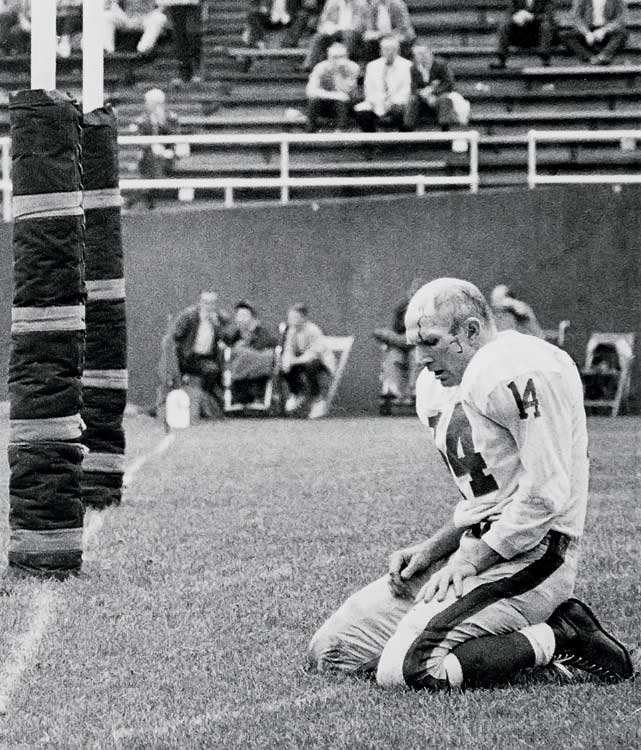
Answer: I remember one of the best football players to ever play the game was Marcus Allen. He was a running back for the Oakland Raiders and later, the Kansas City Chiefs. Every time he scored a touchdown (145 of them) he simply handed the ball to the referee and trotted off the field. I never saw him spike the ball in the end zone or do some sort of “look at me” dance that is so prevalent today. It seems like professional athletes in most sports celebrate in ways that may indicate ego issues.

Perhaps ego displays in the business world don’t equal the level that we see on the gridiron or hardwood courts, but they are on display nonetheless. There are those who will say that this is really about demonstrating one’s pride. Nilton Bonder, a Brazilian rabbi said this, “Many people believe that humility is the opposite of pride, when, in fact, it is a point of equilibrium. The opposite of pride is actually a lack of self-esteem.”

Have you heard the term “ego drive?” Ego drive has been defined as the inner need to persuade others as a means of gaining personal gratification. It’s all about getting someone else to say “yes” and the satisfaction derived from this act. Ego drive is generally a healthy trait as opposed to egotism which is closely related to narcissism.

I’ve always believed that the “bigger” you become the more humble you should be. With success comes the need for less arrogance; less pomposity; more sensitivity and more empathy. Here’s a small way you can practice this. Every time you compose an e-mail or verbally speak to someone else, see how often you can eliminate the reference to “I” and “my” and replace them with “we” and “us.” The more we can think in terms of crediting others with helping us achieve success the more humility we gain.

To the extent that we can be comfortable with who we are on the inside, the more likely it is that we will become a genuinely humble person. And at that point the respect and admiration of others will come naturally and effortlessly because it will have been truly earned.

This blog is being written in tandem with my book, “An Entrepreneur’s Words to Live By,” available on Amazon.com in paperback and Kindle (My Book), as well as being available in all of the other major eBook formats.

Football Spiking

The Ear and the Brain

Question: I’m struggling to communicate with a co-worker. How do I get him to listen to me?

Answer: This question sure hits home. The mind of an entrepreneur is racing at 100 miles per hour. We juggle balls of all shapes and sizes. Frequently we are on the move at warp speed. People think we listen . . . and WE think we listen. But sometimes there are complicating factors.

If I say “hello” to you, usually you will say “hello” back to me. Does that mean that I listened to you? Maybe. But it’s for certain that I heard you. Listening is more complicated than the simple act of hearing. Let’s assume that you come into my office and tell me that there’s an issue with a particular client. You describe a course of action that you want me to approve to resolve this issue. I nod. I may murmur, “uh-huh.” And you leave believing that you have my consent. A week later you tell me that the matter was taken care of although there was some fallout with the client. I give you a blank stare at which point you say, “I told you about this last week!” You get another blank stare from me at which point I might suggest how you could have resolved the issue without the fallout. In the end you are irritated because of this outcome. What happened here?

This is a real life classic example of hearing and not listening. Members of my team who read this are nodding their heads so hard right now that they’re going to get whiplash. When you came into my office I had just finished a phone conversation and was still processing the gist of it. A thought also popped into my head about a related matter, and I needed to leave for a lunch meeting. I certainly heard you but didn’t have the presence of mind to slow down and listen to what you were saying.

There are several solutions. The easiest is to make certain that I am in a listening mode. Ask me if now is a good time to chat. I may ask if we could do it later and set an appointment with you. Or, if I have time, I’ll talk then. After you are finished telling me what you have to say, ask me for specific feedback – pros and cons or other thoughts I might have. Once a course of action is determined, ask me to summarize what I understand is going to happen. This can be done by you simply saying, “I want to make sure I do this the way we have agreed. Would you mind summarizing what you understand that I am to do?”

We all know that clear communications is paramount to success. It’s critical that we make certain that the people with whom we are communicating are truly listening to us and not just hearing what we say. Ultimately it’s our responsibility to make this happen.

This blog is being written in tandem with my book, “An Entrepreneur’s Words to Live By,” available on Amazon.com in paperback and Kindle (My Book), as well as being available in all of the other major eBook formats.

ears