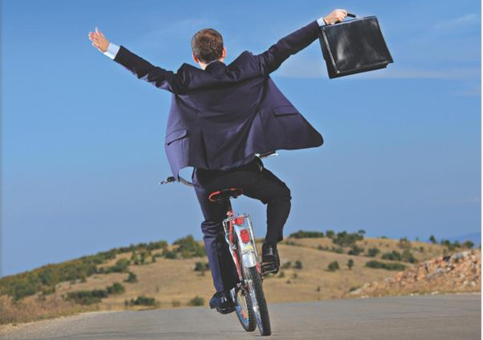
The “Danger Will Robinson” Entrepreneur

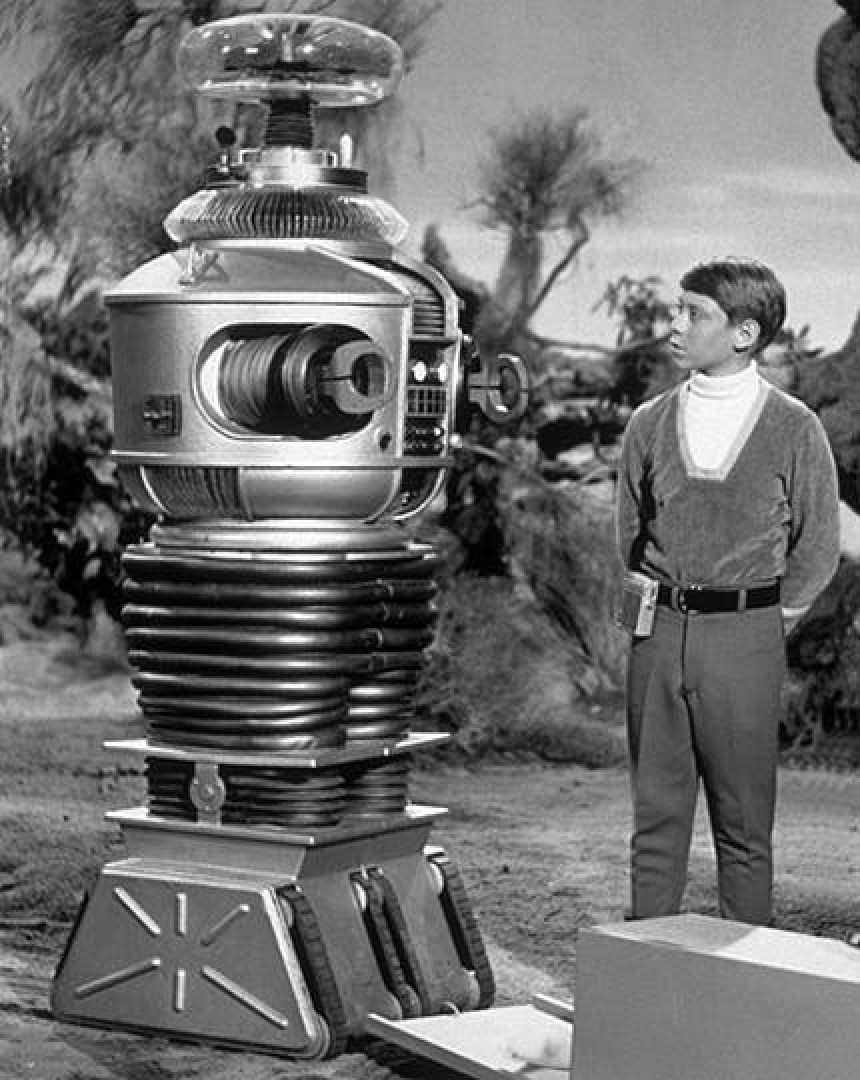
Lost in Space was a classic television show broadcast on CBS between 1965 and 1968. A young Billy Mumy played the part of Will Robinson who regularly interacted with the Robot. For those of you too young to remember, the plot centered on a modern-day Swiss Family Robinson, marooned in space where the goal was to somehow figure out how to return to Earth. I enjoyed watching this show in black and white, and later in color, while Will and his family would constantly encounter misadventures. One of the most epic lines was spoken in a raised voice by the Robot – “Danger Will Robinson; Danger!” whenever Will was about to be eaten by some exotic space creature, or step into an abyss that lay below some cosmic quicksand.

We entrepreneurs need our own version of the Robot to help us avoid many of the missteps that we encounter in our daily lives. One such opportunity for disaster comes when we are in the middle of negotiating. In my world, we are always buying and selling apartment properties. Let’s use the acquisition of one such property as the example for this blog. The property in question seems to perfectly fit our acquisition strategy. The location is right, the property age falls within the target timeframe, the unit mix is perfect, and historical data shows a very strong operation for the past several years. But . . . the price is significantly higher than we can pay to generate the return on investment we are seeking.

We negotiate back and forth. Offers and counteroffers ensue, but we just are not quite at the price we are looking for. Here is where we need the Robot to save us from ourselves. There is a psychological threshold at which point we are committed to getting the deal done. We are vulnerable at this point to being taken advantage of. Maybe we start looking at our projections again and tinker with the annual rent increase percentage we initially underwrote. When we do this, the numbers work, and we can close the deal. Yet are the new rent increase projections realistic? Or are we simply looking for a way to rationalize the adjustment? I have certainly done it before. My reasoning went like this, “The standard 3% increase on this property is approximately $25 per month. Another .5% pushes the rent up by $29 per month. A renter isn’t going to balk at $29 any more than at $25, so I’m comfortable using an annual rent increase factor of 3.5%.” Now, it is very possible that this line of reasoning is sound. But it is important to understand the motivation behind it. Are we modifying our projections just to get the deal done, or are we really being ultra-conservative and there really is not going to be a problem with the rent increase tweak?

There is a fine line to walk between being creative to successfully complete a negotiation and allowing our emotions to drive the terms and conditions that we are willing to accept. By establishing strategic parameters in advance, we can avoid becoming vulnerable to doing a bad deal. For example, we will only acquire an apartment property that is of sufficient size so that we are not compelled to purchase a second or third property in the same market just to gain management efficiencies and economies of scale. It is also important to remember to separate business negotiations from personal ones. Buying a piece of artwork for a personal residence is an emotional decision and it is acceptable to allow emotions to enter the negotiations. Making a business acquisition of some sort should be completely divorced of emotion in all but the rarest instances.

In a business negotiation understanding where the line is between sound decision making and being vulnerable to manipulation is critical. Establishing strategic parameters before the negotiations commence and then sticking to them during the negotiating process will help us avoid crossing this line.

This blog is being written in tandem with my book, “An Entrepreneur’s Words to Live By,” available on Amazon.com in paperback and Kindle (My Book), as well as being available in all of the other major eBook formats.

The Mistake-Prone Entrepreneur

I have a philosophy that mistakes are simply unfinished experiments in the laboratory of life. That does not mean we want to leave the same experiment unfinished over and over. But being too tentative and too cautious to avoid making a mistake may itself be a mistake! The obvious conclusion is that we want to learn from our mistakes and turn them into productive experiences.

To turn our mistakes into productive experiences we need to analyze them in a process-oriented manner. Being a go-go entrepreneur, it is not easy for me to slow down long enough to reflect on what went wrong. Generally, I just want to get back in the game and do it right the next time. This worked somewhat well in the past, but as I have gotten older, I’ve learned that being more intentional about analyzing mistakes increases the odds of not making the same mistake again. It also has caused me to look for the “silver lining” – that nugget of information that might enable me to turn the mistake into something unintentionally positive.

Step One in my mistake analysis process involves the simple act of identifying what went wrong and writing it down. Yes, I know this takes time, but it forces us to take a hard look at what happened. Did I follow an established process, or did I deviate from it – maybe even wing it? Did I fail to build-in a sufficient margin of safety at the front end? Did I somehow ignore warning signals that were flashing at me? Was I driven by emotion or was my initiative grounded in fact? I have found that most of my mistakes came from deviating from an established process. Because of my go-go nature I want results to happen very quickly. By analyzing my mistakes, I have recognized a tendency pattern to cut corners.

Step Two requires that we consciously determine what we need to do differently and commit to do it. Knowing that I have the propensity to cut corners, I have become committed to following established processes. Before I move forward with anything I am doing, I stop myself and ask the simple question, “What is the process that needs to be followed?” I make certain that I know exactly what the process should be and then I affirm, “I know the process and I will follow it.” Sometimes I may even make this pledge to a close colleague for accountability’s sake.

The final step in mistake analysis is that of looking for the “silver lining.” History is littered with mistakes that resulted in brilliance. Alexander Fleming discovered penicillin due to a mistake he made in his lab. Another famous mistake at the 3M laboratories turned into Post-it Notes. Plastic was invented as the result of a mistake – some say that Charles Goodyear left a mixture of rubber and sulfur on the stove too long and found that he had created a new material. Wilson Greatbatch was building a heart rhythm recording device in 1956; used a wrong part and realized that the device would maintain a heart rhythm – thus the pacemaker was born. If we do not look for the silver linings in our mistakes, we may never find that little (or big) something that manifests into a positive development. Finding the silver lining requires a creative mindset – perhaps this is an exercise that can be done with others. Take the mistake and purposefully look through the “rubble” to see if there is anything of value that might be useful.

Mistakes don’t have to be the end of the world for us if we take the time to find out what happened; how we’re going to act differently in the future and committing to such different action and finding the silver linings that may be hiding in plain sight.

This blog is being written in tandem with my book, “An Entrepreneur’s Words to Live By,” available on Amazon.com in paperback and Kindle (My Book), as well as being available in all of the other major eBook formats.

The Competitive Entrepreneur

Evil, dirty, underhanded, devious, conniving, despicable, dishonest, cutthroat, backstabbing, snobbish, arrogant, lying and cheating. These are terms I have heard applied to competitors over the last 50 years. Without a doubt I have missed some. What emotions are evoked when you think about your competitors? Some entrepreneurs I know have pure hatred for the competition and others display a great deal of fear. Why do we associate such negativity about our competition?

The amateur psychologist in me believes it has something to do with our childhood (don’t all our issues?). On the playground we engaged in competitive duels involving kickball, dodge ball, four-square and other gladiator-like activities. Losers were vanquished with taunts and teasing. When we were older, competition for relationships with the opposite sex was intense. When a sought-after girl or boy chose someone else, we were crushed and dejected. Fast forward to today and it is no wonder that we often see our competition as the enemy.

But do we really benefit from viewing our competitors in this manner? Competition is actually a wonderful thing. Let’s look at several of the reasons why.

  • Competition stimulates creativity and innovation. Every day we know that our competitors are working overtime to develop new products or services. To keep from being left behind we do the same. New discoveries are made from this process that may generate greater profits and capture a larger market share.
  • Best practices emanate from a competitive environment. Let’s face it; we don’t have all the answers. So, observing how others do things and testing our approach accordingly can lead us to implement better systems and processes. Without competition what would be the incentive to improve?
  • An inefficient market is the byproduct of competition. Some competitors are stronger, and some are weaker. If every competitor is equally strong how would anyone win? The concept of winners and losers is critical to a healthy yet inefficient market.
  • Hand-in-hand with the inefficient market theory is the opportunity for differentiation. This is good for the consumer, and it is outstanding for the entrepreneur. Why? Because we can create a level of variety that may appeal to more customers. It is not just about “better;” it’s also about “different.” If every boutique sold the same black dress, doesn’t it stand to reason that a boutique selling a purple skirt might win a few more customers than the black dress sellers?
  • Competition helps to broaden the talent pool. It provides career paths for the workforce into which we as entrepreneurs can tap. We can create cultures where people want to work, giving them the chance to grow and advance their careers. And in the process, we get to attract the best and the brightest.

For years we have enjoyed good relationships with our competitors. We view them with respect and in some cases, admiration. Other terms come to mind as well: friendship, collaboration, empathy, and gratitude. Collaboration you ask? Yes, we have often referred customers to our competitors when we could not meet their needs, and they have done the same for us. In 2008 a Maine portable restroom business owned by Jeff Bellino burned to the ground. Who came to the rescue? Bellino’s competitors! They provided portable restrooms, toilet tissue and chemicals so that he could keep going while he rebuilt his operation. Competition is at its healthiest when competitors have each other’s backs in a time of need.

When we embrace the notion of strong and healthy competition, we enhance our chances for success. There is no doubt that competition makes us better entrepreneurs in every respect.

This blog is being written in tandem with my book, “An Entrepreneur’s Words to Live By,” available on Amazon.com in paperback and Kindle (My Book), as well as being available in all of the other major eBook formats.

The Fulfilled Entrepreneur

Here’s a question for entrepreneurs that can be a rather perplexing conundrum. What is the value that we are adding to what we do every day? Could a trained monkey do it too . . . and maybe even better? Here’s the thing. We sometimes tend to fall into a rut that’s usually within our comfort zone. And then we go through motions every day – over and over and over. Oftentimes we become very, very good at what we do and so it is easy to keep doing it – over and over and over. But is it a truly fulfilling experience?

My father-in-law was a funeral director. He was very, very good at what he did, and it was evident that he liked helping people. But he always said that when he turned 65, he was done and would retire. And that’s exactly what he did. I concluded that while he liked what he did, he didn’t love it enough to never want to stop doing it. I never did get a chance to ask him before he died what value he brought to what he did every day.

Entrepreneurs think a lot about money. Yet, those I’ve known who do what they do just to make a lot of money tend to become restless and bored. Making a lot of money may be great, but after a while it’s just a way to keep score. And if we’re winning every day and only doing it for the money, how does one keep the “fire in the belly?” There must be something more.

There’s no denying that we entrepreneurs want to make money. And there’s nothing wrong with this – after all, most of us are unabashed capitalists. But just focusing on the money can lead to a hollow existence. Money is a commodity and eventually we find ourselves feeling like the proverbial trained monkey. That’s when the trouble can begin. Being restless and bored can lead to many issues the least of which might be extramarital affairs, drug or alcohol abuse or even daredevil types of hobbies. I’m not casting aspersion on thrill-seeking activities, but we must examine the real reason that we pursue them. Is it because we are feeling unfulfilled in our business and/or personal lives?

All this pondering leads us to conclude that we need to be doing something of substance to feel fulfilled. I’ve written before about value propositions where customers are concerned. But we also need a personal value proposition that winds us up and keeps us excited, happy and content. My value proposition is the same as my personal WHY (thank you Simon Sinek) which is to make sense of complexity. This manifests itself in many ways including consistently developing creative ideas and solutions. If a day goes by where I wasn’t challenged creatively or didn’t become immersed in something complicated, I don’t feel fulfilled. Thus, I try and always put myself in situations where this never happens.

Each of us needs to find our own personal value proposition. Perhaps it’s doing things the right way every single time. Maybe it’s about innovation and doing things in a better way. Some of us want to make a contribution or a difference in the lives of others. There are those of us who want to create trust and build relationships, while others just want to simplify things. A few entrepreneurs live to master what they do, and others want to create clarity. Of course, there are always a few Steve Jobs types who want to challenge the status quo and think differently.

Discovering our own personal value proposition energizes us and keeps us coming back for more. Being a great entrepreneur hinges on our ability to continually maintain a sense of fulfillment.

This blog is being written in tandem with my book, “An Entrepreneur’s Words to Live By,” available on Amazon.com in paperback and Kindle (My Book), as well as being available in all of the other major eBook formats.
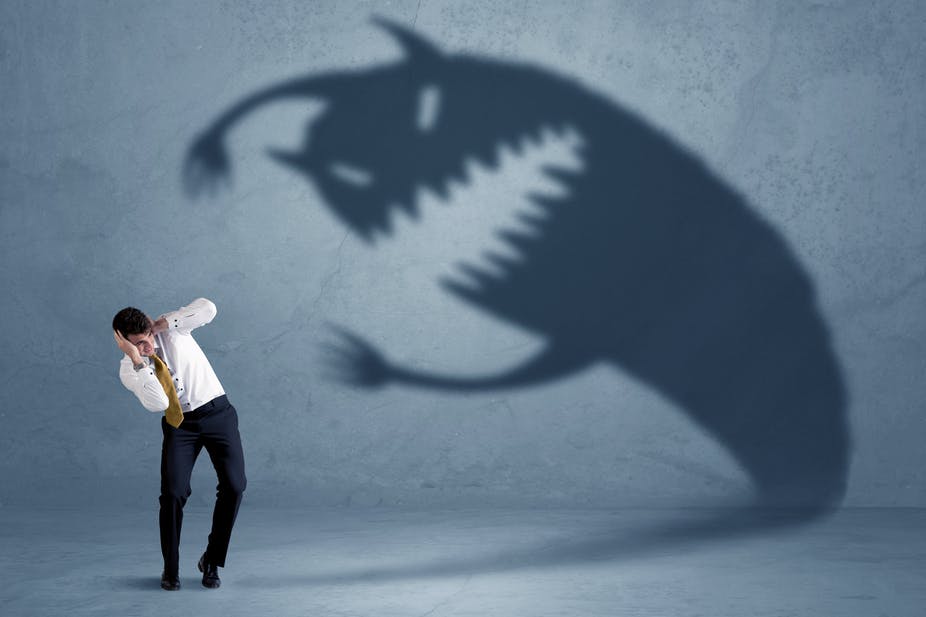
The Fearless Entrepreneur

I’ve heard it said that fear is a major motivation for entrepreneurs. This may be true but it’s not a healthy or effective motivator in my book. Think about what happens when we are afraid. Do we think with a high degree of clarity or are we focused on some form of self-preservation? Is our creativity in full bloom or do we just want to escape that which is making us fearful? Do we really want to be motivated by something so negative as fear?

There’s no question that we entrepreneurs have moments when we are afraid. Perhaps we just learned that a major customer is going to stop giving us his business. What’s our immediate reaction? “Oh no! That customer represents 20% of our revenues and we’re going to have to lay people off!” We conjure up all sorts of horrible outcomes when we hear this news. And then it gets worse. Our negative thoughts multiply. “If that customer is unhappy enough to leave, I wonder how many other customers feel the same way. This could be a disaster! Our company could enter a death spiral and we’ll have to close the doors. What will I do next? Would someone even hire me after this debacle?”

It’s been my experience that rarely are things ever as bad as they might seem in the heat of the moment. What’s needed is an automatic diversion of some sort when thoughts of fear start to creep into our minds. And I have the perfect alternative for the ravages of dread and despair. Here’s the antidote . . . What could go right?

Here’s how it works. When something occurs that could have negative connotations – perhaps an event that stirs up severe anxiety – we stop and say, “what could go right?”  It’s like a train that is barreling down the tracks and it comes to a switch. If the switch is turned one way, the train goes to the left. If the switch is turned the other way, the train goes to the right. The mantra, “what could go right?” acts as that switch. If we go to the left, we are on the path to being afraid with a cascade of undesirable results. If we go to the right, we are on the path to calm and a highly desirable conclusion.

The notion of “what could go right?” is not just a blind state of Pollyanna. Instead, it’s a powerful frame of mind. In the example previously cited, let’s see how it might work. When the customer declares his intention to stop doing business with us, we immediately ask the question, “what could go right?” Rather than dwell on the loss of business, we drill down further and explore the cause for the customer’s departure. Let’s say that this individual was simply retiring and shutting down his operations – his decision had nothing to do with the product we’ve been providing. That doesn’t necessarily make the loss of revenues any easier, but at least we didn’t drive him away. We now have more capacity in our organization. In our newly found state of tranquility, we remember hearing about a prospective customer that we had not pursued because we did not have the production capacity to meet her needs. But now . . . ! Without missing a beat, we set up a meeting with the prospective customer and guess what? She wants our product, and her order will push our revenues beyond where they were with the departing customer.

Had we wallowed in fear, there is no way we would have looked for this new opportunity. We would have been “licking our wounds,” “regrouping,” and “hanging on for dear life.” Instead, we conquered fear before it ever took hold by asking ourselves the simple question, “What could go right?” We took the positive energy from that question and used it to kick our creativity into overdrive. And rather than seeing the situation as a problem to be solved, we viewed it as a steppingstone to even greater good.

As entrepreneurs we’re in a much better position to enjoy positive outcomes when we look at everything with the question, “What could go right?”

This blog is being written in tandem with my book, “An Entrepreneur’s Words to Live By,” available on Amazon.com in paperback and Kindle (My Book), as well as being available in all of the other major eBook formats.
The “Lucky” Entrepreneur

How often have you encountered situations where you conclude that luck must have played a part in the outcome? Perhaps you barely escaped being involved in a horrific traffic accident. Or you walked into a meeting with a prospective customer with whom you’d never spoken and won a major account just by “being in the right place at the right time.” Is someone who seemingly sails through life without struggle just lucky? What about fate? Is our destination already mapped for us? Are some people pre-ordained to succeed and others to fail? Could it be that we use “luck” and “fate” as rationale for something we don’t understand or can’t explain?

I’m going to go out on a limb here and profess that I believe luck and fate are mostly myths. Since no one can prove or disprove this statement, I think I’m safe. Notice I didn’t completely rule out either concept . . . because I can’t be totally certain. But I do think that how we live our lives has a lot to do with what we might otherwise perceive as luck or fate. While this may sound a bit New Age, stick with me on this.

I am totally committed to the notion that positive energy exists and when we live a positive life in all ways possible, good things come to us. Does this mean that a positive lifestyle provides protection from bad things happening to us? I don’t know. I suppose it’s possible, but I prefer to look at . . . yes, the positive side of this. Here’s what I know for sure. When I’m thinking positive thoughts my heart rate is lower, my head is clearer and I’m more often “in the zone.” I’m much less resistive to new ideas and my creativity is off the charts.

Successful outcomes are a combination of many things. It helps to have talent, skill, intelligence, hard work, determination, and perseverance. Everyone has talent. Unfortunately, many people don’t dig deeply enough to discover their true talent – but it’s there. Skills can be learned and developed. Almost everyone can learn and develop a skill. Intelligence is innate, but even those individuals with average or below-average IQs can be very successful by learning how to think. Yes, there are many who are allergic to hard work, but everyone can work hard. With the right mindset, anyone can possess enormous amounts of determination. And of course, we all can persevere if we choose to be patient. Too often, people are willing to give up because they aren’t determined and patient enough. Are people who consistently enjoy high levels of success just lucky, or have they discovered their talent, honed their skill, learned how to think critically, worked hard, been doggedly determined and are supremely patient? 

Who needs luck when we can wrap a cocoon of energy from a positive mindset around our talent, skill, intelligence, hard work, determination, and perseverance? The universe works in amazing ways and perhaps we resist negativity and bad outcomes by living inside this cocoon. Suppose we’re competing for a contract, and we lose. Some might say that our woo-woo positive approach didn’t work. But I choose to see it differently. Instead, I get very excited when I don’t win because it means that something better is in store for me. In the moment that may be hard to see. But I’ve experienced this concept countless times. There have been instances when I’ve later learned that what we “lost” would not necessarily have been right for us in the first place. I remember vying to acquire an apartment property in a small town but did not win the bid. A few months later the major employer in that town pulled up stakes and left – occupancy at the apartment property we had wanted to buy was devastated.

Luck and fate are abstractions that can allow us to rationalize our success or failure. Living the most positive lifestyle possible eliminates the need for carrying a rabbit’s foot or wearing a garlic necklace to ward off evil spirits.

This blog is being written in tandem with my book, “An Entrepreneur’s Words to Live By,” available on Amazon.com in paperback and Kindle (My Book), as well as being available in all of the other major eBook formats.
The Anatomy of an Entrepreneur

As entrepreneurs exactly who are we? What makes us tick? Is there some sort of DNA gene that we can point to? I’ve thought a lot about some of the exceptional entrepreneurs I’ve known over the past four decades and have identified some of their traits and tendencies that stand out.

Let’s start with creativity and innovation. Entrepreneurs use their creative powers to innovate and find a better way to do something. Elon Musk must be one of the most prolific entrepreneurs when it comes to innovation – Tesla Motors, SpaceX, Pay Pal and Solar City come to mind to name a few. Often, creative entrepreneurs are also visionaries. They have an uncanny ability to see into the future and understand what their customers will want and how their company needs to be designed to win. GoPro CEO Nick Woodman is one of the foremost visionaries in America today. Who could ever have imagined a series of high-definition video cameras that are small, durable and light enough to capture our daily adventures – daring and mundane? And successful entrepreneurs understand risk. Rather than taking risk they are adept at managing it.

When they get knocked down, great entrepreneurs get back up – over and over and over. They are amazingly resilient and don’t see failure . . . only opportunity. Walt Disney was fired by his employer, the Kansas City Star, because he supposedly lacked creativity. That didn’t seem to impact his storied career. When things don’t work out as planned, they are flexible and know how to adapt and make the best of every situation. Top-flight entrepreneurs are persuasive and can convince others to say yes. They do so through the power of their passion. Does Steve Jobs come to mind? Look what he convinced us to buy! Along with their persuasive powers, successful entrepreneurs are strong communicators in both verbal and written formats.

Entrepreneurs are assertive – the great ones are less aggressive than assertive. They have a healthy degree of empathy and are sensitive to the feelings of others. Entrepreneurs at the top of their game have a certain amount of charisma. They can be sociable and gregarious – even if those aren’t their core tendencies. Without charisma an entrepreneur will find it tougher to raise money, develop important relationships and influence others. Billionaire entrepreneur Sir Richard Branson is one of the most charismatic leaders on the planet. And he has woven his charisma into a tapestry of empathy and caring about other people.

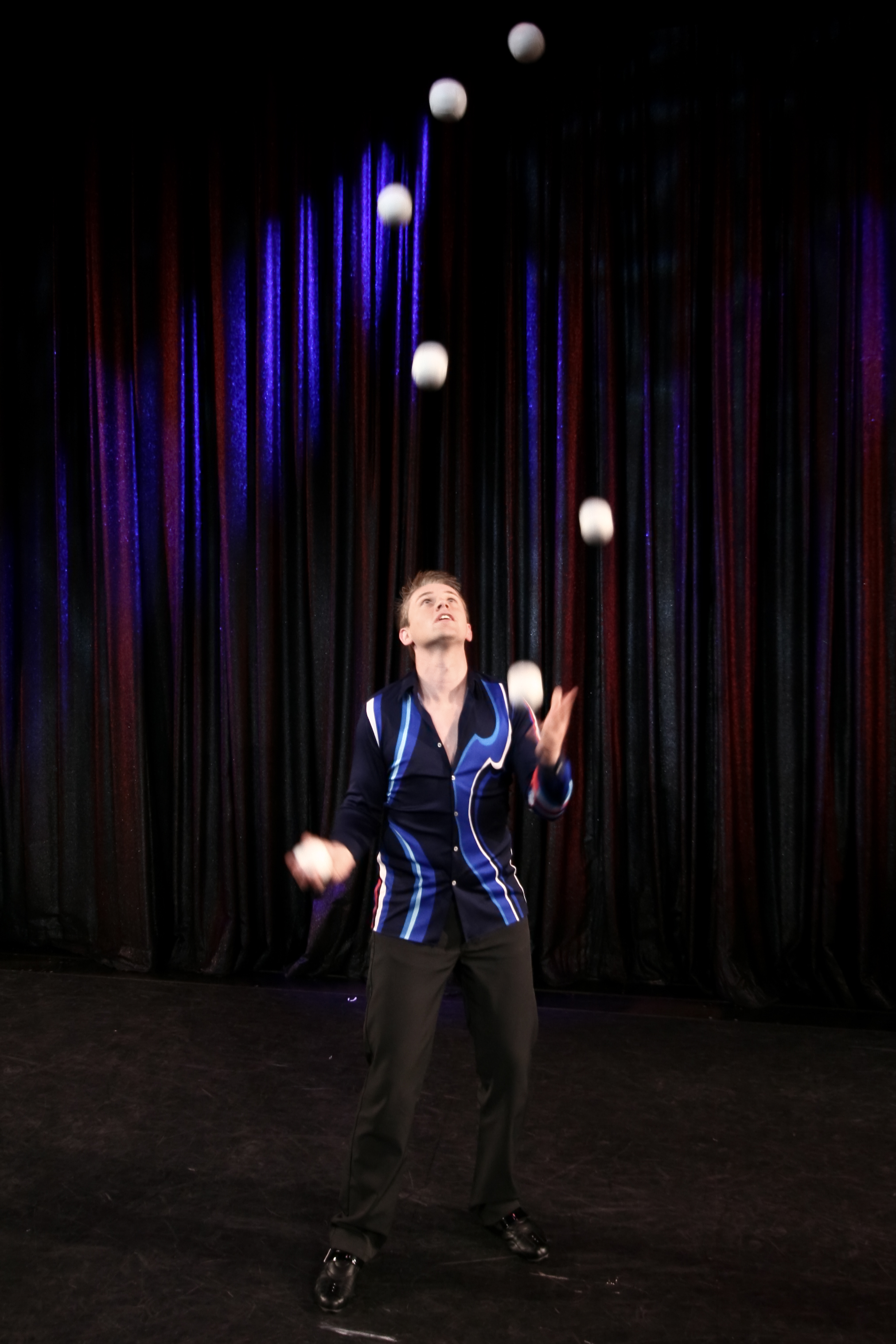
Culture King is another descriptor for the cream-of-the-crop entrepreneur. Ben Chestnut, founder, and CEO of MailChimp fits into this category in the ways he has empowered the 500+ members of his team. Together with a strong culture is a smart entrepreneur’s ability to delegate. According to a 2013 Gallup survey of Inc. 500 CEOs, an average three-year growth rate of 1,751% was realized where the CEO had a high Delegator talent. Entrepreneurs typically have a high sense of urgency and tend to be very self-structured – there’s no way anyone is going to tell them what to do! Entrepreneurs simply don’t want to be a cog in someone else’s machine. Most entrepreneurs also can juggle many things at once and in fact need to feel the rush and excitement of pursuing multiple projects and initiatives simultaneously. Finally, ultra-successful entrepreneurs are generally positive and optimistic people. They don’t dwell on mistakes and never play the victim.

Remember the DNA thing I mentioned at the beginning of this blog? Well, there may be something to it. A February 17, 2016, research paper published in the Austin Journal of Molecular and Cellular Biology reported on the Dopamine Receptor D4 Gene and concluded that entrepreneurs have a higher tolerance for risk-taking in part, due to this gene      (https://www.researchgate.net/publication/294874673_Entrepreneurship_and_its_Genetic_Basis). Apparently, genetics governs approximately 30% of what makes one an entrepreneur. But that leaves 70% to a wide range of personality traits and tendencies.

There are many such traits and tendencies that are identified with entrepreneurs. No one person possesses them all, but the more to which we lay claim the closer we come to attaining world class status.

This blog is being written in tandem with my book, “An Entrepreneur’s Words to Live By,” available on Amazon.com in paperback and Kindle (My Book), as well as being available in all of the other major eBook formats.

The No-Struggle Entrepreneur

How many times have you heard that entrepreneurship is a struggle? Heck, we’ve all heard how life in general can be a struggle. But is it really? I think it’s worth exploring the notion of “struggling.” Various definitions of the word “struggle” reference adversaries, opposing forces, bodily effort, fight, conflict, or contest. I’m just not feeling it.

Let’s paint a picture. Three years ago, Entrepreneur Ed launched his new enterprise. He has encountered many interesting issues along the way. There have been untimely resignations of key team members; nail-biting moments when it was questionable whether he would make payroll; a patent infringement lawsuit; shortages of raw materials that were critical in producing Ed’s product; brutal competition resulting in a price war; cancellation of a liability insurance policy, and the loss of a key customer. Many might say that the last three years have been a “struggle” for Entrepreneur Ed, after all, it appears that he has faced a great deal of adversity. But Ed doesn’t see it that way.

Here is Ed’s perspective. What others see as negative experiences Ed sees as puzzles to solve. Challenging – sure! But Ed believes that what doesn’t kill him will make him stronger and smarter. The utopian view would have us sail along on calm seas growing our businesses from 8 to 5, then going home to play with the kids and spend weekends at the beach. Uh, sorry, it doesn’t work that way. What matters most is the mindset we have as we move through the course of each day. Do we feel like we’re on a perpetual treadmill, grinding away and being attacked from all sides? Do we wonder when the proverbial “other shoe” is going to drop? Perhaps we have become totally overwhelmed to the point of depression. It doesn’t have to be.

Here’s the antidote to the “struggle.” We know we’ve signed on for an adventure – both in the entrepreneurial world and for life in general. That adventure is going to be whatever we make it. If we are fearful and expect disaster . . . we’re likely to find ourselves with a front row seat on the deck of the Titanic as it slowly sinks into the North Atlantic. However, every challenge does not need to end in catastrophe.

We have been rapidly scaling our companies for the past few years. There have been many moments when someone looking in from the outside might believe we were seconds from colliding with a massive iceberg (sorry, I can’t seem to shake out of the Titanic metaphor). I have never believed for a moment that we were on the wrong course. I’ve seen each challenge as a positive opportunity for creativity and growth. And guess what? It’s working! Every time we think we’re flirting with disaster we seem to pull a rabbit out of a hat – except there’s really nothing magical about it at all. Instead, we have a well-thought plan, and we have an extremely positive mindset. We know there will be detours along the way. Sometimes we’ll have to backtrack to find the trail, but we are never lost, and we are always focused on our vision.

As I write this, it’s worth noting that I’ve been with the same company and on the same quest for nearly 49 years. I can now look back and realize how incredible the ride was. Did it ever seem like a struggle? There definitely were times early in my career where I wondered if we were going to survive. But the older (and maybe wiser) I’ve become, the more I’ve come to understand that success comes from within us. While there may be some external influences, it’s really all about how we see the world when we get up in the morning; how we choose to look at each experience throughout the day, and the impression with which we are left when our head hits the pillow at night. In other words, we’ll struggle if we believe we are struggling. Or we’ll see the incredibly short time we are riding this planet as a golden opportunity for experimentation, innovation, mastery, and joy.

We throw off the chains of “struggle” when we embrace a life filled with positive energy and gratitude. And then we can pursue our purposeful vision with confidence.

This blog is being written in tandem with my book, “An Entrepreneur’s Words to Live By,” available on Amazon.com in paperback and Kindle (My Book), as well as being available in all of the other major eBook formats.
The Extinct Entrepreneur

By now, everyone knows that tens of thousands of retail stores have closed across the country over the past several years. One industry source predicts another 50,000 stores could close by 2027. Covid certainly had an impact while public access was locked down for an extended time. But the trend started well before Covid. This year, Bed, Bath & Beyond is just one of the latest chains to close the doors. At its peak, Bed, Bath had 1,552 locations. Sears at its peak had 3,500 stores and Kmart had 2,300 locations. Now both Sears and Kmart have a combined 23 stores remaining in the U.S. Bricks and mortar retailers are fighting for their collective lives. They are up against the likes of Amazon and Walmart, to name two of their biggest competitors. Amazon is open 24/7 and Walmart stores seem to be open most of the hours people are awake.

This data has gotten me to think about how some businesses simply fail to change with the times. This isn’t anything new. But by now one would think that the ability to adapt would be case study Numero Uno in the school of entrepreneurship. Let’s look at another example – this one is in the educational sector. For years, we’ve seen tuition spiking at public universities and colleges. According to Education Data.org, tuition has increased approximately 136.5% from 2000 – 2021, an annual rate of 6.8%. Meanwhile inflation has averaged 2.55% per year for the same timeframe. Why has this happened? Government-insured student loans have been a major contributor to the upward movement of tuition. Universities have known that they could just keep pushing tuition because students could borrow cheap money to finance the cost. There’s only one problem. The student loan bubble is bursting as millions of young people are questioning why they should take on debt of as much as $100,000 or more to earn a college degree. Public funding for higher education has been under pressure for years. Meanwhile, colleges and universities blithely continue to build new buildings and act like the good times will roll forever. There’s scant evidence that leadership is plotting how to adapt to what could become a very scary situation.

The landscape is littered with the carcasses of companies that failed to adapt. Besides Bed, Bath & Beyond, Sears, and Kmart, we’ve seen store closings and/or bankruptcies at Mattress Firm, Brookstone, David’s Bridal, Tuesday Morning, Party City, Serta Simmons Bedding, Rockport, Nine West, Claire’s, Toys R Us, iHeartMedia, Gibson’s (the guitar maker) and Bon-Ton to name a few. Many of these companies had accumulated too much debt. Others grew too quickly and saturated the market with stores (Mattress Firm comes to mind). Others clearly kept plodding along with a business strategy that no longer worked.

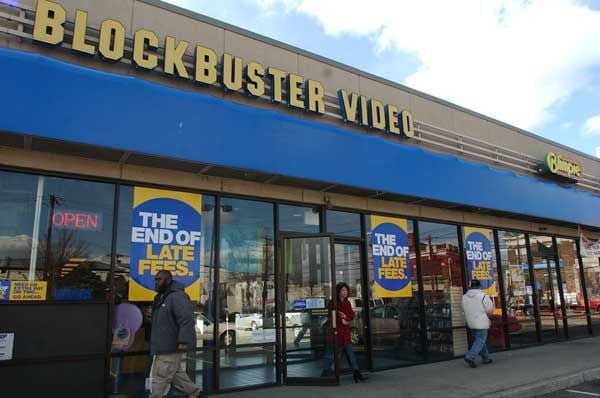
The Netflix vs. Blockbuster Video story is common knowledge. Blockbuster never came to grips with the fact that streaming services were going to be king of the mountain, pushing the business of renting videocassettes into the abyss. Eastman Kodak failed to understand that digital photography was the future – not film and photographic paper. Yahoo blew it when Google was offering everything for free; yet Yahoo thought it could charge for e-mail and file sharing. 

When we as entrepreneurs become comfortable and believe that we have the best idea, we’re probably headed for a fall. Because there’s absolutely no doubt that someone else is already working on the next best idea and may roll it out as early as tomorrow. Dr. Ichak Adizes, CEO of the Adizes Institute and one of the world’s leading management experts has developed a concept he calls the Corporate Lifecycle. He identifies a “Mature” organization as one that is about to experience “The Fall.” He goes on to say, “The leaders of The Fall companies are starting to feel content and somewhat complacent. This attitude has been developing for some time. The company is strong, but it is starting to lose flexibility. It is at the top of its lifecycle curve, but it has expended nearly all the “developmental momentum” it amassed during its growing stages. The rocket is slowing down and starting to change direction and head down the lifecycle curve. The organization suffers from an attitude that says, ‘If it ain’t broke, don’t fix it.’ The company is losing the spirit of creativity, innovation, and the desire to change that brought it to Prime (the ultimate phase of the corporate lifecycle). It has sown the seeds of mediocrity.”

There are many lessons to be learned here. As our organizations continue to grow and become rocket ships, it’s critical that we maintain our spirit of creativity, innovation, and the desire to change. Always. Every day. Forever.  

This blog is being written in tandem with my book, “An Entrepreneur’s Words to Live By,” available on Amazon.com in paperback and Kindle (My Book), as well as being available in all of the other major eBook formats.

Walt Disney and Entrepreneurship

I recently re-read a terrific biography by Bob Thomas called Walt Disney: An American Original. Thomas was a reporter and biographer who authored multiple biographies focusing on Hollywood celebrities. The Disney story is fascinating and is packed with incredible entrepreneurial anecdotes. As a kid in the 1950s and 1960s, I watched Walt Disney Presents and Walt Disney’s Wonderful World of Color on ABC and NBC. I remember attending the Disney movie Babes in Toyland in early 1962 at the local theater. And then of course there was Mary Poppins starring Julie Andrews and Dick Van Dyke in 1964. The pièce de résistance was a visit to Disneyland in Anaheim, California, with my family. Of course, as a boy I had no idea what entrepreneurship was all about.

Roll the tape forward several decades and I find myself in awe of this amazing man. He epitomizes so many positive traits of a successful entrepreneur. For starters, he was one of the most optimistic individuals I’ve ever studied. Walt Disney was born in 1901 and began his career at age 18, and in the 1920s moved to California and launched Disney Studios with his older brother, Roy. The early days were lean – sometimes very lean. There were many weeks when the Disneys were scrounging for enough money to make the payroll. Roy took this very seriously and fretted considerably over their plight. But Walt was the eternal optimist. He would smile and say he never worried about money. He believed they would always figure out a way to survive. And he was right! Somehow the studio inevitably pulled a rabbit out of a hat and came up with the cash. Without Walt’s optimism and positive mindset, there would be no Disney legend that we know today.

Walt understood grit and perseverance better than anyone else. The Disney organization was just starting to come into its own when the Great Depression came crashing down upon the country. And yet Walt continued fine tuning his craft and creating cartoons that were well received by theater audiences everywhere. His optimism fueled this perseverance and every time he was knocked down, he was able to pick himself up, dust himself off and go back at it. This resilience combined with perseverance and a positive attitude was the key to surviving the dark days of the 1930s.

Creativity was another Disney hallmark. Walt got the idea to create a feature-length animated movie and introduced the world to Snow White and the Seven Dwarfs in 1937. No one in the film industry had ever produced a feature-length animated movie and everyone doubted that such a production could succeed. Walt Disney proved the skeptics wrong and followed with additional masterpieces such as Pinnochio (1940), Fantasia (1940), Dumbo (1941) and Bambi (1942). When World War II took away many of his talented animators, he made movies under a contract with the federal government. While not nearly as profitable, the Disney organization was able to endure the war and remain in business. Walt’s creativity and ability to adapt to his circumstances were more entrepreneurial characteristics that led to his success.

He was a true visionary in every sense of the word. After succeeding with motion pictures, Walt foresaw the opportunity to create an amusement park that embodied the magic he had been delivering through his animated films. I can still remember that trip to Disneyland when I was five or six years old. I was overwhelmed by such an amazing experience. After Disneyland came his ideas for Disney World and Epcot in central Florida. Unfortunately, Walt Disney died from lung cancer in 1966 at the age of 65. The tragedy of this was the fact that he never witnessed the finished product of the Florida projects.

Walt was obsessed with detail and would often snoop after hours and look at the animator boards to see what his team was producing. Often the animators would arrive the next morning to find notes from Walt suggesting changes that would improve their work – and he was usually right about what he wanted. He demanded the highest level of quality for everything that bore the Disney brand. This was one of the major differentiators that enabled the Disney organization to consistently outpace the competition.

We entrepreneurs would be well-served to use Walt Disney as a role model. Wrapped into a single human being are the entrepreneurial traits of optimism and positivity; grit, perseverance, and resilience; adaptability; creativity; vision; attention to detail and demand for quality. The impact he has had on our culture is indelible. The impact he has had in blazing a trail for entrepreneurs is profound.

This blog is being written in tandem with my book, “An Entrepreneur’s Words to Live By,” available on Amazon.com in paperback and Kindle (My Book), as well as being available in all of the other major eBook formats.