
The First Impression Entrepreneur

Most days are good days for me. Every once in a while I will feel a bit more intense and may have a tendency to behave in ways that are out of character for me. Recently I observed a situation that reminded me of how dangerous it can be to let my guard down in this way. Allow me to set the stage for this story.

We were vacationing with friends and enjoying breakfast in a small outdoor café. A mid-60s couple was sitting at a nearby table. The woman was seated next to a small ledge and unwittingly shifted her chair and toppled over backwards. Immediately my friend who was closest, jumped up and rushed to her assistance. With her glasses askew and an embarrassed look on her face, she got back on her feet with my friend’s help. Fortunately, she was not hurt.

The focus of this story is not on the woman’s accident but on the husband and how he reacted. He just sat there. While my friend came to the rescue, the husband just sat in his seat drinking his coffee like nothing had happened. At one point he joked to his wife that she “looked like a circus clown.” Once she regained her composure, the woman left the café – smiling but humiliated. After a moment, the husband looked at us and said half in jest, “Well, you sure made me look bad.” And then he left.

Now here is the most instructive part of this episode. Once the husband was gone the café patrons were abuzz and angry. People could not believe the husband had treated his wife this way. As she cleared the table, the server exclaimed, “He just sat there. I can’t believe he didn’t get up to help her!” I heard references to “jerk,” and “a**hole,” just to name a few.

This man was being judged by a jury of his peers and he was found guilty. He left a lasting impression on everyone in that restaurant, and it was 100% negative. Just a single action. For all we know, this man might be one of the finest, most generous, and thoughtful human beings on the planet. He might have just donated $100 million to build a new wing on the local hospital and named it in honor of his wife. But at that moment in time, and without any other context, he was an ogre to his jury and will forever remain frozen in that image.

Most of us care about how others see us. We want to be viewed in a favorable light or at worst, in a neutral manner. The husband in this story obviously had enough self-awareness to realize he was wrong as evidenced by his statement that, “You made me look bad.” Unfortunately, that comment probably sealed his fate for the onlookers. He chose to blame my friend for how others saw him rather than taking responsibility for his own poor behavior. I would bet that if he apologized to his wife in the restaurant and admitted that he had a momentary lapse in judgment, the impression he left would have been different.

We all have momentary lapses in our behavior. But it is important to take corrective action to repair the damage as quickly as possible. Failure to do so may result in an extremely harsh and lasting judgment by a jury of our peers.

This blog is being written in tandem with my book, “An Entrepreneur’s Words to Live By,” available on Amazon.com in paperback and Kindle (My Book), as well as being available in all of the other major eBook formats.


The Servant Entrepreneur

What would you do if you were visiting in another city, fell and broke your front teeth? And what if it happened in the evening and on a weekend? Well of course you would try and find a dentist. Unfortunately, though, it is not that easy.

A friend of ours related the story of her friend who encountered this very calamity. She was carrying a platter of meat at dinner time from the common outdoor grill in the condo where she was staying, tripped on a step and did a face plant. In the process she broke her top teeth and actually pushed one of them back at a 45-degree angle. Needless to say, she was in a lot of pain. A dentist lived in the condo building but was not home, so she began calling dental offices in the city. She contacted approximately 30 practices – presumably, it was an answering service in each case. Only one dentist called her back.

He was a young man and told her to meet him at his office at 8:30 that evening. When she arrived, he opened the office and proceeded to make the necessary dental repairs. She thanked him profusely and his reply was the clincher. “I only hope that if my wife was ever in another city and had this happen, that someone would help her.” I have no idea whether the other 29 dentists even were notified by their answering services, so I am hesitant to make any judgments here. Suffice it to say that she only needed one dentist to respond, and one did.

This dentist clearly displayed an attitude of service. While it may seem like a rather obvious thing, our perception of medical service providers as compassionate and caring is not always accurate. This can be said about most professions and industries. Too often in too many fields, practitioners are focused less on their customers and more on other objectives. Does this person have insurance? Will this person become a repeat customer? I am busy. Someone else will handle this. I just finished a 12-hour day and I am too tired. Get the picture?

At what point do we put the needs of the customer ahead of our own? Do we do this only when it is immediately profitable to do so? A lot of businesses apparently have adopted this philosophy. Or, do we believe in serving every customer, client, patient, etc. as we would want to be served? This is a very uncomplicated subject. We either serve or we do not. It is totally our choice. But there is a natural law at work here. For when we do good for others, good comes back to us in greater and greater abundance.

As entrepreneurs the rewards are enormous for putting the needs of others ahead of our own. When service comes first the profits will be bigger than we ever could expect.

This blog is being written in tandem with my book, “An Entrepreneur’s Words to Live By,” available on Amazon.com in paperback and Kindle (My Book), as well as being available in all of the other major eBook formats.

The Value Proposition Entrepreneur

Several days ago, I was talking with an entrepreneur about his company. For many years, he had achieved a reasonable level of success with the manufacture and sale of a particular product. But more recently his sales had trailed off and he was becoming worried. He made very telling statement, “the product is the same as it has been for the past 15 years – I don’t understand why people aren’t buying it in the quantities they once did.” Framed in this manner, the problem is obvious. But how often do we march on oblivious to the changes that are occurring around us?

I asked the entrepreneur to explain his value proposition, a question that was followed by silence. He admitted that he really had not thought about it for quite some time (actually it had been several years). The bottom line was that his customers no longer saw the value in his product the same way as they had in the past. Tastes change. Competition is fierce. Customers can sometimes feel like they are being taken for granted. Unless we make an effort to continually understand why our customers buy our products or services, we aren’t in a position to make the tiny tweaks or major overhauls that are necessary to maintain our winning streak.

Conventional wisdom says that a value proposition is a promise of value to be delivered. Obviously, there is a lot more to it. A restaurant where we eat sometimes seems to be having a bit of a struggle with its value proposition. I suppose that the proprietor could say to me the customer, “You pay me money and I’ll cook your dinner.” Technically that is a value proposition – but a pretty bad one. The website for this restaurant references “a special dining experience.” There are some other superlatives in the “About” section of the website, but nothing that would really grab you. There are a lot of little things about this place that demonstrate a lack of focus on a strong value proposition. The prime rib is fatty and gristly; the wait staff is not trained to make sure that a diner’s glass of tea or water is always full – even if it is not their assigned table; likewise, empty plates are not cleared by the bus staff while guests are at the table (only by the primary server), and finally, service can be a bit slow at times.

A value proposition needs to reflect the culture of the organization. In the case of the restaurant previously mentioned, there does not seem to be a culture of attention to detail. This restaurant probably gets 95% of the dining experience right but does not seem to care enough to nail that last 5%. If I owned the restaurant, I would re-tool the culture and become fastidious about the little things. My ultimate value proposition would be something like this: “Most restaurants can cook you a meal. We focus on that last 5% to make your dining experience 100% perfect.” Then I would follow that with a further explanation – “your drink glass will never be empty; we select only the highest quality beef, pork, poultry and fish; our wait staff will always be looking for ways to serve you – regardless of whether or not it’s their assigned table.” Not only does this clearly state what value we will be delivering, but it also defines the points of differentiation with competing venues.

A good value proposition is clear, inspiring, and differentiating. To avoid becoming irrelevant, entrepreneurs must continually review and refine their value propositions.

This blog is being written in tandem with my book, “An Entrepreneur’s Words to Live By,” available on Amazon.com in paperback and Kindle (My Book), as well as being available in all of the other major eBook formats.

The In-the-Zone Entrepreneur

“I need to stop and get milk on the way home from the office. I wonder how that new employee we just hired is going to work out. Wow, it is hot in here! I’m hungry. This paragraph I am reading makes no sense. Boy it is sure hard to concentrate right now. The stock market is way down today. Man, I am really hungry. Note to self – pick up wife’s birthday present. Must also remember to follow-up with Smith on the Franklin contract. Blah, blah, blah, buzz, buzz, buzz . . .”

Does this sound like what is going on in an entrepreneur’s mind ALL THE TIME?! Do you recognize the pattern? If you are like me, you have a million thoughts crossing your mind at warp speed and on a continual basis throughout the day. There are all kinds of statistics to be found, but the National Science Foundation provides a range of 12,000 to 50,000 thoughts per day for each of us. Even on the low end, that is a lot of thoughts. As a result, it is easy to become overwhelmed by our own minds. We are constantly bombarded with massive amounts of stimuli – much more so than ever before. I believe that the Internet and technology in general has enabled us to connect with a multitude of people and things that contribute to this trend. Think about a farmer in the 1800s. He might have read a newspaper every once in a while. Beyond that, he was not really in touch with the world outside his own small community. He worked hard physically. His mental challenges were pretty much limited to providing for and taking care of his family.

How hard would it be to just sit quietly for 30 minutes and think of absolutely nothing? I do not know many people who can actually do this. And yet, we need to be able to clear our minds of the clutter that accumulates throughout the day. A friend of mine has some wonderful advice. He says, “Listen deeply into the silence behind the noise.” Yes, much of what we think is just noise. Have you ever tried to talk on the phone with someone while a very loud conversation is occurring within earshot? Have you ever tried to focus and concentrate when there is a loud television blaring in the background? This is exactly what is happening in our minds with all the thoughts competing for attention. So, what to do?

To listen deeply into the silence behind the noise means that we must clear and quiet our minds. There is probably nothing harder for us entrepreneurs than to slow down and turn off our thoughts. But I think you will agree that when this is accomplished the flow of creative energy becomes even greater than before. And of course, creativity leads to better products and services; a more acute awareness for solving problems, and stronger interpersonal relationships. Whether you meditate, practice yoga, take long walks, or engage in some other daily mind-clearing activity the important thing to remember is to be present. Most of us are either thinking thoughts about the past or the future. When I take a walk, I try and focus on where I am and what I am experiencing in the moment. I observe the color of the sky, the shape of the clouds, the birds I am seeing in the trees and the sounds that are cascading around me. Above all, I am able to push all of the thoughts about past and future out of my head and live for the moment during the time I’m talking my walk.

We must be intentional about clearing our minds of the clutter that accumulates. Only then will our creative energy be heightened in positive and rewarding ways.

This blog is being written in tandem with my book, “An Entrepreneur’s Words to Live By,” available on Amazon.com in paperback and Kindle (My Book), as well as being available in all of the other major eBook formats.

The WUONPS Entrepreneur

Have you ever found yourself in what I call a “wired-up overwhelmed near-panic spiral – WUONPS?” You wake up at 3:30 AM with this gnawing feeling – you are not worried about anything in particular, but that feeling is there. You cannot go back to sleep, so you get up and make some coffee. You surf the internet while drinking three cups of coffee. Then you hit the drive-through at Starbucks on the way to work and get a Triple Frappasomething with an extra double shot of cappuccino. It has been consumed before you reach the first stoplight. By the time you arrive at the office the feeling is welling up. With few more cups of coffee, a glance at 75 new e-mails and a minor crisis dropped in your lap, you have now reached the pinnacle of WUONPS. Oh, and it is only 8:11 AM. What to do?

The first step is to recognize the state that we are in. The quicker we can do this the faster we can move toward resolution. When we push on without stepping back our feelings cascade and we end up in a spiral. In aviation parlance, we are now in full-fledged crash and burn mode. When we recognize that we are headed into WUONPS we need to stop what we are doing IMMEDIATELY. Then we need to go and find a quiet place for decompression.

Once in our quiet place it is important to sit with our feet flat on the floor and hands in our lap with our eyes closed. We take a deep breath and let it out slowly. We do it again and again. Focusing on our breathing is a sure-fire method of calming ourselves. Deep breathing delivers increased amounts of oxygen to the brain. Livestrong.com says this: “Breathing slowly and mindfully activates the hypothalamus, connected to the pituitary gland in the brain, to send out neurohormones and trigger a relaxation response in the body. The hypothalamus links the nervous system to the endocrine system, which secretes the hormones that regulate all activities throughout the body.” Scientific explanation or not, this process definitely works.

Once we have begun to “unwire” through deep breathing, we might undertake the ROY G BIV exercise. ROY G BIV is an acronym for the seven colors of the rainbow – red, orange, yellow, green, blue, indigo, and violet. In our mind’s eye we see each of the colors of the rainbow traveling from the center of the earth through the bottom of our feet, up our leg, across our midsection, down the other leg and back to the center of the earth. We do this slowly and intentionally with each color of the rainbow. The purpose of ROY G BIV is to ground ourselves. I know that when I have been in a state of WUONPS, I have a weird free-floating out-of-control feeling. ROY G BIV eliminates this feeling.

After spending ten or fifteen minutes deep breathing and grounding ourselves, we are now ready to move back into the day. But first we should review our goals and objectives for the day. We spend a few moments with our “To Do” list and make sure we are clear on what we intend to accomplish for the rest of the day. Then we move forward with a new purpose and a new attitude. And . . . we avoid any additional caffeine for the rest of the day. We can also eliminate WUONPS altogether if we exercise regularly (daily for me); limit our consumption of caffeine and maintain a daily practice of meditation or quiet time.

Recognizing WUONPS is critical. Breaking the spiral with deep breathing and ROY G BIV is paramount. Recommitting to the day with a clear understanding of what we intend to accomplish puts us back on the calm and productive path we desire.

This blog is being written in tandem with my book, “An Entrepreneur’s Words to Live By,” available on Amazon.com in paperback and Kindle (My Book), as well as being available in all of the other major eBook formats.

The Never Say Never Entrepreneur

“If you think life is magical or life is hard, either way you are right. Your thoughts are the source of reality.” I love this quote by Dr. Debasish Mridha, an American physician and philosopher. And here is a phrase that is toxic to the entrepreneurial mindset – “It’s too hard.” Why? Because it is an affirmation – and a powerful one at that. There is nothing wrong with acknowledging that the mountain in front of us may be huge. But we can easily tip over into defeatist territory if we say something is “too hard.” Often that is a signal that it is time to give up. Au contraire!

Conquering something difficult and maybe even insurmountable is a true entrepreneur’s dream, much in the same vein as climbing Mount Everest or something less daring like public speaking. I want to “run to hard” and embrace it. I do so because I know that many others have run away from it. “Too hard” is an opportunity to blend innovation and creativity into a solution. It is an opportunity to witness the power of a positive attitude. It is an opportunity to learn how tough we are and how able we are to persevere.

There are examples all around us of how “too hard” really wasn’t. Think how hard it must have been to put a man on the moon in 1969 before the technological advancements we have today. The first heart transplant must have been amazingly hard – yet someone did it. And how hard was it for swimmer Michael Phelps to win 28 Olympic medals over the course of his career? There is no doubt that someone uttered the “too hard” phrase with each of these accomplishments. And that someone was obviously dead wrong.

Here is what I have learned. A leader must be the eternal optimist. He or she must absolutely and totally believe in the goal or objective. This belief must be authentic and genuine – not playacting for the team. There’s confidence on steroids at work here. But more than sheer willpower is necessary to generate the desired result. The effort must be strategic and smart.

Hoover, Electrolux, and Oreck seemed to have a corner on the vacuum market for years. Then along came James Dyson with a revolutionary idea in the late 1970s.  He created 5,127 prototypes over five years and the G-Force Dual Cyclone was born. Dyson has since become a worldwide market leader with 2019 sales of more than $7.3 billion. Here is another example. Blockbuster had 2004 revenue of $6 billion while Netflix brought in $500 million. Today, Netflix has more than nearly 208 million streaming subscribers and Blockbuster is out of business. What happened to “too hard” with Dyson and Netflix?

Dyson revolutionized vacuum cleaner design and eliminated the need for a bag. It was clearly a disruptor in its industry. Its swivel ball technology also made it easier to use a vacuum cleaner in tight spaces – something the incumbent makers had failed to do. Netflix was all about convenience for its customers. I remember having to drive to the Blockbuster store to rent a movie. Meanwhile Netflix was sending them through the mail. Ultimately, the company figured out that streaming was the future and rode the wave in handsome fashion. “Too hard” was transformed into stunning success through innovation, creativity, perseverance, resilience and above all a “can’t lose” mindset.

How do these stories apply to us? If nothing else, it is imperative that we learn how to convert too hard into let’s do it.” We must first convince ourselves that we can do whatever we set out to do. Then we must persuade our team to believe the same way. I know that this sounds like a lot of rah-rah. But the formula is a simple one. Yes, there will be risks – but we figure out how to manage them. Yes, there will be failure – but we use it to learn what works and what doesn’t. And yes, there will be periods where progress seems painfully slow – but we keep moving forward until we break through.

This blog is being written in tandem with my book, “An Entrepreneur’s Words to Live By,” available on Amazon.com in paperback and Kindle (My Book), as well as being available in all of the other major eBook formats.

The Opportunity-Juggling Entrepreneur

Are you a juggler? Or do you like to focus on one thing at a time? This is the classic conundrum for an entrepreneur. True confession. My personality is such that I could become easily bored if forced to focus on only one thing. I flourish when I am juggling 67 balls and trying to keep every single one of them in the air. There are times when juggling is not only useful but necessary. And there are times when intense focus is mandatory. Mind you, I can focus like a laser when I absolutely must. But I do not really like to do this day-in and day-out.

In the start-up world, venture capitalists often advise entrepreneurial founders to focus on a single product or service. This is generally sound advice. Too often, founders “flit” all over the place with a million ideas and are masters of none. I understand this. At the earliest stages of the corporate lifecycle, we are searching to find the right product; the right features; and the right market. As a result, we may tend to cast a wide net over many products, many features, and many markets, looking for the right combination in the process. And so, the juggling act begins.

There is a fine line between juggling to fine-tune a product or service and juggling a panoply of unrelated ideas that we think are opportunities. One of our business units is focused on acquiring market-rate apartment properties across the country. This product set has been painstakingly refined and our team is very disciplined within the parameters that have been established. This strategy calls for purchasing properties of 200 to 600-units, built in the 1980s to 2000s, and located in larger markets in the Midwest, Southeast and Southwest. I am very supportive of this approach. A couple years ago I suggested that we purchase some smaller properties in the same markets for a different group of investors wishing to write smaller equity checks. Fortunately, our team knows my proclivities and accommodated my suggestion. I think they would prefer to maintain their focus on the larger properties. But they understand that this second product set provides some diversification as well as some operating efficiencies. Needless to say, this additional strategy has caused a certain amount of juggling to accomplish.

Many of the great companies have started with a single product. Amazon sold only books in the early days. One could order hard copy books and eventually digital books that could be read on Amazon’s e-reader, the Kindle. It was years before Amazon began juggling in the sale of other products. Apple did the same thing with a personal computer. Again, it was years before they started selling MP3 players, phones, and other electronic devices. Somewhere along the line these companies had to begin juggling in a more robust manner. What was the inflection point? If you are an entrepreneur, have you found the inflection point where juggling more opportunities is appropriate and perhaps even necessary?

Working within a team structure is critical to discovering the right time to begin juggling more and more opportunities. Debating and discussing a multitude of ideas is healthy and will lead to the right decision. One thing I appreciate about our team is the fact that while willing to juggle, they will say “no” to opportunities they do not believe are productive. They test each idea and opportunity against our corporate vision and mission. This is the most important factor of all. Earlier in my career I grabbed at everything. That was before our vision and mission was clear. It is much easier now to juggle while still remaining focused when understanding which opportunities are truly a fit.

As entrepreneurs we are destined to juggle. But we must know when to be singularly focused and when to look at many ideas and opportunities. Using a team approach to make these decisions and testing each idea and opportunity against the corporate vision and mission is the ticket to success.

This blog is being written in tandem with my book, “An Entrepreneur’s Words to Live By,” available on Amazon.com in paperback and Kindle (My Book), as well as being available in all of the other major eBook formats.

The Moat-Building Entrepreneur

We know from our history lessons that in medieval days, members of noble families often lived in castles. These fortresses were imposing in appearance and have stood for centuries – a testament to their design and construction. Castles were built over a 900-year timeframe which is truly amazing. These structures were protected by a wide range of defenses including various forms of artillery, arrows, boiling oil, tar and sewage, and there are even reports of diseased dead bodies being catapulted at assailants. Finally, deep wide ditches were dug around many castles and filled with water, requiring access via drawbridges. In fairy tales we heard about moats being home to alligators, crocodiles, and other horrible monsters though it is doubtful that in real life moats were populated in this fashion.

So, what is your moat? Strange question you ask? I have written several times in the past about how important it is that entrepreneurs differentiate themselves from their competitors. In 2007, Warren Buffet was speaking to a group of University of Florida MBA students and had this to say about differentiation.

“I don’t want a business that’s easy for competitors. I want a business with a moat around it. I want a very valuable castle in the middle. And then I want…the Duke who is in charge of that castle to be honest and hard-working and able. And then I want a big moat around the castle, and that moat can be various things.”

“The moat in a business like our auto insurance business at GEICO is low cost. I mean people have to buy auto insurance, so everybody’s going to have one auto insurance policy per car basically, or per driver. And…I can’t sell them twenty…but they have to buy one. What are they going to buy it on? They’re going to buy it based on service and cost. Most people will assume the service is fairly identical among companies, or close enough, so they’re going to do it on cost, so I gotta be the low cost producer. That’s my moat. To the extent my costs get further lower than the other guy, I’ve thrown a couple of sharks into the moat.”

Thinking about differentiation in terms of a moat is a slightly different perspective than I have had in the past. I have viewed differentiation proactively and as an opportunity to exploit. Buffet seems to be seeing it from a defensive standpoint – thus his moat analogy. Either way, we get to the same place. There must be a reason that people want to do business with us beyond our charm and good looks.

I am advocating for a combination of defense and offense with respect to differentiation. On the one hand, I am looking for products and services that have high barriers to entry. Perhaps this is due to substantial capital requirements; extremely complex aspects to the product or service; maybe it is a patent; or perhaps there is a vertically integrated process that is extremely difficult to replicate. All those factors become the moat. They make it hard for competitors to easily jump into our space and make inroads.

Now let’s play offense. Simply keeping our competition at bay does not ensure success or profitability. It is what we do inside the castle that really counts. We can sit on a throne, eat rich foods, and get fat (dumb and happy), or we can exploit the opportunity we have to function in an arena where competition may not be as intense. This might take the form of developing a premium product, or a marketing strategy that creates FOMO – the Fear of Missing Out. Maybe exploiting the opportunity looks like the streamlining of an internal process that produces even greater profits. The point is that with a moat in place we can take our endeavor to an even higher level than ever before.

Differentiating ourselves as entrepreneurs is essential to our success. Doing so with a dual strategy of building a moat and exploiting the opportunity allows us to play defense and offense at the same time.  

This blog is being written in tandem with my book, “An Entrepreneur’s Words to Live By,” available on Amazon.com in paperback and Kindle (My Book), as well as being available in all of the other major eBook formats.
What’s Wrong With Retail?

During 2020, 12,200 retail stores closed, up from 9,300 store closures in 2019. Another 5,700 retailers closed their doors in 2018, and 8,000 closed in 2017. That is a total of 35,200 stores over a four-year timeframe. Experts have offered several reasons for this trend including the growth of e-commerce as well as the opening of too many stores in years past. Certainly, these are likely factors in the struggles experienced by the retail industry. But there are some basic and fundamental reasons as well. Entrepreneurs would do well to pay attention to how these basics and fundamentals could have an impact on every business – whether retail or otherwise.

We recently traveled several miles to a large national furniture home store in search of a particular kind of lamp we wanted to purchase. When we arrived, there was a grand total of one salesperson on the showroom floor and he was working with a family that appeared to be pondering a significant purchase. I cannot say that I blame him for focusing all his attention on a customer that would earn him a very nice commission. Unfortunately, he did not even acknowledge us or try to find another salesperson to assist us. We waited approximately 20 minutes and then I began wandering the store and came across another salesperson who was arranging a display. He didn’t even ask if I needed help until I finally told him we had questions and would appreciate speaking with a salesperson. I then showed him the lamps that were exactly what we needed and asked him to ring up the sale and we would take the lamps home with us. Not so fast, he responded. The store did not keep lamps in stock and would have to order them. I asked if we could just buy the floor models and he said no. If they did that, they would not have anything to display on the floor. He then informed me that it would be about four weeks before the lamps would be delivered. Disappointed, we told him that we would order them online from a different supplier which we did – and had them three days later.

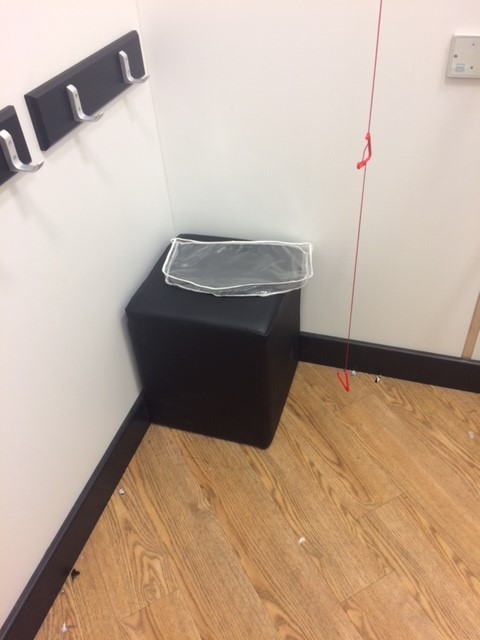
A friend of ours related another story which she said she has encountered several times. She recently visited a large national department store chain in a local mall. As happens so often, there were no salespeople on the floor, and she had to go looking for them – sound familiar? Once found, the salespeople (remember, this happened on numerous occasions) were uncaring and unknowledgeable. She wanted to try on different clothing items only to find the dressing rooms filthy to the point that she did not want to use them.

Finally, we periodically patronize a large national household goods store. This chain purportedly sells everything under the sun. And yet, we always leave with at least one or two very common items remaining on our shopping list. Why? Because the items are not in stock for one reason or another. We have tracked down sales associates who tell us that if it is not on the shelves, they do not have it. This was understandable during COVID-19, but the problem was occurring well before the pandemic.

So, let’s review. A large retailer does not carry floor items in stock so that customers can take their purchases with them. In fact, a customer must wait longer to receive such items from the store than if they make the purchases through an e-commerce site. Several large, national retailers do not have adequate sales associates available to help customers. And, in several cases the sales associates they do have are of no help. Finally, cleanliness in a few cases is apparently not on anyone’s “To Do” list.

Let’s be clear. There are many retail establishments that are doing it correctly. Home Depot and Lowe’s have plenty of friendly and knowledgeable sales associates who are instantly available to assist. This is not an indictment of the retail industry as a whole. But the fact that so many large, national chains are falling short is baffling – especially considering the existential threat posed by e-commerce.

As entrepreneurs we should understand how critical the customer experience is to our success. This is certainly an obvious statement; so why are so many businesses continuing to fall short with the basics and fundamentals? I am sure as you read this that you can relate your own examples of the disappointing encounters you have had in the retail sector. Just remember to make sure that your customers aren’t saying the same things about your business.

This blog is being written in tandem with my book, “An Entrepreneur’s Words to Live By,” available on Amazon.com in paperback and Kindle (My Book), as well as being available in all of the other major eBook formats.

The Premium-Priced Entrepreneur

What do the following have in common? A To’ak Chocolate Bar, Sapporo’s Space Barley Beer, the Shure KSE1500 Electrostatic Earphone System, the Rolls Royce Phantom Serenity automobile, and the Bunn Tiger XL Super-Auto Espresso Machine? OK, here is a hint. The chocolate bar costs $260; the beer retails at $110 per six pack; the earphone system costs $2,999; the Rolls Royce runs $1.1 million, and the Bunn coffee machine is $12,000. It is obvious that all are ultra-premium products. A Hershey Bar at Sam’s Club can be purchased for $.57. A six-pack of Bud Light is about seven bucks. For less than $20 you can buy Philips SHE3590 earphones. A Toyota Corolla will set you back $18,500, and a Mr. Coffee BVMC-SJX33GT-AM 12-Cup Programmable Coffee Maker with Thermal Carafe Option is available on Amazon.com for $18.26 – and in a chrome finish no less!

You may be thinking “A chocolate bar is a chocolate bar,” right? And why would anyone want to drink a beer that costs $18.33 – would it really taste 1,467% better than a Bud Light because that is the cost differential! Isn’t driving from Point A to Point B basically the same whether it’s in a Corolla or a Rolls? Why is there so much of a difference between a regular product and a premium one?

In nearly every industry there is always a product or service that commands a premium price. In this extremely competitive world in which we live, how can this be? There are a lot of wannabes when it comes to premium products, but most come up short. As entrepreneurs we want to look for the opportunity to create a premium product or service that generate huge margins and burnish our reputation. So, what do we do?

Let’s look at the primary elements that comprise a premium product or service. Certainly, Quality is at the top of this list. The Rolls Royce Phantom Serenity is amazing in the category of quality. A Gearheads.org write-up had this to say, “The interior of the car received exceptionally crafted elements that are probably the most perfectly sculpted and crafted elements in the car world. Bloom effect and bloom motifs that are scattered throughout the cabin are applied by artists using a squirrel hairbrush. The extent of lunacy of perfection went so far that Rolls-Royce imported a specially woven silk from Suzhou in China and integrate it throughout the cabin. Bloom effect was added onto the silk as well and Rolls-Royce officially published information that painting one silk panel with bloom effect required 600 working hours. You have read that right too. Basically, a man should work fifteen weeks straight to make a perfect blossom motif on only one silk covered panel.”

Another component attributable to the premium label is that of Features. Listen to this about the Shure KSE1500 from the Shure website. “Offers five EQ presets, four customizable EQ settings, and Bypass Mode which bypasses digital processing for pure analog audio enjoyment. Features high-resolution 24/96 ADC/DAC, aligning with the Japan Audio Society High-Resolution requirements for both analog-to-digital and digital-to-analog conversion. Works with any earphones or headphones with a 3.5 mm jack; compatible with Mac, PC, iOS, and Android devices. Includes paired earphones and amplifier (not compatible with other earphones or amplifiers), charger, Lightning® and OTG cables, two 1/8″ cables, 1/4″ adapter, airline adapter, attenuator, cable clip, two security bands, cleaning cloth, case and user guide.” If I wanted a set of premium earphones, I would be impressed with such a wide array of meaningful features.

The final primary facet of a premium product (or service) revolves around Brand. Sometimes a brand can be so legendary that it overshadows the actual product. There is no doubt that a Rolls Royce is exquisite in terms of quality, but the Rolls brand is so steeped in a tradition of luxury that just about any automobile it produces will be perceived as an ultra-premium vehicle.

We entrepreneurs would do well to study premium products and services and model them to the greatest extent possible in our own organizations. Too often companies charge higher prices just because it costs more to produce whatever they are selling rather than providing true value to the customer. When we give premium value to our customers, we are well on our way to achieving a level of product or service differentiation that commands a premium price.

This blog is being written in tandem with my book, “An Entrepreneur’s Words to Live By,” available on Amazon.com in paperback and Kindle (My Book), as well as being available in all of the other major eBook formats.