
D or D?

Let’s look at two scenarios. A busy and stressed-out entrepreneur is on the run. He stops by the desk of a colleague and says the following, “I need some PowerPoint slides for a presentation about our XYZ product. This is a top priority – I need it ASAP.” Now, let’s contrast that with the same encounter but different characters.

A busy and stressed-out entrepreneur is on the run. She goes to the office of a colleague and sits down to explain what she needs. “We have an opportunity to make a presentation to the ABC Company for potentially one of the largest orders of our XYZ product ever received. We’ve been building a relationship with ABC for the past year and they called last night and said we could have 30 minutes on Tuesday. Could you please help me put together this presentation? I’m going to work on exactly what I’m going to say – would you be able to put together eight PowerPoint slides that show how the XYZ product is different than the top competing products? I’m wide open to any ideas you have to be creative here. I realize that this will require some juggling on your part – what is a reasonable time line to get this completed? What can I do to help?”     

The difference in approaches isn’t hard to spot. In the first case, the entrepreneur performed the Dump and Run maneuver flawlessly. If Olympic judges were grading him, he would have nailed a perfect 10. In the second case, the entrepreneur used the Delegation technique. She too would have received high marks. So, if you were on the receiving end of this encounter, which of these entrepreneurs would you prefer to work with?

Dump or Delegate. Both start with the same letter but that’s where the similarity ends. Which is more efficient and effective? Some might say that from the entrepreneur’s perspective, handing off an assignment and quickly moving on to the next task is indeed efficient. And there’s no doubt that there are many things that simply can be “dumped” with a minimum of explanation. The problem is that some of us tend to make this the default practice rather than the exception. When I discussed this with another business person at some point in the past, he told me that “if my people aren’t smart enough to figure it out for themselves, then I have the wrong people.” I think I disagree . . . strongly.

Delegating work in a true sense requires collaboration. I’ve found the collaborative approach to be much more efficient and effective. Why? Because by spending the time necessary to bring others up-to-speed the chances for an error-free outcome increase substantially. Further, the odds also improve for a higher quality result. This happens because people are actually able to engage their brains in a much more comprehensive manner when they have a full understanding of the situation at hand. It stands to reason that if I just give someone a “snapshot” of what is needed without the broader context then I’m likely to get a narrowly-focused work product.

Here are the steps I’ve found most productive when delegating to others.

  • First, I try to provide the whole story – not just snippets. In doing so, I’m showing respect to my colleague by making sure they have the same information as do I.
  • Second, I try to be as specific as I can about what I need. But I also encourage my colleague to be innovative to the extent the situation warrants. This sends a message of flexibility as opposed to rigidity. It also enables the colleague to “personalize” the finished product.
  • Third, I make sure my colleague understands the overall timeline. It’s important that the colleague understand when I learned of the assignment. How many times have we seen someone sit on a project then do the last-minute mad dash to finish in time? The last thing I want is for my co-worker to think I’m doing this to him or her. I also want my colleague to set the deadline for completing what I’ve asked to be produced. If his/her timing doesn’t work for the assignment, I can always negotiate a tighter date.

Our team grows stronger when we Delegate every chance we get. While it may take a little longer at the front end, the final result is usually much better than what comes from the Dump scenario.

You can also listen to a weekly audio podcast of my blog. What you hear will be different than what you read in this blog. Subscribe on iTunes or wherever you get your podcasts. You can also click on this link – Click here to listen to Audio Episode 7 – Brick Walls.

This blog is being written in tandem with my book, “An Entrepreneur’s Words to Live By,” available on Amazon.com in paperback and Kindle (My Book), as well as being available in all of the other major eBook formats.


dumptruck

Hall of Famer

“Just concentrate on throwing the ball over the plate rather than breaking the sound barrier, and be more varied and selective with your pitches.” That’s the advice catcher Norm Sherry gave to future Hall of Fame pitcher, Sandy Koufax, in 1961. Prior to that Koufax had labored through several seasons of mediocre pitching. Once he solved his control problem he became nearly unhittable striking out 2,396 batters in his relatively short career. Koufax retired from the game in 1967 at age 30. Without a doubt, he went out a winner.

When we think of winning, what comes to mind? Most of us would say that we have achieved the success of victory – that’s the obvious answer. But when we’re asked how we won, the answer becomes a bit murkier. So, exactly how do we win? Do we simply throw the ball harder than anyone else? Or is there something deeper?

As we study great winners in sports and other walks of life one thing becomes abundantly clear. Great winners are fanatical about the basics and fundamentals of what they do. We’ve all heard how the basics and fundamentals are the foundational elements to success. And yet many times we just want to swing hard and hit the ball into the left field seats. The result is that we often strikeout. Lesson #1 – we’ll strikeout less and win more if we pay attention to how well we are executing the basics and fundamentals of our game. In business, perhaps we have enjoyed a winning streak lately. Human nature may cause us to take our foot off the accelerator and start enjoying the ride. What happens then? Maybe our winning streak comes to an end. We haven’t spent the time and energy continuing to cultivate relationships. We aren’t making the follow-up calls that we used to make. And we aren’t doing the homework necessary to understand what our customers really need and want.

Sandy Koufax would be an anomaly in today’s sports environment. He shunned the spotlight and stayed out of the public eye. He loved violin music – it’s said that Mendelsohn was one of his favorite composers. He chose not to chase the money and quit the game rather than risk further injury to an ailing arm. He was his own man which in itself is a special mindset. Lesson #2 – ignoring the noise in the world around us and maintaining our focus puts us on the path to winning.

Winning is seemingly about competing – right? Well, yes and no. If we are out to “beat” someone else the chances are higher that we won’t. In other words, if we become fixated on how to beat the competition we’re really ceding our power to someone else. Why? Because our focus has shifted away from what we need to do to execute in the necessary fashion, and we’re now conjuring a methodology that we think will give us a competitive advantage. Unfortunately we’ve forgotten that the way we win is to ignore the noise around us and execute our game plan in a flawless manner. Lesson #3 – don’t allow our competition to dictate the terms and conditions for winning.

Zig Ziglar famously said, “You were born to win, but to be a winner, you must plan to win, prepare to win, and expect to win.” I used the term “special mindset” in this blog. The only thing really special is the absolute, 100% core belief that we deserve to win and we will win. But there’s one more piece to this puzzle. We must relax into winning. If our intensity is too great, we can easily deviate from the basics and fundamentals and overcompensate. I’ve seen terrific baseball pitchers that start losing because they are so amped up that they try to “throw” the ball and over-control it, rather than relaxing and “pitching” the way they know how. Lesson #4 – to win, we must believe that we will and we must remain relaxed while doing so.

Winning is a relatively simple formula that involves always executing the basics and fundamentals; ignoring all the noise that is going on around us; playing our game and not trying to beat the competition, and believing without any doubt that we’ll win. Oh, and yes, relax. Putting it altogether ensures that we’ll be Hall of Famers in our own right.

You can also listen to a weekly audio podcast of my blog. What you hear will be different than what you read in this blog. Subscribe on iTunes or wherever you get your podcasts. You can also click on this link – Click here to listen to Audio Episode 6 – A Right Way and a Wrong Way.

This blog is being written in tandem with my book, “An Entrepreneur’s Words to Live By,” available on Amazon.com in paperback and Kindle (My Book), as well as being available in all of the other major eBook formats.

sandy-koufax

2,300 Feet and No Ropes!

On May 15, 1963, astronaut Gordon Cooper blasted into space on Mercury-Atlas 9. The Mercury capsule was 10.8 feet long and 6.0 feet wide. The duration was 34 hours and 19 minutes 46 seconds at a maximum velocity of 17,547 miles per hour and an altitude of 166 miles.

Alex Honnold is a world-renowned big wall free solo rock climber. He is particularly famous for climbing Yosemite’s Triple Crown – The Nose (El Capitan), Mt. Watkins and The Regular Northwest Face of Half Dome – completed in 18-hours and 50-minutes. Free solo climbing is done without ropes, pitons or carabiners.

Navy Commander Jeremiah Denton was a POW in North Vietnam for eight years (1965-1973) four of which were in solitary confinement. He was forced to participate in a 1966 televised press conference during which he blinked the letters T-O-R-T-U-R-E in Morse code. After his release from captivity he retired at the rank of Rear Admiral and became a U.S. senator from Alabama.

What is the common thread that runs through all three of these individuals? Of course their physical stamina is obvious. But perhaps even more amazing is their mental toughness. I can’t imagine what it would have been like stuck in a tiny Mercury capsule all by myself hurtling through space at an incredible speed. What if something went wrong and I couldn’t get back down? Or how about being 2,300 feet up the 3,000 foot face of El Capitan with no ropes or anchors and suddenly feeling sick? And being tortured and isolated for years in a prison camp is incomprehensible. Without mental grit, think about how easy it would have been to go stark-raving mad in each of these situations and just totally lose it.

Fortunately as entrepreneurs we’re generally not faced with situations that threaten our mortality. But developing a strong mental state is critical to our entrepreneurial success. There are many situations that we encounter that call for mental toughness. If we waver or lose our way, we can lose a whole lot – financially, in terms of relationships, team members and reputation.

Exactly what should we do to become mentally tougher? First, how do we contemplate and deal with failure? Failing is actually a crossroads for us. When something doesn’t work the way we had planned we have a choice to make. We either give up or we get back up and keep trying. Feelings of pain and discomfort create patterns that our brain wants to avoid in the future. True progress is made when we decide to move forward past the pain and into a state of endurance.

Second, we need to identify the self-imposed limitations that hold us back. Do we have routines that have actually become ruts? If we keep pushing the goal we achieve real growth. Breaking out of old habits and happily accepting new challenges is mentally stimulating and helps us become conditioned for success. As is always the case, constantly maintaining a positive attitude is an enormous step toward becoming mentally tough.

Finally, we visualize the end result then write the script for the journey to get there. Mental toughness cannot be achieved aimlessly. We must have an end game in mind. Gordon Cooper wanted to finish the mission and get home safely. Alex Honnold wanted to get to the summit of El Capitan. Jeremiah Denton wanted to put his feet back on American soil. In each case they had a clear objective and kept it front and center at all times.

To become mentally tough we embrace failure and use it to create endurance. We discard self-imposed limitations and through positivity, set the table for success. Ultimately we paint a clear picture of what our success will look like and then execute the strategy and tactics that take us there.

You can also listen to a weekly audio podcast of my blog. What you hear will be different than what you read in this blog. Subscribe on iTunes or wherever you get your podcasts. You can also click on this link – Click here to listen to Audio Episode 5 – Now What?

This blog is being written in tandem with my book, “An Entrepreneur’s Words to Live By,” available on Amazon.com in paperback and Kindle (My Book), as well as being available in all of the other major eBook formats.
Yosemite_El_Capitan

Gawker, Thiel and Vengeance

Something happened in the entrepreneurial world that is so strange that I literally did a double-take. Here’s what was reported in the New York Times on May 25, 2016.

“A billionaire Silicon Valley entrepreneur was outed as being gay by a media organization. His friends suffered at the hands of the same gossip site. Nearly a decade later, the entrepreneur secretly financed a lawsuit to try to put the media company out of business.”

“That is the back story to a legal case that had already grabbed headlines: The wrestler Hulk Hogan sued Gawker Media for invasion of privacy after it published a sex tape, and a Florida jury recently awarded the wrestler, whose real name is Terry Gene Bollea, $140 million.”

“What the jury — and the public — did not know was that Mr. Bollea had a secret benefactor paying about $10 million for the lawsuit: Peter Thiel, a co-founder of PayPal and one of the earliest investors in Facebook.”

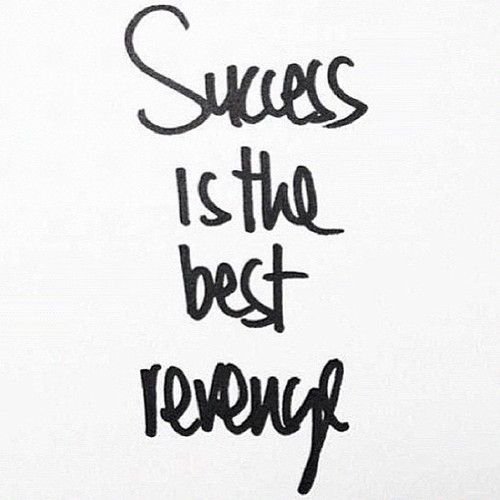
We’ve all heard the phrase, “don’t get mad – get even.” I think this example takes the concept to a whole new level.  Ultimately Gawker filed for bankruptcy so I suppose that Thiel achieved his objective. Thiel claims that his financing of lawsuits against the company was about deterrence rather than revenge. But that’s a bit hard to swallow. Several issues surface with this situation including whether or not it’s right for wealthy people to use lawsuits to attack free speech. But that’s a subject for others to discuss. The focal point for this blog is how we as entrepreneurs choose to react when we perceive that others have been unfair with us.

Undoubtedly we’ve all experienced a time when the Golden Rule was taken out of the drawer and used to beat rather than measure us. And when this happens our first instinct may be to fight the injustice that we’ve experienced. Thoughts cross our minds like, “we’ll sue,” or “let’s steal one of their clients or employees.” This is perfectly natural . . . and totally unproductive. Of course there are situations where it’s perfectly valid to take legal action. But doing so out of revenge or spite may not be in our best interest.

I’m making no judgment about Peter Thiel. But I know for myself that even a hint of vengeance in my persona is a very bad thing. Vengeance is nothing but negative energy which can lead to all sorts of undesirable consequences. Why take a chance on attracting illness, loss of relationships, financial hardship and other unfavorable outcomes because we dwell in the negativity of revenge? Instead, why not focus on the goals and objectives at hand and deny the temptation to wander down the payback path? Rather than looking for retribution, look to use the injustice as a powerful incentive to succeed.

The English philosopher Francis Bacon once said, “A man that studieth revenge, keeps his own wounds green, which otherwise would heal.” In other words, wallowing in revenge keeps reminding us of our negative experience. It crowds out other thoughts and feelings that might be the new idea we need or the solution to a problem we’ve been seeking. The pursuit of punishment and retaliation keep us stuck in neutral and prevents us from moving forward. Competition is tough enough these days – why allow our competitors to lap us while we are stuck in the metaphorical pit stop of vengeance?

As entrepreneurs we fortunately are able to make our own choices. Choosing not to accept the negative emotions that are associated with unfair or unjust treatment puts us that much closer to prize which we desire.

You can also listen to a weekly audio podcast of my blog. What you hear will be different than what you read in this blog. Subscribe on iTunes or wherever you get your podcasts. You can also click on this link – Click here to listen to Audio Episode 4 – The Anti-Bulldozer.

This blog is being written in tandem with my book, “An Entrepreneur’s Words to Live By,” available on Amazon.com in paperback and Kindle (My Book), as well as being available in all of the other major eBook formats.

Revenge

“No” Flippers

Here is a fascinating subject for all entrepreneurs (and everyone else for that matter). It’s the world of auto-antonyms with a focus on one particular word in the English language. What is an auto-antonym you ask? Don’t worry; you didn’t miss anything in school. Until I looked it up, I had no idea about auto-antonyms, sometimes called a contranym. Simple answer – it’s a word that can mean the opposite of what it appears to mean. Now that the picture is completely confused, let’s focus on the word . . . NO.

“No” seems like a pretty simple word to understand – right? Not so fast. In my world “No” can actually mean “Yes.” Let me explain. Remember when we were kids and we bugged our parents for something? Often times the default answer was “No.” But we became conditioned to realize that “No” could be changed to “Yes.” I remember a trip to Disneyland in Anaheim, California when I was five years old. There was one particular ride that I wanted to try as soon as I hit the park. My parents – in unison – said, “No” (emphasis not added). They reasoned that I was too young. But I continued to harangue them throughout the day and wore them down to the point that before we left the park that afternoon, they finally said, “Yes.” In fact I was too young for the ride and had no clue what to do – one of the attendants had to come and rescue me – but I was victorious in my quest to flip “No” to “Yes.” I guess that was the launch of my persuasive powers on the road to becoming an entrepreneur.

Too often, we hear “No” and accept it as gospel. We interpret the word as a form of rejection; feelings may be hurt, and we may become dejected and deflated. This next statement is very, very important. NO. DOES. NOT. ALWAYS. MEAN. NO. If we simply accept the word for what we think it means then it’s Strike Three and game over. But if we see “No” as the starting point for getting to “Yes,” there’s still a chance for extra innings. And who knows – we might win the game in the bottom of the 12th!

Entrepreneurs who hear “Yes” when they are told “No” are “No Flippers.” They understand that being told “No” just means that they need to become more persuasive and work harder to build their relationships. By doing so, they increase the odds of flipping the “No” answer to a “Yes” answer. When we are told “No,” we have a chance to zero-in and learn something. If we’re helping someone buy our product or service, it’s imperative that we find out why the other party has declined. By politely asking for feedback we might discover that a minor change in the product or service could result in a totally different outcome. Had we simply accepted the “No” answer, we might not have had the chance to make the tweak that led to a sale. Sometimes we are told “No” not because the other party doesn’t like us or what we are offering, but the timing isn’t right for them. This is where relationship-building is critical. We remain in touch and work to serve the relationship in whatever ways possible while staying in front of the customer in a positive manner. But remember – there’s a fine line between the obnoxious childish whining we did as kids to get our way, and doing what it takes to be in the right place at the right time to serve our customers.

I can’t begin to count the number of times I’ve been told “No” whether it was in raising equity from investors to acquire properties; securing a loan for an acquisition; negotiating the purchase or sale of a property, or trying to hire a particular individual to join our team. Maybe I’m just thickheaded, but when I hear “No,” it’s just a signal to step-up my game.

As entrepreneurs we need to become accomplished “No Flippers.” It may take a while and we will need to be creative, but eventually we’ll get someone to say “Yes.” Maybe it’s the person we have been trying to convince all along, or perhaps it’s someone else. We use the knowledge we gain from hearing “No” to make the changes necessary to get to “Yes” and achieve success.

You can also listen to a weekly audio podcast of my blog. What you hear will be different than what you read in this blog. Subscribe on iTunes or wherever you get your podcasts. You can also click on this link – Click here to listen to Audio Episode 3 – Visually Unimpaired.

This blog is being written in tandem with my book, “An Entrepreneur’s Words to Live By,” available on Amazon.com in paperback and Kindle (My Book), as well as being available in all of the other major eBook formats.
yes

The Anatomy of an Entrepreneur

As entrepreneurs exactly who are we? What makes us tick? Is there some sort of DNA gene that we can point to? I’ve thought a lot about some of the exceptional entrepreneurs I’ve known over the past four decades and have identified some of their traits and tendencies that stand out.

Let’s start with creativity and innovation. Entrepreneurs use their creative powers to innovate and find a better way to do something. Elon Musk has to be one of the most prolific entrepreneurs when it comes to innovation – Tesla Motors, SpaceX, Pay Pal and Solar City come to mind to name a few. Often, creative entrepreneurs are also visionaries. They have an uncanny ability to see into the future and understand what their customers will want and how their company needs to be designed to win. GoPro CEO Nick Woodman, is one of the foremost visionaries in America today. Who could ever have imagined a series of high definition video cameras that are small, durable and light enough to capture our daily adventures – daring and mundane? And successful entrepreneurs understand risk. Rather than taking risk they are adept at managing it.

When they get knocked down, great entrepreneurs get back up – over and over and over. They are amazingly resilient and don’t see failure . . . only opportunity. Walt Disney was fired by his employer, the Kansas City Star, because he supposedly lacked creativity. That didn’t seem to impact his storied career. When things don’t work out as planned they are flexible and know how to adapt and make the best of every situation. Top flight entrepreneurs are persuasive and can convince others to say yes. They do so through the power of their passion. Does Steve Jobs come to mind? Look what he convinced us to buy! Along with their persuasive powers, successful entrepreneurs are strong communicators in both verbal and written formats.

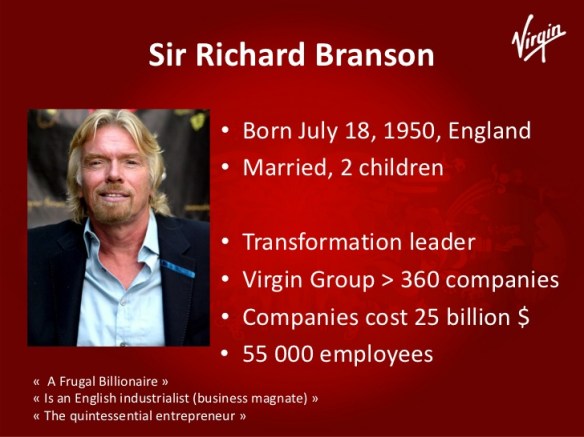
Entrepreneurs are assertive – the great ones are less aggressive than assertive. They have a healthy degree of empathy and are sensitive to the feelings of others. Entrepreneurs at the top of their game have a certain amount of charisma. They can be sociable and gregarious – even if those aren’t their core tendencies. Without charisma an entrepreneur will find it tougher to raise money, develop important relationships and influence others. Billionaire entrepreneur Sir Richard Branson is one of the most charismatic leaders on the planet. And he has woven his charisma into a tapestry of empathy and caring about other people.

Culture King is another descriptor for the cream-of-the-crop entrepreneur. Ben Chestnut is the founder and CEO of MailChimp fits into this category in the ways he has empowered the 500+ members of his team. Hand-in-hand with a strong culture is a smart entrepreneur’s ability to delegate. According to a 2013 Gallup survey of Inc. 500 CEOs, an average three-year growth rate of 1,751% was realized where the CEO had a high Delegator talent. Entrepreneurs typically have a high sense of urgency and tend to be very self-structured – there’s no way anyone is going to tell them what to do! Entrepreneurs simply don’t want to be a cog in someone else’s machine. Most entrepreneurs also have the ability to juggle many things at once and in fact need to feel the rush and excitement of pursuing multiple projects and initiatives simultaneously. Finally, ultra-successful entrepreneurs are generally positive and optimistic people. They don’t dwell on mistakes and never play the victim.

Remember the DNA thing I mentioned at the beginning of this blog? Well, there may be something to it. A February 17, 2016, research paper published in the Austin Journal of Molecular and Cellular Biology reported on the Dopamine Receptor D4 Gene and concluded that entrepreneurs have a higher tolerance for risk-taking in part, due to this gene (Link to research publication.). Apparently genetics govern approximately 30% of what makes one an entrepreneur. But that leaves 70% to a wide range of personality traits and tendencies.

There are many such traits and tendencies that are identified with entrepreneurs. No one person possesses them all, but the more to which we lay claim the closer we come to attaining world class status.

You can also listen to a weekly audio podcast of my blog. What you hear will be different than what you read in this blog. Subscribe on iTunes or wherever you get your podcasts. You can also click on this link – Click here to listen to Audio Episode 2 – The When Affliction.

This blog is being written in tandem with my book, “An Entrepreneur’s Words to Live By,” available on Amazon.com in paperback and Kindle (My Book), as well as being available in all of the other major eBook formats.

richard-branson-as-a-leader-4-728

Who Is Dan Meyer?

In 1961 Major League Baseball’s Philadelphia Phillies suffered a 23 game losing streak. The 2013-14 NBA Philadelphia 76ers endured a 26 game losing streak. In 1976-77 the Tampa Bay Buccaneers had the longest losing streak in NFL history at 26 games. Dan Meyer played both in the infield and the outfield for the 1983 Oakland Athletics and captured the MLB record for hitless at-bats in 48 attempts by a non-pitcher. Talk about slumps! A quick check of the dictionary offers the following definition of slump – “a period during which a person performs slowly, inefficiently, or ineffectively, especially a period during which an athlete or team fails to play or score as well as usual.”

We’ve all watched sports teams at amateur and professional levels encounter slumps. Ditto for businesses. And we’ve undoubtedly experienced periods in our own lives where we perform slowly, inefficiently or ineffectively. Feelings of hopelessness and victimization set in. Day after day we become more lethargic. It’s harder and hard to get out of bed. We’re defeated shortly after we arise. When things don’t turn out the way they should we say things like, “it figures – I just can’t win,” and an air of resignation sets in.

A slump is simply a state of mind. While I don’t have scientific proof, I believe we enter a slump as a result of negative thinking. We’re rocking along with everything going fine and something happens that has negative connotations. Maybe we were certain we were going to win a certain piece of business and then we don’t. Rather than shake it off and re-double our efforts with a positive attitude, we allow the loss to gnaw at us. It might be very subtle or even subconscious. But we let that little bit of negativity into our psyche and that, my friends, can be the beginning of a slump. Which is why I am such a staunch advocate for maintaining a positive frame of mind 100% of the time. Positivity is the best armor against a slump. When something doesn’t go right we need to see it as an opportunity to get right back on the horse and ride again . . . without hesitation. The negative creep in our consciousness will kill us if we don’t.

Suppose that somehow we find ourselves in a slump. How do we pull out of it? The same way we avoid falling into a slump in the first place. The first and most important step is to examine our attitude. Recognizing the negative thoughts and replacing them with positive ones is absolutely crucial. And we need to make sure we get every last one of them. Even a lingering doubt of any sort can be enough to keep the slump alive.

Once we return to a positive frame of mind we can take some additional steps to ensure that we’re back on track and the slump is behind us. Look for a small victory of some sort. No need to swing for the fences – just get a base hit. For example, we don’t need to immediately make that next big sale. Instead, simply get an appointment to meet with a prospective customer. Also, it’s a good time to review the basics and fundamentals of whatever it is that you do. This becomes a necessary grounding exercise. A baseball player who is struggling at the plate will often focus on the mechanics of his hitting. Perhaps he finds that a very minor change in technique makes all the difference. With a completely positive mindset and solid basics and fundamentals working in concert, the final step is going to a place of gratitude. We have so much for which to be grateful and must intentionally create a thanksgiving inventory. Focusing on gratitude will close the circle and put us back in the winning mode again.

Slumps occur because we let in a tiny bit of negativity. We can quickly end a slump by regaining our positive attitude; by focusing on the basics and fundamentals of what we do, and by being thankful for all of the good that is in our life.

You can also listen to a weekly audio podcast of my blog. What you hear will be different than what you read in this blog. Subscribe on iTunes or wherever you get your podcasts. You can also click on this link – Click here to listen to Audio Episode 1 – False Choices.

This blog is being written in tandem with my book, “An Entrepreneur’s Words to Live By,” available on Amazon.com in paperback and Kindle (My Book), as well as being available in all of the other major eBook formats.

Dan Meyer

Innie or Outie?

Are you an “innie or an outie?” And I’m not talking about belly buttons. Are you an introvert or an extrovert? Before you answer you should know that there are many common misconceptions about these terms. The famous Swiss psychiatrist, Carl Jung developed extensive research on this subject. In fact, Jung actually used the term “extravert” instead of “extrovert.” Over the years the word seemed to have morphed into the “extrovert” terminology we use today. So, when you hear these words, what do you think? An introvert is shy and an extrovert is outgoing? As with many things, this is an oversimplification. Think about how we recharge our batteries. Do you find that you gain renewed energy from being alone in solitude or by being around other people? Technically, introverts seek renewal alone and extroverts recharge through interaction with others. But enough with the technicalities. Let’s explore introversion and extroversion in the more traditional sense.

How can introverts and extroverts survive and thrive with each other? How can an introvert succeed when many situations call for a high degree of sociability and gregariousness? And how do extroverts avoid coming across as a bull in a china shop in situations that need reflection and finesse?

I know a person who has a position that requires considerable interaction with others in a public setting. This individual makes outstanding presentations to large groups of people but struggles mightily with one-on-one interaction. I and others question his genuineness and authenticity as a result of this challenge with his personality. People see him as a masterful “performer” on stage but are frustrated because the “act” doesn’t translate into personal charisma.

For those of us who might find it challenging to engage easily with others, here are some ideas. Step into it. Play offense instead of defense. We can put ourselves in situations where we have the opportunity for interaction. Maybe it’s at a conference or a gathering of some sort. We find someone who isn’t already talking to others and go introduce ourselves. Be strong. The handshake is firm and we make friendly eye contact. The person I mentioned in the preceding paragraph has a tendency to either avoid eye contact or look over my shoulder. Smile. Always smile. It helps us to put ourselves and others at ease. Relax. Don’t try too hard. We just need to be who we are – not someone else. And yes, we can be strong and relaxed at the same time. This actually projects confidence.

On the other end of the spectrum some of us may be somewhat supercharged with extroversion. In certain situations this can be overwhelming to others and can come across in a high pressure salesman manner. Of course we don’t want to be perceived this way. Many extroverts have a great deal of nervous energy and perhaps even a touch (or mega dose) of ADHD. This reflects in their speech patterns and mannerisms.

As extroverts we need to work to “dial it back” at times. Zip it. We may have a tendency to dominate conversations. Instead, we need to make a concerted effort to create a dialogue where we make sure that others have a chance to express themselves. Chill. Somehow we have to resist the urge to outwardly manifest all of the energy that is pent-up inside. Calm. We need to replace the pent-up energy with calmness. Don’t worry; our charisma is so strong that we won’t be seen as a shrinking violet. Smile. A friendly smile is disarming and sends positive vibes to others. As extroverts we may have a tendency to be too intense. Remembering to always smile will put others at ease.

Introverts and extroverts must make a mutual effort to co-exist and collaborate. When they succeed, they can do great things together.

This blog is being written in tandem with my book, “An Entrepreneur’s Words to Live By,” available on Amazon.com in paperback and Kindle (My Book), as well as being available in all of the other major eBook formats.

bull-china-shop

P+A+C=I

“. . . we shall fight in France, we shall fight on the seas and oceans, we shall fight with growing confidence and growing strength in the air, we shall defend our island, whatever the cost may be, we shall fight on the beaches, we shall fight on the landing grounds, we shall fight in the fields and in the streets, we shall fight in the hills; we shall never surrender.” “Let us therefore brace ourselves to our duties, and so bear ourselves, that if the British Empire and its Commonwealth last for a thousand years, men will still say, ‘This was their finest hour’.” Winston Churchill uttered these words during World War II and led Great Britain through one of its darkest periods in history.

“. . . I still have a dream. It is a dream deeply rooted in the American dream. I have a dream that one day this nation will rise up, live out the true meaning of its creed: We hold these truths to be self-evident, that all men are created equal.” On August 28, 1963, Dr. Martin Luther King made this proclamation at the Lincoln Memorial in Washington, DC, witnessed by 250,000 civil rights supporters.

Have you ever heard of Patrick Henry Hughes? He is an amazing story. Born without eyes and a congenital birth defect that prevented him from straightening his arms and legs, Patrick became an accomplished vocalist as well as playing the piano and trumpet. He even became a member of the University of Louisville Marching and Pep Bands, and a UP Premiere movie, “I Am Potential,” is based upon his life and success.

What is the common theme for these three individuals? Inarguably each is an inspiration. Churchill inspired his countrymen to stand strong during the difficult days when Britain was under siege. King inspired millions seeking equality in their everyday lives. Patrick Henry Hughes as served as an inspiration for everyone who has encountered a challenge – and haven’t we all?

As entrepreneurs we want to be inspirational leaders. We want to lead inspirational organizations. We want our mission and vision to be inspirational. But sometimes the notion of inspiration can be confusing and even elusive. Exactly how do we inspire? I’ve looked high and low and there’s no handbook. There are as many definitions as there are inspirational quotes – the quantities are massive. Here’s an equation that I’ve developed over the years that I believe stimulates inspiration.

Passion + Authenticity + Conviction = Inspiration

This formula can be measured by the likes of Winston Churchill, Martin Luther King, Jr. and Patrick Henry Hughes. Is there any question that each had incredible passion for their cause? And is there any doubt as to their authenticity? Think about it. How could anyone play-act the power and impact that each had on society? Finally, they never wavered. They never quit. They stood by their beliefs no matter what. When we genuinely have a deep and lasting positive passion; demonstrate it in authentic ways, and are steadfast in maintaining this passion, we can’t help but inspire others. People aren’t inspired by wishy-washy. People aren’t inspired by fake. And people aren’t inspired by quitters.

Inspirational intelligence exists in great leaders. By emulating the inspirational formula, Passion + Authenticity + Conviction, we too can motivate others to join with us in doing great things.

This blog is being written in tandem with my book, “An Entrepreneur’s Words to Live By,” available on Amazon.com in paperback and Kindle (My Book), as well as being available in all of the other major eBook formats.

Patrick-Henry-Hughes

The Zone of Doom

What do we dread most in our business and personal lives today? No, it’s not losing. When that happens, we simply pick ourselves up and go after it again. And it’s not being overwhelmed by our workload. We solve this with a few adjustments to time management and delegating to other team members. Our biggest “dread” is insidious and frustrating beyond belief. Here’s an example of what happens. We’re attempting to do business with someone. We’re past the cold calling stage and actually have been interacting with other party. We send an e-mail and wait a day or two. Then we call and leave a voicemail. Perhaps we even send a text. A week goes by with radio silence. We’re officially in the Zone of Doom.

The Zone of Doom is the black hole of non-responsiveness. Unfortunately it’s become an epidemic. With caller ID many people simply ignore calls from those of us with whom they do not wish to speak. Blowing off e-mails is even easier. I know I sound like an old geezer, but when I was growing up in the business world I quickly learned that protocol dictated the return of every phone call the same day or next morning. We didn’t have e-mail back then so letters and memos were the standard for written communications. The expectation was that the response be immediate. There never was any thought of not responding at all. In fact, when someone slipped and failed to provide a timely response, the word usually got back to corporate leadership and there was hell to pay.

The biggest challenge relayed to me by members of our team is that their interactions with so many people outside the company are one-way. Simply trying to reach people is so much harder than ever before. Long ago, I resolved not to fall into this category. I think I’m about 95% true to this resolution. I do return my phone calls in a timely fashion – though I will admit that there may be a cold call here or there from a salesperson that I miss. I believe most people will attest to the fact that I usually return all my e-mails the same day if not the same hour.

So how are we supposed to deal with the Zone of Doom?  How are we supposed to do business when people are so unresponsive? There’s no question that failure to respond is not acceptable. But we must ask ourselves what might be the root cause for our receiving the silent treatment? This goes beyond the fact that people are busy. It all boils down to priorities. Think about how we develop our own set of priorities. What goes at the top of the list and what goes at the bottom? I find that the things that are most important are those which are most impactful to my business and my life. It’s a pretty good bet that others set their priorities in the same manner. When I’m trying to reach someone else I try to bear in mind whether or not communicating with me will make that much difference to the other person. There’s the word . . . difference.

We must be able to differentiate ourselves when competing with someone else’s priorities. Is what we are attempting to communicate really that important to them? If not, then what can we do to push it up toward the top of the ladder. This is where relationship building becomes so important. I’ve written many times that relationships are all about service. I’ve found that the harder I work to establish and serve a relationship the more likely someone will reciprocate my attempt to communicate. You may be thinking, “How can I possibly build and serve relationships with everyone with whom I come into contact?” No one said it would be easy. Relationships take time to build and there’s no time to waste. Any and every little thing that can be done to help someone else builds that relationship. Many business people seek to establish relationships to benefit themselves. If we do it differently and make every attempt to help others, our efforts will be recognized as genuine and authentic.

We can avoid the Zone of Doom by building relationships for the purpose of serving others. And through our relationships, we move up the priority list of those we are serving.

This blog is being written in tandem with my book, “An Entrepreneur’s Words to Live By,” available on Amazon.com in paperback and Kindle (My Book), as well as being available in all of the other major eBook formats.

abyss