
Oh Those Surly Bonds

I’m proud to say that I’m an entrepreneur in a state of denial. And I suggest that you too should be in a similar state of denial. Why you ask, would an entrepreneur want to be in denial? After all, we’re eternal optimists and have a never-say-die approach to everything . . . right? Here’s what I’m in denial about.

I deny fear. I realize that fear freezes me into a state of inertia, or causes me to make irrational decisions. Fear saps my energy and causes me to ride an emotional roller-coaster. Fear robs me of my creativity and my initiative. I will not be afraid.

I deny all thoughts of self-doubt. Self-doubt is my mortal enemy. It causes me to question my instincts and clouds my intuition. I become tentative and worry about making mistakes. Self-doubt destroys my confidence and causes me to question my abilities. I will not allow self-doubt to manifest in my life.

I deny any belief that I’m a victim. There may be times when I feel that I’ve been wronged or believe someone has done something that prevents my success. I realize that when I feel victimized I’m giving away my power to someone else. Playing the victim fills me with negative energy. I will not be a victim to anyone for anything.

I deny all thoughts of lack and limitation. I stop myself when I start to utter phrases such as, “I can’t because,” “I’m not able,” and “if only.” My entrepreneurial spirit is dulled when I think that I am limited in some way. I realize that the only limitations I have are those that I place upon myself. I will not allow thoughts of lack and limitation to creep into my consciousness.

Being in denial about fear, self-doubt, beliefs of victimization, and thoughts of lack and limitation is only the first of two critical steps. It’s not enough to simply deny these negative factors. We must replace them with positive action-oriented affirmations. I deny fear and embrace faith. I deny self-doubt and have total confidence in who I am and what I’m doing. I deny any belief that I’m a victim and take full responsibility for my actions. I deny all thoughts of lack and limitation and know that my opportunities have no bounds.

Denying that which will inhibit me and affirming the positive direction I will take, allows me to release the surly bonds that hold me. And then I can soar to new heights.

This blog is being written in tandem with my book, “An Entrepreneur’s Words to Live By,” available on Amazon.com in paperback and Kindle (My Book), as well as being available in all of the other major eBook formats.

space-shuttle-atlantis

Charm School

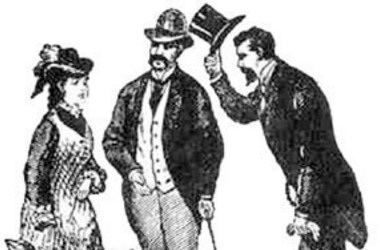
I’ve always believed that the more successful we are the more humble we should be. Entrepreneurs have an opportunity to be fabulously successful in many different ways. And sometimes we may be viewed in a negative light by others who envy our success. That’s why it’s important that we not project the least bit of arrogance or haughtiness. One of the best ways to combat this perception is to go out of our way to practice the little courtesies in life.

As I’ve gotten older I’ve come to realize what a positive difference such courtesies can make in the lives of others. It’s one thing to be interacting personally with someone else and say please and thank you. But how well do we use these words in our e-mail conversations? Here’s a suggestion. Look through the recent “Sent Items” in your e-mail account and intentionally look for instances where you could have said “please and thank you.” Did you? Courteously asking someone to provide information or assistance in some way feels better to others than being “commanded” to do so.

My dad taught me to always hold doors open for others. As a kid, I became quite a doorman. This has certainly carried over into my adult life and it feels good to be polite in this manner. This practice doesn’t need to be limited to building doors but also elevator doors. Rather than be the first person on or off the elevator, I prefer to hold the door to make sure others get on or off ahead of me. In this day and age does this really matter? Perhaps it doesn’t make a difference to most people, but for me it’s the right thing to do. My father always had a good sense about the things he taught me and I think his teachings are ageless.

Sometimes we can be so busy and single-minded that we may not even notice others around us and fail to offer them a friendly greeting. Trust me when I say that while we may not notice them, others certainly notice us when we don’t acknowledge them. In my office or wherever I go, I strive to look others in the eye and say hello. A firm handshake also provides a sense of connection and can help to put the recipient at ease.

In the old days there was a saying about Southern charm. And there is something charming about offering compliments to others. I have found that service providers in all walks of life are often overlooked in this regard. We tend to take their service for granted. I’ve made a concerted effort over the past several years of speaking to service providers and when warranted, complimenting them on their service. If a waitperson in a restaurant has served me well, I’ll say something like, “very nice work this evening.” This statement is made at the same time that I look them in the eye, smile and shake their hand. If the service was really great, I find their supervisor and reiterate the compliment to that person. Recently I was in a restaurant where the food was exquisite. I asked my server to send out the chef if he was not too busy. I then proceeded to tell him what a fabulous meal he had prepared – I thought he was going to cry!

Here are a few other little tidbits. Drop a short handwritten thank-you note to someone with whom you’ve met or with whom you’ve dined – especially if you did so in their home or they paid the bill in a restaurant. An e-mail conveying the same message only gets us halfway there. When invited to someone’s home for dinner, don’t forget to take flowers, a bottle of wine, fine hand soap, or some other token of appreciation. I wish every high school senior had to take a Miss Manners class. The world would certainly be a much more polite and courteous place to live.

The last thing in the world we want is to step on someone’s feelings and have them think we’re an arrogant “high and mighty” so-and-so. By putting the needs of others first and being gracious we will have nothing to fear in this regard.

This blog is being written in tandem with my book, “An Entrepreneur’s Words to Live By,” available on Amazon.com in paperback and Kindle (My Book), as well as being available in all of the other major eBook formats.

manners2

Grrrr!

I know someone who always seems to have the worst luck with personal encounters. This person relates harrowing tales of being cut off by other drivers and nearly having an accident on a daily basis. This person is regularly aggrieved by others – slights of all types and magnitude. This person is opinionated and not the least bit shy about sharing views on a wide range of subjects, often causing discomfort for others. In short, this person lives in a constant state of conflict.

Conflict can be a healthy thing if it’s properly managed. But I sure don’t want to live there. Some people dread and avoid conflict as much as others seem to constantly be embroiled in it. As entrepreneurs it’s next to impossible to completely avoid situations where conflict may arise. And trying to do so may damage our relationships if we fail to be genuine and authentic for the sake of what we perceive as “keeping the peace.” So just how should we manage conflict in a healthy manner? I have learned through experience that there are four elements to managing conflict.

First, we must never play the victim. Conflict begins when we give someone else our power by letting our feelings be hurt or believe that we are being taken advantage of in some way. These feelings bubble up and our resentment builds as we buy into this story that we are telling ourselves. It’s critical that we break this cycle before it starts thereby allowing us to avoid wallowing in and exaggerating the fiction that we have created. Of course there may be instances where someone really is trying to hurt us and take advantage of us. But if we don’t give our power away the perpetrator won’t be able to escalate the conflict.

Second, maintaining a positive attitude is critical to successfully managing conflict. After we eliminate any stray feelings of victimization we need to shift into a 100% positive frame of mind as quickly as possible. Our positive energy is vital to creating the end result that we desire. Think about it. Are we more likely to end up in a good place with negative energy or positive energy? The choice is pretty simple.

Third, we stay in “fact mode.” Let’s assume for a moment that the conflict involves an employee who has accused you of showing favoritism to another employee. The accuser is so upset that he has pleaded his case to a number of his co-workers, causing a minor uproar in the organization. You know this guy is flat wrong but you resist the temptation to feel like a victim and take offense that your integrity and leadership is being impugned. You choose to stay positive and move directly into the fact finding mode. You have a calm and non-accusatory conversation with the angry employee to find out specifically why he believes you are showing favoritism. Perhaps the facts lead you to the realization that this person misunderstood a key piece of information that led to his misperception. You are easily able to share the real facts and quickly defuse the situation.

Finally, we must know when to compromise when appropriate. It’s easy when we know we’re right to become entrenched in our position and dig in our heels. And it might be just as easy to say something like, “I’m sorry for the misunderstanding,” even if we truly aren’t at fault. I do not advocate compromising our core values or our principles. But sometimes it’s better to offer the olive branch when neither is at stake. The conflict may quickly de-escalate at that point and our leadership may be admired and respected.

Managing conflict can be a positive opportunity to build relationships. Entrepreneurs should embrace this opportunity by not playing the victim card; staying positive; pursuing the facts and compromising when it makes sense to do so.

This blog is being written in tandem with my book, “An Entrepreneur’s Words to Live By,” available on Amazon.com in paperback and Kindle (My Book), as well as being available in all of the other major eBook formats.

boxing-babies

Beam Me Up Scotty

Did you know that Michael Jordan was cut by his high school basketball team because it was determined that he lacked skill? Babe Ruth struck out 1,330 times in his stellar career. Winston Churchill flunked sixth grade. Elvis Presley was once told that his career was going nowhere and he should drive a truck. Authors Stephen King, John Grisham, Theodore Seuss Giesel and cartoonist Charles Schultz were all rejected more than 85 times before being published.

What do all of these famous people have in common? They all are or were extremely self-confident. Successful entrepreneurs need a healthy dose of self-confidence. Without it the chances to achieve our goals and objectives drop precipitously. We also must guard against misunderstanding confidence for arrogance. Arrogance is actually overcompensation for a lack of confidence.

So how do we go about building self-confidence? Allow me to share my experience with you. Early in my career I struggled in this department. I graduated from college at 21 years of age and immediately began working for the company I’ve been with ever since. I thought I was pretty confident when I was in school but in the real world I discovered a lot of self-doubt. It didn’t help that I was told that I was just a punk kid who didn’t know anything. This statement was reinforced for a number of years – and I let it get inside my head. Eventually I came to realize that with a few years of experience under my belt and some creative successes along the way, I really did know what I was doing.

Here are some ideas. Repetition is extremely important. Identify one or more things that you feel less confident about and do them over and over again. Perhaps it’s public speaking or maybe it’s interacting with lots of other people in a large group setting. Set standards for what you believe to be “good” or “great.” Try and consistently perform to those standards and when you do, congratulate yourself. Own your mistakes and setbacks. Resist the temptation to blame others or play the victim. When we focus on how we can improve and do things differently the next time, we build confidence for our next encounter in a similar situation. When we celebrate the success of others – including our competitors – it’s a demonstration of confidence. When we criticize others – including our competitors – it’s not. When we’re not afraid to be wrong, that’s evidence of self-confidence. Being defensive and making excuses is not. Being positive and humble are definitely traits of self-confident people.

Self-confidence can ebb and flow. Our goal is to be more consistent with our confidence. But just because we have moments of doubt or fear, doesn’t mean we’re losing our mojo. When we can take a deep breath and understand from where the doubt or fear is coming, that’s a way we can regain our confidence.

Self-confidence enables us to eliminate thoughts of lack and limitation and know the truth about ourselves. In so doing, we can shoot for the stars and realize our true potential. Beam me up Scotty.

This blog is being written in tandem with my book, “An Entrepreneur’s Words to Live By,” available on Amazon.com in paperback and Kindle (My Book), as well as being available in all of the other major eBook formats.
Scotty

Tick-Tock

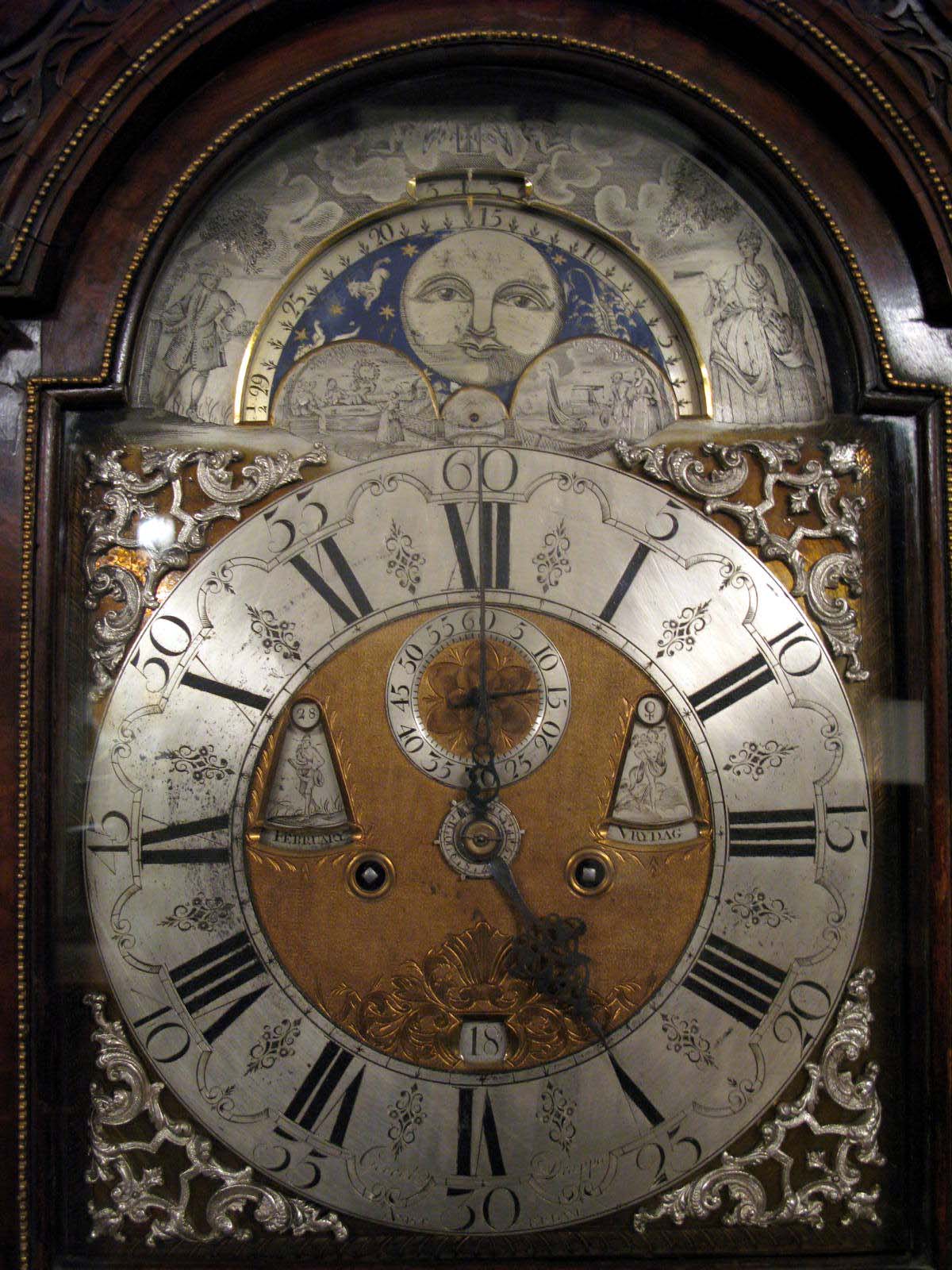
Did you know that the earth is estimated to be 4.54 billion years old? And did you know that the lifespan of a U.S. male is 77.4 years? U.S. women have it better at 82.2 years. Do you realize that if we extrapolated the earth’s age to that of a U.S. male – 77.4 years – the human equivalency would be a mere 41.6 seconds? And for a woman, the human equivalency would be 46.9 seconds. Simply put, we’re but a tiny blip in the overall scheme of the time continuum.

When we contemplate how short our lives really are it brings a new perspective to how we spend our time. When I was in my 20s and 30s, I always had a thought in the back of my mind – “I’m young and there’s plenty of time to do everything I want in life.” Well I’ve done a lot in my life and I know I’m a lot closer to the finish line . . . and yet, there’s still a lot I want to do. We’ve all known people whose existence was cut short unexpectedly and didn’t have the opportunity to live a normal lifespan. And the knowledge that we are a heartbeat away from the same fate is a sobering thought. Thus, I am committed to making every moment a quality experience and let me tell you, I have a lot of work to do to accomplish this!

So, exactly what am I doing to make every moment a quality experience? I’m trying not to get hung up on inconsequential things that don’t really matter one whit. It’s become evident to me that fighting and arguing with others does not fall in the category of a quality experience. Thinking negative thoughts of lack and limitation are no longer in the cards either. Worrying about things is completely taboo. I find myself testing much of what I do by asking myself this question – “Is this a memory I want to make?” Do I want to finish cranking out a document on my computer on a Sunday afternoon at home, or do I spend a few moments and toss the football with my grandson? “Is this a memory I want to make?” Do I watch another mindless show on TV or do I take a walk with my wife? “Is this a memory I want to make?” Do I dwell on how a guy just cut me off with his car, or do I become immersed in the music from my stereo? “Is this a memory I want to make?”

Folks, it’s not easy making every moment a quality experience. But when framing each moment in the context of what kind of a memory we want to make, the task becomes much easier. Of course we still have to do certain things that may not be particularly enjoyable, but we can change our perspective enough to create a memory we want to make through the end result. For example, my mother made me weed our yard as a kid to the point that I was fairly certain that I never wanted to pull another weed as an adult. Yet, today I don’t mind weeding the shrub and flower beds at my home because the end result is beautiful landscaping that makes for wonderful memories.

When we realize that life is far too short, we’ll begin making every moment a quality experience. There’s not a moment to waste. And we’ll create countless pleasant memories in the process.

This blog is being written in tandem with my book, “An Entrepreneur’s Words to Live By,” available on Amazon.com in paperback and Kindle (My Book), as well as being available in all of the other major eBook formats.

grandfather clock

Curious?

How curious are you? This may seem like a curious question (pun intended) for me to be asking. But follow along. Remember when we were in elementary school how the world looked so huge? We were in awe and wonderment of all there was to learn. When my daughters were young the phrase I heard the most was, “Daddy, why ______” – then fill in the blank. Why does the sun come up in the east instead of the west? Why do dogs bark but chickens cluck? And the list goes on forever. The point is, as children we were curious about nearly everything.

As we get older our curiosity changes and our questions are generally more mature. Naturally we’ve learned a lot over the years and sometimes it’s easy to get stuck in a “learning dearth” rut. In other words, we ask fewer questions and seek fewer answers. If we’re not careful we can become very one-dimensional, wrapped in our comfortable cocoon and drifting along on the river of life. I’m not being critical, but as entrepreneurs, we can be more effective and accomplish more if we maintain our curiosity. Asking why often leads to innovation. Why do certain processes exist within our organization? How could a particular product be improved? What could we do to provide better customer service?

There are a number of things that we can do to maintain the curiosity bug. Reading different publications (not just business books) on a regular basis is stimulating. This might include such topics as human interest, hard news, politics, religion, travel, philosophy, humor and sports. The Internet is today’s version of the World Book Encyclopedia – on steroids! Sometimes I’ll simply surf an obscure site just to see what’s there. A walk through Home Depot serves the same purpose. Frequent conversations with friends and colleagues are invaluable in stoking curiosity. Attend sporting events, the theater, concerts, seminars and other live activities. For me, I’m constantly asking the why, what, how, where and when questions in the context of everything I see and do.

We can become more creative and innovative by being intentional about arousing our curiosity. Blend this with some quiet, meditative time, and we find new ideas pouring into our consciousness. This quiet time is critical for it gives us the opportunity to empty our minds of all the clutter that accumulates through the course of the day. And the vacuum that is created opens the way for solutions to problems to emerge and for new opportunities to be born. But curiosity is the beginning of this winning formula.

If you feel like you’ve become a bit stale in the curiosity department, I recommend that you keep a simple journal for a few weeks. Record the things you do each day to stimulate your curiosity. Write down any new ideas that you have. See how many why, what, how, where and when questions you can ask . . . and answer. Don’t forget the quiet time that is needed each day to allow your curious mind to make sense of all of this.

Curiosity, creativity and innovation go hand-in-hand. We’re never too old to recapture that childlike curiosity that we experienced when we were seven.

This blog is being written in tandem with my book, “An Entrepreneur’s Words to Live By,” available on Amazon.com in paperback and Kindle (My Book), as well as being available in all of the other major eBook formats.

encyclopedias

The Kelly Factor

My wife and I ate dinner at an old 1960s vintage diner while on vacation recently. Our server was Kelly and she was absolutely terrific. In fact I told her she should come and work with me. Why was I so impressed with Kelly? She was genuine and authentic. This translated into her being very personable. Not only was she friendly but she clearly was very interested in providing us with the best dining experience possible. Kelly checked on us regularly, was witty and her countenance literally beamed.

It was obvious from the minute we sat down that Kelly was fully invested in her job. She had “skin in the game” so to speak. She greeted every customer that walked in the door, even if she wasn’t their server. And when a customer departed she acknowledged them similarly. There is a great lesson here for us entrepreneurs. When someone throws themself into their job like Kelly did, it not only is obvious but it is infectious. My wife and I both left the diner feeling more upbeat than we did when we walked in.

While sitting in the booth listening to some great old rock and roll tunes (from the 60s of course) I got to thinking about what makes Kelly tick. As Simon Sinek would say, what is her WHY? It was pretty apparent from what she said and her demeanor that Kelly is all about building trust and lasting relationships. Thus, everything she does for her customers is foundational in this respect. At one point she stopped by to see if some barbecue sauce had been delivered – it had not. She ran off to the kitchen and got it. When she returned, she explained that someone else was bringing it and then there was a minor disaster in the kitchen that caused the sauce to get waylaid. The fact that she felt a need to explain what had happened told me that she really wanted to earn our trust.

As entrepreneurs we need to have “skin in the game” as do all of the people we work with. It’s pretty evident when someone is simply going through the motions. While on the same vacation, we ate at another restaurant where our server was nice, but it was obvious she was just doing her job. She made no effort to engage us in conversation and build a relationship of any sort. Our experience in this restaurant and with this server was fine. But it serves in stark contrast with our Kelly experience.

Skin in the game means doing whatever it takes to make the customer happy. Skin in the game means going the extra mile for everyone involved – customer, company and other team members. Skin in the game means taking the wins and losses personally. Skin in the game means sometimes doing something that is less advantageous for us and more advantageous for someone else.

We know when we’ve become fully invested in whatever we’re doing. The results will be evident when we see that everyone involved had the kind of WOW experience that we did with Kelly.

This blog is being written in tandem with my book, “An Entrepreneur’s Words to Live By,” available on Amazon.com in paperback and Kindle (My Book), as well as being available in all of the other major eBook formats.

waitress

The Road to Riches

Early in my career I did a lot of planning – especially financial planning. I had it all figured out that by a certain age I would be earning a certain income and projected how that amount would grow over time. I obsessed over my calculations and created spreadsheets to track my progress. Back in the day this sort of focus was what you did if you wanted to succeed. Or so I thought. Unfortunately I didn’t have anyone to tell me that there was a better way.

Did I achieve my income goals? For the most part the answer is yes. But what I discovered as I got older, more experienced and wiser, is that this approach was actually limiting me. So how you ask, could prudent planning become limiting? And the answer is elegantly simple. By focusing on a specific amount of income that I desired, I was subliminally telling myself that I really didn’t want any more than that amount. My various income-generating strategies were aimed at achieving the target amount and nothing more.

Fast forward to today. I’ve learned a lot. For starters, I no longer accept the limitations created by chasing a specific dollar amount. Instead I’ve learned to be open to all creative possibilities. I’ve learned not to place restrictions on my potential. I now focus on being much more strategic and much less tactical. It’s now more about service to others than others serving me. When the money no longer is the primary focus it’s amazing how much more prosperous we can become. I still look at the money but only as part of a risk-reward equation – something all entrepreneurs should consider.

Here’s something else I learned. Get rich quick schemes lead to disappointment. Playing the lottery or trying to earn a few extra bucks playing cards is not a winning hand in life. Hard work is also overrated when it comes to financial satisfaction – believe me, I’m an expert on the hard work subject. Smart work is more likely to lead to financial security and independence.

So how does one work smarter? I’ve written many times about how important it is for us to know our WHY. Another way of putting this is to understand what we are passionate about. Why do we do what we do? What makes us tick? What do we love to do so much that we’d do it regardless of whether or not we were paid? When we are living our passion we aren’t chasing financial riches. Our focus is on the process of staying in the passion zone. And one of the byproducts of this approach is that monetary rewards will come our way – sometimes effortlessly. If we’re just working to earn a living, that’s all we’ll do. If we’re working because what we’re doing is interwoven with our passion, positive results will flow to us – financial and otherwise.

When we let go of our limiting money dreams and pursue our bigger and grander dreams we are able to live our passion. And when we live our passion, through our creative energy we will discover infinite possibilities for good in our lives.

This blog is being written in tandem with my book, “An Entrepreneur’s Words to Live By,” available on Amazon.com in paperback and Kindle (My Book), as well as being available in all of the other major eBook formats.

wealth

Brick Walls

Let’s count brick walls. They are everywhere. We encounter them at work and at home. We find them in our personal and business relationships. Brick walls seem to be a part of our lives. But do they need to be?

We tend to be great masons and build some very elaborate and impregnable brick walls. The brick walls to which I refer are the limitations that we impose upon ourselves. Sometimes we believe that these limitations are imposed by others but if we really examine them closely, they are more often than not, self-imposed. It is critical for us as entrepreneurs to avoid allowing thoughts of lack or limitation to creep into our psyches.

Let’s look at some of the things we speak to ourselves and say to others. Anytime a sentence contains the words “I can’t,” “I don’t” or “I won’t” there’s a strong possibility that limitations are in play. Certainly there are some limitations that are rational and necessary – I’m not talking about those. Thoughts of lack and limitation that prevent us from achieving our greatest potential and success are what we need to train ourselves to eliminate.

I can recall several times over the course of my career where a rookie entered the commercial real estate business and completed a series of amazing transactions. Everyone looked at each other and said, “How did he do it?” Well, I know how. This rookie didn’t know what he didn’t know. Make sense? In other words, he didn’t know to place limitations on himself that many veterans of the industry had imposed upon themselves. As a result, he made cold calls on clients that others thought to be untouchable or intractable. And guess what? He got deals done.

Why do we limit ourselves in the first place? Often it is the result of fear or a lack of knowledge. Analyze the following statement. “I can’t pursue that business opportunity because I don’t have the money to do so.” This statement contains both the “I can’t” and “I don’t” negative affirmations which will probably result in this person not pursuing the business opportunity. Most likely the underlying reason for the statement is that this person either has a fear about the business opportunity – perhaps it’s a fear of failure – or he/she simply doesn’t know how to find the money needed. Regardless, the opportunity won’t be pursued because this person has built a brick wall around it.

So, what’s the truth? We have a choice to either create reality or face reality. If we choose to create our reality, we can do so by removing all thoughts of lack and limitation. We tap into our creative energy and identify the resources that we need to succeed. We pursue that business opportunity because we find a way to raise the money that is needed. In several of the companies with which I’m involved, we regularly complete apartment developments and acquisitions utilizing very complex financial structures. We’ve rescued many a deal from the scrap heap because we not only have the knowledge to figure out how to make them work, but we also have no fear of failure. Do we fail? Sure we do. But our failures are simply steps toward our ultimate end goal. And we manage our risk so that none of our failures are fatal.

We can go through a life full of brick walls that are of our own making, or we can create our own reality by taking the simple yet powerful step of eliminating thoughts of lack and limitation. Whenever these thoughts start to become a part of our mindset, we recognize them; we release them, and we replace them with the truth of unlimited possibilities.

This blog is being written in tandem with my book, “An Entrepreneur’s Words to Live By,” available on Amazon.com in paperback and Kindle (My Book), as well as being available in all of the other major eBook formats.
brick walls

Chronicles of a Loser

Entrepreneurs absolutely do not like to lose. We’re winners at heart. But there’s one kind of a loss that is actually an enormous win. Give up? Let me give you some background. When I got married in January 1974, I was 19 years old; was 6’4” tall and weighed 150 pounds. It took many years before I “filled out.” But something else happened. The filling out didn’t stop. In August 2012, my weight had ballooned to 289 pounds! I had actually begun to make healthier choices in the years preceding this date and at one point had dropped to 245 pounds. But somehow the pounds I had lost were found again.

Carrying too much weight had a number of unsatisfactory consequences for me. My cholesterol and triglycerides were higher than they should be. My blood sugar was elevated and when I vacationed in the Colorado mountains, I huffed and puffed (and wheezed) just walking into a restaurant. My left knee had been weak for years and the extra weight exacerbated the issue. Finally, my clothes fit tightly and the size of my stomach was an embarrassment. A little voice in my head began screaming, “You are a prime candidate for a heart attack!”

To change a destructive behavior we usually need an “aha” moment. Sometimes it IS a heart attack that provides the wake-up call . . . assuming that we wake up afterwards. In August 2012 my “aha” moment was not so dramatic, but it was just as powerful. My oldest grandson was six years of age at the time and his daddy isn’t in the picture. He definitely needs a father figure in his life – a role that I had been filling. The realization that I might not be around when he needed me most hit me like a sledgehammer. But I knew that a diet would not work. And I knew that if the pounds came off too fast, the weight loss wouldn’t last. Thus I embarked upon a complete lifestyle change that has become permanent.

I have always exercised and in August 2012, I was lifting weights three days each week and about 30-minutes of cardio five days a week. Today, in August 2014, I exercise seven days a week for a total of 10 hours. My cardio consists of walking at a pretty good pace – last week I walked nearly 32 miles. A personal trainer adjusts my weight lifting routine every five weeks – something I still do three days each week. And I’ve become addicted to the Fitbit®, a wearable device that tracks my steps, calorie burn, sleep pattern, etc. The goal is to walk 10,000 steps each day – I’m usually achieving 14,000 – 16,000 steps daily.

I love the way I eat. I gave up sugar in 2006; have eliminated dairy, and am mostly gluten-free. The biggest difference maker was cutting out the carbohydrates – mainly the simple carbs. I eat a lot of protein – a cardiologist told me I could eat as much red meat as I wanted – provided I continued doing everything else I am doing. Thanks to the Fitbit® I am able to log everything I eat into a computer program that calculates the number of calories I am consuming. The awareness of calories in vs. calories out has helped me fine tune my food consumption. And I owe a huge debt of gratitude to a medical professional who specializes in blood chemistry and prescribes an extensive regimen of supplements based upon my blood work every four months.

Today, I now weigh 218 pounds – a loss of 71 pounds in two years. I am within eight pounds of the target weight my doctor and I agreed upon. I feel stronger and healthier than at any time in decades. I’ve made excellent progress with my blood work and have been able to eliminate several prescribed medications. My knee doesn’t hurt anymore. My bank account is smaller as a result of the constant tinkering with my wardrobe – stuff just doesn’t fit – but that’s I problem I can live with. My stomach bulge is nearly gone. People who haven’t seen me for a while tell me that the change in appearance is dramatic. A recent scan showed an exceptionally low plaque build-up in the primary arteries of my heart muscle. I have seemingly dodged the proverbial bullet. And my chances of being around for a long time to support BOTH of my grandsons seem pretty good.

I’m glad I paid attention to my “aha” moment. I’m glad I found the way to be healthy that is just right for me. I’m glad I found the tools that I needed to help me with my journey. There’s no turning back. I’m not the least bit concerned about any backsliding because my LIFE has changed permanently. Perhaps you have something in your life that you want to change permanently. I’m a walking testament to the truth that you absolutely can.

This blog is being written in tandem with my book, “An Entrepreneur’s Words to Live By,” available on Amazon.com in paperback and Kindle (My Book), as well as being available in all of the other major eBook formats.

Konishiki