Bridges

Question: Sometimes I get so angry with people that I want to tell them exactly how I feel about them. Don’t you think that such honesty is always the best policy?

Answer: Well, yes and no. We have to evaluate how the other person will react to our “honesty” and we also need to understand whether we are really being constructive with our comments or simply seeking the satisfaction of telling someone off.

There have been many times over my career that I’ve felt wronged by someone and wanted to lambaste them for what they did. I can’t tell you how many letters I’ve written to such people; put them in the drawer; “slept on it,” and then never mailed the letters (or hit the Send button for an e-mail). I guess writing the letters and e-mails was therapeutic but a little voice kept telling me not to follow-through and send them.

Recently a former investor of ours was in my office visiting from another city. Toward the end of our relationship with his firm things became a bit strained. We had gone above and beyond our contractual obligations with his company and yet there was no “give” on his part. However, we went out of our way to keep things businesslike and cordial. He commented during his recent meeting with me that he respected the way we handled the situation. He pointed out that he was in our office talking to us about doing another deal with his firm because we did not burn bridges with him.

Reacting emotionally and burning bridges may feel good at the time. But in the long run it costs us relationships, friendships and money. I still get irritated with people that don’t adhere to my business principles and values. However, I’ve come to realize that making the choice to protect the relationship is much more important and I quickly moderate my emotions. Sure it’s hard to smile and keep an even tone – but we never know when that person who has caused the irritation may become our best client or even our best friend.

I’ve said for years that one of my objectives as an entrepreneur is to collect and serve as many relationships as I possibly can over the course of my career. A lot of time and effort is invested in doing this – so why would I want to throw this all away by burning a bridge with one of these relationships? Perhaps when a bridge becomes shaky or weak, the best course of action is to work to strengthen it rather than burning it.

This blog is being written in tandem with my book, “An Entrepreneur’s Words to Live By,” available on Amazon.com in paperback and Kindle (My Book), as well as being available in all of the other major eBook formats.


burning-bridge

Resolved

Question: What’s the best New Year’s resolution for an entrepreneur?

Answer: While many great ideas come to mind, there is one that is elegantly simple and it goes like this. I resolve to embrace entrepreneurship as a lifestyle of choice and responsibility. Doesn’t this statement epitomize entrepreneurship?

One of the greatest things about being an entrepreneur is the fact that we are free to make our own choices. While this is true for everyone – entrepreneurs and non-entrepreneurs alike – to succeed as an entrepreneur it is imperative that we understand the concept of choice. No one else makes our choices for us. We can choose to make rational decisions or irrational ones. We can choose to be positive or negative. We can choose to be creative; we can choose to be philanthropic; it’s our choice to win or lose, and we choose whether or not to be happy and prosper.

Choice is perfectly symmetrical with responsibility. We make our choices and then we take responsibility for the consequences of those choices. If we make rational choices we will succeed and if we make irrational choices we will fail. And we accept responsibility for this. If we choose to be positive, our life will be rewarding in countless ways. And if we choose to be negative, our life will be full of stress and strife. Above all, we accept responsibility for these choices. We are never victims of anything or anyone.

The power of choice and responsibility is one of the most liberating aspects of our lives. An entrepreneur who completely understands choice and responsibility can live a life absolutely free of fear for he or she is in control of his or her own destiny. I’m not a big resolution-maker as each year comes to a close. But from a big picture standpoint, I remind myself that what happens in my life – every single thing – is the result of a choice I made. I fully understand the results that stem from each choice. And if I don’t have this understanding it’s because I didn’t choose to do the necessary research in the first place to reach a full understanding.

Thus, it is my resolve to make the best choices I possibly can using the best possible information I can gather, and then let the chips fall where they may. But at the end of the day they are my choices and my responsibility. Happy New Year.

This blog is being written in tandem with my book, “An Entrepreneur’s Words to Live By,” available on Amazon.com in paperback and Kindle (My Book), as well as being available in all of the other major eBook formats.

new year images

Quiet

Question: I find that when I go to bed at night I have a hundred thoughts running through my head. Sometimes it’s hard to get to sleep. I know that I’m a busy person but is this normal?

Answer: Busy people – especially entrepreneurs – process a lot of information on a continual basis. According to a variety of sources, the average brain has 70,000 thoughts a day. I’m not sure how this was measured but it’s clear that there’s a lot floating around in our brains. So it’s not hard to see how we can become overwhelmed by mind-clutter. We need to find a way to somehow turn it all off.

There is a way. The concept involves spending a few minutes each day in quiet contemplation. Some call this meditation. But it need not be construed as having religious overtones. Instead, consider meditation as a time to block out the hustle and bustle of the world around us and sharpen the focus of our mind. I find that there are times when my emotional state is not in sync with my mental state. I use meditation to align my heart and my head.

I used to schedule this time of quiet right after I got out of bed each day. But I found that I would become too relaxed and fall asleep. What works best for me is to complete my morning exercise routine and then spend seven to ten minutes in solitude.

Here’s the process I use. I sit in a chair with my feet flat on the floor, close my eyes and put my hands in my lap. I concentrate on my breathing, slowly bringing the breaths from diaphragm. Then I visualize the Horizontal Situation Indicator that is an instrument on the control panel of an aircraft. The HSI displays a bifurcated vertical bar with an arrow on top. When flying an instrument approach, the pilot attempts to fly so that the vertical bar and the arrow become one. For me, this is the way I see my head and my heart becoming aligned. Finally, I clear away the constant stream of thoughts in my mind and create a void. When one or more thoughts creep into my consciousness, I gently push them out to once again create a void.

By calming our minds and pushing out all thoughts, we become open and receptive to the powerful flow of positive and creative energy that comes rushing into the void. And we can see the successful results through new ideas and solutions to problems we are working that present themselves throughout the day.

This blog is being written in tandem with my book, “An Entrepreneur’s Words to Live By,” available on Amazon.com in paperback and Kindle (My Book), as well as being available in all of the other major eBook formats.

HSI

A Bucket of Blue Leaves

Question: It seems like everywhere I turn there is more bureaucratic nonsense to deal with. I have to fill out endless forms and jump through hoops to get anything done. What can I do to bring down my blood pressure?

Answer: People who know me will attest to the fact that bureaucracy makes me crazy too. And over the years I could have easily filled 100 volumes of books the length of War and Peace with my rantings about mindless, spirit-crushing bureaucracy. But recently a friend of mine told a story at a business conference we were attending. He called it “a Bucket of Blue Leaves.”

It seems as though he had experienced many of the same frustrations as had I, with a particular federal agency. Someone told him he needed to get a Bucket of Blue Leaves. He of course said, “There is no such thing as this. Blue Leaves don’t exist.” But after thinking for a moment he realized that all he needed to do was go to the Home Depot and buy a bucket and some blue spray paint. Then he would simply find some leaves and paint them blue. Ultimately he delivered this “Bucket of Blue Leaves” to the federal agency and got what he wanted.

What a perfect metaphor. We can do as I have done in the past which is to fight, stew, get angry and undoubtedly make other people mad. Or, we can be smart and figure out how we can deliver exactly what is being requested regardless of how ridiculous we believe the requirements to be. Often, what is being requested in such situations may seem completely illogical. We entrepreneurs generally want everything to be neat, orderly and logical. When this doesn’t happen our world can turn upside down. But it doesn’t have to.

I’m still working on this one. When things get in my way – especially bureaucrats – I want to bulldoze over them. However I’m now realizing that the idea of getting past an obstacle doesn’t always mean I have to go through it. So every time I have an encounter with another bureaucrat, before I get mad I get a Bucket of Blue Leaves. I suppose if this doesn’t work I’ll have to get a Bucket of Purple Leaves . . .

This blog is being written in tandem with my book, “An Entrepreneur’s Words to Live By,” available on Amazon.com in paperback and Kindle (My Book), as well as being available in all of the other major eBook formats.

Peripheral Vision

Question: My career has really taken off and I’m very focused on being successful. But I also am being told that I’ve become one dimensional. How can I grow my career and still be involved with the other things that are important in my life?

Answer: Entrepreneurs often struggle with balancing their passion for their businesses with their passion for their families. I faced this conundrum more than once in my career. There were a couple of thoughts running through my mind. The first was, “I’m young and I’ll have plenty of time to focus on my family – right now my business needs me.” The second was, “There is no one else who can do what I need to do to grow my business.”

For some reason I held the mistaken belief that time would stand still, and my kids would stay small waiting for me to tend to my business. And there was also a bit of arrogance in my belief that no one else could do what I was doing. Fortunately I remembered that when I was growing up my parents – both of them – attended every piano recital, basketball game and school function in which I participated. And it meant a lot to have them there. So if it meant a lot to me I figured that it would mean a lot to my kids.

What I also discovered was that I was only juggling one ball. Think about this. I was throwing one ball up in the air and watching it land in my hand. Then I was throwing it up again and watching it land . . . day-after-day, year-after-year. Eventually I realized that I needed to throw more than one ball in the air. So I began spending more time with my family. Then I was throwing two balls in the air. But I would throw one in the air and watch it land in my hand. Then I would throw the second one in the air and watch it land in my other hand. This became very frustrating. Why? Because I was bouncing back and forth between and career and family but was neglecting one while focused on the other.

Ultimately I decided that I needed to learn how to juggle many different balls at the same time. Have you ever noticed how a really good juggler never watches the balls as they land in his hands? Instead he uses his peripheral vision to keep the balls in the air and landing in his hands. This works for us too. We must establish our life priorities – family, career, friends, philanthropy, hobbies, etc., and commit to be fully present when we are involved with each. Being fully present and living in the moment is how we use our peripheral vision.

When we give our full and undivided attention to each of our priorities we can know that none are being neglected. In so doing we can have confidence that the other balls we have in the air are going to be juggled successfully because we are giving sufficient quality attention to each.

This blog is being written in tandem with my book, “An Entrepreneur’s Words to Live By,” available on Amazon.com in paperback and Kindle (My Book), as well as being available in all of the other major eBook formats.

It’s An Art

Question: I am beginning to attend more social and business functions. I’m not sure exactly how to make the most of such events. Some people seem so natural at being in groups. What advice do you have for me?

Answer: Working a room is an art. Certain unique individuals walk into a room and suck all the air out of it. They have big personalities and people naturally gravitate to them. For most of us we have to expend more effort to get the results we want. Which brings us to the question of just exactly what do we want to gain from personal encounters in group settings? For me it’s about the fact that I enjoy meeting and being around other people. And it’s about collecting as many relationships as possible over the course of my life . . . relationships that I can serve in some way.

I have developed a very specific approach to working a room. I make sure that I have a good supply of business cards in my coat pocket. I generally stop at the bar for a glass of water (I’d rather not drink alcohol at these functions) and then I’m ready to launch. If I see someone I know, I’ll make a beeline to him or her and strike up a conversation. Usually this will result in the person I know introducing me to someone else whom I haven’t previously met. Ultimately, I try to meet everyone in the room depending of course upon the size of the gathering. I tend to make the first move – look the person in the eye, shake their hand firmly and give them my name. I get their name in return and then I usually ask a question of some sort. It may be about the event, the host or something I’ve observed about the person. The conversation usually comes easy after that.

My purpose for meeting people is not to see what they can do for me. It’s the other way around. I live my life knowing that when I help others, good things will come back to me in ways I can’t imagine. So, I’m not “targeting” people to meet in order to position myself to eventually “sell” them something. Over the years I’ve met some of the most fascinating people on the planet. I’ve figured out ways to help them, and my life – both business and personally – has been richly blessed as a result.

The key to success with social or business group situations is to have a well-defined purpose. If we show sincere and genuine interest in other people; are there to talk about them; listen to them; and find ways to help them, we’ll be rewarded beyond our wildest dreams.

This blog is being written in tandem with my book, “An Entrepreneur’s Words to Live By,” available on Amazon.com in paperback and Kindle (My Book), as well as being available in all of the other major eBook formats.
No Crystal Ball Needed

Question: I’m not sure what the future holds. How do I deal with the uncertainty?

Answer: No crystal ball is needed. Write your own obituary.

Now I know you’re wondering what this has to do with peering into the future. Stay with me and I’ll show you how. The future is only uncertain to the extent that we allow it to be. In reality we can shape the future if we have vision. I define “vision” as “what it looks like when we get there.” In other words, to what exactly do we aspire? How many years from now will it be before we accomplish our goals?

To be a successful entrepreneur and to succeed in life, we must have vision. Floating along the river of life may work for some people, but for most entrepreneurs we need more clarity. Developing a vision can provide definition and lucidity. Which brings us to the obituary. I know suggesting that you write your own obituary may feel more than just a bit awkward and maybe even a touch morbid. But if you do it correctly it will be a very eye-opening exercise. What you are doing is looking back at the life you will have lived and envision how you want it to have been.

Avoid the shallow objectives such as, “he was the best father he could be,” or “she lived life to the fullest.” While there is nothing wrong with these statements, don’t we want our lives to be deeper and more meaningful than that? Ultimately you will write a strong and powerful statement about the life you want to have lived. From your future “obituary” you will begin to see the vision of what you want your life to become.

Once we create our vision we can develop strategies that will deliver that vision. And then we are able to shape our future, eliminate the uncertainty and move forward with confidence to purposefully pursue our passions.

This blog is being written in tandem with my book, “An Entrepreneur’s Words to Live By,” available on Amazon.com in paperback and Kindle (My Book), as well as being available in all of the other major eBook formats.
CrystalBallLarge

Just the Facts Ma’am

Question: I have become increasingly concerned about the tone of e-mails that I have been receiving lately. And I find that people aren’t responding to my e-mails in a timely manner. Why aren’t people more courteous?

Answer: E-mail is a wonderful medium. It’s hard to remember what it was like before the days of “You’ve Got Mail.” We’ve become so accustomed to popping off an e-mail every time we feel like it that we take for granted this amazing tool. And now we don’t have to be sitting at a computer to send an e-mail – we can do it from our phones or an electronic tablet. All this makes for a high level of efficiency – wouldn’t you agree?

But we are paying a price with this advancement. We sit in our offices and send an e-mail to a colleague who may be less than 10 feet away. We send text messages to family members sitting in the same room. We send messages via Facebook and Twitter. So what don’t we do? We don’t talk to each other anymore. What I’ve come to learn is that e-mail is a great one-dimensional form of communications. It is perfect for conveying factual information. But all too often we use e-mail to express emotion and sometimes this can be misinterpreted by others.

I remember as a kid how a neighbor’s German shepherd would sometimes chase me into my house while nipping at my heels. Once inside, I’d turn around and scold the dog through the screen door – knowing he couldn’t bite me because I was safe inside. We may have the tendency to say things in an e-mail that we wouldn’t say in person. I call this “talking tough behind the locked screen door.” How easy it is to fire off an e-mail that expresses our feelings about something – especially if those feelings aren’t totally positive. Yet the recipient cannot see our eyes or the expression on our face. He or she cannot hear the intonation in our voice.

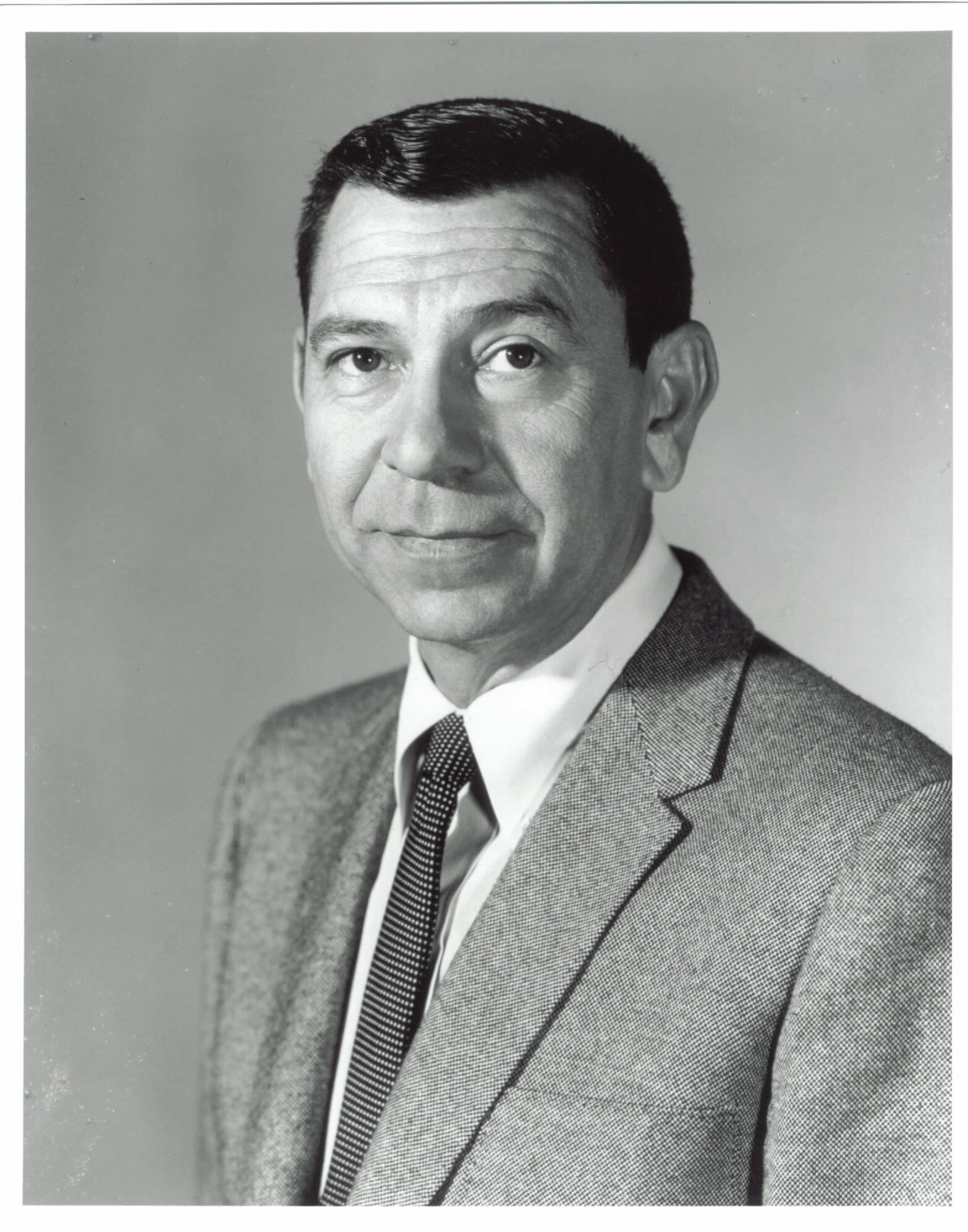
We should consider reserving e-mail for what I call “just the facts ma’am” communications. Remember how that was the trademark line from Sgt. Joe Friday of the old TV program, Dragnet? When there is a chance that something slightly contentious needs to be discussed, the best way is in person or at least by phone. I find that when I do this, I’m more likely to be sensitive of the other person’s feelings and talk about the issue in a more positive manner.

E-mail makes our business and personal lives more productive. Good old-fashioned, eyeball-to-eyeball encounters protect relationships, and enable us to maintain our personal connections with others.

This blog is being written in tandem with my book, “An Entrepreneur’s Words to Live By,” available on Amazon.com in paperback and Kindle (My Book), as well as being available in all of the other major eBook formats.
Armor Plated

Question: I have worked for years with a particular client and he never shows me one single sign of appreciation. The results I have produced for this client have been terrific by any standard. Why won’t he recognize my efforts?

Answer: I’ve certainly experienced the same thing over the course of my career. And I’ve learned several things that may be helpful in understanding this sort of situation. First, some people are just not wired to show appreciation to others. Second, there may be the belief that we are being paid for the services we provide and that is enough of a demonstration of appreciation. Third, if the business arrangement is recurring and requires the renewal of a contract the client may feel that the continuation of the relationship is sufficient proof of appreciation. Fourth, some people may believe that showing appreciation is reserved for personal relationships and not business situations. And finally, it’s possible that a client doesn’t express appreciation because he isn’t satisfied with the product or service being provided.

I’ve come to realize that none of these reasons is necessarily right or wrong. What’s more important is how we feel and react. We have no control over how others act but we do make a choice as to how we respond. Do we allow ourselves to feel hurt and victimized? Do we choose to become resentful and irritated?

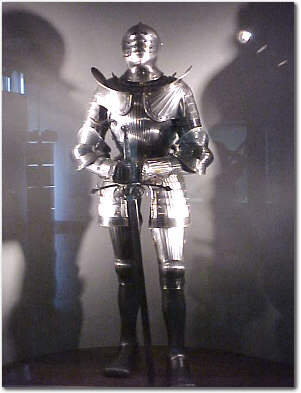
Feeling unappreciated can actually be turned into a positive experience. We can make the choice not to allow how we are treated by others to affect the way we see ourselves. This is akin to developing a suit of armor that enables us not to even give a second thought to what may be perceived or real sleights on the part of others. But the bigger win is to observe what we consider to be the less desirable traits and tendencies of others and do just the opposite. If someone is not showing appreciation, rather than allowing this to upset us we can make an extra effort to show appreciation to others.

Life is full of opportunity. Almost every situation that we might consider negative has a positive side. The choices we make will determine whether or not we live a happy and vibrant life. How others act toward us need not have any bearing on this truth.

This blog is being written in tandem with my book, “An Entrepreneur’s Words to Live By,” available on Amazon.com in paperback and Kindle (My Book), as well as being available in all of the other major eBook formats.
The RPM Game

Question: I’m finding that I’m becoming less patient as I get further into my career. Sometimes my impatience doesn’t serve me well. Any tips on how to be more patient?

Answer: I’m right there with you . . . I hate to wait. As a matter of fact my sense of urgency is off the charts – my colleagues can certainly attest to that! It’s the worst when I’m in my car. I think that once upon a time a wicked witch put a stoplight curse on me because I seem to hit every red light known to man. In my world, things need to happen right now and right away. I have a perspective that life is a fleeting moment in the overall scheme of things and there is too much that I want to accomplish in a short period of time. So I’m not very tolerant of things that slow me down.

Yet, I actually have become more patient in many respects. What I’ve learned is that my impatience at times has caused me to try and muscle through situations where a more patient and finessed approach would have been much more effective. My sense of urgency remains as high as ever, but I’ve become more intuitive at backing off and being a bit more gentle and methodical in moving forward. At some point in the past I realized that my impatience with the people around me wasn’t helping them advance the cause. Instead it was frustrating and flustering them. That quite literally gave me pause.  

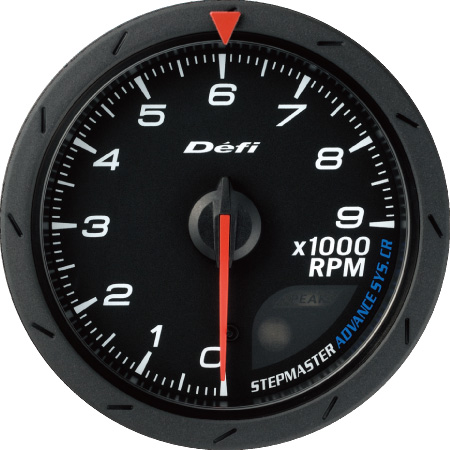
My sense of urgency is now tempered with my willingness to slow down and make sure that the people around me have clarity and understanding about the situation at hand. If they don’t, it’s my obligation to patiently take the time to help them gain a clear perspective. I liken this to the simple act of shifting gears in a car. In a lower gear the engine revs up and runs harder. When shifting into a higher gear, the RPMs drop and the engine doesn’t have to work as hard. The more impatient we become the harder our engine has to work.

Slowing down long enough to ensure that others have a clear picture of the road ahead is in itself, a practice in patience. And this actually allows us to shift into a higher gear and go even faster.

This blog is being written in tandem with my book, “An Entrepreneur’s Words to Live By,” available on Amazon.com in paperback and Kindle (My Book), as well as being available in all of the other major eBook formats.