
Undefeated

Question: Someone told me that arrogance and complacency are one in the same. How does one avoid falling into this trap?

Answer: Here’s my challenge to you and everyone – entrepreneur or not. What are you doing today that makes you better than you were yesterday? This is a beautifully simple calculus. Take a look at your life. Do you have a purposeful intent to improve yourself every single day that you walk on this planet? Do we want to waste one precious day of our lives failing to do so?

Purposeful intent is the key to continual improvement. To get started, make an appointment with yourself to catalog the various aspects of your life that you would like to improve – personally and professionally. This needs to be a substantive process driven by a sufficient dose of introspection and reflection. Then spend a moment when you get out of bed each morning and identify at least one thing you will do to move the improvement needle in those key areas you contemplated.  

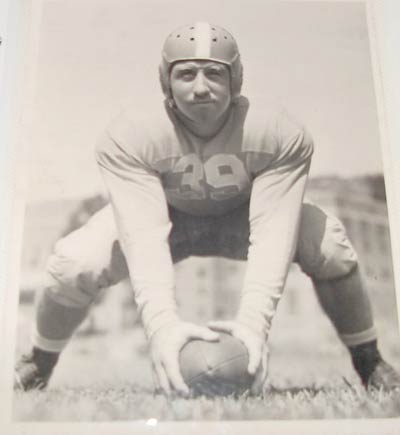
Do you feel as though you are at the top of your game? Are you a success in your business? You can do better. Are you successful at being a parent? You can do better. Consider this sports metaphor. Suppose we participate on a football team that has an undefeated season and wins the national championship. We might assume that we have reached the mountaintop. But, did we win every game by keeping the other team from scoring a single point? Probably not. So, we can do better. If we actually did accomplish a shutout against every team, did we score a touchdown on every single play we ran during every game of the season? If not, we can do better. You see, there’s always another step we can take to be better and do better.

When we settle for what we have achieved we may become a victim of our own success. We all know that whether in sports or business, teams that rest on their laurels eventually lose. The same is true with life. As long as we sincerely aspire to always do better, our success will continue for improvement is the mortal enemy of complacency. Thus, we’ll remain undefeated if we maintain an attitude of “I can always do better.”

This blog is being written in tandem with my book, “An Entrepreneur’s Words to Live By,” available on Amazon.com in paperback and Kindle (My Book), as well as being available in all of the other major eBook formats.

At the End of the Rainbow

Question: You blogged recently about fear and I understand that it’s necessary to deal with fear on a long-term basis. But what can I do about moments of sheer panic?

Answer: Entrepreneurs frequently find themselves in situations where there is an opportunity to panic. It could be a situation where we must speak publicly. Or it might be an e-mail from our largest customer telling us that they are taking their business elsewhere. And it could be a personal situation – that phone call from the hospital telling us that a loved one has been injured. Of course we want in the worst way to avoid feelings of panic. We will try our darnedest to refrain from showing anyone else that we are in distress. But regardless, the feeling is there and at the time, it is the worst feeling in the world. Which brings us back to the original question – what do we do when we feel the wave of panic?

Just take a breath. Seriously. Taking slow deep breaths is the first order of business. Focus on breathing from the diaphragm. We’ve all heard this but may forget to do it when it’s most important. Getting oxygen to the brain is critical to helping us sort things out and think clearly. Next, move into a grounding exercise that has been powerful for me. Have you ever heard of ROY G. BIV? Here’s how old Roy works. Sit with your feet flat on the floor and your hands unclenched in your lap. Close your eyes and visualize the most brilliant colors of the rainbow – one at a time. Start with the color red, and see it slowly traveling from the center of the earth and running up your left leg; across your harrow point (just below your navel); then running down your right leg and back to the center of the earth. Follow this with each of the remaining colors orange, yellow, green, blue, indigo and violet – hence the acronym ROY G. BIV.

Earlier this year I injured my left knee and left shoulder and had two successive MRIs. The MRI for the knee was no big deal but the shoulder was a different story. Though the machine was “open” it certainly didn’t feel that way for me. I made the mistake of realizing how close to my face this massive imaging machine was positioned and felt an enormous wave of panic. I felt like I was wedged between two giant rocks in a cave. This wasn’t simply a case of butterflies but real, honest-to-goodness terror. I did my breathing and that helped. I went through the Roy G. Biv exercise which also helped. But I knew that I was stuck in this machine for another 35 minutes and resolved that I would NOT succumb to the panic and call off the procedure. Instead, I replayed in my mind each day of a wonderful vacation trip that we had taken a few weeks earlier. I visualized my wife, my children and my grandson. It probably took at least 15 minutes for my heart to slow down to the point that it didn’t feel like it was going to explode. But I made it through the procedure and conquered the panic.

By remaining centered, we can manage our minds and bodies if and when panic occurs. Focus. Breathe. Relax. Visualize.

Batter Up

Question: I am very competitive and want to win in the worst way. It depresses me when I lose. Are these feelings healthy?

Answer: The world is more competitive than ever before. Companies are competing for customers. Individuals are competing for jobs, promotions, more compensation, better assignments – it never ends. And yes . . . competition is healthy. It makes us better at what we do. It makes us stronger, tougher and more innovative. But this can only happen if we are willing to embrace competition in a positive and constructive way.

How do we embrace competition and why would we want to? It comes down to something I mention quite often – mindset. We can either fear and resent competition, or we can view it as an opportunity for growth. And we know that fear and resentment are negative energy. How then can we win with negative energy? Instead, we can look at competition with an attitude of what we can learn. Moreover, we should take the opportunity to accentuate our strengths and shore up our weaknesses.  

I used to obsess over the competition. I would incessantly study the win-loss records of our competition and try and figure out their every move. When they won and I lost, it was devastating and I would move through a series of emotions from second-guessing myself to believing that they somehow cheated. Finally at some point I realized that I was so focused on the competition that I was failing to focus on my own performance. Could this have been the reason they were winning and I was not? Going forward I opted to create a game plan that was different and began to focus on executing that game plan to perfection. I stopped obsessing about the competition because it was apparent that I was giving away my power when I did so.

As a kid I loved to play baseball. I can still hear the coaches drilling the words, “keep your eye on the ball” into my brain. The analogy certainly fits in a competitive context. Fixating on my competitor causes me to take my eye off the ball. When I watch the pitch, I hit home runs. Today the only reason I watch the competition is to find something I can use constructively to incorporate into my own game plan. And then I hit even more home runs. Batter up.  

This blog is being written in tandem with my book, “An Entrepreneur’s Words to Live By,” available on Amazon.com in paperback and Kindle (My Book), as well as being available in all of the other major eBook formats.

Clouds

Question: I’ve made great progress toward becoming successful but I find myself feeling a great deal of fear at times. I know that I’m afraid of failure and all the consequences associated with it and I know it is holding me back. How do I overcome this fear?

Answer: Fear kills. It kills dreams, creativity, and entrepreneurial spirit. Fear can be paralyzing. You are wise to declare that you want to overcome it. Some people say that fear can be motivating – that having a bit of fear is a good thing. I don’t subscribe to that philosophy. I can find plenty of positive things to motivate me and the negativity of fear is not one of them. Removing fear from our consciousness is a process and should be treated as such. I realize that this may sound somewhat clinical but I’ve found that gaining a thorough understanding of the root of a fear is an important first step.

Over the years I’ve heard entrepreneurs discuss a myriad of fears including public speaking, losing a big client, encountering poor health, financial issues, entering into a romantic relationship – you name it and I’ve heard it. But overcoming these fears has one thing in common. The root cause of the fear must be identified before it can be resolved. Doing this may require some introspection and more than a few uncomfortable moments.

Thirty years ago I found myself flying on airplanes every week. I had a young family at the time and developed a severe fear of getting on a plane. My stomach was tied up in knots; I began to sweat; I’d feel faint, and my heart was pounding out of my chest. It was all I could do to force myself to walk down the jet way. I was convinced that the odds were against me and plane was going to crash. After months of trying to fight the anxiety I finally began to search for the root cause. I realized I was afraid of leaving my small children without a father – and to some extent I was afraid of death itself. I worked with my minister to understand where this came from and gradually the fear disappeared. Having always been fascinated with airplanes I began studying the mechanics of flight, started taking flying lessons and eventually bought a plane of my own. How’s that for turning the tables on fear?

My dad had a terrific saying, “Your troubles are like the clouds. Tomorrow they will be gone.” Our fears can also be like dissipating clouds if we don’t try to fight or suppress them. Instead we must go inward and find the source of our fear. Then gently and easily we release it to be replaced with confidence and faith.   

This blog is being written in tandem with my book, “An Entrepreneur’s Words to Live By,” available on Amazon.com in paperback and Kindle (My Book), as well as being available in all of the other major eBook formats.

The Rose Colored Glasses

Question: Sometimes it seems like the deck is stacked against me. I’m pretty sure I’m doing everything right but I just can’t win. Do you believe in bad luck?

Answer: I’m sure that you already know that there’s really no such thing as luck – good or bad. But I certainly understand how it can seem that way. Actually, what we think of as luck is simply the foundation that we lay for ourselves every single day. How? Through our thoughts, words and deeds we are creating a pattern of cause and effect, also known as the Law of Attraction.

Here’s the reality of it all. The little things that we think and the little actions that we take are recorded in our psyche. How many times have you thought to yourself, “there’s no way I could (fill in the blank here)?” How many times have you said something like, “I should call that CEO who just announced a major expansion in his company, but he probably wouldn’t return my call?” These may seem like they are harmless and fleeting thoughts . . . but they aren’t. What we really are doing is affirming a pattern of negativity in our lives.

Metaphorically speaking, we entrepreneurs live a rough-and-tumble life. There are plenty of knocks and countless challenges. Why make things tougher than they already are with negative thought patterns? In my company I am often teased for what many think is my rose-colored view of the world. That used to bother me. I guess I equated it to naiveté. The older and wiser I’ve become I realize that what some consider a rose-colored view is actually a reflection of the choice I’ve made to try and look at everything in positive terms. In so doing, I’ve patterned my psyche to draw positivity into my life. What a liberating feeling it is to not recognize bad luck because it does not exist for me! Do I encounter obstacles along the way? Of course – but I have chosen not to see them as bad luck or insurmountable. Instead they are opportunities for creativity and growth.

So, you too can start the process of seeing the world through rose-colored glasses. Begin by catching yourself every time you notice a negative thought creep into your mind or a negative word cross your lips. Remind yourself that you are on a different mission now. Replace it with a positive thought. The more you can do this the more your “luck” will change for the better. And eventually you won’t want to ever remove your rose-colored glasses.

This blog is being written in tandem with my book, “An Entrepreneur’s Words to Live By,” available on Amazon.com in paperback and Kindle (My Book), as well as being available in all of the other major eBook formats.

Once and For All

Question: I have some less-than-desirable habits that I’d like to change. I’ve tried before but somehow I run out of gas. Is there a secret to gaining self-discipline?

Answer: Welcome to the club. Like everyone else, we entrepreneurs have things we’d like to change about our lives. Our challenge is to make certain that our bad habits don’t get in the way of our success. Obviously some habits are of more concern than others. Gambling, drugs, alcohol, infidelity – these are issues that can prevent or destroy success. Getting professional help to solve them may be the right move. But there are other habits that we can deal with. Do you want to exercise more or quit smoking? How about losing weight or even something as simple as not interrupting someone else when they are talking?

I wish I could tell you that the answer is simple, and actually . . . it is. What it all boils down to is making a choice. We fail so often at changing things in our lives because we aren’t ready to make the “once-and-for-all” choice. I enjoyed smoking pipes and cigars for many years but one day more than eleven years ago I decided that it would be healthier not to smoke. So I quit cold turkey. I was just ready to make the “once-and-for-all” choice. Something clicked for me. It was a realization that I was having a ball living my life and my smoking habit might someday interrupt all that fun – as in my early demise.

Until we have the epiphany that results in a “once-and-for-all” choice, we’ll never eliminate the bad habit we want to break or launch that great new habit we want to start. Becoming self-disciplined is a process. As entrepreneurs we know that much of the success in our businesses comes through a dedication to process. Start this process by taking inventory. If there are habits you’d like to eliminate (or good habits you want to start), make a list of them. Decide which is most important and focus on it only. As the saying goes, the only way to eat an elephant is one bite at a time. If you try to tackle everything at once it may be an overwhelming experience. Think hard about what you expect to gain from making the change you want to make. Write down everything that comes to mind. When the “aha moment” arrives you’ll know you are ready to make the change. If you try to force yourself to become more self-disciplined it is likely that you’ll be frustrated when this approach doesn’t work. Only when that “aha” spark occurs will you make the “once-and-for-all” choice. And then the change that happens will be permanent.

This blog is being written in tandem with my book, An Entrepreneur’s Words to Live By, available on Amazon.com in paperback and Kindle (My Book), as well as being available in all of the other major eBook formats.

The Moon Shot

Question: It seems like everything is always in a state of change. This can be disconcerting at times. How do I keep up?

Answer: Entrepreneurs embrace change. We’re sort of like scientists in a sense. A scientist who is looking to discover a cure for a disease runs countless experiments. With some experiments the cure formula is changed incrementally. In other experiments it’s changed dramatically. Regardless, the formula keeps changing until the solution is found.

For us change is exhilarating. Why? Because it’s a way to make things better. It’s a way to find out what works and what doesn’t work. If we view change with trepidation or fear it will be difficult for good things to come about. But if we see change as a golden opportunity we can meet and exceed our goals. I love change from a business perspective because it creates inefficiencies in the marketplace. The opportunity I see is to react to such inefficiencies in a profitable way. Look at the companies that figured out how to successfully adapt to changing conditions in our society. Xerox got its start selling photography paper. Tiffany’s was a purveyor of stationery before it became world famous for jewelry. LG sold cosmetics before the days of flat screen televisions. Now look at companies that failed to change – Eastman Kodak recently filed for bankruptcy as did Borders Books and Blockbuster Video.

A key to understanding change is the word “pivot.” I played basketball as a kid. Our coaches taught us how to pivot in every practice. We would keep one foot anchored to the floor and rotate our body around that foot in different directions. In business as well as our lives, we should always be on the lookout for opportunities to pivot. Perhaps a slight change in direction will yield better results. But remember, a pivot should be undertaken with a clear objective in mind. In basketball the objective was to pivot into a position to score or to pass the ball to someone else who could score. If we just pivot around and around with no objective it’s likely that we won’t score.

One final thought on change. I have found that to be able to thrive on change as an entrepreneur, I need certain constants in my life. Remember that pivot foot in basketball stays anchored to the floor until I dribble, pass or shoot. I’ve been fortunate and blessed to be with the same wonderful woman for more than 41 years; be with the same company for more than 37 years, and live in the same house for 34 years. Look for something in your life that is a constant or a positive anchor – faith, family, friendships – and then shoot for the moon where change is concerned. Happy flying!

This blog is being written in tandem with my book, An Entrepreneur’s Words to Live By, available on Amazon.com in paperback and Kindle (My Book), as well as being available in all of the other major eBook formats.

All Else Being Equal . . .

Question: Competition is tougher than ever. What is the most effective way to be different?

Answer: You have certainly asked the right question. Whether we are selling a product, a service or looking for a job, the key is differentiation. Think for a moment about great companies in America today and how they are different. Walmart is known for huge selection and low prices. Nordstrom is a champion of customer service but sells at a higher price point. TOMS Shoes donates one pair of shoes to a needy person for every pair of shoes a customer purchases.

Identify your niche and figure out how you can be the absolute master of that niche. But don’t stop there. Make sure that everything about your company, your product/service and about you – is reflective of this mastery. Allow me to share an example. One of our companies acquires, owns and operates apartment communities across the country. Buying apartments is a very competitive business these days. We have chosen to focus on purchasing properties that were initially developed using affordable housing tax credits. There aren’t as many buyers for this type of property due to the complexity of the tax credit program. We have become known as a buyer that understands the program and will pay a fair price.

We’ve taken the niche a step further. We market extensively to prospective apartment sellers and have attempted to be just as unique about the way we go about doing this. We don’t use e-mail – everyone does that now. Instead we send personally addressed high-quality marketing materials via snail mail. Our kick-off piece was a gold cardboard tube that contained a cover letter and a black velvet bag. Inside the bag was a gold dollar coin with a message saying, “Consider this to be a down payment on a profitable relationship.” Every three weeks an announcement of an apartment acquisition is sent to our prospective sellers. And one of our associates makes follow-up phone calls every 60 days. Believe me it is having the desired effect.

Here’s the takeaway. Do your homework and find that area in which you can specialize. Get creative and devise unique ways to deliver your message. Remember that those who win are able to convey a value proposition that resonates with their customers (or prospective employers). Above all remember that life is about making a difference in the lives of others. From an entrepreneurial perspective, those who follow through and truly make a difference will prosper.

The Story of the Faint Star

Question: I’m not satisfied with the amount of money I’m making. It seems that the harder I try the harder it is to reach my financial objectives. How do I resolve this?

Answer: It’s possible that you are trying too hard. I completely understand your predicament for I once was in exactly the same place. Earlier in my career and after working for what seemed to be an eternity, I was constantly frustrated by what I felt was a gap between my true value to my company and what I was actually being paid. In my mind I was expending my blood, sweat and tears to make someone else rich – obviously a classic case of “woe is me.” It seemed that the harder I reached for the dollars the more they eluded my outstretched fingertips. Then one day something clicked. I had an epiphany that maybe I was trying too hard. I think someone probably made this observation and I finally listened.

Have you ever tried to look at a faint star in the night sky – you know it’s there but the more you strain to see it the harder it is to find? But if you look ever so slightly to the right or to the left, all of a sudden you see it clearly with your peripheral vision. This same thing happened for me. I shifted my focus away from chasing the almighty dollar and intentionally decided to pursue that for which I was passionate. I loved to be creative and I loved working with other people. The money became the byproduct of my passion rather than the primary focus.

Something that you can do to absolutely guarantee a life of abundance is to tithe to that which feeds your soul. Many people tithe to their church. Others may have a charitable cause that deeply moves them. I have found that joyfully tithing 10% of my income – no matter how much or how little I might earn – allows me to tap into a flow of positive energy that ensures abundance. I know this to be true because the more I tithe the more my life has been enriched – financially and otherwise. When I tithe I don’t expect a quid pro quo. But over the past 40-years it has simply been a fact of my life that unconditional tithing has led to financial prosperity that I never dreamed I would experience.

It’s Bigger Than a Paperclip

Question: Some entrepreneurs create truly amazing products and concepts. What is their secret?

Answer: Would you believe that mindset has a lot to do with answering this question? When interviewing people seeking a sales position with our firm I used to administer what I called the “paperclip test.” I would toss a paperclip to the interviewee and ask him or her to spend a moment in thought and then sell me the paperclip. Some people would first try to determine my needs – obviously an excellent practice. Most would then launch into selling me on the virtues of the paperclip. They would tell me that it was made of the finest quality metal. They would tell me that it would grab like a vise and that it was guaranteed not to tear my papers in the process. A few prospective salespeople even did a very nice job of explaining the benefits of the features they were describing. But every once in a while, there was that rare individual who went in a totally different direction.

The rare person I’m talking about performed the need determination. But he or she ignored the practical reality that the object was a paperclip. I remember one individual who asked me what I was encountering that was my biggest challenge at the time. He heard me say that I needed to solve a property financing issue of some sort. He then twisted the paperclip into an abstract shape and explained that it was a unique financing tool and suggested how it was the answer I was seeking.

You can see why I thought this person was a rare individual indeed. His ability to think bigger led to the discovery of a solution to my problem. And that is the differentiator. Thinking big and then thinking bigger. So here’s the challenge for each of us. When we have an idea, write it down in all its glory. Then go to the next level with it and think about all the ways you can turn it into an even bigger idea. Don’t worry if some of the things you come up with are a bit off-the-wall – that’s part of the process. The whole point is not to be satisfied with the result of your initial efforts. Push yourself to go beyond the obvious. Collaborating with your colleagues may help. The more you practice the more you can create a new mindset that will push you and your ideas into the stratosphere.