
Speak to Me

Question: Recently I was asked to speak before an industry group. I’m very nervous about giving this presentation. How can I get rid of the butterflies and give a talk for which I can be proud?

Answer: Public speaking offers a terrific opportunity to share knowledge and gain exposure for your organization and yourself. And yet it’s something that a large percentage of the population fears . . . even dreads. Why is that? I believe that the main reason is that we are so afraid of what other people will think of us. What if we make a mistake? Will we be viewed as not having the expertise that we want to project? Perhaps we measure ourselves against the lofty speaking styles of those we perceive to be great orators.

As with most things, successful public speaking is all about mindset. We can allow the fear to consume us or we can turn the tables and actually embrace the opportunity. Think about this. The choice is very clear – consuming fear or a joyful embrace. Assuming that we choose to embrace the opportunity we then must continuously affirm how positively excited and grateful we are to be making the presentation. Making this choice is Step One in the process.

Step Two is to determine the style of speaking that is best suited for us. I detest standing behind a podium and reading a speech. Instead, I need to connect with my audience. I’ve adopted a style where I take a microphone and walk around the room – almost like a town hall format. I ask questions of the audience and encourage their feedback throughout my presentation. Thus, I do not put myself in situations where I can’t adapt the presentation to my style. And when I’ve been asked to stand behind a podium and read a speech, I’m generally able to re-work the format into my walk-around more casual approach. Finding the right style of speaking is a critical step toward a successful presentation.

Step Three is to practice, practice and practice. I recommend that you practice your presentation at least three times in front of other people if possible. The more you practice the more confident you will become. Practice also will allow you to become more fluid in your delivery and to fine tune some of the details that you wish to present.

So, now we have continuously embraced the opportunity with a positive attitude. We have developed a speaking style that is just right for us. And we’ve practiced our presentation multiple times. Now the moment of truth has arrived and perhaps we’re feeling a little jittery. Try “leaning into” the jitters. Instead of allowing them to nibble at our confidence, we turn the anxiety into excitement. Try exclaiming, “I am thrilled to have the opportunity to make the best presentation I’ve ever made in my life!” Say it multiple times along with a few deep breaths, and we’re ready to rock-and-roll.

Speaking in public is an honor. Presenting over and over ensures that we’ll become highly proficient. And then the feeling we get when we’re finished is that of supreme satisfaction.

This blog is being written in tandem with my book, “An Entrepreneur’s Words to Live By,” available on Amazon.com in paperback and Kindle (My Book), as well as being available in all of the other major eBook formats.


public speaking

Resolute

Question: It’s time for another New Year’s resolution.

Answer: Over the past year I’ve written a great deal about how the mindset we have means everything. For the coming year I resolve to hold a positive and productive mindset about everything and everyone. We’ve all heard that our minds are incredibly powerful. Undoubtedly we’ve seen numerous examples of how this impacts our lives and the lives of others – so we know it works. Our opportunity in the New Year is to commit to put this into practice.

If I encounter a health challenge of some sort, I will hold a positive and productive mindset to see myself as healthy and whole. I know that the power of my mind will enable my body to heal. A negative mindset will block the healing process.

If I face difficulties in my relationships I will hold a positive and productive mindset to bring about peace and harmony. When negative thoughts about another person creep into my mind, I will recognize them; release them, and replace them with positive thoughts.

Should I face financial difficulties I will hold a positive and productive mindset in order to find the right and perfect solution. This will give me insight into a window of creativity that will lead me to a state of abundance and prosperity. Negative thinking will constrict the creative flow that I need.

When I find myself in a funk I know that this can turn into frustration. I will hold a positive and productive mindset in order to become relaxed and refreshed. Frustration is pure negative energy and will prevent me from returning to a place of balance and order.

If I experience fear, I know that a positive and productive mindset will allow me to shine a light into the shadows and chase the fear away. Negativity and fear are twin siblings and I have no use for them.

I am solely responsible for my own thoughts and I accept the consequences of those thoughts. I know that positive thoughts produce positive results and negative thoughts produce negative results. Thus, I make the choice to hold a positive and productive mindset in order to live a happy and successful life. The equation is simple and straightforward.

Happy New Year!

This blog is being written in tandem with my book, “An Entrepreneur’s Words to Live By,” available on Amazon.com in paperback and Kindle (My Book), as well as being available in all of the other major eBook formats.

New Year Image 2

Magnified

Question: Every time I watch the news on TV or on the Internet all I see is negativity and bad stuff. This is so demoralizing and just sickening to see. I need to know what’s happening in the world but this is too much.

Answer: Bad things have been happening since humans inhabited the earth. And I don’t believe that more bad things are happening now than in the past – just different things. But one fact is significantly different than in the past. Everything – and I mean everything – can be reported at the speed of light. Unfortunately the media believes that no one wants to see or read happy news. This may or may not be true but it’s the hand we’re dealt. The net effect is that all the negativity is magnified because that’s all that’s reported.

Too many people ignore the news. I have talked to countless 20 and 30-somethings who tell me that they don’t pay attention to the news, primarily because it’s so negative. But that’s not the solution. We can’t afford to have a nation of low information citizens. Some sort of coping mechanism is needed to filter out the bad and the negative enabling us to understand what is happening in the world around us.

Here are two ideas that can work hand-in-hand to help us with this issue. Both involve perspective. First, when we read a newspaper, watch television news or surf the Internet, we must remember that we’re seeing what others want us to see. And what others want us to see typically imparts an element of their own bias – and often that bias is substantial. Remember in school how we were taught to abstract articles? Now is the time to put that into action. We can’t change the circumstances that may be negative, but we can focus only on the facts. A plane crashed and people lost their lives. Do we really need to digest all the gory details? If we stick to the facts we can lessen the negative assault on our psyche.

The second idea involves intentional awareness. Each day should start with our resolving to look for good things that are happening around us. Rather than allowing what we read and hear in the media to beat us down, we can notice the acts of kindness, friendly greetings, big and little wins, and other positive things that will never get the attention of a “journalist.” We have no need to filter what we see with our own eyes.

Intentionally looking for the good in our lives helps to cancel out the drumbeat of bad news and negativity that others are trying to serve up to us. And then the choice is ours for how we interpret what we hear and see in our world.

This blog is being written in tandem with my book, “An Entrepreneur’s Words to Live By,” available on Amazon.com in paperback and Kindle (My Book), as well as being available in all of the other major eBook formats.

tv

The Circle

Question: Giving it away makes me feel good. But I’m told that being able to receive is just as important. I don’t get it.

Answer: I will confess at the outset that this is not my strong suit. Part of my personal growth is learning how to receive. I love to give of my time, talent and treasure but it feels weird in some instances when I’m put in a position of receiving. I’ve wondered if for some reason this has something to do with my feelings of self-worth. For some this could be an issue, but for me I don’t think it is the reason as much as my upbringing. My parents taught me to be humble and not draw attention to myself. They modeled this for my sister and me and we learned it well. But it has resulted in my struggle with being on the receiving end.

I can tell you that the “old tapes” are playing in my head big-time when I receive an unexpected gift. And when I receive recognition of some sort I often feel a bit embarrassed. Contrast this with how I feel when I give to others – even if it’s anonymously. Now that’s a real high for me!

Here’s something important that I’ve discovered about giving. Receiving completes the circle. And when we fail to receive with the proper mindset, we’re creating a blockage for the good things that are destined to come to us. Confused? I’ve said over and over that the more we give the more we receive – it’s just the way it works. And yet, if we have trouble receiving then how do we realize our good? I think part of my problem with this has been that I have a false concern that others might view the way I receive as arrogance or braggadocio. The lesson I’m learning is that if we receive our good in a humble and appreciative manner and properly express our heartfelt gratitude then our integrity remains intact. And we always must remember that when we give, we do so without any quid pro quo expectations. We give from our hearts. But we know that we will receive – something, sometime and somewhere – in bigger and better ways than we can ever imagine.

Giving and receiving is one of life’s endless circles. By being able to embrace receiving as much as we do giving helps us to complete that circle over and over.

This blog is being written in tandem with my book, “An Entrepreneur’s Words to Live By,” available on Amazon.com in paperback and Kindle (My Book), as well as being available in all of the other major eBook formats.

circle

All the Best

Question: I hate being disappointed about so many things in my life. How do I set my expectations so that this doesn’t happen?

Answer: Disappointment is an insidious feeling. Years and years of disappointment breeds cynicism. Disappointment also leads to pessimism. Cynicism and pessimism slowly creeps into our consciousness and attacks our soul. At all costs we must avoid allowing ourselves to be disappointed. So your question is really about how to avoid being disappointed.

The solution may sound perverse but it’s really not. Expect the best. It’s that simple. Expect the best. This is not a Pollyanna concept but a mindset. Think about it. When we try to lower our expectations what does that do? It creates a mindset that is limiting. We may take actions that align with our lowered expectations and as a result we ensure that we won’t achieve our highest good. The reason we may be disappointed is because we may not really believe high expectations. We think at one level that things are going to be amazing but deep down inside we don’t really believe it. And the situation then becomes a self-fulfilling prophesy.

Expecting the best is all about truly believing. I’ve written before about being accused of wearing rose-colored glasses. But I’ve found over the years that always expecting the best generally turns into reality. It’s the law of mind-action. What we believe in our minds is produced in the world around us. Of course a distinction must be made lest this law be misunderstood. If I’m 60 years old and believe I’m 20, I’m not really going to roll the clock back and become 20 again. But if I believe that I feel like I’m 20 . . . if I truly believe this . . . then I will feel like I’m 20. Which brings us back to expectations. How many times have we said, “I really want to win that new contract, but the deck is probably stacked against me.” What is most likely to happen? We won’t win the contract because we affirmed that we wouldn’t. Our lowered-expectation is that we won’t win.

Expecting the best is liberating. It means that we have no need to lower or measure our expectations. Instead we can truly believe the best about our lives. And as an added bonus, our beliefs will manifest.

This blog is being written in tandem with my book, “An Entrepreneur’s Words to Live By,” available on Amazon.com in paperback and Kindle (My Book), as well as being available in all of the other major eBook formats.
Ice Cream

Which Wire Do I Cut?

Question: I often find myself pressed for time due to a deadline of some kind. The more pressure I’m under the more mistakes I make. What can I do to feel less stress and perform at a higher level?

Answer: You may be expecting me to tell you to just relax, right? And while that’s good advice, that’s not going to be my answer here. Instead, consider turning the tables. This may sound counterintuitive but it works. What were the thoughts that ran through your mind when you faced a seemingly impossible deadline? “I’ll never get this done in time!” Or, “this is ridiculous, why did I agree to this crazy due date?”

What do you suppose would happen if you said this instead? “Wow, this is a fantastic opportunity! I have a chance to push myself to succeed where in the past I might have failed.” Naturally the words mean nothing if the mindset isn’t there. Think about all of the benefits of working under pressure. First, we get to grow. How does staying comfortable stimulate personal growth? Only when we stretch do we really learn how to be better. Second, we become even more effective at planning. The odds are better for successfully meeting a tight deadline if we create a precision plan to identify and execute all of the necessary steps. Finally, we get more done. In the overall context of eternity, our lives are but a blink of an eye. Working continuously in short deadline mode means that we get to experience a lot more of life.

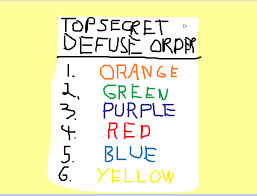
Here’s a game that I devised years ago to help me handle the pressure of meeting deadlines. Imagine that you are a James Bondesque individual and you just learned that you are in a building containing a nuclear bomb that is set to explode in five minutes vaporizing you and tens of millions of people. There’s no time to call anyone – it’s totally up to you to defuse this device. You have to find the bomb; figure out how to remove its housing; determine if there’s a booby trap to disarm, and then decide which of the colored wires should be snipped (if you ever find yourself in this situation, never cut the red wire). Meanwhile the clock is ticking and you could very soon become a bug on the great cosmic windshield if you screw up. This exaggerated imagery has made me laugh, prompted me to plan, encouraged me to keep score (of how many times I’ve saved the world) and taught me never to procrastinate.

Whether we’re entrepreneurs or not, our lives are filled with deadlines. Perhaps seeing ourselves as Mission Impossible heroes will spur us into action and allow us to actually enjoy the process of reaching the finish line. Alive!

This blog is being written in tandem with my book, “An Entrepreneur’s Words to Live By,” available on Amazon.com in paperback and Kindle (My Book), as well as being available in all of the other major eBook formats.
bomb defusing

Grrrrrrreat!

Question: Is there a secret formula for “greatness?” Some people seem to be destined that way. The rest of us . . . I’m not so sure sometimes.

Answer: Think about the people who you might consider being great – they can be living or dead. Who do you include? Albert Einstein? George Washington? Jonas Salk? Mother Teresa? What do all of these people have in common? They were all human beings, just like you and me. Each of them faced trials and tribulations similar to our own. None of them set out to be great. So just how did they rise to the level of respect and achievement that they did?

Each of these great people worked hard to live to their full potential. No one actually does this completely. But some people seem to get closer than others. So what does this say about mankind? We all are meant to do great things. When I was a child my parents pushed me hard to be better. My teachers did the same. On the basketball court my coaches rode me hard. There were times when I resented this but as an adult I realize that each parent, teacher and coach saw that I had potential and wanted me to achieve it. I attribute some of my success to having these people believe in me and encourage me to reach for the stars.

Some of us weren’t pushed as hard during our formative years as was I. So how do we do great things? Here’s the formula:

(Big Dreams + Risk Something) + (Resilience + Perseverance) + Positivity = Greatness

We can’t do great things if we don’t dream big dreams. Why don’t more people dream bigger? Because often there is risk involved or they don’t believe they can realize their dreams. But when we dream big and we put ourselves at risk, then we have a chance to make a real difference. And there’s no doubt that when we do both of these things we may not always succeed immediately. So it’s imperative that we bounce back and keep on trying. In the immortal words of Winston Churchill – we never, ever, ever, ever, ever give up. Finally we must maintain a positive outlook on everything we’re doing. Negativity blocks the flow of positive energy that we need to make the formula work. There’s one word that describes all of this . . . mindset. Great people who do great things have a great mindset.

You and I can have a great mindset. It requires practice every single day. Our DNA is programmed for us to do great things. When our mindset is in the right place, our greatness will manifest.

This blog is being written in tandem with my book, “An Entrepreneur’s Words to Live By,” available on Amazon.com in paperback and Kindle (My Book), as well as being available in all of the other major eBook formats.

Einstein

MAS

Question: I am very goal-oriented and set very specific objectives for myself. I meet my goals fairly consistently but I just don’t think I’m making the kind of progress personally or professionally that I desire. Any suggestions on how to step up my game?

Answer: Conventional wisdom says that we should always set goals. We’re also told to set “stretch” goals – that is, we need to set objectives that may be attainable but with considerably more effort than normal. Setting goals and achieving them – especially stretch goals, can produce a very satisfying feeling. But think about this for a moment. Is it our goal to simply be satisfied? Or do we want to accomplish amazing things?

Setting and meeting goals doesn’t usually allow us to accomplish amazing things. Let me clarify something here before you get the wrong idea. There is nothing wrong with setting goals and in fact, it’s a necessary process in business and in our personal lives. The differentiator is the mindset we hold about our goals. When we focus only on achieving the goal . . . we probably will. But if we use the goal as a minimum standard for achievement we open ourselves to the possibility that we might accomplish something even bigger and better.

I have been practicing this concept for a number of years and the results are not incremental. Let me explain. Earlier in my career I spent a lot of time visualizing the results I was pursuing. And most of the time those results were realized. But after doing this for a while, I came to understand that by only working to achieve my goals I was actually limiting myself. So I began setting goals in a manner I called Minimum Achievable Standards (MAS). This didn’t mean I set minimal goals – a very important distinction. I made sure that the objectives were realistic and sometimes even of the stretch variety. But then my focus became on how I could become more creative and innovative to perform the task at hand. I really didn’t worry about the goal at that point because I knew it would be achieved. The real question became how far beyond the goal could I go. The results have been exponential ever since.

Goals can be inspirational or perspirational. We can work very hard to achieve our goals. Or we can use goal setting as a springboard to soar to amazing new heights and beyond.

This blog is being written in tandem with my book, “An Entrepreneur’s Words to Live By,” available on Amazon.com in paperback and Kindle (My Book), as well as being available in all of the other major eBook formats.
jetman

It Only Cost a Buck

Question: Recently I read an online customer review about my business and it was pretty mediocre. We delivered the service we were supposed to. Why would someone give us such average marks?

Answer: Maybe the service was mediocre. It’s my theory that people generally expect average which is a pretty low bar. That’s also why it’s so easy to wow customers with a little bit extra. There just aren’t a lot of companies that consistently deliver the wow factor.

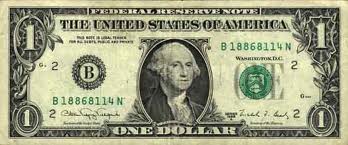
While vacationing recently I had the opportunity to eat in the same restaurant while driving to our destination and again when driving back. Apparently the general policy at this restaurant is for the server to leave the ticket at the end of the meal and the customer pays at the cash register. During my first visit, our server saw me take out my credit card and asked me if she could take the ticket and my credit card and handle the payment without my having to go to the register. This was a small but friendly touch that resulted in my rounding up the bill to the nearest five-dollar amount and calculating her tip on that basis. My visit on the return trip was, well . . . average. Our server was friendly enough but when the time came to settle up, I put my credit card on the table with the ticket and it sat there. She came back twice to clear dishes but never made a move to pick up the credit card. I finally paid at the register and guess what I did? I rounded down to the nearest five-dollar amount to calculate her tip. It only cost her a buck, but imagine what that could add up to over the course of a year.

In my second encounter the server didn’t do anything wrong. In fact she was undoubtedly following restaurant policy. Thus she met my expectations. But it wouldn’t have taken much for her to exceed my expectations as her colleague had done a couple of weeks earlier. This minor incident highlights the fact that it doesn’t take much in this average society of ours to really stand out. As entrepreneurs we’re always looking for ways to differentiate ourselves and our businesses. We don’t need to get fancy about it. Just understand what average is and find simple and friendly ways to beat average.

The same lesson applies to life in general. Do we want to have average relationships? In my book, life to a great extent is about the people that pass through it. I’d like to think that the people in my life get more than “average” from me. Having the mindset of always giving a little extra effort will make this so.

This blog is being written in tandem with my book, “An Entrepreneur’s Words to Live By,” available on Amazon.com in paperback and Kindle (My Book), as well as being available in all of the other major eBook formats.

dollar bill

I Still Hate Eggplant and Rhubarb

Question: I attended an event recently and talked for quite a while with another individual. He was completely boring and didn’t have much to say beyond work stuff. It made me wonder if I too might be one-dimensional. How do I make sure I’m not?

Answer: Your self-awareness is an encouraging sign that you are on the right track. We entrepreneurs can have a tendency to be so focused on our work that we assume everyone else must be interested in this aspect of our lives. The first step in making certain we aren’t one-dimensional is to take a personal inventory. During the past 30-days, make note of all of the activities in which we have participated that are not work-related. If we’ve attended sporting events, the symphony, met friends for dinner, read a book or two, watched a documentary and volunteered at the local food bank, we are probably in pretty good shape.

If you find that you need a bit more variety in your life make a “bucket list.” This isn’t necessarily a bucket list of things you want to do before you die (though it can be), but is simply a list of things that you think might be interesting if you would ever stop eating, breathing and sleeping your work so much.

The hardest part about this is moving out of the work-focus mindset. To move forward and try new things we need to give ourselves permission to do so. That new product idea will still be ready for us to flesh out tomorrow if we take a cooking class tonight. We’ll still have time to complete the spreadsheet that needs to be created for next week’s presentation if we take a piano lesson or spend some time at the gym. Try new things. Meet new people. Twenty years ago there is no way that I would have envisioned doing the things I am now outside of my profession. And in so doing, it’s opened a whole new world for me that has made me a much better entrepreneur. Why? Because adding more dimension to my life has stimulated my creativity and kept me fresh. I’m more receptive to new concepts and I find it fascinating to talk to other people about many things other than business.

If you choose to walk down this path don’t despair if at first it’s a slow go. You’ve become accustomed to doing things a certain way and you can’t broaden your horizons overnight. But your enthusiasm will grow and I guarantee you’ll be a better entrepreneur and a better person overall.

The best antidote to being one-dimensional is an open mind. The world is full of opportunity beyond our own little backyard. There are so many new and wonderful things to experience. That said, I still hate eggplant and rhubarb.

This blog is being written in tandem with my book, “An Entrepreneur’s Words to Live By,” available on Amazon.com in paperback and Kindle (My Book), as well as being available in all of the other major eBook formats.

NCI_03