
The Collaborative Entrepreneur

Nike’s corporate tag line is “Just Do It.” And that could be the tag line for companies of all sizes. Leaders at all levels send the message of “Just Do It” to their “charges.” This notion boils down to a command and control style of management. And I probably do not need to point out how poorly this approach works with today’s Millennial and Gen Z workforce. We Boomers grew up in this environment and may tend to continue its practice. Perhaps it is time for something different.

I know that many entrepreneurs agree in principle with a more collaborative style of leadership. Yet, the language that is used may belie this agreement. Examine the following statement that rolls up many of the words used into a massive contradiction with collaboration. Mr. Smith is a senior executive with the ABC Company and he’s describing a recent business win for his company.

My employees really came through with this project. I have a hundred people working under me and every one of them did their jobs like they were supposed to. I set their goals, and they achieved them. I’ve been focused on this opportunity for a long time. I love winning this way!”

At first blush Mr. Smith seems to be giving credit for the win to others. But the way he says it indicates that he is not yet a convert to a more enlightened style of leadership. Note the highlighted words. Clearly, he is in charge here and other people have done his bidding.

Entrepreneurs can change this narrative. When we are comfortable in our own skin, we are easily able to eliminate the unhealthy aspects of our ego from our interactions with others. It is often the case that having to take the credit for an accomplishment or reinforcing the fact that we were “at the top of the food chain” is a result of our own lack of confidence or some other insecurity. With our new level of comfort, we relax, smile, and become totally humble.

Here is another version of the previous statement. Mr. Doe is a senior executive with XYZ, Inc. and is celebrating recent success.

“The XYZ team is amazing! They worked together to establish the goal and drew upon our Core Values to develop a winning strategy. We are so appreciative of each and every one of the hundred team members who worked tirelessly on this project for more than a year. Their commitment, dedication and creativity are the reasons for our success.”

Sounds a little different, doesn’t it? There is not a single mention of the words “I,” “me” or “my.” The word “employee” has been replaced with “team member.” Mr. Doe simply delivers the message without allowing his ego to enter the picture. Clearly, Mr. Doe’s team members work “with” him – not “under” him. I have written before about how we need to be intentional about modifying our vernacular away from “I,” “me,” and “my,” and changing to “we,” “us,” and “our.” 

Collaborative leadership is not decision making by committee – as a leader we still make the ultimate critical decisions. Collaborative leadership is about seeking out team members and listening to their thoughts and ideas. It is valuing others as human beings and the contribution they make to the enterprise. It is about having empathy and creating a culture of respect. And it is about using the words we say as a reflection of all these factors.

When we think about what we write and say we can ask ourselves this simple question – “Do my words focus the spotlight on me or on others?” Doing so helps us move away from the old command and control approach of the past.

This blog is being written in tandem with my book, “An Entrepreneur’s Words to Live By,” available on Amazon.com in paperback and Kindle (My Book), as well as being available in all of the other major eBook formats.

The Coach-Entrepreneur

There is a lot of talk these days about mentoring. Many members of Generation X and Generation Y (Millennials) have told researchers that having a mentor is of high importance to them. As a Baby Boomer, I take great pleasure in being called upon to mentor other entrepreneurs. But as the CEO of our family of companies, I made the mistake of also thinking that I could be a mentor to some of the up-and-coming leaders in our organization. Over the years this realization has become more apparent to me and its subtlety is what tripped me up.

By my definition, a mentor is an advisor and nothing more. The mentee can take what the mentor offers and do with it what he or she wishes. A mentor typically has no “skin in the game” where the mentee is concerned. As a result, the mentor freely dispenses advice and opinions without an agenda. CEOs should not try to be mentors within their own companies. Why? Because they clearly have an agenda which is first and foremost shaped around what is in the company’s best interest. In my experience trying to be a mentor to a handful of leaders in our firm has not worked effectively. They are deferential to a fault because I am the CEO. They listen to what I have to say differently than if I were outside the organization. For example, when I challenge them with a particular question or premise, they take it as gospel. The relationship of the CEO to any member of the team is going to be such that a true mentoring relationship will be very difficult.

So, what is an appropriate role for a CEO to play in developing leaders within his or her company? I have found that becoming a coach is the right path to take. Let us use sports as the metaphor here. The coach is a teacher. He/she may call the plays from the sidelines until a sufficient level of expertise and trust is developed with the players to allow them to call their own plays. A coach should be wise and compassionate; yet there are times when he may be appropriately demanding and exacting.

Gen Xers and Millennials are well-served to understand the distinction between coaching and mentoring. I believe that a future leader should have both. Find a mentor who is older and has plenty of experience outside the company. By building extensive relationships throughout the community, one can usually connect with someone who may be willing to serve in a mentoring capacity. Then, try and establish a coaching relationship with a superior inside the company, assuming the individual has a coaching personality. Unfortunately, this is not always the case with certain people in positions of authority who are insecure and have power issues. I submit that it is healthy for the organization to move away from the boss-employee mentality and develop an attitude of coach-player.

CEOs and members of their teams can be fulfilled by a healthy coaching relationship. And an outside mentor can be the icing on the cake.

This blog is being written in tandem with my book, “An Entrepreneur’s Words to Live By,” available on Amazon.com in paperback and Kindle (My Book), as well as being available in all of the other major eBook formats.

The “Paladin” Entrepreneur

I grew up during an age when the hero of the day was a cowboy or someone like Superman. I think my favorite was a character named Paladin played by Richard Boone in Have Gun Will Travel TV western series that ran from 1957 to 1963. Paladin wore a black hat, but he was definitely a good guy. He took care of the bad guys with his cunning and his fast gun. He wore a stoic expression and generally solved the problems he faced by himself. You never saw him flinch. There were no high fives; no fist bumps; no complaints, and he was always the gentleman. Many of us grew up idolizing macho heroes of this sort.

Paladin is a wonderful metaphor for today’s entrepreneur. How many of us take the “never let ‘em see you sweat” approach and soldier on to the finish line regardless of the obstacles we encounter? I know that I certainly have felt responsibility for the hundreds of employees and their families that are integral to the success of our companies. And as a result, there have been times when I have sacrificed mightily to make certain that my colleagues are safe and secure. After all, isn’t that what a leader is supposed to do?

We entrepreneurs often spend more time working in rather than on our businesses. I will stand at the head of the line to admit that in the past I handled things that others could have been doing because I: a) wanted to set a good example, b) figured that I could get it done more quickly than showing someone else how to do it, or c) wanted it done properly. After a while I began to wonder why everyone stepped back and let me do these things not realizing that the example I was setting was encouraging people to believe that I would handle it! I suppose at the time that there was a feeling of indispensability on my part. I needed to be in the middle of things to pave the way to victory.

So, what did I learn following this path? I learned that no one saw me as “the hero.” They became reliant upon me, and they also felt that I did not have confidence in them. Apathy became a real problem. The quality of work slipped because the “Lee will fix it – he fixes everything” syndrome was in full swing. I was burning out and not having as much fun as I had in the past. 

As I’ve gotten older, I’ve come to realize that if I really care about my team members and their families – and I really do – the most important thing I can do for them is to create a sustainable organization. Companies where the founder or key principal micromanages everything and strangles everyone are doomed to die when the leader retires or dies. I cannot bear the thought of that happening to the people I have worked with for decades. My solution has been to develop a culture of empowerment and coaching. I now spend time helping my teammates learn how to fish as opposed to doing the fishing for them. It is my responsibility to hold the vision for our companies, but that has become a shared vision rather than just my vision. Delegation is a key element to sustainability and all team members now have clearly defined roles and accountabilities with training and resources devoted to helping them succeed.

Heroes come from the battlefield or burning buildings and not from the boardroom. Sharing responsibility is the best way to create a sustainable organization.

This blog is being written in tandem with my book, “An Entrepreneur’s Words to Live By,” available on Amazon.com in paperback and Kindle (My Book), as well as being available in all of the other major eBook formats.

The Blessed Entrepreneur

We all have aspirations. So, what kind of an entrepreneur do we aspire to be? I would like to be a Blessed Entrepreneur. How would this manifest?

The Blessed Entrepreneur has a rock-solid set of principles and core values. He or she marches to a tune of integrity and honor. Decisions are made in part with an eye toward how others are helped and most certainly an avoidance of intentionally hurting anyone. The purest test of this individual comes when a choice must be made between earning substantial profits by “cutting corners” or doing the right thing that generates little or no gain.

The Blessed Entrepreneur sees the glass not half empty or half full. This person sees many glasses overflowing and is always in deep gratitude for such bounty. A completely positive mindset is one of the strongest attributes of the Blessed Entrepreneur. Thoughts of lack and limitation are quickly swept away with optimism and hope; then translated into process and action that pre-ordains the desired outcomes. Even moments of doubt and challenge are transformed into opportunity and silver linings.

The Blessed Entrepreneur exudes quiet confidence. There is no arrogance – only competence. This confidence evolves through knowledge, experience and selflessness. The Blessed Entrepreneur is never too proud to ask for help or admit ignorance about a particular subject or situation. He or she is totally comfortable in his or her own skin. There’s no need to “put on airs” or pretend to be someone they’re not.

The Blessed Entrepreneur is the quintessential leader. This person is a role model and a collaborator. A command-and-control style is never utilized. Coaching is the approach most favored, and a clear vision is continuously articulated. The Blessed Entrepreneur inspires members of the team to do better and be better. He or she is always looking for ways to recognize the accomplishments and success of others. An intentionally positive culture is developed and nurtured.

The Blessed Entrepreneur understands his or her priorities. Outside of a vocation, this individual has a strong focus on living a healthy lifestyle. This includes regular exercise, eating right and getting regular medical checkups. The Blessed Entrepreneur is aware that good health impacts all other aspects of his or her life. Similarly, this person also pays attention to the family unit, spending quality time with a spouse or partner, children, parents, grandparents and other family members. Most important of all, being fully present defines quality time.

The Blessed Entrepreneur is financially prosperous but not because wealth is his or her goal. Instead, a passion for a profession drives this person to excel and discover new opportunities. This passion unlocks a powerful creative flow that results in amazing success. And part of this success can be measured in a level of financial benefit that becomes a by-product of the overall effort.

The Blessed Entrepreneur embraces change and fearlessly pursues innovative solutions to problems that are faced. The prospects of change stimulate excitement and a desire to lead the process that enables an orderly transition. There’s no hand wringing about the past – only a positive outlook for the future with an expectation that every day will be even better than the last. This attitude converts to boundless energy that is infectious for all those with whom contact is made.

Finally, the Blessed Entrepreneur lives a life of service to others. He or she is always looking for ways to offer a helping hand without quid pro quo. There is no need or anticipation for accolades and recognition. The Blessed Entrepreneur has an innate ability to spot those who need assistance whether it be a colleague, a friend, a family member or even a stranger. This giving of oneself may be small in nature or significant – it matters not.

Blessed Entrepreneurs lead complete and satisfying lives. They are committed to their aspirations which become inspirational for the rest of us.

This blog is being written in tandem with my book, “An Entrepreneur’s Words to Live By,” available on Amazon.com in paperback and Kindle (My Book), as well as being available in all of the other major eBook formats.

The Bad News Entrepreneur

Uh-oh. Jack just learned that he did not win a contract that was supposedly all but certain. He was counting on this deal to make his quota and had been bragging to the vice-president of sales and his co-workers that it was in the bag. What’s more troubling is the fact that he’s been under the gun by upper management over the past few months to improve his production. Now what?

Jack must deliver the bad news. The first thought running through his head is that he’s going to be fired on the spot. He’s deep in debt and has a wife and two small kids at home. What does he do? Unfortunately, Jack chooses to do what so often happens in situations like this. He fudges the truth. He tells his boss that he hasn’t yet “heard the final word” from the client. Jack holds onto a thread of hope that he might be able to salvage the deal.

It’s obvious that delivering bad news is never fun. It starts with an organization’s culture. What is the reaction to bad news by the leadership? Is there screaming, yelling and threats? How about chaos and recriminations? If so, this sets the tone for anyone on the wrong side of having to report unfavorable results. It’s human nature to try and avoid painful encounters of this sort. Thus, some people may tend to stretch the truth, fudge the facts or outright lie about the situation, rather than endure the wrath of the boss.

In a healthy organization, delivering bad news is just another routine task to be performed. The enlightened leader will encourage team members to openly talk about what isn’t working including setbacks that have recently occurred or are anticipated. He or she will work with the team to understand what went wrong and how to avoid a similar result in the future. There’s no negative emotion or drama associated with this analysis. In so doing, team members feel safe in bringing news of any sort – good or bad.

A leader who operates in a fair and even-handed manner is entitled to expect full and total integrity from the team. The team member in a healthy organization who fudges the facts like Jack did should be dealt with in a severe manner. Here’s the calculus. I won’t blow up and make you feel lower than whale poop, and you owe me complete transparency. It’s as simple as that.

If you are part of an organization that struggles with bad news, first look inward and remember that it’s a two-way street. If the organization is unwilling to react in a calm and measured way, then it cannot expect team members to want to deliver bad tidings.

There’s another element to delivering bad news. It may be that the leader does not have an angry tantrum at all. This individual may always be very upbeat and optimistic. But members of his or her team may still not want to tell it like it is. Why? Because they don’t want to disappoint him. In many situations feeling like one has let down a co-worker or a leader is a powerful motive to duck or delay the inevitable. It’s circumstances like this where the leader must take care not to send any signals that he/she may be disappointed. In fact, this leader should go out of his way to encourage members of his team not to equate bad news with a disappointed boss.

One way to solve this dilemma is to embrace failure as simply a step in a process. A forward-thinking entrepreneur will model this attitude by sharing his or her failures with the team. Being vulnerable in this manner may encourage others to be more comfortable doing the same without fear of disappointing the leader.

Let’s replay Jack’s scenario with a different twist. Jack learns that he did not win the contract. He immediately goes to his boss and explains the facts of the situation. His boss says, “Jack, this reminds me of a situation a few years ago where I was positive, I was going to win the brass ring only to be left holding the bag. But I scrambled together a radical new approach and took a long shot by asking to see the client one last time. Believe it or not he changed his mind, and I won the deal after all. You might try the same approach.” Maybe Jack went on to win the deal and maybe not. Regardless, there was no hesitation when it came time to deliver the bad news initially.

Delivering bad news can be done in a matter-of-fact fashion if an organization’s culture encourages it. If not, we can expect that people will take extreme measures to avoid this unpleasant task.

This blog is being written in tandem with my book, “An Entrepreneur’s Words to Live By,” available on Amazon.com in paperback and Kindle (My Book), as well as being available in all of the other major eBook formats.
The Modern Entrepreneur Leader

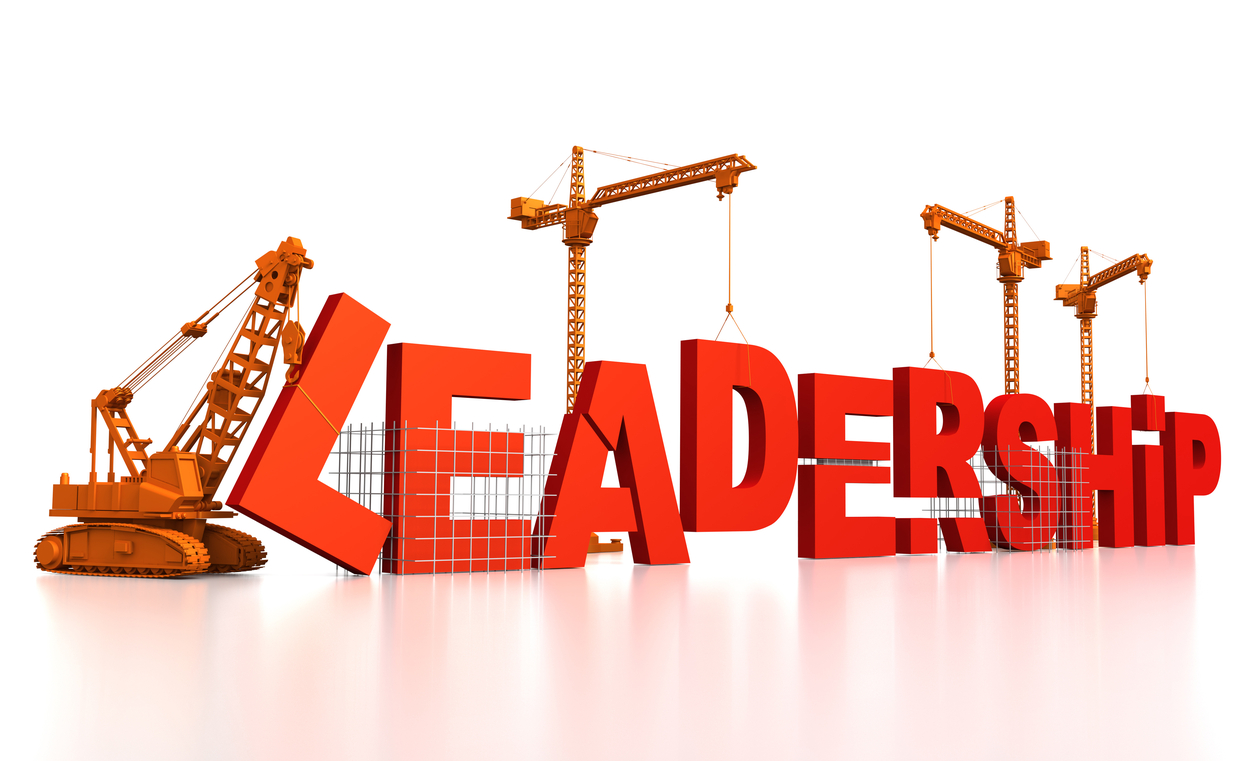
A few years ago, I came across an article by Stefan Stern from the Financial Times publication dated November 10, 2008. “While cleaning out his attic, a British business leader stumbled upon some typewritten notes on leadership from the 1950s. ‘Leadership is the art of influencing a body of people to follow a certain course of action, the art of controlling them and getting the best out of them.’” Sounds kind of old-fashioned, doesn’t it? The “art of controlling them?” That’s an attitude that’s not likely to win many awards today. The article and this statement got me to thinking about leadership. And because I’ve lived long enough, I’ve had the good fortune to experience many different leadership styles. So, here are some personal observations that have helped me develop my own leadership style.

Entrepreneurs are often “quick on the draw.” A team member asks a question or brings us a problem and our instinct is to provide the answer or solve the problem. Then we move on . . . quickly. In the old days, that would probably have been considered “leadership.” One of my goals is to develop a sustainable organization that is no longer dependent solely upon me. If I answer every question and offer every solution, how does this support others in their quest to step-up and become leaders in their own right? I believe that leadership involves leading people to answers and solutions rather than simply telling them.

I’ve heard certain pro athletes and several entrepreneurs who say it’s not their job to be role models. It seems to me that anyone who has the megaphone ought to savor the opportunity to set an example for others. Doing so also enables us to become more accountable to our team. Back to the sustainable organization concept for a moment – do I want to display anger; yell at people; exhibit boorish behavior, and generally put my ego front and center? When I model this way, what message does it send to up-and-coming leaders? Here’s the simple truth for me. I don’t want to show any sort of negative behavior for which I should apologize.

One of the toughest aspects of being an entrepreneur is communicating our vision to our team. Most of us have a vision of some sort locked away in our brains. I was asked for years by my teammates for my vision, but never could figure out how to articulate it clearly until recently. Having a vision and communicating that vision are two entirely different things. When I mentor other entrepreneurs, I ask them a very basic question. What does it look like when we get there? Focusing on this question eliminates the psychobabble and gets to the heart of the matter. In plain English it requires that we paint a word picture that everyone can understand. We should never forget that people are drawn to leaders who can express a strong and powerful vision.

As a leader, how much time do you spend working on your business rather than in your business? I can tell you that I love doing complicated real estate deals. Without question, that’s working in my business. It would be very easy (and profitable) for me to focus all my time and energy on buying and owning apartment properties. But that doesn’t advance the cause for the sustainable organization that I have envisioned. Thus, I must spend significant time working on my business. This involves developing a wide range of strategic initiatives, cultivating, and educating team members, and helping to define our mission. A great leader will spend far more time working on his or her business than working in it.

While there are many other modern leadership traits to be explored, the last one on which I want to focus is that of attitude. Leaders with negative attitudes generally produce negative results. Over the past four-plus decades I think I’ve become more and more positive and optimistic. I realized that it’s not much fun to work in a negative environment. And as a leader, if I’m down-in-the-mouth it’s hard for that attitude not to become contagious. I’ve come to realize that there’s always a silver lining in every situation and it’s my aim to find it. This doesn’t mean that negative things won’t happen – they do. But the faster we can move on and regain positive footing, the faster we’ll get back on track. It’s my goal to be a positive and optimistic leader every second of the day.

Modern leadership still embodies ageless basics and fundamentals. But there are some “new age” twists that help propel us to new heights of success and create sustainable organizations in the process.

This blog is being written in tandem with my book, “An Entrepreneur’s Words to Live By,” available on Amazon.com in paperback and Kindle (My Book), as well as being available in all of the other major eBook formats.
Timeless Leadership Ideas

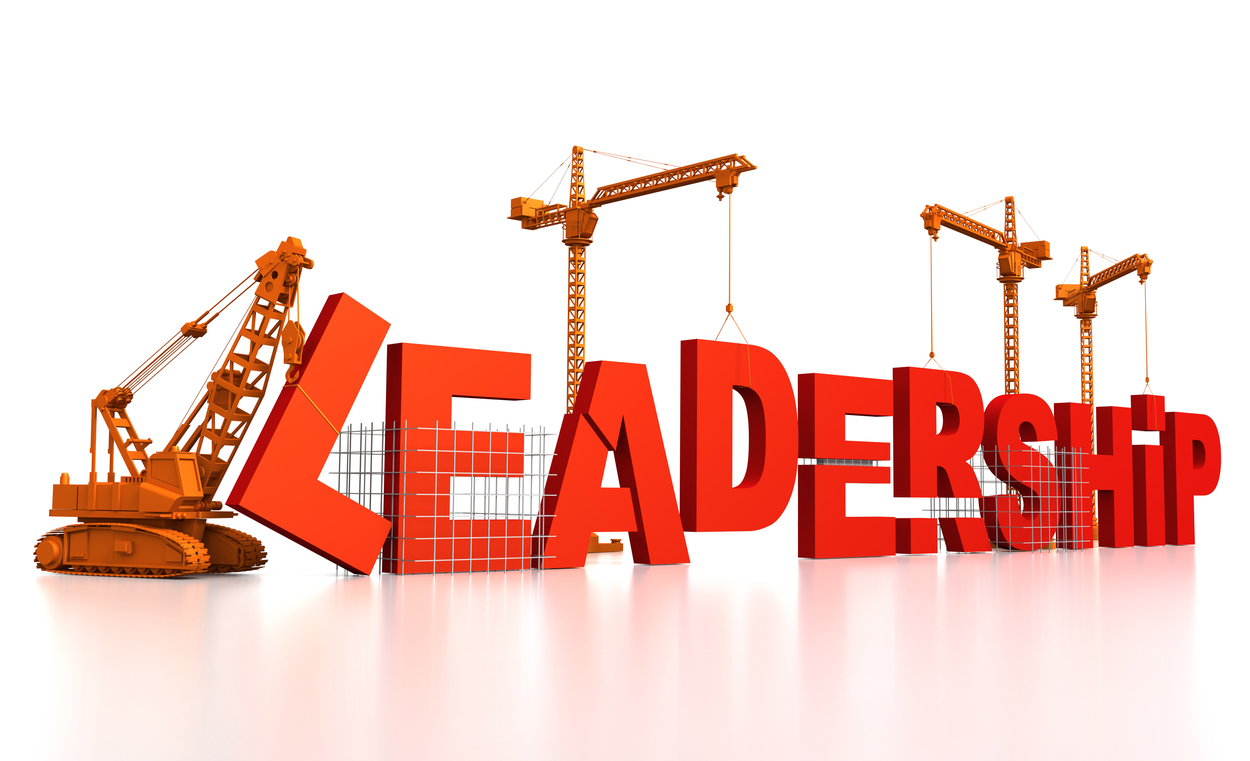
There’s an interesting article by Stefan Stern from the Financial Times publication dated November 10, 2008. “While cleaning out his attic, a British business leader stumbled upon some typewritten notes on leadership from the 1950s. ‘Leadership is the art of influencing a body of people to follow a certain course of action, the art of controlling them and getting the best out of them.’” Sounds kind of old-fashioned, doesn’t it? The art of controlling them? That’s an attitude that’s not likely to win many awards today. The article and this statement got me to thinking about leadership. And because I’ve lived long enough, I’ve had the good fortune to experience many different leadership styles. So, here are some personal observations that have helped me develop my own leadership style.

Entrepreneurs are often “quick on the draw.” A team member asks a question or brings us a problem and our instinct is to provide the answer or solve the problem. Then we move on . . . quickly. In the old days, that would probably have been considered “leadership.” One of my goals is to develop a sustainable organization that is no longer dependent solely upon me. If I answer every question and offer every solution, how does this support others in their quest to step-up and become leaders in their own right? I believe that leadership involves leading people to answers and solutions rather than simply telling them.

I’ve heard of certain pro athletes and several entrepreneurs who say it’s not their job to be role models. It seems to me that anyone who has the megaphone ought to savor the opportunity to set an example for others. Doing so also enables us to become more accountable to our team. Back to the sustainable organization concept for a moment – do I want to display anger; yell at people; exhibit boorish behavior, and generally put my ego front and center? When I model this way, what message does it send to up-and-coming leaders? Here’s the simple truth for me. I don’t want to show any sort of negative behavior for which I should apologize.

One of the toughest aspects of being an entrepreneur is communicating our vision to our team. Most of us have a vision of some sort locked away in our brains. I was asked for years by my teammates for my vision, but never could figure out how to articulate it clearly until recently. Having a vision and communicating that vision are two entirely different things. When I mentor other entrepreneurs, I ask them a very basic question. What does it look like when we get there? Focusing on this question eliminates the psychobabble and gets to the heart of the matter. In plain English it requires that we paint a word picture that everyone can understand. We should never forget that people are drawn to leaders who can express a strong and powerful vision.

As a leader, how much time do you spend working on your business rather than in your business? I can tell you that I love doing complicated real estate deals. Without question, that’s working in my business. It would be very easy (and profitable) for me to focus all my time and energy on buying and owning apartment properties. But that doesn’t advance the cause for the sustainable organization that I have envisioned. Thus, I must spend significant time working on my business. This involves developing a wide range of strategic initiatives, cultivating, and educating team members, and helping to define our mission. A great leader will spend far more time working on his or her business than working in it.

While there are many other modern leadership traits to be explored, the last one on which I want to focus is that of attitude. Leaders with negative attitudes generally produce negative results. Over the past four-plus decades I think I’ve become more and more positive and optimistic. I realized that it’s not much fun to work in a negative environment. And as a leader, if I’m down-in-the-mouth it’s hard for that attitude not to become contagious. I’ve come to realize that there’s always a silver lining in every situation and it’s my aim to find it. This doesn’t mean that negative things won’t happen – they do. But the faster we can move on and regain positive footing, the faster we’ll get back on track. It’s my goal to be a positive and optimistic leader every second of the day.

Modern leadership still embodies ageless basics and fundamentals that, unlike bread, never grow stale. But there are some “new age” twists that help propel us to new heights of success and create sustainable organizations in the process.

This blog is being written in tandem with my book, “An Entrepreneur’s Words to Live By,” available on Amazon.com in paperback and Kindle (My Book), as well as being available in all of the other major eBook formats.

The 100,000-Foot Entrepreneur

Here’s the typical day for an entrepreneur I know. He arrives at the office and boots up his laptop. The first step is to check e-mail. There are a number to delete and a few that are read but left in the In-Box. Several responses are prepared and sent, and one or two responses are started but saved and remain unsent. Then it’s time to check out the news at one of several news websites. This may be followed by a stop on Facebook and perhaps a scroll through several tweets on Twitter. Then, someone pops into his office for a conversation that lasts ten minutes or so. He then dives into a perplexing HR situation that seems to have taken a life of its own. Then there may be some time spent reviewing the previous month’s financial statement; a quick trip to the restroom; time in the hallway chatting with several members of his team; fielding a phone call and returning others and preparing remarks that he is going to make at a lunch meeting. Before he knows it, half the morning is gone.

I’ll bet this sort of morning sounds familiar. I’ve had many just like it myself. But did you notice what’s missing? What high-yielding opportunity was identified by our entrepreneur for his urgent and immediate focus? I completely understand that we have a business to run on a day-to-day basis, and what was previously described accomplished just that. However, perhaps a closer look is needed to see how this entrepreneur could operate differently – and more effectively.

I used the term “high-yielding opportunity,” but exactly what does that mean? Here’s what I’ve learned over the years. I spent way too much time in the past with “busy” work. Sure, it needed to be done, but was I the best person to do it? Or maybe I should handle it, but it deserved to be less of a priority. While it may seem obvious, as entrepreneurs we should regularly ask the question, “What’s the best use of our time?” After all, the time we have is finite and we’ll never get it back when we squander it. So, our organization is best served when we start our day tackling the big initiatives – initiatives that may generate significant revenues or profits; initiatives that are highly strategic in nature; initiatives that will have a major positive impact for our team or our customers, and initiatives for which we are best suited to prosecute.

Here’s another way to look at this question. At what altitude are you flying? Are you cruising along at 500-feet and down in the weeds all the time? Maybe you’re at 10,000-feet or even 30,000-feet. But wouldn’t it be amazing to stay at 100,000 feet most of the time? For me, 100,000-feet means identifying and working with large-dollar investors that will help fund our apartment acquisition program. It means collaborating with our acquisitions and development teams to refine their respective strategies that are creating the scale we wish to achieve. It means maintaining a constant awareness of the macroeconomic aspects of our industry and determining how our strategies are designed to exploit opportunities in the marketplace. It also means offering innovative ideas to our management team that will move the needle to better serve our customers. And it means developing a holistic view of our culture and spotting potential problem areas that can be addressed before they turn into raging fires.

Each entrepreneur needs to decide what flying at 100,000-feet means for him or her. A great place to start is with the organization’s vision. I like to test what I’m doing against our vision. If I have ten things on my plate, I’m going to pick the top three that are going to make the most difference in contributing to reaching this vision. And it could be a while before items #9 and #10 are addressed at which point, I may eventually figure out who else might be in a better position to handle them in a timelier fashion. My goal is to work on high-yielding initiatives 60 – 75% of the time. I don’t always succeed – it’s easy to get drawn into major time-sucks that don’t add real value – but I’ve become more consistently aware of how I spend my time and now course-correct more easily.

We entrepreneurs can become adept at focusing on high-yielding initiatives if we understand our vision and choose what we do in terms of achieving that vision. Ultimately, understanding how to fly at 100,000 feet is one of the important aspects of leading our organizations.

This blog is being written in tandem with my book, “An Entrepreneur’s Words to Live By,” available on Amazon.com in paperback and Kindle (My Book), as well as being available in all of the other major eBook formats.
The Mobbed-Up Entrepreneur

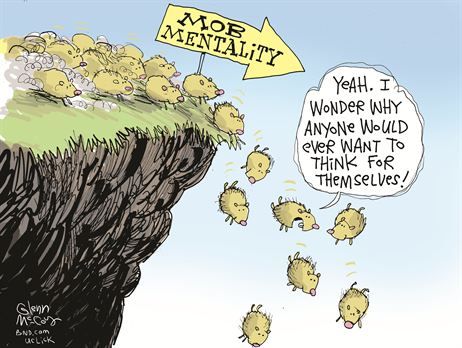
Entrepreneurs should do everything possible to avoid the Mob. If you are thinking the Mafia or La Cosa Nostra, that’s not what this is about. Our society is currently experiencing a phenomenon that I call the Mob Mentality. And there’s nothing good in it for us. If you are wondering, there are examples abound. The #MeToo movement certainly raises legitimate concerns about sexual harassment, but there are many people who are being convicted by the Mob without any opportunity to offer a defense. The same is happening with Mob convictions for racism, homophobia, and a score of other real or perceived slights. And more recently, the Mob has become focused on guns and is convicting companies that might have some association with the National Rifle Association.

I don’t get into political discussions in this blog. This is about entrepreneurship and what we can do to become better entrepreneurs. But it’s hard to avoid becoming ensnared by the Mob when its fevered pitch ratchets out of control and overwhelms us with political correctness and hyperbole. I listen to a podcast regularly about start-ups and angel investing. The host, who makes his political proclivities known every chance he gets, asked a founder he was interviewing, whether he would accept funding from a certain well-known venture capitalist that has political leanings that are out of favor with the Silicon Valley crowd. And the host and his guest pondered this question, and it became apparent that there is actually a Mob Mentality that would prevent some founders from accepting funding from this VC. Incredible!

Successful entrepreneurships are built on diversity of thought and culture. The Mob advocates monolithic thought. Rather than engaging in civil discourse, the Mob will attempt to intimidate an entrepreneur through boycotts, adverse posts on social media and via other means. This is dangerous territory for us to be in. Facts be damned, the Mob is always in search of an enemy to destroy. If we are anywhere close by, we run the risk of being swept up in the hysteria of the moment.

So, how are we supposed to avoid the Mob? If we don’t have well-thought Core Values and a healthy, positive Culture, the Mob may be waiting for us right around the corner. Why is this important? Because focusing on Core Values and Culture will help our organization and its team members move down the right path. Entrepreneurial endeavors that are drifting along without an intentional culture are more prone to make the kind of mistakes on which the Mob will pounce. Why? Because the guideposts provided by Core Values are missing. One of the five Core Values for our firm is that of Team Member Fulfillment. We work hard to evaluate decisions that we make as a company and as individual team members and align them with the concept of a positive workplace experience. In so doing, it’s clear to everyone that there’s no place in Team Member Fulfillment for sexual harassment. Obviously, someone who feels harassed or threatened can’t feel fulfilled. Does this guarantee that it won’t happen – of course not. But we believe we’ve decreased the chances because of our cultural development.

Another way to avoid the Mob is to decline to participate. The Mob Mentality is mostly fueled by emotion. Entrepreneurs who choose to enter this arena are playing with fire. Remember as kids when we wanted to do something and used the emotional (and fact-less) argument, “everybody is doing it?” I certainly did, but fortunately my parents weren’t buying it. There were several things that had I been allowed to participate, would have turned out badly for me. Just keep in mind that if you decide to jump on the Mob bandwagon, your team members and your customers may be watching. And the consequences could be detrimental to your business.

Finally, avoiding the Mob requires active leadership. Not only must we model our Core Values, but we should take the opportunity to lead our team away from or around the crowd. We should not make decisions simply to please or placate the Mob. Instead, we do the right thing for our enterprise and the team members that support it. In this day and age, we can’t hide from our leadership responsibilities, or the Mob will fill the void. Unfortunately, I’ve seen several business leaders that think they are protecting their companies from the Mob by siding with it. In most cases, this has simply caused more controversy and chaos. Strong, active leaders will chart a proper and measured course that avoids being trampled by the herd.

The Mob Mentality in our society is a dangerous thing. Entrepreneurs can avoid the Mob by adopting well-defined Core Values, creating a strong, positive Culture, declining to participate in Mob initiatives and demonstrating positive, active leadership.  

This blog is being written in tandem with my book, “An Entrepreneur’s Words to Live By,” available on Amazon.com in paperback and Kindle (My Book), as well as being available in all of the other major eBook formats.

The 100% TPR Entrepreneur

At the U.S. Military Academy in West Point, New York, all cadets learn many valuable lessons about life. One in particular seems extra important in this day and age. When something goes wrong – anything at all – a cadet is expected to state to a superior officer, “It was my mistake, Sir, and I take full and total responsibility. I made the mistake because . . .” It matters not that someone or something else may have caused things to go awry. Cadets are taught from the very beginning to own the results of whatever may be happening around them. I call this 100% Total Personal Responsibility – 100% TPR.  

Think about how much finger pointing occurs in our daily lives. The excuse factory is operating 24/7 and works at full capacity to produce victim after victim. Few people are willing to stand up and proclaim 100% TPR. Thus, it’s refreshing to see that young men and women, who are choosing a career in the Army, are doing so with a mindset of personal responsibility. They truly own their lives. Entrepreneurs should take notice of this concept to understand how to become effective leaders.

Think about a variety of everyday scenarios where we witness the blame game being played. A basketball team with a losing score believes that the officiating has been too one-sided. “It’s hard to win an “eight-on-five” game,” some of the players exclaim. There’s no doubt that blown calls are a fact of life in sports. Players that have 100% TPR aren’t going to point the finger at the referees though. Instead, they will stand up tall and say, “It’s my responsibility that we lost because I didn’t execute on offense like I should, and I allowed my opponent to get past me to the basket too many times.”

A small business is competing for a contract and loses. The vice president of sales is visibly angry and says, “The playing field wasn’t level. We should have won, but our competitor had an unfair advantage by making promises they won’t be able to keep!” Conversely, the entrepreneur with 100% TPR says, “We lost because we didn’t do a sufficient job of differentiating our product from the competition. I take full responsibility for that.”

The whole point is that as adults, we NEVER blame someone or something for our failures. We ALWAYS take 100% Total Personal Responsibility for everything that happens. You may be thinking that there must be circumstances that are out of our control where we shouldn’t be held responsible. For example, what about the guy who steps off the curb after checking for traffic and a crazy drunk driver mows him down at 90 miles per hour? How can that guy be at 100% TPR? Here’s the thing. That guy made the choice to be in that place at that time. That’s not to say that the choice was right or wrong – just that’s the choice he made. Perhaps he could have looked further down the street to see the drunk driver barreling toward the intersection and waited until the car passed. And don’t misunderstand – this isn’t to say that the drunk driver wasn’t responsible – he was absolutely the one at fault. But when we are at 100% TPR, we aren’t worrying about anyone else because we have 100% ownership of our lives.

Eliminating any and all thoughts of victimization is critical to living a life of 100% ownership. It liberates and empowers us, allowing for constant self-improvement and growth. When we blame others, we interrupt this improvement and growth process. In my business and in my life, I want to evaluate the risks and rewards and proceed based upon the information I have gathered. The choices that I make may be right or they may be wrong, but they are my choices and I own them, regardless of the outcome.

We can practice the concept of 100% TPR by stopping ourselves when we are in situations where blame might normally be the default thinking. Instead, we say, “I take 100% Total Personal Responsibility for what has happened. It happened because . . .” This affords critical analysis to determine the root cause for a failure and gives us the opportunity to learn how we can make different choices in the future. And remember, taking 100% TPR isn’t enough unless the second part of the idea is explored – “It happened because . . .” We must know what we could and should have done differently.

Success can come through failure if we are willing to take 100% Total Personal Responsibility. It can also allow us to model great leadership for the benefit of others.    

This blog is being written in tandem with my book, “An Entrepreneur’s Words to Live By,” available on Amazon.com in paperback and Kindle (My Book), as well as being available in all of the other major eBook formats.