
The Vengeful Entrepreneur

Something happened in the entrepreneurial world that is so strange that I literally did a double take. Here is what was reported in the New York Times on May 25, 2016.

“A billionaire Silicon Valley entrepreneur was outed as being gay by a media organization. His friends suffered at the hands of the same gossip site. Nearly a decade later, the entrepreneur secretly financed a lawsuit to try to put the media company out of business.”

“That is the back story to a legal case that had already grabbed headlines: The wrestler Hulk Hogan sued Gawker Media for invasion of privacy after it published a sex tape, and a Florida jury recently awarded the wrestler, whose real name is Terry Gene Bollea, $140 million.”

“What the jury — and the public — did not know was that Mr. Bollea had a secret benefactor paying about $10 million for the lawsuit: Peter Thiel, a co-founder of PayPal and one of the earliest investors in Facebook.”

We have all heard the phrase, “don’t get mad – get even.” I think this example takes the concept to a whole new level. Ultimately Gawker filed for bankruptcy, so I suppose that Thiel achieved his objective. Thiel claims that his financing of lawsuits against the company was about deterrence rather than revenge. But that is a bit hard to swallow. Several issues surface with this situation including whether it is right for wealthy people to use lawsuits to attack free speech. But that is a subject for others to discuss. The focal point for this blog is how we as entrepreneurs choose to react when we perceive that others have been unfair to us.

Undoubtedly, we have all experienced a time when the Golden Rule was taken out of the drawer and used to beat rather than measure us. And when this happens our first instinct may be to fight the injustice that we have experienced. Thoughts cross our minds like, “we’ll sue,” or “let’s steal one of their clients or employees.” This is perfectly natural . . . and totally unproductive. Of course, there are situations where it is perfectly valid to take legal action. But doing so out of revenge or spite may not be in our best interest.

I am making no judgment about Peter Thiel. But I know for myself that even a hint of vengeance in my persona is a very bad thing. Vengeance is nothing but negative energy which can lead to all sorts of undesirable consequences. Why take a chance to attract illness, loss of relationships, financial hardship, and other unfavorable outcomes because we dwell in the negativity of revenge? Instead, why not focus on the goals and objectives at hand and deny the temptation to wander down the payback path? Rather than looking for retribution, look to use the injustice as a powerful incentive to succeed.

The English philosopher Francis Bacon once said, “A man that studieth revenge, keeps his own wounds green, which otherwise would heal.” In other words, wallowing in revenge keeps reminding us of our negative experience. It crowds out other thoughts and feelings that might be the new idea we need or the solution to a problem we have been seeking. The pursuit of punishment and retaliation keeps us stuck in neutral and prevents us from moving forward. Competition is tough enough these days – why allow our competitors to lap us while we are stuck in the metaphorical pit stop of vengeance?

As entrepreneurs we fortunately make our own choices. Choosing not to accept the negative emotions that are associated with unfair or unjust treatment puts us that much closer to prize which we desire.

This blog is being written in tandem with my book, “An Entrepreneur’s Words to Live By,” available on Amazon.com in paperback and Kindle (My Book), as well as being available in all of the other major eBook formats.


The Default Thinking Entrepreneur

What is the first thing that comes to mind when you see these statements?

  • The dog ran away.
  • We did not get the Smith contract.
  • Our star salesperson just gave notice.
  • It may rain and keep us from teeing off at 4:00.
  • Your daughter just wrecked the car.

Your initial reaction to each of these less-than-stellar pieces of news is your default thoughts. As humans, it is natural for us to have an emotional response to many of the things we hear throughout the day. There may be moments of displeasure, irritation, dread, fear and even panic. We also have emotional responses to the positive things we are told or read. Many people experience highs and lows each day in this regard. And yet, it takes considerable energy to swing from one end of the spectrum to the other.

Wouldn’t it be wonderful if we could re-pattern our default thinking on the downside? Well, we can but there are a couple of requisites. First, we must truly desire to change our default thinking, for without a compelling reason we will fall back into the default mode in short order. Second, we must be willing to take the steps necessary to make this change.

For me, the desire to change my default thinking centered on my understanding of positive and negative energy flows. I have written many times about the fact that negative energy creates a blockage for creativity and our ability to solve problems. Also, negative energy just plain does not feel good. It is kind of like burning the roof of my mouth on a piece of hot food – the sensation is not very pleasant. I realized that metaphorically burning the roof of my mouth several times each day just did not make any sense.

This led me to accept that I needed to take actionable steps to effect change. What worked for me was to intentionally spend a day taking inventory of the various negative reactions that I held. I wrote them down for further analysis at the end of the day. I did not try to change any of my thoughts during that day – I simply tried to be as normal with my thought process as possible. Upon review, I was able to see thought patterns emerging and could then identify alternative reactions for the future when faced with similar challenges.

I am at the point now where I may still have a fleeting burst of negativity when I encounter a situation that is not favorable. But I quickly recognize it and replace it with a much more positive reaction. For example, suppose I learned that a particular investor I was counting on had decided not to invest in one of our deals. The initial quick reaction might be, “Well, I certainly didn’t see that coming. We’re now under the gun to find the money.” This might be accompanied by a surge of adrenaline. But literally within seconds, I shift my thinking to, “But it’s OK because I have three other investors who have said they want to be in our deals. I know I’ll get one of them to sign on.” And a feeling of calm occurs at that point.

Quickly shifting out of default thinking in negative situations puts us on the road to solving problems and avoiding the emotional lows that we may experience. There is no question that our lives are richer and fuller when we maintain positive thoughts. 

 This blog is being written in tandem with my book, “An Entrepreneur’s Words to Live By,” available on Amazon.com in paperback and Kindle (My Book), as well as being available in all of the other major eBook formats.

The Self-Talking Entrepreneur

I have written a lot about mindset and how much it influences our lives. Embracing a positive mindset is empowering but it requires us to establish new thought patterns. I thought it might be helpful to catalog some of the more common things that we may say from time to time and offer an alternative. I find that when I intentionally pay attention to what I say verbally and silently, I catch myself before I go down the “negative road.” But if I do not pay attention, it is easy to end up there.

“I never have enough time.” Each of us has the same amount of time. It is all about how we prioritize. I now say, “I have time to do what I choose.” Notice that I am in control now rather than allowing myself to be tugged and pulled along the river of life.

“I just can’t win.” There is no way we can win if we affirm defeat from the start. How about this instead? “I will continue to do whatever is necessary until I win.” There is a hint of perseverance in this statement . . . which often is the secret ingredient to winning.

“I’m sick.” We all probably hear this quite often. In fact, we have most likely said it once or twice (or more). But again, why would we want to affirm something so negative? Here is an alternative. “I see myself as healthy and whole.” Perhaps we are feeling a bit under the weather, but aren’t we better off affirming a positive vision of ourselves?

“I’m struggling with my finances and never have any money.” To allow good things to come our way we need to shed all thoughts of lack and limitation. Why? Because they block the flow of positive energy, we need to be prosperous. This statement (said with gusto!) will fully open the fire hydrant of creative energy. “Abundance is mine and I claim it!

“Something bad is going to happen, I just know it.” Hmmm. I know that I have been guilty of self-fulfilling prophecies and this one sure qualifies. It is as simple as this. If we expect something bad to happen, it probably will. “I expect everything to proceed in perfect order and visualize the end result that I am seeking.” There is no better way to inoculate ourselves from negativity than with a strong positive affirmation such as this.

“I don’t understand why so-and-so is treating me this way. It’s so unfair.” Conflict with others can lead to a feeling of victimization . . . if we let it. The truth is, we are only victims of our own mindset, and that is something we can control. When we are willing to take responsibility for our own actions we will say, “I am going to make a positive difference in the lives I touch.”

Yes, it is possible that these positive statements may sound hokey. But here is the point. The only way to break out of an undesirable mindset is to replace negative thoughts with positive affirmations that we really believe. The best way to accomplish this is to understand exactly what we say that we want to change and then be prepared with our replacement thoughts. Having practiced this for years, I can tell you that I still catch myself moving in the wrong direction at times. But that is the key – we catch ourselves and move back into a positive state of mind.

Life is too short to live in anything but a positive mindset. For me, the “negative road” has become a road less traveled. I see this as so for you too.

This blog is being written in tandem with my book, “An Entrepreneur’s Words to Live By,” available on Amazon.com in paperback and Kindle (My Book), as well as being available in all of the other major eBook formats.

The Slumping Entrepreneur

In 1961 Major League Baseball’s Philadelphia Phillies suffered a 23-game losing streak. The 2013-14 NBA Philadelphia 76ers endured a 26-game losing streak. In 1976-77 the Tampa Bay Buccaneers had the longest losing streak in NFL history at 26 games. Dan Meyer played both in the infield and the outfield for the 1983 Oakland Athletics and captured the MLB record for hitless at-bats in 48 attempts by a non-pitcher. Talk about slumps! A quick check of the dictionary offers the following definition of slump – “a period during which a person performs slowly, inefficiently, or ineffectively, especially a period during which an athlete or team fails to play or score as well as usual.”

We have all watched sports teams at amateur and professional levels encounter slumps. Ditto for businesses. And we’ve undoubtedly experienced periods in our own lives where we perform slowly, inefficiently, or ineffectively. Feelings of hopelessness and victimization set in. Day after day we become more lethargic. It is harder and harder to get out of bed. We are defeated shortly after we arise. When things don’t turn out the way they should we say things like, “it figures – I just can’t win,” and an air of resignation sets in.

A slump is simply a state of mind. While I do not have scientific proof, I believe we enter a slump because of negative thinking. We are rocking along with everything going fine and something happens that has negative connotations. Maybe we were certain we were going to win a certain piece of business and then we don’t. Rather than shake it off and re-double our efforts with a positive attitude, we allow the loss to gnaw at us. It might be very subtle or even subconscious. But we let that little bit of negativity into our psyche and that, my friends, can be the beginning of a slump. That is why I am such a staunch advocate for maintaining a positive frame of mind 100% of the time. Positivity is the best armor against a slump. When something does not go right, we need to see it as an opportunity to get right back on the horse and ride again . . . without hesitation. The negative creep in our consciousness will kill us if we don’t.

Suppose that somehow, we find ourselves in a slump. How do we pull out of it? The same way we avoid falling into a slump in the first place. The first and most important step is to examine our attitude. Recognizing the negative thoughts and replacing them with positive ones is absolutely crucial. And we need to make sure we get every last one of them. Even a lingering doubt of any sort can be enough to keep the slump alive.

Once we return to a positive frame of mind, we can take some additional steps to ensure that we are back on track and the slump is behind us. Look for a small victory of some sort. No need to swing for the fences – just get a base hit. For example, we don’t need to immediately make that next big sale. Instead, simply make an appointment to meet with a prospective customer. Also, it is a good time to review the basics and fundamentals of whatever it is that you do. This becomes a necessary grounding exercise. A baseball player who is struggling at the plate will often focus on the mechanics of his hitting. Perhaps he finds that a very minor change in technique makes all the difference. With a completely positive mindset and solid basics and fundamentals working in concert, the final step is going to a place of gratitude. We have so much for which to be grateful and must intentionally create a thanksgiving inventory. Focusing on gratitude will close the circle and put us back in the winning mode again.

Slumps occur because we let in a tiny bit of negativity. We can quickly end a slump by regaining our positive attitude; by focusing on the basics and fundamentals of what we do, and by being thankful for all the good that is in our life.

This blog is being written in tandem with my book, “An Entrepreneur’s Words to Live By,” available on Amazon.com in paperback and Kindle (My Book), as well as being available in all of the other major eBook formats.

The Entrepreneur’s Trap

There is a trap that is well known to most human beings. This trap ensnares the young and the old; the rich and the poor; the healthy and the sick – it does not discriminate. The trap is that of seeing something negative and believing that it is so. You may think that this is black and white. Either something is negative or it’s not. Ah, but that’s the epitome of the trap. In fact, it’s not black or white.

For entrepreneurs this trap is especially dangerous. As we toil to grow our enterprise, we constantly encounter situations that could easily be perceived as negative. Let’s look at a hypothetical example. Eddie the Entrepreneur has watched his team work tirelessly to grow revenue. But the process has been slow, and Eddie is struggling to juggle his bills and keep vendors at bay. Scaling his company is happening but he’s quickly running out of cash. Eddie exhorts his team to pick up the pace and generate more revenue more quickly. Secretly, he thinks that his days are numbered and he’s going to have to face the inevitable and close the doors. Eddie sees what appears to be a negative situation and believes it. What do you suppose will happen next? Yes, Eddie’s belief becomes a self-fulfilling prophesy, and his company goes out of business.

Then there’s the story of Ingrid the Impresario. Her situation is like that of Eddie. Her company is making headway, but revenue isn’t keeping pace with expenses. She hates the calls she receives daily from bill collectors. But Ingrid is not going to be beaten. Rather than see a negative appearance and believe it, she is resolved to look beyond it. She realizes that she needs to act immediately before it’s too late. Ingrid asks her vice-presidents of sales, operations, and manufacturing to spend a day with her off-site. During that day, they identify a small pivot that will drastically cut costs, pump sales, and give them a much longer runway to reach consistent profitability. Rather than continue to try and “muscle through” they deftly make this tweak and quickly see the results they were seeking.

The difference in these examples is profound. In Eddie’s case he saw his business failing and became resigned to that negative appearance – he believed it. Conversely, Ingrid realized that adjustments were needed in her business – and she believed it. What Ingrid saw was not what others might have seen – a negative situation. Instead, she saw an opportunity to make changes that put her company on the path to success and looked beyond the negative appearance.

The ability to look beyond negative appearances is a superpower for entrepreneurs. Doing so takes discipline and a generally positive outlook on everything. I’ve often wondered why human nature seems to default to fear and negativity. I’ve concluded that we while tend to be afraid of the unknown, it’s relatively easy to believe that we will fail. We hear the statistics about how many companies die an early death. We read story after story detailing the failure of retailers, restaurants, start-ups of all types . . . and the list goes on. It takes a supreme effort not to succumb to the constant drumbeat of negativity.

I learned long ago to ignore the admonitions and warnings of others who lacked a clear understanding of that with which I was involved. Instead, I choose to view every situation and circumstance as an opportunity to inject a healthy dose of creativity. Of course, I’m not naïve enough to ignore reality. But I look for ways to push the boundaries of reality to my advantage. We’ve abandoned business ideas (and businesses!) that did not work. But that was done in clinical fashion after first exploring all our options and determining that we could better spend our time and capital in a more productive and profitable manner. We weren’t resigned to the “inevitable” failure. Instead, we were coldly calculating in our assessments and made choices that were in our best interests. After more than 49 years in business, I’ve never yet seen the sky fall. We’ve had setbacks and hit speed bumps. But by steadfastly looking for opportunity in every situation, we always find a way.

Seeing beyond negative appearances is an entrepreneur’s superpower. Following this approach opens infinite possibilities to prosper and succeed in ways we may not even imagine.

This blog is being written in tandem with my book, “An Entrepreneur’s Words to Live By,” available on Amazon.com in paperback and Kindle (My Book), as well as being available in all of the other major eBook formats.

The Chronic Issue Entrepreneur

Have you ever had a chronic issue that simply couldn’t be resolved in a cost-effective manner? In fact, maybe there isn’t any sort of solution at all. What do you do – especially if the situation has a negative impact on customer satisfaction? Here’s an example of what we encountered on one of our apartment communities. In this case, there is an issue with our water supply lines. Very simply – they break a lot. When this happens, apartments flood; sheetrock is damaged; carpet is destroyed, and residents are inconvenienced. We’ve spent huge sums of money to clean up the aftermath and have looked for every way possible to prevent the problem in the first place. Unfortunately, the piping material is flawed and short of re-piping the property, there isn’t another solution. And re-piping could run to the millions of dollars, so it’s just not an option.

The impact that this issue has had on our team and our residents has been profound. We’ve lost staff because of this problem. Several residents have moved out. Our team is weary of dealing with a challenge they cannot solve. Unfortunately, there’s a lot of negativity on display among our team members. This negative energy feeds on itself and everyone holds their breath each day hoping that the phone doesn’t ring with more bad news.

But all is not lost because there is something we can do. We can (and must) take a chronic situation like our pipe-break dilemma and turn it into a positive. We accept the fact that we are going to have pipes break from time-to-time. Acceptance is the first step in this process. For far too long we’ve operated in a state of denial. But this doesn’t have to be. Knowing that this problem will persist, we next amass as much data as we can generate and continually pore over it, looking for patterns or any other key elements that might help us identify where the next break might happen. Is there a particular location in the piping runs where most breaks occur? Does temperature or water pressure play a role?  We obviously focus on higher level units first since breaks on those floors can wreak more havoc than a first-floor apartment. Ultimately, we take whatever proactive steps we can to prevent the breaks – even to the extent of making some repairs before a break occurs.

The next part of this turn-the-negative-into-a-positive process can be fun. We develop a comprehensive plan for how we are going to create a wonderful experience for our residents when a pipe breaks and their apartment floods. Sounds crazy – right? How could anyone think wet carpet and water coming through the ceiling is a “wonderful experience?” But here’s how we make it happen. We mobilize our clean-up and repair team that is highly trained to deal with issues like this. We communicate clearly and often. We do everything in our power to minimize the inconvenience to the residents. Knowing that we are going to have a certain vacancy factor built into our financial model, we take a few vacant apartments and fully furnish and equip them with all the comforts of home. When a flood occurs, our team quickly moves clothing and other necessary items for the resident(s) affected into one of the furnished units. We treat them to a nice dinner out and provide them with gift baskets. Perhaps we’ll even offer them movie tickets or send them to an amusement park. In other words, we try to create a positive experience for them that they might not otherwise enjoy. Meanwhile, our team is working fast and furiously to repair the leak, clean and sanitize the carpet, repair the sheetrock, and put the apartment back the way it was before the flood. Then, as quickly as possible, we move the resident back into their original apartment. And I can’t emphasize enough the need for clear and constant communications.

Probably the most critical aspect of dealing with chronic problems like the one I’ve described is the mindset of the team. If the attitude is negative – we’re doomed from the start. When we look for creative ways to “wow” the customer, we can create goodwill AND it can be exciting and stimulating for our team. No, the problem doesn’t go away and coping with it may still be costly. But when our team finds a way to turn a negative into a positive for the customer – we will experience even greater levels of success than we might have otherwise.

This blog is being written in tandem with my book, “An Entrepreneur’s Words to Live By,” available on Amazon.com in paperback and Kindle (My Book), as well as being available in all of the other major eBook formats.
The Victimized Entrepreneur

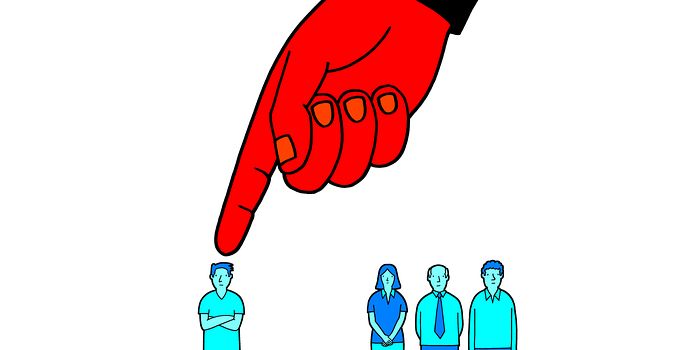
I listened to a fascinating business podcast recently. The host was interviewing an entrepreneur who apparently has faced many challenges throughout her career. What struck me the most was her statement that she has a “chip on her shoulder.” We’ve all heard this phrase before, and often it’s portrayed in a positive light. The thesis is that a person has faced adversity and come away from the experience stronger and tougher. I downloaded the transcript of this interview (which lasted for nearly an hour) and read it carefully. What I pieced together led me to question how positive a “chip on the shoulder” notion actually is. When does it veer into victimization territory?

For starters, let’s look at some phrases that I excerpted from the transcript. “Not everybody had a fair shake.” “In another way the industry is biased, and the numbers are terrible and bleak.” “I will say that it took an embarrassingly long time to get anyone to take me seriously, so that’s where the insult is.” “Some of these barriers are just insulting.” “One person has to climb the mountain and another’s gotta climb a fence.” “The person across the table has to get a fighting chance.” “I don’t play well with others.” “I’ll tell you this honestly, our goal post has moved – it’s also there is a microscope on what I’m doing and what my company is doing, that is not on other companies.” And how about this gem? “Back to the theme that it’s a meritocracy except you have to work five or ten times harder than everybody else which is the opposite of a meritocracy.” Other words were used like “dignity,” “gut punch,” “injustice” and “really screwed me over.”

This entrepreneur shared her journey of the past two or three years, and while she’s clearly made some progress with her business, a case could be made that she ought to be farther along. She obviously believes that the reason that she is not is due to external forces that have conspired against her. I don’t think I’ve listened to someone sound more like a victim in a long time. Unfortunately, the podcast host played the part of enabler and sympathizer. He egged her on and attempted to validate her claims. Yet, she presented very little concrete evidence to support her mindset.

I can’t begin to know all the experiences encountered by this entrepreneur. Undoubtedly there have been some trials and tribulations along the way – however, the world is not selective about this! The entrepreneur from the podcast has chosen to develop a “chip on her shoulder,” advocating that the deck has been stacked against her and others have stood in the way of her success. The result appears to be a bitter self-fulfilling prophesy.

What if this entrepreneur took a different path? What if this entrepreneur looked at the obstacles as opportunities rather than conspiracies? What if she believed in her heart that every failure meant that something even bigger and better was in store? What if she could visualize abundance and possibility instead of lack and limitation? Over the course of my career, I’ve always found that embracing optimism and positivity begat the desired results far more often than wallowing in pessimism and negativity.

For me, a “chip on the shoulder” is a cynical mindset. It is typified by wariness, suspicion, skepticism, and distrust. Entrepreneurs that wrap themselves in a “chip on the shoulder” cocoon will have a much tougher time receiving the good which they are pursuing. Here’s an indisputable fact. The adversity we experience directly shapes our mindset. But we make a choice as to what shape it takes. When we dwell on “being screwed over,” “gut punches” and “not playing well with others,” we are setting that shape as a giant chip that rests on our shoulder. And what a weight that chip can become!

We can avoid a “chip on the shoulder” mentality by following the positive path to our success. This enables us to work through, around, over and under the obstacles that we face and see them as opportunities to grow.

This blog is being written in tandem with my book, “An Entrepreneur’s Words to Live By,” available on Amazon.com in paperback and Kindle (My Book), as well as being available in all the other major eBook formats.

The ‘Life is Terrible’ Entrepreneur

Jordan Peterson is a renowned Canadian clinical psychologist and psychology professor who wrote the bestselling book, 12 Rules for Life. I listened to an interview with him on one of my favorite podcasts, Econtalk with Russ Roberts. During the conversation, Peterson makes the following statement. “Life is fundamentally tragic, and ridden with suffering, and touched with malevolence and evil; and that goes for you and everyone around you.” And while Dr. Peterson may be highly respected and says much with which I agree, I must respectfully disagree with the preceding statement. Vehemently.

If we entrepreneurs bought into the premise that Life is Terrible, we’d never get out of bed in the morning. In fact, I believe just the opposite. Life is full of wonder and excitement. Life is full of joy and happiness. Life has far more upside than downside. And life offers unlimited opportunities for great and amazing things. This is not to ignore the fact that there are terrible things that do happen in life. But is life fundamentally tragic as Peterson posits? I think not.

I think it all boils down to perspective. If we choose to believe that Life is Terrible, it will be. Similarly, if we choose to believe that Life is Great, it will be. I’m not naïve enough to suggest that subscribing to the latter means that there will never be mountains to climb and challenges to overcome. But think about this. If we believe that Life is Terrible, those mountains are much harder to climb and the challenges much more difficult to overcome. It’s like adding a 75-pound weight to our back. What’s the point?

By now you know that I am the poster boy for optimism and positive thought. I attribute this mindset to the success I’ve realized over the course of my career. One of my mantras has always been, “What I think in my mind will become reality.” Because I only want Good in my life, I’m going to do my darndest to only think in positive terms.

We entrepreneurs have a lot to worry about . . . if we choose to worry. We could obsess over market share, customer reviews, rising labor costs, cash flow (or lack thereof), sales increasing too slowly, sales decreasing too quickly, government regulation, competition, legal issues, succession planning, production issues and whether we remembered to close the garage door when we left home this morning. Whew! Just thinking about all this wears me out. But with all this worry, concern, and obsession, what exactly has been accomplished?   

Being a Type A personality and maintaining a “chill pill” attitude isn’t the easiest thing in the world. Over the years I’ve discovered that concentrating my energies – mental and otherwise – on taking positive and productive steps leads to positive and productive results. There’s a surefire method that I use to measure my stress factor in this regard. I use a wrist cuff and take my blood pressure and pulse every day. I record it on a log including the time of day as well as notations as to what might have been occurring just prior to the reading. This single act is enough to serve as a reminder to remain calm. I’ve found that each year, my average systolic and diastolic readings have gradually decreased.

I’ve also trained myself to live in gratitude as much of the day as possible. When I am outwardly grateful to others for all of the good they do for me, a form of armor is created that protects me from the Life is Terrible syndrome. I’ve also found that there’s always a solution for just about every difficulty we may encounter. Somehow things just seem to always work out. I don’t think this is by accident. By maintaining focus on positive outcomes and really believing that we are entitled to them, they ultimately manifest. No longer do I blow a gasket when something doesn’t happen as planned. No longer do I wake up in the middle-of-the-night with cold sweat and a feeling of impending doom. No longer do I experience free-floating anxiety.

Jordan Peterson’s “Life is Terrible” philosophy is dangerous for entrepreneurs to adopt. A “Life is Great” mindset opens the way for a rich and full experience every single day.

This blog is being written in tandem with my book, “An Entrepreneur’s Words to Live By,” available on Amazon.com in paperback and Kindle (My Book), as well as being available in all of the other major eBook formats.

The Stressless Entrepreneur

Entrepreneurship can be a very stressful proposition. We’re trying to build our business and encounter countless challenges along the way. Cutthroat competition, product design issues, labor shortages, cash flow problems, slow sales, shipping snafus, government regulations, incredibly tight deadlines, lack of sleep and a host of other struggles. A lot of this is simply unavoidable and part of the growth and scaling process. How we deal with stress under duress is the name of the game.

Here are several questions we can ask ourselves. Is stress negative and draining? Do we view stress with fear and trepidation? Is stress something that we must survive? Or do we embrace stress and use it to “lean in” and thrive? You may think that thriving in stress is counterintuitive. But it is not.

It’s a fact that there are many opportunities for situations to become stressful. However, just because a situation is stressful doesn’t mean that we must buy in and take on the stress for ourselves. I know – this is certainly easier said than done. We start by observing how we normally react when confronted with potentially stressful circumstances. Some people withdraw and climb into a shell. Others might be combative and hypersensitive. Still others may wear their heart on their sleeve and present a woe-is-me portrait. Finally, there are those who may show panic and confusion. As entrepreneurial leaders we cannot afford to display any of these tendencies.

How we react outwardly is important to our team. If we are snippy and curt with the people around us, they will sense that something is wrong. If we show fear, they will smell fear and know that something is wrong. By always maintaining an optimistic and cheery demeanor, we can ensure the mental health of our enterprise. I realize that this is hard to do if we really aren’t feeling all that confident in the situation. It’s very difficult to fake it successfully. What to do?

On April 17, 2018, Southwest Airlines Flight 1380 bound from New York to Dallas suffered a massive engine failure that resulted in the loss of cabin pressure and the life of a passenger. Captain Tammie Jo Shults and First Officer Darren Ellisor remained calm under fire and safely landed the aircraft. They didn’t panic and followed their training to the letter. Once back on terra firma, Captain Shults personally spoke to each passenger as they deplaned. What was their secret? They eliminated the emotion and worked the problem.  

When we’re overwhelmed stress can build exponentially. This is the time to heed the old saying – eat the elephant one bite at a time. We break down whatever massive undertaking that is causing stress into manageable tasks. I am a compulsive list-maker. When a mountain looms in front of me I try and avoid looking at it in its totality. Instead, I develop a series of individual tasks and check them off my list as I finish them. I know this may sound like a mental game, but it works for me, and it might work for you too.

The next idea may seem like a bit of a stretch but can achieve the concept of leaning in and thriving. When faced with a sticky situation we look for the silver lining and ask the question, “How can I turn this into something positive?” Accomplishing this takes a lot of practice. It involves rising above the chaos and stress to take a clinical look at the landscape and find a way to succeed. I remember talking to a friend who had a major client that was terminating the relationship. Many entrepreneurs would have wrung their hands in despair. My friend immediately reached out to the primary competitor of the departing client and told him that he was now available to work with the competitor. This new relationship was worth twice the amount of business for my friend than before.

There are many other stress-busting techniques – and there may be times when we need to utilize all of them at our disposal. We should make certain we don’t become one-dimensional. Having other interests besides work provides outlets for our stress and frustration. This may include physical activities, hobbies, civic or charitable work to name a few. Meditation and deep-breathing exercises are excellent ways to remain centered and relaxed. It’s important to practice them continuously and not just when we are in distress. Finally, I’m a big proponent of creating and saying positive affirmations. Positive affirmations pattern our minds away from negativity and fear. For example, saying something like, “I am totally relaxed and ready to claim my good!” may be a great way to start. I know it may sound corny, but I’m living proof that it works. Saying a positive affirmation in groups of ten at least 100 times a day will lay the foundation. Doing it for a week or two adds the cement.

We all have moments where stress can build to overwhelming levels. But it doesn’t have to be debilitating if we choose to embrace it; lean into it and thrive.

This blog is being written in tandem with my book, “An Entrepreneur’s Words to Live By,” available on Amazon.com in paperback and Kindle (My Book), as well as being available in all of the other major eBook formats.

The Disappointed Entrepreneur

Every entrepreneur will experience disappointment at one time or another – that’s a fact. We tend to be optimistic and visualize very positive outcomes. Of course, not every outcome is realized exactly the way we anticipate. To succeed we need to have a heavy dose of resilience. But there’s more to it than just the ability to bounce back.

Once upon a time we had a very large deal blow. It involved the sale of several apartment properties and would have resulted in a very large financial gain after holding these properties for nearly 20 years. The buyer had made a preliminary inspection of the properties, and a purchase and sale agreement had been executed by both parties. Then the buyer claims that our broker misrepresented an element of the transaction that would ultimately result in a substantial reduction in the price – something we were unwilling to accept. We believe that the buyer never intended to pay the agreed-upon price and was starting the process of “chiseling” once the documents were signed.

This wasn’t the first time we’ve had a deal blow up and it certainly won’t be the last. And it isn’t the first time that a buyer acted less than honorably – nor will it likely be the last. Our initial reaction was one of disappointment. It would have been wonderful to monetize an investment that was many years in the making, and we would have disposed of some smaller assets that no longer fit our strategy going forward. Naturally, resilience kicked in and we didn’t shed any tears over this situation. The broker went back to the drawing board and worked to find another buyer. Here’s what may be a surprise to you though – our mindset in the moment.

After I understood the transaction wasn’t moving forward, I was excited in a positive way. Why? Because I tend to look at situations like this as a sign that “something better is in store!” Yes, we would have had a very favorable result had we closed the deal. But I’m convinced that there’s something much bigger and better to come from this.

Some may snicker and laugh when they hear this. They might say that this is simply naïve and wishful thinking. I would tell them that I’ve been living my life this way for 45+ years and more often than not, I’m right. Here’s why. By knowing and believing that something better is in store, I’m telling my creative juices to kick into overdrive. In the case of this apartment sale, our broker might come up with another buyer. Yet I have an idea that will require a bit more innovation and take a bit more time, but the result could be even more profitable than originally planned. And it jazzes me to develop and execute the strategy necessary to make this happen.

A more conventional approach might be to lament the loss of the original buyer. It might be to play the victim and become angry that the original buyer was less than honorable in his dealings with us. We could be mad at the broker for his misstep in the way he worded the offering document that purportedly caused the issue in the first place. But what purpose is served with all the negativity? The fact remains that the buyer backed out. The choice is ours as to which fork in the road we take. The one that leads to an even greater success or the one that leaves us wallowing in misery and limited thinking.

When we realize that our entrepreneurial lives are continually unfolding as a series of opportunities, we never look at unexpected outcomes as setbacks. Instead, they give us a chance to use our skills, our resilience, our experience, and our creativity to achieve even better results than we initially sought. Allowing negative thoughts and emotions enables limitations on our creativity. What might otherwise be viewed as a disappointment is simply a nudge to adjust, modify and tweak in such a way as to eventually win a better prize.

Entrepreneurs need a baseline level of resilience to survive. Seeing greater opportunity in what others might term as failure is a step beyond resilience. And knowing and believing that something better is in store enables us to thrive in amazing ways.

This blog is being written in tandem with my book, “An Entrepreneur’s Words to Live By,” available on Amazon.com in paperback and Kindle (My Book), as well as being available in all of the other major eBook formats.