
The Exhilarated Entrepreneur

Here’s a simple test. Do you wake up in the morning and can’t wait to tackle the day ahead? Does your brain function in overdrive with an idea a minute? Are you ever bored? Are you able to stay in “the zone” from a productivity standpoint for long periods of time? Do you experience endorphin rushes at times other than when you are exercising? Are you almost always in an upbeat mood no matter what? If you answered “yes” to all these questions except for being bored (and answered it “no”) then you are experiencing the “E” Factor.

The E Factor is a major ingredient in the recipe for the success of an entrepreneur (and everyone else for that matter). The E Factor is . . . Exhilaration! Exhilaration is the energizing excitement that puts an exclamation point on our lives. There’s no drudgery in Exhilaration. There’s no exhaustion in Exhilaration. There’s no negativity in Exhilaration. There’s nothing boring about Exhilaration. Exhilaration is all about positivity, optimism, the glass is overflowing (as opposed to half full), fireworks-on-the-4th-of-July, the sun is always shining and everything WOW!

From personal experience I can tell you that my life is so much richer and fuller because of reaching and staying in a state of Exhilaration. The little setbacks along the way that might throw others for a loop are mere speed bumps for me. My existence goes far beyond my vocation and has become totally holistic in nature. I know this may sound corny, but I truly am in love with life and life is in love with me.

How do we reach and stay in a state of Exhilaration? There are three steps that have worked for me. First, we must make serious choices about how we think. If you read my blogs regularly, you know that I constantly talk about how much of a difference our mindset can make. We all know this for the most part, but it’s not always easy to remember. Maintaining a positive state of mind is absolutely and totally critical to the E Factor. We must recognize when we are starting to veer into negative thinking; stop and release the negative thought and replace it with a positive thought. I have found that a positive affirmation said over and over is a perfect replacement for a negative thought. 

Second, we deserve to live our passion. I realize that sometimes there needs to be a ramp-up process to reach this passion. My passion isn’t just what I do for a living. My passion is the way I live. It’s filled with many things for which I have a passion including my relationships, my philanthropy, my health, my creativity, my faith and many more elements. I’ve said numerous times that passion is what allows us to see in color. Just because we may not be totally passionate about our careers now doesn’t mean that there aren’t many other aspects to our lives for which we can have passion. And with respect to our careers – we should have a step-by-step plan that provides the light at the end of the tunnel for when our career does become our passion.

Finally, we must practice intense gratitude. Being grateful for what we have and what we receive keeps the energy channel open for us to receive greater good in our lives. When I think back over the years about all the wonderful people who have done wonderful things for me, my gratitude needle explodes off the meter. Saying thank you isn’t enough. Doing good things for other people is an expression of our gratitude that recognizes what others have done for us. It’s a bit of a pay-it-forward mentality.

We can live in a state of Exhilaration if we choose to do so. It’s as simple as that. And to achieve the E Factor we must be positive, passionate and grateful. Enjoy the fireworks show!

This blog is being written in tandem with my book, “An Entrepreneur’s Words to Live By,” available on Amazon.com in paperback and Kindle (My Book), as well as being available in all of the other major eBook formats.


The “Lucky” Entrepreneur

How often have you encountered situations where you conclude that luck must have played a part in the outcome? Perhaps you barely escaped being involved in a horrific traffic accident. Or you walked into a meeting with a prospective customer with whom you’d never spoken and won a major account just by “being in the right place at the right time.” Is someone who seemingly sails through life without struggle just lucky? What about fate? Is our destination already mapped for us? Are some people pre-ordained to succeed and others to fail? Could it be that we use “luck” and “fate” as rationale for something we don’t understand or can’t explain?

I’m going to go out on a limb here and profess that I believe luck and fate are mostly myths. Since no one can prove or disprove this statement, I think I’m safe. Notice I didn’t completely rule out either concept . . . because I can’t be totally certain. But I do think that how we live our lives has a lot to do with what we might otherwise perceive as luck or fate. While this may sound a bit New Age, stick with me on this.

I am totally committed to the notion that positive energy exists and when we live a positive life in all ways possible, good things come to us. Does this mean that a positive lifestyle provides protection from bad things happening to us? I don’t know. I suppose it’s possible, but I prefer to look at . . . yes, the positive side of this. Here’s what I know for sure. When I’m thinking positive thoughts my heart rate is lower, my head is clearer and I’m more often “in the zone.” I’m much less resistive to new ideas and my creativity is off the charts.

Successful outcomes are a combination of many things. It helps to have talent, skill, intelligence, hard work, determination, and perseverance. Everyone has talent. Unfortunately, many people don’t dig deeply enough to discover their true talent – but it’s there. Skills can be learned and developed. Almost everyone can learn and develop a skill. Intelligence is innate, but even those individuals with average or below-average IQs can be very successful by learning how to think. Yes, there are many who are allergic to hard work, but everyone can work hard. With the right mindset, anyone can possess enormous amounts of determination. And of course, we all can persevere if we choose to be patient. Too often, people are willing to give up because they aren’t determined and patient enough. Are people who consistently enjoy high levels of success just lucky, or have they discovered their talent, honed their skill, learned how to think critically, worked hard, been doggedly determined and are supremely patient? 

Who needs luck when we can wrap a cocoon of energy from a positive mindset around our talent, skill, intelligence, hard work, determination, and perseverance? The universe works in amazing ways and perhaps we resist negativity and bad outcomes by living inside this cocoon. Suppose we’re competing for a contract, and we lose. Some might say that our woo-woo positive approach didn’t work. But I choose to see it differently. Instead, I get very excited when I don’t win because it means that something better is in store for me. In the moment that may be hard to see. But I’ve experienced this concept countless times. There have been instances when I’ve later learned that what we “lost” would not necessarily have been right for us in the first place. I remember vying to acquire an apartment property in a small town but did not win the bid. A few months later the major employer in that town pulled up stakes and left – occupancy at the apartment property we had wanted to buy was devastated.

Luck and fate are abstractions that can allow us to rationalize our success or failure. Living the most positive lifestyle possible eliminates the need for carrying a rabbit’s foot or wearing a garlic necklace to ward off evil spirits.

This blog is being written in tandem with my book, “An Entrepreneur’s Words to Live By,” available on Amazon.com in paperback and Kindle (My Book), as well as being available in all of the other major eBook formats.
The Modern Entrepreneur Leader

A few years ago, I came across an article by Stefan Stern from the Financial Times publication dated November 10, 2008. “While cleaning out his attic, a British business leader stumbled upon some typewritten notes on leadership from the 1950s. ‘Leadership is the art of influencing a body of people to follow a certain course of action, the art of controlling them and getting the best out of them.’” Sounds kind of old-fashioned, doesn’t it? The “art of controlling them?” That’s an attitude that’s not likely to win many awards today. The article and this statement got me to thinking about leadership. And because I’ve lived long enough, I’ve had the good fortune to experience many different leadership styles. So, here are some personal observations that have helped me develop my own leadership style.

Entrepreneurs are often “quick on the draw.” A team member asks a question or brings us a problem and our instinct is to provide the answer or solve the problem. Then we move on . . . quickly. In the old days, that would probably have been considered “leadership.” One of my goals is to develop a sustainable organization that is no longer dependent solely upon me. If I answer every question and offer every solution, how does this support others in their quest to step-up and become leaders in their own right? I believe that leadership involves leading people to answers and solutions rather than simply telling them.

I’ve heard certain pro athletes and several entrepreneurs who say it’s not their job to be role models. It seems to me that anyone who has the megaphone ought to savor the opportunity to set an example for others. Doing so also enables us to become more accountable to our team. Back to the sustainable organization concept for a moment – do I want to display anger; yell at people; exhibit boorish behavior, and generally put my ego front and center? When I model this way, what message does it send to up-and-coming leaders? Here’s the simple truth for me. I don’t want to show any sort of negative behavior for which I should apologize.

One of the toughest aspects of being an entrepreneur is communicating our vision to our team. Most of us have a vision of some sort locked away in our brains. I was asked for years by my teammates for my vision, but never could figure out how to articulate it clearly until recently. Having a vision and communicating that vision are two entirely different things. When I mentor other entrepreneurs, I ask them a very basic question. What does it look like when we get there? Focusing on this question eliminates the psychobabble and gets to the heart of the matter. In plain English it requires that we paint a word picture that everyone can understand. We should never forget that people are drawn to leaders who can express a strong and powerful vision.

As a leader, how much time do you spend working on your business rather than in your business? I can tell you that I love doing complicated real estate deals. Without question, that’s working in my business. It would be very easy (and profitable) for me to focus all my time and energy on buying and owning apartment properties. But that doesn’t advance the cause for the sustainable organization that I have envisioned. Thus, I must spend significant time working on my business. This involves developing a wide range of strategic initiatives, cultivating, and educating team members, and helping to define our mission. A great leader will spend far more time working on his or her business than working in it.

While there are many other modern leadership traits to be explored, the last one on which I want to focus is that of attitude. Leaders with negative attitudes generally produce negative results. Over the past four-plus decades I think I’ve become more and more positive and optimistic. I realized that it’s not much fun to work in a negative environment. And as a leader, if I’m down-in-the-mouth it’s hard for that attitude not to become contagious. I’ve come to realize that there’s always a silver lining in every situation and it’s my aim to find it. This doesn’t mean that negative things won’t happen – they do. But the faster we can move on and regain positive footing, the faster we’ll get back on track. It’s my goal to be a positive and optimistic leader every second of the day.

Modern leadership still embodies ageless basics and fundamentals. But there are some “new age” twists that help propel us to new heights of success and create sustainable organizations in the process.

This blog is being written in tandem with my book, “An Entrepreneur’s Words to Live By,” available on Amazon.com in paperback and Kindle (My Book), as well as being available in all of the other major eBook formats.

The No-Struggle Entrepreneur

How many times have you heard that entrepreneurship is a struggle? Heck, we’ve all heard how life in general can be a struggle. But is it really? I think it’s worth exploring the notion of “struggling.” Various definitions of the word “struggle” reference adversaries, opposing forces, bodily effort, fight, conflict, or contest. I’m just not feeling it.

Let’s paint a picture. Three years ago, Entrepreneur Ed launched his new enterprise. He has encountered many interesting issues along the way. There have been untimely resignations of key team members; nail-biting moments when it was questionable whether he would make payroll; a patent infringement lawsuit; shortages of raw materials that were critical in producing Ed’s product; brutal competition resulting in a price war; cancellation of a liability insurance policy, and the loss of a key customer. Many might say that the last three years have been a “struggle” for Entrepreneur Ed, after all, it appears that he has faced a great deal of adversity. But Ed doesn’t see it that way.

Here is Ed’s perspective. What others see as negative experiences Ed sees as puzzles to solve. Challenging – sure! But Ed believes that what doesn’t kill him will make him stronger and smarter. The utopian view would have us sail along on calm seas growing our businesses from 8 to 5, then going home to play with the kids and spend weekends at the beach. Uh, sorry, it doesn’t work that way. What matters most is the mindset we have as we move through the course of each day. Do we feel like we’re on a perpetual treadmill, grinding away and being attacked from all sides? Do we wonder when the proverbial “other shoe” is going to drop? Perhaps we have become totally overwhelmed to the point of depression. It doesn’t have to be.

Here’s the antidote to the “struggle.” We know we’ve signed on for an adventure – both in the entrepreneurial world and for life in general. That adventure is going to be whatever we make it. If we are fearful and expect disaster . . . we’re likely to find ourselves with a front row seat on the deck of the Titanic as it slowly sinks into the North Atlantic. However, every challenge does not need to end in catastrophe.

We have been rapidly scaling our companies for the past few years. There have been many moments when someone looking in from the outside might believe we were seconds from colliding with a massive iceberg (sorry, I can’t seem to shake out of the Titanic metaphor). I have never believed for a moment that we were on the wrong course. I’ve seen each challenge as a positive opportunity for creativity and growth. And guess what? It’s working! Every time we think we’re flirting with disaster we seem to pull a rabbit out of a hat – except there’s really nothing magical about it at all. Instead, we have a well-thought plan, and we have an extremely positive mindset. We know there will be detours along the way. Sometimes we’ll have to backtrack to find the trail, but we are never lost, and we are always focused on our vision.

As I write this, it’s worth noting that I’ve been with the same company and on the same quest for nearly 49 years. I can now look back and realize how incredible the ride was. Did it ever seem like a struggle? There definitely were times early in my career where I wondered if we were going to survive. But the older (and maybe wiser) I’ve become, the more I’ve come to understand that success comes from within us. While there may be some external influences, it’s really all about how we see the world when we get up in the morning; how we choose to look at each experience throughout the day, and the impression with which we are left when our head hits the pillow at night. In other words, we’ll struggle if we believe we are struggling. Or we’ll see the incredibly short time we are riding this planet as a golden opportunity for experimentation, innovation, mastery, and joy.

We throw off the chains of “struggle” when we embrace a life filled with positive energy and gratitude. And then we can pursue our purposeful vision with confidence.

This blog is being written in tandem with my book, “An Entrepreneur’s Words to Live By,” available on Amazon.com in paperback and Kindle (My Book), as well as being available in all of the other major eBook formats.
Timeless Leadership Ideas

There’s an interesting article by Stefan Stern from the Financial Times publication dated November 10, 2008. “While cleaning out his attic, a British business leader stumbled upon some typewritten notes on leadership from the 1950s. ‘Leadership is the art of influencing a body of people to follow a certain course of action, the art of controlling them and getting the best out of them.’” Sounds kind of old-fashioned, doesn’t it? The art of controlling them? That’s an attitude that’s not likely to win many awards today. The article and this statement got me to thinking about leadership. And because I’ve lived long enough, I’ve had the good fortune to experience many different leadership styles. So, here are some personal observations that have helped me develop my own leadership style.

Entrepreneurs are often “quick on the draw.” A team member asks a question or brings us a problem and our instinct is to provide the answer or solve the problem. Then we move on . . . quickly. In the old days, that would probably have been considered “leadership.” One of my goals is to develop a sustainable organization that is no longer dependent solely upon me. If I answer every question and offer every solution, how does this support others in their quest to step-up and become leaders in their own right? I believe that leadership involves leading people to answers and solutions rather than simply telling them.

I’ve heard of certain pro athletes and several entrepreneurs who say it’s not their job to be role models. It seems to me that anyone who has the megaphone ought to savor the opportunity to set an example for others. Doing so also enables us to become more accountable to our team. Back to the sustainable organization concept for a moment – do I want to display anger; yell at people; exhibit boorish behavior, and generally put my ego front and center? When I model this way, what message does it send to up-and-coming leaders? Here’s the simple truth for me. I don’t want to show any sort of negative behavior for which I should apologize.

One of the toughest aspects of being an entrepreneur is communicating our vision to our team. Most of us have a vision of some sort locked away in our brains. I was asked for years by my teammates for my vision, but never could figure out how to articulate it clearly until recently. Having a vision and communicating that vision are two entirely different things. When I mentor other entrepreneurs, I ask them a very basic question. What does it look like when we get there? Focusing on this question eliminates the psychobabble and gets to the heart of the matter. In plain English it requires that we paint a word picture that everyone can understand. We should never forget that people are drawn to leaders who can express a strong and powerful vision.

As a leader, how much time do you spend working on your business rather than in your business? I can tell you that I love doing complicated real estate deals. Without question, that’s working in my business. It would be very easy (and profitable) for me to focus all my time and energy on buying and owning apartment properties. But that doesn’t advance the cause for the sustainable organization that I have envisioned. Thus, I must spend significant time working on my business. This involves developing a wide range of strategic initiatives, cultivating, and educating team members, and helping to define our mission. A great leader will spend far more time working on his or her business than working in it.

While there are many other modern leadership traits to be explored, the last one on which I want to focus is that of attitude. Leaders with negative attitudes generally produce negative results. Over the past four-plus decades I think I’ve become more and more positive and optimistic. I realized that it’s not much fun to work in a negative environment. And as a leader, if I’m down-in-the-mouth it’s hard for that attitude not to become contagious. I’ve come to realize that there’s always a silver lining in every situation and it’s my aim to find it. This doesn’t mean that negative things won’t happen – they do. But the faster we can move on and regain positive footing, the faster we’ll get back on track. It’s my goal to be a positive and optimistic leader every second of the day.

Modern leadership still embodies ageless basics and fundamentals that, unlike bread, never grow stale. But there are some “new age” twists that help propel us to new heights of success and create sustainable organizations in the process.

This blog is being written in tandem with my book, “An Entrepreneur’s Words to Live By,” available on Amazon.com in paperback and Kindle (My Book), as well as being available in all of the other major eBook formats.
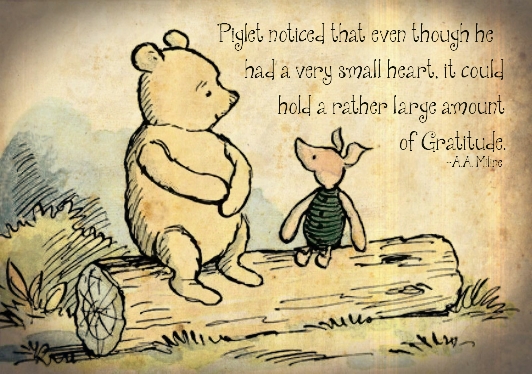
The Grateful Entrepreneur

When I was a young lad in my formative years there was a hard and fast rule set for my sister and me. As soon as the Christmas or birthday wrapping paper was discarded, we went to our respective rooms and began writing thank-you notes. It didn’t matter how insignificant the gift (or whether it was something we wanted) a thank-you note was written. And writing something like, “Dear Grandmother – thank you for the sweater you sent for Christmas,” was wholly insufficient. Mom expected something more in the order of, “Dear Grandmother – thank you for the lovely sweater you sent me for Christmas. I can’t wait to wear it at my upcoming band concert. I’ll send you a picture of me wearing the sweater after the concert. We miss you and wish we could see you more often.” And by golly, I wore that sweater at the band concert and sent a follow-up note with the photo.  

Our daughters were subjected to the same practice when they were young though I’m not sure that our grandchildren have adopted the ritual . . . which is unfortunate. It sometimes seems that expressing gratitude is becoming a lost art. I’ve written before about how living in gratitude makes our lives so much richer and rewarding. It opens the flow of positive energy that allows us to thrive in any situation. I’ve advocated for keeping a gratitude journal in which we write daily, making note of the various people and things for which we are grateful each day. I know that when I hit a rough spot in my life, focusing on that for which I am grateful always centers me and puts me back on track.

Here’s the thing. Entrepreneurs have endless reasons to be grateful. Who among us hasn’t been encouraged by someone along the way? Who among us hasn’t received a helping hand from a kind soul who selflessly made our way smoother? Who hasn’t been the beneficiary of opportunities that were created by someone else? Do we truly feel grateful for these actions, or do we take them for granted? Perhaps we have even rationalized a sense of entitlement . . . which would be unfortunate. “I know my company has assigned me some terrific projects that have been very helpful to my career, but I work long hours to make these projects successful.” What is not said (but maybe thought) is, “I don’t need to express gratitude to anyone because I go above and beyond to do my job.”

What is the proper way to express gratitude to others? First and foremost, it needs to be heartfelt. Simply going through the motions (like I did with my sweater letter) is not true gratitude. We need to think specifically about what others have done for us. This is where a gratitude journal can be helpful. It establishes a practice whereby we focus on our bounty – material or otherwise – and identify the source that facilitated it. This doesn’t take anything away from our own accomplishments. It simply completes the circle of gratitude. We acknowledge that source as well as being proud of what we ultimately accomplished.

When our gratitude is coherent with our head and our heart, we can offer an outward expression of it. Perhaps it takes the form of looking someone in the eye and telling them how much their support has meant and how appreciative we are. Maybe it’s a handwritten note of thanks. Possibly it takes the form of a gift of some sort. Regardless of the method, intentionality is the key and will be felt by the recipient.  

Learning how to be grateful and expressing gratitude to others is a practice that is critical to living an amazing entrepreneurial life. And I want to say thank you to my mom in heaven for instilling in me the foundational elements of gratitude.

This blog is being written in tandem with my book, “An Entrepreneur’s Words to Live By,” available on Amazon.com in paperback and Kindle (My Book), as well as being available in all of the other major eBook formats.

The Supremely Confident Entrepreneur

There is at least one must-have trait for successful entrepreneurs. Without confidence the road is very steep and rocky. College basketball is one of the most interesting demonstrations of how confidence or a lack thereof can impact outcomes. I’ve watched many games where the players on a team are tentative. They lack energy and they are missing their shots. Often, they are out of position and cannot rebound or chase down loose balls. A few days later the same team plays another game. This time there is fluidity in their motion. They are passing the ball crisply; players are getting nice elevation when they shoot, and the ball is going in the hole. The night-and-day difference between the two contests is that of confidence.

What is the secret to gaining and maintaining confidence? There are several elements that are required. The first is that of “mastery.” Mastery is achieved through constant practice and the repetitive patterning that occurs as our experience builds. This is particularly important for millennials to understand. Fair or not, many millennials are tagged with the stereotype that they have an incredibly high sense of urgency. They don’t want to wait for results and can be impatient at times. However, I’ve seen millennials and people of all ages try something a couple of times and believe they have mastered it. Then I watch as they try it again and bomb badly. With confidence shaken they are humbled and may become afraid to jump in the water again. All of this could have been avoided had real mastery been achieved. One of the biggest fears in society today is that of public speaking. And the only way to resolve this fear once and for all, is to practice speaking over and over and over. The fear doesn’t suddenly evaporate after a handful of gigs. It took me 50 or 60 times to reach the point that I began to feel comfortable in front of a group.  

The second element is that of achieving a history of desired outcomes. It’s one thing to repeat a process enough times to master something. That helps to build confidence. But achieving the results we want is the validation necessary for us to know that we’re on the right track with our mastery. Let’s use our basketball example again. A team may be executing the basics and fundamentals properly; it may be playing strong defense, and the players are running the plays as designed. But if the scoreboard isn’t showing a W for the team on a regular basis, it’s hard to build confidence. I’ve never heard anyone profess that losing all the time builds confidence . . . but winning does. As entrepreneurs we must tweak our approach until we begin to win consistently. For example, if our sales approach isn’t working and we keep doing it the same way, it’s time to start experimenting to learn what it takes to win. After all, there’s no point in “mastering” losing!

The third aspect of building confidence is to always maintain a positive attitude – no matter what. We must believe that eventually we’ll get it right; eventually we will win. I’ve said many times that what we think in mind produces in the outer after its kind. When we believe at our core that we are going to win, eventually we will win. If we have doubts or know in our bones that we’re going to lose, eventually we will lose. I have never seen anyone become more self-confident by having a negative attitude. Attitude is critical to the success of individuals and to the team. If one member of the team is positive and the rest are negative, the confidence of the team will be adversely affected. As entrepreneurial leaders it is incumbent upon us to make sure that our team is unanimous with a positive attitude.  

Developing mastery, achieving success and being eternally optimistic are the rocket fuel that will propel us to a perpetual state of self-confidence. This patterning also inoculates us from having our self-confidence shaken when from time-to-time we might stumble. We’ve been there before. We know what we must do, and we are able to re-calibrate and get back on track with ease and grace. There is no panic or desperation – we simply remember to follow the formula that has worked so well in the past.

Building self-confidence is a process much like riding a bicycle. Once learned, we may fall off on rare occasions; but when we do we get up, dust ourselves off and start riding the bike again like it never happened.

This blog is being written in tandem with my book, “An Entrepreneur’s Words to Live By,” available on Amazon.com in paperback and Kindle (My Book), as well as being available in all of the other major eBook formats.

The World’s Winningest Entrepreneur

We entrepreneurs are winners at heart. Every day is like the Super Bowl or the World Series for us. It kills us when we lose on a last second shot. We train like we’re going into battle. We sweat and bleed and play through the hurt if there’s a chance to score a touchdown. We endure winning streaks that we are convinced will never end and losing streaks that create the lowest of lows. Whenever possible we want the deck to be stacked in our favor. Here are some ideas for doing exactly that.

  1. Admit mistakes. I’ve always said that mistakes are simply unfinished experiments in the laboratory of life. But this can be a trap for entrepreneurs. Why? Because false pride and arrogance can sometimes prevent us from quickly admitting our mistakes. We simply refuse to be wrong. And when it’s painfully obvious to others, we lose our credibility. The moral of the story is this. We admit our mistakes immediately, learn whatever there is to learn and move on. Doing so also garners more respect from our team when they see us take on this mantle of vulnerability.
  2. Always do the right thing. We always do the right thing – even when it’s to our disadvantage. This is all about integrity, which is doing the right thing when no one is looking or will ever notice. This is all about looking in the mirror at the end of each day and knowing that we don’t have any regrets about how we treated other people.
  3. Show appreciation for others. Here’s another trap for us entrepreneurs to avoid. There are times when we can tend to believe that we are all important and singlehandedly carry the day. In the process we may be seen by others as being arrogant. Very rarely is there a situation where the Lone Ranger effect is a reality. Instead, our success is almost always the result of a team effort. As such, it is incumbent upon us to express gratitude and appreciation for the many things that others have done to contribute to our success.
  4. Be humble. I’ve always said that the bigger we become in terms of success and personal profile, the humbler we should be. While showing appreciation for others is part of this, there is much more to it. We do our best to shine the spotlight on others. We are as gracious as we can possibly be. Rather than crashing around with our Type A personalities, we try and walk as softly as we can – almost to the point that others aren’t even aware we are there. We have enough self-confidence and self-awareness to know that we don’t have to be the center of attention to be highly successful.
  5. Always have a positive mindset. I have never encountered a situation where negativity produced a viable solution for anything. Positivity is contagious and is ours to model. When our team members see us remaining truly positive in the face of great adversity, they may be more inclined to do the same. Positive energy propels – negative energy repels. Who among us wants to be around a negative person? When we can adopt the belief that what seems like failure in the moment is an opportunity for something bigger and better, we are well down the road to continued success.
  6. Persevere. The entrepreneurial game is a tough one. We get knocked down a lot. There are plenty of times that nothing seems to be going our way. But we always have a choice. We can throw in the towel, or we can live by Winston Churchill’s famous quote, “Never give in, never give in, never, never, never, never – in nothing, great or small, large or petty – never give in to convictions of honor and good sense.” Endurance becomes our ability to outlast every challenge that comes our way.
  7. Laugh and have fun. We don’t always have to be so serious . . . and we don’t have to take ourselves seriously either. Entrepreneurship is not a life sentence to drudgery and misery. We should savor every breath we take as we walk this incredible planet. Laugh, laugh, and laugh some more. And when we can laugh at ourselves that’s even better. The more our entrepreneurial journey can be fun, the more likely we are to be living our passion.

When put it altogether – admitting mistakes, integrity, appreciation, gratitude, humility, positivity, perseverance, and laughter – we are clearly stacking the deck in our favor. This “extra edge” then sets us up for the success that is ours to claim.

This blog is being written in tandem with my book, “An Entrepreneur’s Words to Live By,” available on Amazon.com in paperback and Kindle (My Book), as well as being available in all of the other major eBook formats.

The Chronic Issue Entrepreneur

Have you ever had a chronic issue that simply couldn’t be resolved in a cost-effective manner? In fact, maybe there isn’t any sort of solution at all. What do you do – especially if the situation has a negative impact on customer satisfaction? Here’s an example of what we encountered on one of our apartment communities. In this case, there is an issue with our water supply lines. Very simply – they break a lot. When this happens, apartments flood; sheetrock is damaged; carpet is destroyed, and residents are inconvenienced. We’ve spent huge sums of money to clean up the aftermath and have looked for every way possible to prevent the problem in the first place. Unfortunately, the piping material is flawed and short of re-piping the property, there isn’t another solution. And re-piping could run to the millions of dollars, so it’s just not an option.

The impact that this issue has had on our team and our residents has been profound. We’ve lost staff because of this problem. Several residents have moved out. Our team is weary of dealing with a challenge they cannot solve. Unfortunately, there’s a lot of negativity on display among our team members. This negative energy feeds on itself and everyone holds their breath each day hoping that the phone doesn’t ring with more bad news.

But all is not lost because there is something we can do. We can (and must) take a chronic situation like our pipe-break dilemma and turn it into a positive. We accept the fact that we are going to have pipes break from time-to-time. Acceptance is the first step in this process. For far too long we’ve operated in a state of denial. But this doesn’t have to be. Knowing that this problem will persist, we next amass as much data as we can generate and continually pore over it, looking for patterns or any other key elements that might help us identify where the next break might happen. Is there a particular location in the piping runs where most breaks occur? Does temperature or water pressure play a role?  We obviously focus on higher level units first since breaks on those floors can wreak more havoc than a first-floor apartment. Ultimately, we take whatever proactive steps we can to prevent the breaks – even to the extent of making some repairs before a break occurs.

The next part of this turn-the-negative-into-a-positive process can be fun. We develop a comprehensive plan for how we are going to create a wonderful experience for our residents when a pipe breaks and their apartment floods. Sounds crazy – right? How could anyone think wet carpet and water coming through the ceiling is a “wonderful experience?” But here’s how we make it happen. We mobilize our clean-up and repair team that is highly trained to deal with issues like this. We communicate clearly and often. We do everything in our power to minimize the inconvenience to the residents. Knowing that we are going to have a certain vacancy factor built into our financial model, we take a few vacant apartments and fully furnish and equip them with all the comforts of home. When a flood occurs, our team quickly moves clothing and other necessary items for the resident(s) affected into one of the furnished units. We treat them to a nice dinner out and provide them with gift baskets. Perhaps we’ll even offer them movie tickets or send them to an amusement park. In other words, we try to create a positive experience for them that they might not otherwise enjoy. Meanwhile, our team is working fast and furiously to repair the leak, clean and sanitize the carpet, repair the sheetrock, and put the apartment back the way it was before the flood. Then, as quickly as possible, we move the resident back into their original apartment. And I can’t emphasize enough the need for clear and constant communications.

Probably the most critical aspect of dealing with chronic problems like the one I’ve described is the mindset of the team. If the attitude is negative – we’re doomed from the start. When we look for creative ways to “wow” the customer, we can create goodwill AND it can be exciting and stimulating for our team. No, the problem doesn’t go away and coping with it may still be costly. But when our team finds a way to turn a negative into a positive for the customer – we will experience even greater levels of success than we might have otherwise.

This blog is being written in tandem with my book, “An Entrepreneur’s Words to Live By,” available on Amazon.com in paperback and Kindle (My Book), as well as being available in all of the other major eBook formats.

The Joyful Entrepreneur

When you think about entrepreneurs what comes to mind? I’m betting that it’s something different for just about everyone. Some will visualize rugged individuals with a pioneering spirit while others will see highly driven and extremely creative people. To how many of us did the word “joy” come to mind?

Entrepreneurship isn’t all about 100-hour weeks and one sacrifice after another. It doesn’t have to only be about struggling to find the right value proposition or meeting the next payroll. Entrepreneurship can also be a truly joyful experience. After all the “grind it out” moments we endure, it’s good to remind ourselves of the fact that there is much to be positive, optimistic, and grateful about in our entrepreneurial existence.

Our joy is derived not necessarily from the financial rewards we eventually realize. After all, the dollars are simply a measure for keeping score. No, the joy comes from our leadership and coaching that enables younger or newer colleagues to blossom into confident and productive contributors – both professionally and personally. The joy comes from our ability to stop for a moment in the midst of chaos; assess a situation; identify a problem and then solve it. Great joy comes from creating a product or service for which the marketplace responds enthusiastically and perhaps a difference is made in the lives of many.

Joy is always there but sometimes (maybe often) we forget to look for it. We become so wrapped up in strategy and tactics that we miss that bright shiny apple that is there for the picking. Why does this happen? Why can we be so obsessively serious at times? Perhaps we’ve bought into the meme that entrepreneurship is going to be a difficult marathon. We’ve heard that we need thick skin and a ton of resilience to have any hope of succeeding. And thus, we become conditioned to slugging it out and expecting the journey to be tough. Of course, there’s some element of truth to this, but if we intentionally also look for the joy in what we do, guess what? We’ll find it!!

We can re-program ourselves to seek and find true joy every single day. It doesn’t take much effort to allow moments of jubilation and glee to permeate our being. That spark of imagination can also transform into an explosion of joy when we allow for it. Winning the competition for a new client can be a reason for feelings of exuberance – if we give permission for such feelings to come forth. Those smashingly positive reviews on social media can be realized as a triumphant moment when we become immersed in their afterglow. There’s a common thread to all of this. We must be active participants in pulling the lever that opens the gate whereby joy is invited into our lives. It is, after all, our choice. 

I know many entrepreneurs who lead joyless lives. I look at their businesses and see all sorts of potential for joyful moments. Yet, these entrepreneurs are so focused on their KPIs or squeezing out one more nickel of efficiency that they are oblivious to how much a celebration of joy could mean to themselves and to their entire organizations. Joy is a mindset, and it is critical to the culture we want to create.

Here’s a simple exercise. Get up early some morning and find a quiet place where you can watch the sun rise. Feel the warmth on your face. Watch the changing color of the sky in all its exquisite glory. Do you get a tingle up your spine as a wave of splendor washes over you? If not, were you a real participant at this moment? Or were other thoughts creeping into your consciousness? Perhaps you remembered something you absolutely must do today. Or a nagging worry that caused some tossing and turning during the night emerges once again from its hiding place. I love watching the sun peek over the horizon and I never fail to enjoy an endorphin rush while experiencing this spectacle. Finding joy throughout each day in everything we do is an identical process.

Happy and well-adjusted entrepreneurs realize that there are massive gold nuggets of joy just below the surface of their daily lives. They also understand that they can walk over these gold nuggets without even knowing they are there. Or they can choose to find them with very little effort. I hope that you decide to begin finding your gold nuggets of unlimited joy.

This blog is being written in tandem with my book, “An Entrepreneur’s Words to Live By,” available on Amazon.com in paperback and Kindle (My Book), as well as being available in all of the other major eBook formats.