The Burned-Out Entrepreneur

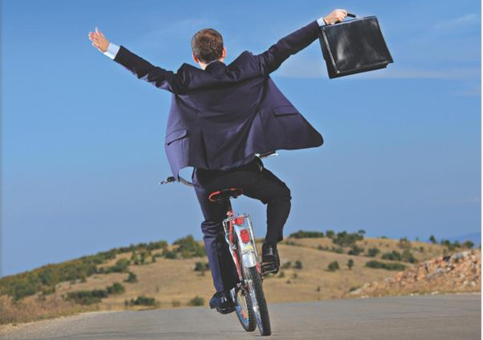
Imagine a warm summer night, a meadow away from the city lights and a cloudless, moonless sky. A blanket is spread on the ground, and you stretch out on your back and gaze at the heavens above. Trillions of pin dots twinkle back at you. Suddenly, as luck would have it, a streak of light crosses right in front of your eyes – a brief moment of intense action in an otherwise passive setting. Yes, a meteor is truly a sight to behold and provides a metaphorical warning to us as entrepreneurs.

The romanticism of a shooting star quickly gives way to the realization that we have just witnessed a piece of interplanetary debris burning up in the earth’s atmosphere. The operative words here are “burning up.” In entrepreneurial parlance, we’re talking about “burnout.” We all know what burnout is, so I don’t need to describe its symptoms. In fact, we’ve all probably experienced burnout in some form over the course of our careers. More important are two central questions. How do we prevent burnout in the first place? And how do we get out of burnout if it already holds us captive?

Preventing burnout in the first place is actually easier than figuring out how to get out of it once we’re in it. Consider this example. Jeff is focused on his software training business in laser-like fashion. He eats, sleeps and breathes software training and hasn’t had a vacation in six years. The business is growing in a very profitable fashion, but Jeff worries every day that if he takes his eye off the ball, his competition could easily overtake him, and he’d begin losing money. He justifies his herculean efforts as the right way to provide for his family (but he’s missed eight of his son’s last ten soccer games). By contrast, Amy has a competing software training business. She is passionate about her company which is growing like Jeff’s and is also profitable. Amy has learned through time management techniques and following a carefully thought plan, how to be incredibly productive while she’s at work. She serves on a non-profit board, exercises and meditates every day, volunteers at a local homeless shelter, plays tennis and takes a ten-day vacation every six months. It’s pretty obvious which entrepreneur is a prime candidate for burnout. Because she has embraced a life balance, Amy is more creative and innovative. When Jeff finally hits the wall Amy will blow on by him because she has learned how to build a strong team to which she can delegate.

Extracting ourselves from the clutches of burnout is a real challenge. The first step is to go back to the basics and determine if our vision and mission are the same now as they were when we were filled with passion at the outset of our endeavor. Do they need to be tweaked? What made us passionate about what we started doing in the first place? Are our core values intact? Reconnecting with our passion is critical and can only happen when we become grounded in our vision, mission and values. Without this re-set we cannot know for certain if the passion is truly alive.

Next, we need to make the choice to move toward a more balanced approach to life. Nothing prevents us from adopting Amy’s M.O. Experts say that it takes three weeks to form a habit. Every day we must become intentional about identifying and implementing the different elements that will compose our newly balanced life. Getting out of ourselves and doing good things for others is one of the best ways to break out of the burnout cycle.

Finding a balance in life is the best preventive medicine for warding off burnout . . . and for getting out of it. While shooting stars are spectacular to watch there’s no need to be one.

 This blog is being written in tandem with my book, “An Entrepreneur’s Words to Live By,” available on Amazon.com in paperback and Kindle (My Book), as well as being available in all of the other major eBook formats.


The Modern Entrepreneur Leader

A few years ago, I came across an article by Stefan Stern from the Financial Times publication dated November 10, 2008. “While cleaning out his attic, a British business leader stumbled upon some typewritten notes on leadership from the 1950s. ‘Leadership is the art of influencing a body of people to follow a certain course of action, the art of controlling them and getting the best out of them.’” Sounds kind of old-fashioned, doesn’t it? The “art of controlling them?” That’s an attitude that’s not likely to win many awards today. The article and this statement got me to thinking about leadership. And because I’ve lived long enough, I’ve had the good fortune to experience many different leadership styles. So, here are some personal observations that have helped me develop my own leadership style.

Entrepreneurs are often “quick on the draw.” A team member asks a question or brings us a problem and our instinct is to provide the answer or solve the problem. Then we move on . . . quickly. In the old days, that would probably have been considered “leadership.” One of my goals is to develop a sustainable organization that is no longer dependent solely upon me. If I answer every question and offer every solution, how does this support others in their quest to step-up and become leaders in their own right? I believe that leadership involves leading people to answers and solutions rather than simply telling them.

I’ve heard certain pro athletes and several entrepreneurs who say it’s not their job to be role models. It seems to me that anyone who has the megaphone ought to savor the opportunity to set an example for others. Doing so also enables us to become more accountable to our team. Back to the sustainable organization concept for a moment – do I want to display anger; yell at people; exhibit boorish behavior, and generally put my ego front and center? When I model this way, what message does it send to up-and-coming leaders? Here’s the simple truth for me. I don’t want to show any sort of negative behavior for which I should apologize.

One of the toughest aspects of being an entrepreneur is communicating our vision to our team. Most of us have a vision of some sort locked away in our brains. I was asked for years by my teammates for my vision, but never could figure out how to articulate it clearly until recently. Having a vision and communicating that vision are two entirely different things. When I mentor other entrepreneurs, I ask them a very basic question. What does it look like when we get there? Focusing on this question eliminates the psychobabble and gets to the heart of the matter. In plain English it requires that we paint a word picture that everyone can understand. We should never forget that people are drawn to leaders who can express a strong and powerful vision.

As a leader, how much time do you spend working on your business rather than in your business? I can tell you that I love doing complicated real estate deals. Without question, that’s working in my business. It would be very easy (and profitable) for me to focus all my time and energy on buying and owning apartment properties. But that doesn’t advance the cause for the sustainable organization that I have envisioned. Thus, I must spend significant time working on my business. This involves developing a wide range of strategic initiatives, cultivating, and educating team members, and helping to define our mission. A great leader will spend far more time working on his or her business than working in it.

While there are many other modern leadership traits to be explored, the last one on which I want to focus is that of attitude. Leaders with negative attitudes generally produce negative results. Over the past four-plus decades I think I’ve become more and more positive and optimistic. I realized that it’s not much fun to work in a negative environment. And as a leader, if I’m down-in-the-mouth it’s hard for that attitude not to become contagious. I’ve come to realize that there’s always a silver lining in every situation and it’s my aim to find it. This doesn’t mean that negative things won’t happen – they do. But the faster we can move on and regain positive footing, the faster we’ll get back on track. It’s my goal to be a positive and optimistic leader every second of the day.

Modern leadership still embodies ageless basics and fundamentals. But there are some “new age” twists that help propel us to new heights of success and create sustainable organizations in the process.

This blog is being written in tandem with my book, “An Entrepreneur’s Words to Live By,” available on Amazon.com in paperback and Kindle (My Book), as well as being available in all of the other major eBook formats.
The No Straight-Line Entrepreneur

I’ve advised every entrepreneur with whom I’ve ever worked to develop a business plan. But I never expect that the path to success outlined in such plans will ever be precisely followed. Some people say that a business plan is a blueprint for the organization. Nah, I don’t think so. I see the business plan as a starting point. I’m convinced that some businesses fail because the entrepreneur hews too closely to the plan. He or she fails to recognize the little signs along the way that point to major pitfalls for which a deviation is warranted . . . or enormous opportunities that will be missed due to a blind devotion to “the plan.”

The notion behind the business plan should be to organize our thoughts around a concept. That concept is actually the Vision, or what it looks like when we get there. An organized process for achieving the vision is extremely important for without it we find ourselves all over the map and failing to make any tangible progress. One of the problems for many entrepreneurs is working too much “in” the business rather than “on” the business. They become bogged down in the organized process tending to minor details best left to others. And weeks, months or even years later they look up and realize that the vision is still a distant fuzzy form way out in the distance. They are the victims of “straight-line thinking.”

Every organization needs some straight-line thinkers and doers. If not for them, there would be sheer chaos all the time. But straight-line thinking is not the job for the entrepreneur. The entrepreneur continually works to bring that “fuzzy form in the distance” into sharp focus. He or she realizes that there will be obstacles along the way and works to anticipate them and determine the path around, under or over. The straight-line thinker runs into the obstacles and is stopped – maybe permanently.

Straight-line systems and processes are critical. That said, they should be periodically reviewed and modified as necessary to meet the continually changing needs of the business. It’s the strategies that must be nimble and flexible. The simplest analogy is that of a car driving down the road. We are going from Temecula to Tucumcari which is nearly a straight 1,000-mile shot across I-40. Just west of Flagstaff the highway construction signs begin to appear – Road Closed Ahead. And the next thing we know there’s a detour on West Route 66 through Flagstaff. We follow the detour and a few miles later we’re back on I-40 on our way to Tucumcari, no worse for the wear. Easy peasy – right? The problem in the entrepreneurial world is that the detours are not so straightforward. Sometimes it’s a challenge to even know that there’s a need for a detour.

Exactly how do we decide when to be flexible with “the plan?” The answer is . . . always! We need to pay a great deal of attention to our customers and understand what they want and need. If we don’t, we may miss subtle signals that inform us that their preferences are shifting. We must stay abreast of what our competition is doing and especially how demand for our products and services might be changing. If a competitor is quickly garnering more market share, we had better know it and be prepared to react accordingly. It’s equally critical that we stay plugged in to the regulatory environment at all governmental levels. Understanding early in the game that a proposed set of rules or new laws could adversely impact our business gives us a chance to re-tool our operation to minimize the downside. And, we must have a constant pulse on the status of our team. Are our team members feeling fulfilled? Is their compensation in line with the work they are doing and the results they are producing? Again, if we aren’t mindful of our team, we’ll be caught flatfooted when someone jumps ship at a time we least expect it. Finally, while keeping our head down and putting one foot in front of the other, we may miss a golden opportunity that was unanticipated and could accelerate our sales and punch up our bottom line in a major way.

Look, I’m all about focus and paying attention to the details. But as entrepreneurs, sometimes by following the straight-line path we’ll walk right into the mouth of a hungry grizzly bear. To thrive and prosper we use our business plan as a starting point; develop a strong set of systems and processes; but are nimble and flexible with the strategies we deploy that deliver us to our ultimate vision.

This blog is being written in tandem with my book, “An Entrepreneur’s Words to Live By,” available on Amazon.com in paperback and Kindle (My Book), as well as being available in all of the other major eBook formats.
Is the Grass Really Greener?

The U.S. unemployment rate is at its lowest since 1969. As I’m writing this, unemployment is hovering around 3.5%. Companies are becoming more and more creative in their recruiting efforts. From an employee’s perspective, times have probably never been better. There’s certainly a temptation to job-hop the way up the compensation ladder in the belief that an employer is going to be much more generous than would have been the case during the Great Recession and for many years thereafter. But the question must be asked, is the grass really greener on the other side of the fence?

Everyone knows that there’s much more to a career than a paycheck. Those who blindly chase the dollars may get what they want – but there may be a whole lot more than they bargained for. I know many people who were thrilled with the amount of money they were going to make only to find out that their new boss was ridiculously difficult, the stress levels were off the charts and working conditions were abysmal. Yet, it’s very tempting to jump at the chance to make a lot more money and pick up a cool new title. So, how should we look at the “grass” on the other side of the fence?

Over the past 48+ years, I’ve had numerous opportunities to make the jump. I resisted every time. Why? Long ago I realized that 1) I was working for and with honorable people; 2) I was allowed incredible freedom to be creative and experiment, and 3) I was working in an industry that I loved and had dreamt about since I was in the 8th grade. You’ll notice that nowhere did I mention money. The reason is simple. I was allowed to continually figure out how to add value to whatever I was pursuing, and my compensation increased accordingly. This approach is my suggested template for viewing the “grass is greener” dilemma.

I’ve always believed that most people work a job. A few pursue a career. And then there are those of us who are lucky enough to live our passion. I don’t think I’ve felt at any point in time (after the first three months in the mid-1970s) that I was working a job. For a while I was pursuing a career. But for most of my adult life I’ve been able to live my passion. This is important to understand for it’s one of the three foundational elements to answering the “grass is greener” question. Each of us must find our own passion to pursue, and the sooner the better.

Let’s assume that we generally know that we are in the right industry – yes, I know – that’s a big assumption to make. But we must start somewhere. This brings us to the other two foundational elements. Am I working for and with honorable people? There’s much more to this question than its literal interpretation. What is the company’s culture? Is there a vision of where the organization is heading? Are there core values that are more than slogans in a fancy frame on the wall? Are employees valued and treated fairly? Do senior leaders express gratitude? Do they seek out feedback; listen to it, and act upon it? No situation is going to be perfect. But if the environment is comfortable and efforts are constantly being made to improve, that’s a good sign that we are amid honorable people.

Finally, we need to measure how likely we will be to succeed over the long haul. In my case, I was pretty much allowed to make my own way. Sure, I had specific roles and responsibilities, but I always wanted to do more and be more. I saw a myriad of opportunities and developed plans to exploit them. I made plenty of mistakes – more than I can count. But I was allowed to make them and learn valuable lessons in the process. I always figured that if my successes exponentially outweighed my failures, I was on solid ground. And that turned out to be true. You’ve likely heard the adage, “the cream rises to the top.” If we are working for and with honorable people, we can always know that we earn more trust and more latitude through our performance.

Ultimately there’s no need to look at the grass on the other side of the fence so long as we can grow a lush, green lawn on our side. When we do this, we’ll surely reap the benefits accordingly.

This blog is being written in tandem with my book, “An Entrepreneur’s Words to Live By,” available on Amazon.com in paperback and Kindle (My Book), as well as being available in all of the other major eBook formats.

The No-Struggle Entrepreneur

How many times have you heard that entrepreneurship is a struggle? Heck, we’ve all heard how life in general can be a struggle. But is it really? I think it’s worth exploring the notion of “struggling.” Various definitions of the word “struggle” reference adversaries, opposing forces, bodily effort, fight, conflict, or contest. I’m just not feeling it.

Let’s paint a picture. Three years ago, Entrepreneur Ed launched his new enterprise. He has encountered many interesting issues along the way. There have been untimely resignations of key team members; nail-biting moments when it was questionable whether he would make payroll; a patent infringement lawsuit; shortages of raw materials that were critical in producing Ed’s product; brutal competition resulting in a price war; cancellation of a liability insurance policy, and the loss of a key customer. Many might say that the last three years have been a “struggle” for Entrepreneur Ed, after all, it appears that he has faced a great deal of adversity. But Ed doesn’t see it that way.

Here is Ed’s perspective. What others see as negative experiences Ed sees as puzzles to solve. Challenging – sure! But Ed believes that what doesn’t kill him will make him stronger and smarter. The utopian view would have us sail along on calm seas growing our businesses from 8 to 5, then going home to play with the kids and spend weekends at the beach. Uh, sorry, it doesn’t work that way. What matters most is the mindset we have as we move through the course of each day. Do we feel like we’re on a perpetual treadmill, grinding away and being attacked from all sides? Do we wonder when the proverbial “other shoe” is going to drop? Perhaps we have become totally overwhelmed to the point of depression. It doesn’t have to be.

Here’s the antidote to the “struggle.” We know we’ve signed on for an adventure – both in the entrepreneurial world and for life in general. That adventure is going to be whatever we make it. If we are fearful and expect disaster . . . we’re likely to find ourselves with a front row seat on the deck of the Titanic as it slowly sinks into the North Atlantic. However, every challenge does not need to end in catastrophe.

We have been rapidly scaling our companies for the past few years. There have been many moments when someone looking in from the outside might believe we were seconds from colliding with a massive iceberg (sorry, I can’t seem to shake out of the Titanic metaphor). I have never believed for a moment that we were on the wrong course. I’ve seen each challenge as a positive opportunity for creativity and growth. And guess what? It’s working! Every time we think we’re flirting with disaster we seem to pull a rabbit out of a hat – except there’s really nothing magical about it at all. Instead, we have a well-thought plan, and we have an extremely positive mindset. We know there will be detours along the way. Sometimes we’ll have to backtrack to find the trail, but we are never lost, and we are always focused on our vision.

As I write this, it’s worth noting that I’ve been with the same company and on the same quest for nearly 49 years. I can now look back and realize how incredible the ride was. Did it ever seem like a struggle? There definitely were times early in my career where I wondered if we were going to survive. But the older (and maybe wiser) I’ve become, the more I’ve come to understand that success comes from within us. While there may be some external influences, it’s really all about how we see the world when we get up in the morning; how we choose to look at each experience throughout the day, and the impression with which we are left when our head hits the pillow at night. In other words, we’ll struggle if we believe we are struggling. Or we’ll see the incredibly short time we are riding this planet as a golden opportunity for experimentation, innovation, mastery, and joy.

We throw off the chains of “struggle” when we embrace a life filled with positive energy and gratitude. And then we can pursue our purposeful vision with confidence.

This blog is being written in tandem with my book, “An Entrepreneur’s Words to Live By,” available on Amazon.com in paperback and Kindle (My Book), as well as being available in all of the other major eBook formats.

Timeless Leadership Ideas

There’s an interesting article by Stefan Stern from the Financial Times publication dated November 10, 2008. “While cleaning out his attic, a British business leader stumbled upon some typewritten notes on leadership from the 1950s. ‘Leadership is the art of influencing a body of people to follow a certain course of action, the art of controlling them and getting the best out of them.’” Sounds kind of old-fashioned, doesn’t it? The art of controlling them? That’s an attitude that’s not likely to win many awards today. The article and this statement got me to thinking about leadership. And because I’ve lived long enough, I’ve had the good fortune to experience many different leadership styles. So, here are some personal observations that have helped me develop my own leadership style.

Entrepreneurs are often “quick on the draw.” A team member asks a question or brings us a problem and our instinct is to provide the answer or solve the problem. Then we move on . . . quickly. In the old days, that would probably have been considered “leadership.” One of my goals is to develop a sustainable organization that is no longer dependent solely upon me. If I answer every question and offer every solution, how does this support others in their quest to step-up and become leaders in their own right? I believe that leadership involves leading people to answers and solutions rather than simply telling them.

I’ve heard of certain pro athletes and several entrepreneurs who say it’s not their job to be role models. It seems to me that anyone who has the megaphone ought to savor the opportunity to set an example for others. Doing so also enables us to become more accountable to our team. Back to the sustainable organization concept for a moment – do I want to display anger; yell at people; exhibit boorish behavior, and generally put my ego front and center? When I model this way, what message does it send to up-and-coming leaders? Here’s the simple truth for me. I don’t want to show any sort of negative behavior for which I should apologize.

One of the toughest aspects of being an entrepreneur is communicating our vision to our team. Most of us have a vision of some sort locked away in our brains. I was asked for years by my teammates for my vision, but never could figure out how to articulate it clearly until recently. Having a vision and communicating that vision are two entirely different things. When I mentor other entrepreneurs, I ask them a very basic question. What does it look like when we get there? Focusing on this question eliminates the psychobabble and gets to the heart of the matter. In plain English it requires that we paint a word picture that everyone can understand. We should never forget that people are drawn to leaders who can express a strong and powerful vision.

As a leader, how much time do you spend working on your business rather than in your business? I can tell you that I love doing complicated real estate deals. Without question, that’s working in my business. It would be very easy (and profitable) for me to focus all my time and energy on buying and owning apartment properties. But that doesn’t advance the cause for the sustainable organization that I have envisioned. Thus, I must spend significant time working on my business. This involves developing a wide range of strategic initiatives, cultivating, and educating team members, and helping to define our mission. A great leader will spend far more time working on his or her business than working in it.

While there are many other modern leadership traits to be explored, the last one on which I want to focus is that of attitude. Leaders with negative attitudes generally produce negative results. Over the past four-plus decades I think I’ve become more and more positive and optimistic. I realized that it’s not much fun to work in a negative environment. And as a leader, if I’m down-in-the-mouth it’s hard for that attitude not to become contagious. I’ve come to realize that there’s always a silver lining in every situation and it’s my aim to find it. This doesn’t mean that negative things won’t happen – they do. But the faster we can move on and regain positive footing, the faster we’ll get back on track. It’s my goal to be a positive and optimistic leader every second of the day.

Modern leadership still embodies ageless basics and fundamentals that, unlike bread, never grow stale. But there are some “new age” twists that help propel us to new heights of success and create sustainable organizations in the process.

This blog is being written in tandem with my book, “An Entrepreneur’s Words to Live By,” available on Amazon.com in paperback and Kindle (My Book), as well as being available in all of the other major eBook formats.
An Iconic Entrepreneur

Right after he passed away several years ago, I wrote a blog as a tribute to Herb Kelleher. I think it’s worth sharing again.

On January 3, 2019, one of the legendary icons of entrepreneurship stepped on a rainbow. Herb Kelleher died at age 87 after living a storied life. Kelleher famously co-founded Southwest Airlines in the late 1960s. He was practicing law in San Antonio when a client brought him an idea to launch a new airline in 1967. Competing airlines did everything they could to prevent the new airline, originally incorporated as Air Southwest Company, from getting off the ground. Lawsuits were the only thing flying for several years, and at one point the board told Kelleher that the venture needed to be shut down. Kelleher offered to fight the lawsuits and pay the court costs out of his own pocket, at which point the board agreed to stay in business. It took four years and victories at both the Texas and the U.S. Supreme Courts – twice – before Southwest Airlines flew for the first time on June 18, 1971. His resilience and tenaciousness are credited for enabling Southwest to persevere and become the major airline that it is today.

Kelleher was general counsel and served on the board of directors, becoming chairman in 1978. In 1981 he became the full-time CEO and built the airline into a powerhouse because of his vision. At the time, the airline industry was highly regulated and when an airline started losing money, it would petition the Civil Aeronautics Board (CAB) to allow for a fare increase. As a result, it became exceedingly expensive for the public to fly – something that Kelleher saw as the opportunity of a lifetime. Initially Southwest was an intrastate carrier flying within Texas, making flying between Dallas, San Antonio, and Houston affordable through ultra-low fares. Over the years the airline started flying outside the state of Texas but was hamstrung by the Wright Amendment – legislation designed to help the legacy carriers and hurt Southwest. The law required that Southwest could not fly from another state directly into Dallas’ Love Field without first stopping in an immediately adjacent state including Arkansas, Louisiana, Oklahoma, and New Mexico. I can remember flying from Kansas City to Dallas and having to stop in Oklahoma City to change planes because of this requirement. Eventually the Wright Amendment was defeated in Congress and Southwest was able to operate like any other airline in the country.

Kelleher was a marketing genius and employed numerous outrageous stunts that endeared Southwest to its employees and to the public. He never took himself too seriously and is well known for his love of Wild Turkey bourbon and a daily dose of five packs of Marlboro cigarettes. When it came to compensation, Kelleher chose to take less in cash salary and more stock options. This approach helped considerably with the Southwest labor force (where the CEO was not receiving an exorbitant level of pay) and made him a billionaire two-and-a-half times over. He claims to have been a “flamboyant marketer but was fiscally conservative.” His shrewd financial prowess put Southwest on a path to profitability that is unmatched by any other airline – and few public companies in any industry. Since 1973, the company has been profitable every single year.

For decades, the culture at Southwest Airlines has been studied under a microscope by business schools and business leaders. It’s safe to say that Kelleher defined and sustained that culture for the 20 years he was the CEO and even after he retired in 2001 (he remained chairman of the board until 2008). He spent an enormous amount of time talking to employees and gaining understanding of what was working and what needed to be fixed. He loaded baggage onto planes every Thanksgiving Day; met technicians at 2:00 AM in a maintenance hangar; visited operators at reservation centers and spent time as a gate agent. According to Terry Maxon, in a 2015 article for the Dallas News, Kelleher dressed up like Elvis Presley, a woman, the Easter bunny, a leprechaun and a flight attendant to promote Southwest. Maxon went on to explain the corporate culture was that of a 1) scrappy underdog to the public; 2) fierce warrior to its competitors, and 3) warm, supportive, and protective atmosphere for the employees.

Herb Kelleher was a larger-than-life model for us as entrepreneurs to emulate. He had all the requisite entrepreneurial traits – vision, tenacity, resilience, marketing skills, financial acumen, a cultural leader, and a genuine love for people. Above all he had a passion for life. They broke the mold when Herb Kelleher left this planet. R.I.P.

This blog is being written in tandem with my book, “An Entrepreneur’s Words to Live By,” available on Amazon.com in paperback and Kindle (My Book), as well as being available in all of the other major eBook formats.
The 100,000-Foot Entrepreneur

Here’s the typical day for an entrepreneur I know. He arrives at the office and boots up his laptop. The first step is to check e-mail. There are a number to delete and a few that are read but left in the In-Box. Several responses are prepared and sent, and one or two responses are started but saved and remain unsent. Then it’s time to check out the news at one of several news websites. This may be followed by a stop on Facebook and perhaps a scroll through several tweets on Twitter. Then, someone pops into his office for a conversation that lasts ten minutes or so. He then dives into a perplexing HR situation that seems to have taken a life of its own. Then there may be some time spent reviewing the previous month’s financial statement; a quick trip to the restroom; time in the hallway chatting with several members of his team; fielding a phone call and returning others and preparing remarks that he is going to make at a lunch meeting. Before he knows it, half the morning is gone.

I’ll bet this sort of morning sounds familiar. I’ve had many just like it myself. But did you notice what’s missing? What high-yielding opportunity was identified by our entrepreneur for his urgent and immediate focus? I completely understand that we have a business to run on a day-to-day basis, and what was previously described accomplished just that. However, perhaps a closer look is needed to see how this entrepreneur could operate differently – and more effectively.

I used the term “high-yielding opportunity,” but exactly what does that mean? Here’s what I’ve learned over the years. I spent way too much time in the past with “busy” work. Sure, it needed to be done, but was I the best person to do it? Or maybe I should handle it, but it deserved to be less of a priority. While it may seem obvious, as entrepreneurs we should regularly ask the question, “What’s the best use of our time?” After all, the time we have is finite and we’ll never get it back when we squander it. So, our organization is best served when we start our day tackling the big initiatives – initiatives that may generate significant revenues or profits; initiatives that are highly strategic in nature; initiatives that will have a major positive impact for our team or our customers, and initiatives for which we are best suited to prosecute.

Here’s another way to look at this question. At what altitude are you flying? Are you cruising along at 500-feet and down in the weeds all the time? Maybe you’re at 10,000-feet or even 30,000-feet. But wouldn’t it be amazing to stay at 100,000 feet most of the time? For me, 100,000-feet means identifying and working with large-dollar investors that will help fund our apartment acquisition program. It means collaborating with our acquisitions and development teams to refine their respective strategies that are creating the scale we wish to achieve. It means maintaining a constant awareness of the macroeconomic aspects of our industry and determining how our strategies are designed to exploit opportunities in the marketplace. It also means offering innovative ideas to our management team that will move the needle to better serve our customers. And it means developing a holistic view of our culture and spotting potential problem areas that can be addressed before they turn into raging fires.

Each entrepreneur needs to decide what flying at 100,000-feet means for him or her. A great place to start is with the organization’s vision. I like to test what I’m doing against our vision. If I have ten things on my plate, I’m going to pick the top three that are going to make the most difference in contributing to reaching this vision. And it could be a while before items #9 and #10 are addressed at which point, I may eventually figure out who else might be in a better position to handle them in a timelier fashion. My goal is to work on high-yielding initiatives 60 – 75% of the time. I don’t always succeed – it’s easy to get drawn into major time-sucks that don’t add real value – but I’ve become more consistently aware of how I spend my time and now course-correct more easily.

We entrepreneurs can become adept at focusing on high-yielding initiatives if we understand our vision and choose what we do in terms of achieving that vision. Ultimately, understanding how to fly at 100,000 feet is one of the important aspects of leading our organizations.

This blog is being written in tandem with my book, “An Entrepreneur’s Words to Live By,” available on Amazon.com in paperback and Kindle (My Book), as well as being available in all of the other major eBook formats.

Walt Disney and Entrepreneurship

I recently re-read a terrific biography by Bob Thomas called Walt Disney: An American Original. Thomas was a reporter and biographer who authored multiple biographies focusing on Hollywood celebrities. The Disney story is fascinating and is packed with incredible entrepreneurial anecdotes. As a kid in the 1950s and 1960s, I watched Walt Disney Presents and Walt Disney’s Wonderful World of Color on ABC and NBC. I remember attending the Disney movie Babes in Toyland in early 1962 at the local theater. And then of course there was Mary Poppins starring Julie Andrews and Dick Van Dyke in 1964. The pièce de résistance was a visit to Disneyland in Anaheim, California, with my family. Of course, as a boy I had no idea what entrepreneurship was all about.

Roll the tape forward several decades and I find myself in awe of this amazing man. He epitomizes so many positive traits of a successful entrepreneur. For starters, he was one of the most optimistic individuals I’ve ever studied. Walt Disney was born in 1901 and began his career at age 18, and in the 1920s moved to California and launched Disney Studios with his older brother, Roy. The early days were lean – sometimes very lean. There were many weeks when the Disneys were scrounging for enough money to make the payroll. Roy took this very seriously and fretted considerably over their plight. But Walt was the eternal optimist. He would smile and say he never worried about money. He believed they would always figure out a way to survive. And he was right! Somehow the studio inevitably pulled a rabbit out of a hat and came up with the cash. Without Walt’s optimism and positive mindset, there would be no Disney legend that we know today.

Walt understood grit and perseverance better than anyone else. The Disney organization was just starting to come into its own when the Great Depression came crashing down upon the country. And yet Walt continued fine tuning his craft and creating cartoons that were well received by theater audiences everywhere. His optimism fueled this perseverance and every time he was knocked down, he was able to pick himself up, dust himself off and go back at it. This resilience combined with perseverance and a positive attitude was the key to surviving the dark days of the 1930s.

Creativity was another Disney hallmark. Walt got the idea to create a feature-length animated movie and introduced the world to Snow White and the Seven Dwarfs in 1937. No one in the film industry had ever produced a feature-length animated movie and everyone doubted that such a production could succeed. Walt Disney proved the skeptics wrong and followed with additional masterpieces such as Pinnochio (1940), Fantasia (1940), Dumbo (1941) and Bambi (1942). When World War II took away many of his talented animators, he made movies under a contract with the federal government. While not nearly as profitable, the Disney organization was able to endure the war and remain in business. Walt’s creativity and ability to adapt to his circumstances were more entrepreneurial characteristics that led to his success.

He was a true visionary in every sense of the word. After succeeding with motion pictures, Walt foresaw the opportunity to create an amusement park that embodied the magic he had been delivering through his animated films. I can still remember that trip to Disneyland when I was five or six years old. I was overwhelmed by such an amazing experience. After Disneyland came his ideas for Disney World and Epcot in central Florida. Unfortunately, Walt Disney died from lung cancer in 1966 at the age of 65. The tragedy of this was the fact that he never witnessed the finished product of the Florida projects.

Walt was obsessed with detail and would often snoop after hours and look at the animator boards to see what his team was producing. Often the animators would arrive the next morning to find notes from Walt suggesting changes that would improve their work – and he was usually right about what he wanted. He demanded the highest level of quality for everything that bore the Disney brand. This was one of the major differentiators that enabled the Disney organization to consistently outpace the competition.

We entrepreneurs would be well-served to use Walt Disney as a role model. Wrapped into a single human being are the entrepreneurial traits of optimism and positivity; grit, perseverance, and resilience; adaptability; creativity; vision; attention to detail and demand for quality. The impact he has had on our culture is indelible. The impact he has had in blazing a trail for entrepreneurs is profound.

This blog is being written in tandem with my book, “An Entrepreneur’s Words to Live By,” available on Amazon.com in paperback and Kindle (My Book), as well as being available in all of the other major eBook formats.

The Existentially Threatened Entrepreneur

That’s an ominous sounding title for this blog – right? But not necessarily for reasons you might be thinking. When most entrepreneurs think about what can “kill them” – in a metaphorical sense – they might list undercapitalization, the inability to hire a qualified and competent workforce, or chronic issues with their product. While these can be serious problems, they are much less severe than the existential threats I’m going to discuss.

I believe that the most menacing threat to an entrepreneur’s existence is his or her own mindset. Do we truly believe we can succeed, or do we feel victimized and constantly under siege? Great entrepreneurs are eternal optimists. We know we can win – there’s no doubt about it. We will pivot when we must, but we are absolutely convinced that we will reach the Promised Land – whatever that might represent for our endeavors. Entrepreneurs who are too skeptical or pessimistic are destined to fail. They become tentative and can be paralyzed when making important decisions. Negative Nellies will usually crash and burn. They live in a world of lack and limitation. They can’t escape the negative energy that always surrounds them and eventually impacts their team.

Together with the negative mindset is another existential threat – that of low resilience. Look, we entrepreneurs get beaten up a lot. We make a ton of mistakes. We hear from plenty of people who don’t like us or what we are doing. If we can’t get up off the ground when we’re knocked down, then we’ll die lying there – again, metaphorically speaking. And it’s not just the ability to bounce back that’s critical. We do so with a smile on our face and a new resolve that we have taken a step toward success with our setback. Does that sound contradictory? It’s this kind of thinking – that we’re moving forward when it seems that we’re failing – that is the real definition of resilience. The existential threat melts away when we are always tougher than the problems we encounter.

The next existential threat is that of a lack of vision. Entrepreneurs absolutely must be able to see into the future. The ability to be a visionary also leads us to think more strategically and work on our business more than in our business. An entrepreneur who is a good operator but lacks vision will eventually “die.” It may be a slow death, but death, nonetheless. Why? Because without a vision – especially one that inspires our team – we are simply stirring the pot. Over time, things begin to unravel. Key people leave because the future is unclear. Important customers leave because a competitor (with vision) has offered a more innovative product or service. Rather than create a clear vision, the operator-entrepreneur takes tactical actions to try and solve the problem. This may include belt-tightening measures or price increases, neither of which addresses the underlying issue. R.I.P.

Poor communications skills are another existential threat to entrepreneurs. This encompasses many elements. The entrepreneur who can’t persuade through artful communications won’t be able to sell his or her ideas to customers, team members or anyone else. The entrepreneur who is unable to communicate effectively will have difficulty building important relationships. When communications are non-existent or garbled at best, misunderstandings will occur, and feelings are hurt. I have found that a very large percentage of challenges that we encounter are the result of inadequate communication. Entrepreneurial leaders must communicate clearly, concisely, and constantly to eliminate this existential threat.

There’s one more existential threat that’s a biggie. Entrepreneurs who operate without integrity will eventually die. Our stock in trade is our integrity. It matters not how positive and optimistic we are, how strong our ability to bounce back, how grand our vision might be, and how well we communicate, if we lack integrity, we’re dead as a doornail. Customers want to do business with entrepreneurs who are honest and forthright. Team members want to work for entrepreneurs who always do the right thing. Of course, there are examples abound of CEOs and companies that seem to have “gotten away” with underhanded behavior. It may take a month, a year or even longer, but eventually the jig is up. Maybe it’s karma or there’s some other explanation, but the entrepreneurs who don’t play it straight will lose in the end.

There are many existential threats to entrepreneurship. A negative mindset, low resilience, a lack of vision, poor communications skills and a deficiency in the integrity department, top the list.

This blog is being written in tandem with my book, “An Entrepreneur’s Words to Live By,” available on Amazon.com in paperback and Kindle (My Book), as well as being available in all of the other major eBook formats.