
The Tale of Two Entrepreneurs

This is a true story about two entrepreneurs – one who is doing it right, and the other who is not. Allow me to set the stage. One of our business units is in the venture capital space. We invest in early-stage companies that operate in agriculture, animal health, and human health verticals. Some might call us seed-stage or angel investors. Often, we are making investments in companies that are pre-revenue or are just starting to generate revenue from their product or service. So, evaluating such opportunities has a lot to do with our assessment of the founder(s) and whether they are competent and have a strong moral compass.

Two companies in our portfolio offer a terrific contrast in competency and integrity. The first company – we’ll call it Company A – is doing all the right things. The founders have a novel idea in the agriculture space that they turned into a real company that is achieving real traction. It is on track to breakeven within the next 12 to 18 months and should become quite profitable as it continues to scale. The team is focused on keeping operating expenses in line and has lowered the cost of producing the product it sells. One thing we are especially pleased with is the level of transparency that the founders exhibit. They communicate regularly with the investors and what they report is substantive and meaningful. If they have experienced a hiccup, they say so. If they achieve a milestone, they celebrate. They are receptive to our suggestions and practice good corporate governance operating with a real board of directors.

Unfortunately, Company B is at the other end of the spectrum. The founder talked a good game when we did our due diligence – and we believed this person. But things unfolded much differently than we anticipated. Shortly after we made our investment, the founder pivoted away from the initial thesis which had attracted us in the first place. The enterprise approach that convinced us to invest was abandoned and the team began focusing on a different one-off kind of model that produced a fraction of the revenue. We have board observer rights, which means that we are entitled to attend all board of directors’ meetings so that we can see firsthand the decisions that are being made. Much to our surprise some decisions that should have been made in a formal board meeting were handled by a board teleconference that we didn’t even know about. And the board of directors, in our opinion, wasn’t a “real” board with independent directors that were performing their fiduciary duties.

Company B’s founder increased his/her salary to a level that is outrageous for a company at this stage. In fact, the Annual Recurring Revenue (ARR) for this company at the time I write this is equal to one month of its cash burn! Most founders at this early stage would be reducing their salary rather than increasing it. Meanwhile, we get weekly e-mails from the founder bragging about how many new customers they added or onboarded during the past week. But this communication is all fluff and B.S. because each customer hardly moves the needle in terms of revenue.

Company B’s founder somehow continues to find ways to convince new investors to throw more money into the pot to keep the company alive. We do not understand what these investors see in this company’s business (or its founder) that shows a clear path to success. At some point the music will stop and Company B will cease to exist, but its founder will have profited handsomely with an exorbitant salary.   

Here are the lessons learned for entrepreneurs. Smooth talk may work for a while (Company B), but eventually solid performance and strong results (Company A) must prevail. Communication is a virtue but only if it provides full transparency sans fluff and B.S. Investors value good ideas and great entrepreneurs. A great entrepreneur has the integrity to always do the right thing even in the face of adversity.

We hope that the founders in Company A eventually have a successful exit where they and their investors (including us!) make a lot of money. And then we hope these founders will start another company. We’ll stand in line to invest in them again.

This blog is being written in tandem with my book, “An Entrepreneur’s Words to Live By,” available on Amazon.com in paperback and Kindle (My Book), as well as being available in all of the other major eBook formats.

The Extinct Entrepreneur

By now, everyone knows that tens of thousands of retail stores have closed across the country over the past several years. One industry source predicts another 50,000 stores could close by 2027. Covid certainly had an impact while public access was locked down for an extended time. But the trend started well before Covid. This year, Bed, Bath & Beyond is just one of the latest chains to close the doors. At its peak, Bed, Bath had 1,552 locations. Sears at its peak had 3,500 stores and Kmart had 2,300 locations. Now both Sears and Kmart have a combined 23 stores remaining in the U.S. Bricks and mortar retailers are fighting for their collective lives. They are up against the likes of Amazon and Walmart, to name two of their biggest competitors. Amazon is open 24/7 and Walmart stores seem to be open most of the hours people are awake.

This data has gotten me to think about how some businesses simply fail to change with the times. This isn’t anything new. But by now one would think that the ability to adapt would be case study Numero Uno in the school of entrepreneurship. Let’s look at another example – this one is in the educational sector. For years, we’ve seen tuition spiking at public universities and colleges. According to Education Data.org, tuition has increased approximately 136.5% from 2000 – 2021, an annual rate of 6.8%. Meanwhile inflation has averaged 2.55% per year for the same timeframe. Why has this happened? Government-insured student loans have been a major contributor to the upward movement of tuition. Universities have known that they could just keep pushing tuition because students could borrow cheap money to finance the cost. There’s only one problem. The student loan bubble is bursting as millions of young people are questioning why they should take on debt of as much as $100,000 or more to earn a college degree. Public funding for higher education has been under pressure for years. Meanwhile, colleges and universities blithely continue to build new buildings and act like the good times will roll forever. There’s scant evidence that leadership is plotting how to adapt to what could become a very scary situation.

The landscape is littered with the carcasses of companies that failed to adapt. Besides Bed, Bath & Beyond, Sears, and Kmart, we’ve seen store closings and/or bankruptcies at Mattress Firm, Brookstone, David’s Bridal, Tuesday Morning, Party City, Serta Simmons Bedding, Rockport, Nine West, Claire’s, Toys R Us, iHeartMedia, Gibson’s (the guitar maker) and Bon-Ton to name a few. Many of these companies had accumulated too much debt. Others grew too quickly and saturated the market with stores (Mattress Firm comes to mind). Others clearly kept plodding along with a business strategy that no longer worked.

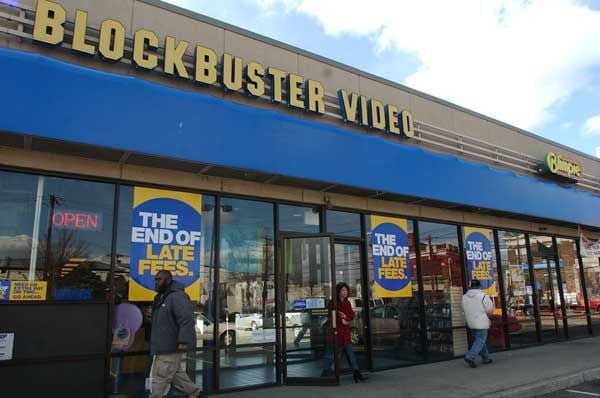
The Netflix vs. Blockbuster Video story is common knowledge. Blockbuster never came to grips with the fact that streaming services were going to be king of the mountain, pushing the business of renting videocassettes into the abyss. Eastman Kodak failed to understand that digital photography was the future – not film and photographic paper. Yahoo blew it when Google was offering everything for free; yet Yahoo thought it could charge for e-mail and file sharing. 

When we as entrepreneurs become comfortable and believe that we have the best idea, we’re probably headed for a fall. Because there’s absolutely no doubt that someone else is already working on the next best idea and may roll it out as early as tomorrow. Dr. Ichak Adizes, CEO of the Adizes Institute and one of the world’s leading management experts has developed a concept he calls the Corporate Lifecycle. He identifies a “Mature” organization as one that is about to experience “The Fall.” He goes on to say, “The leaders of The Fall companies are starting to feel content and somewhat complacent. This attitude has been developing for some time. The company is strong, but it is starting to lose flexibility. It is at the top of its lifecycle curve, but it has expended nearly all the “developmental momentum” it amassed during its growing stages. The rocket is slowing down and starting to change direction and head down the lifecycle curve. The organization suffers from an attitude that says, ‘If it ain’t broke, don’t fix it.’ The company is losing the spirit of creativity, innovation, and the desire to change that brought it to Prime (the ultimate phase of the corporate lifecycle). It has sown the seeds of mediocrity.”

There are many lessons to be learned here. As our organizations continue to grow and become rocket ships, it’s critical that we maintain our spirit of creativity, innovation, and the desire to change. Always. Every day. Forever.  

This blog is being written in tandem with my book, “An Entrepreneur’s Words to Live By,” available on Amazon.com in paperback and Kindle (My Book), as well as being available in all of the other major eBook formats.
An Iconic Entrepreneur

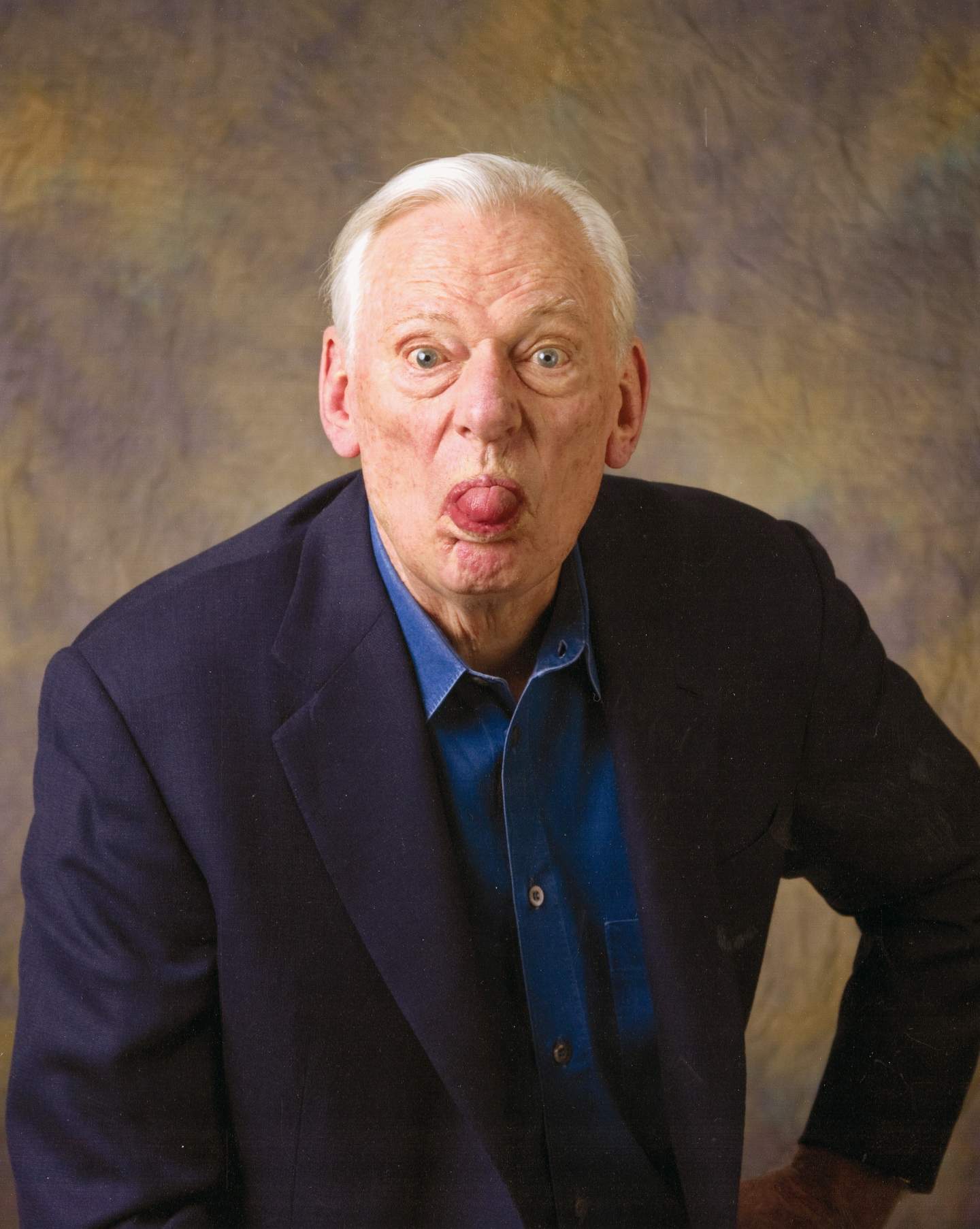
Right after he passed away several years ago, I wrote a blog as a tribute to Herb Kelleher. I think it’s worth sharing again.

On January 3, 2019, one of the legendary icons of entrepreneurship stepped on a rainbow. Herb Kelleher died at age 87 after living a storied life. Kelleher famously co-founded Southwest Airlines in the late 1960s. He was practicing law in San Antonio when a client brought him an idea to launch a new airline in 1967. Competing airlines did everything they could to prevent the new airline, originally incorporated as Air Southwest Company, from getting off the ground. Lawsuits were the only thing flying for several years, and at one point the board told Kelleher that the venture needed to be shut down. Kelleher offered to fight the lawsuits and pay the court costs out of his own pocket, at which point the board agreed to stay in business. It took four years and victories at both the Texas and the U.S. Supreme Courts – twice – before Southwest Airlines flew for the first time on June 18, 1971. His resilience and tenaciousness are credited for enabling Southwest to persevere and become the major airline that it is today.

Kelleher was general counsel and served on the board of directors, becoming chairman in 1978. In 1981 he became the full-time CEO and built the airline into a powerhouse because of his vision. At the time, the airline industry was highly regulated and when an airline started losing money, it would petition the Civil Aeronautics Board (CAB) to allow for a fare increase. As a result, it became exceedingly expensive for the public to fly – something that Kelleher saw as the opportunity of a lifetime. Initially Southwest was an intrastate carrier flying within Texas, making flying between Dallas, San Antonio, and Houston affordable through ultra-low fares. Over the years the airline started flying outside the state of Texas but was hamstrung by the Wright Amendment – legislation designed to help the legacy carriers and hurt Southwest. The law required that Southwest could not fly from another state directly into Dallas’ Love Field without first stopping in an immediately adjacent state including Arkansas, Louisiana, Oklahoma, and New Mexico. I can remember flying from Kansas City to Dallas and having to stop in Oklahoma City to change planes because of this requirement. Eventually the Wright Amendment was defeated in Congress and Southwest was able to operate like any other airline in the country.

Kelleher was a marketing genius and employed numerous outrageous stunts that endeared Southwest to its employees and to the public. He never took himself too seriously and is well known for his love of Wild Turkey bourbon and a daily dose of five packs of Marlboro cigarettes. When it came to compensation, Kelleher chose to take less in cash salary and more stock options. This approach helped considerably with the Southwest labor force (where the CEO was not receiving an exorbitant level of pay) and made him a billionaire two-and-a-half times over. He claims to have been a “flamboyant marketer but was fiscally conservative.” His shrewd financial prowess put Southwest on a path to profitability that is unmatched by any other airline – and few public companies in any industry. Since 1973, the company has been profitable every single year.

For decades, the culture at Southwest Airlines has been studied under a microscope by business schools and business leaders. It’s safe to say that Kelleher defined and sustained that culture for the 20 years he was the CEO and even after he retired in 2001 (he remained chairman of the board until 2008). He spent an enormous amount of time talking to employees and gaining understanding of what was working and what needed to be fixed. He loaded baggage onto planes every Thanksgiving Day; met technicians at 2:00 AM in a maintenance hangar; visited operators at reservation centers and spent time as a gate agent. According to Terry Maxon, in a 2015 article for the Dallas News, Kelleher dressed up like Elvis Presley, a woman, the Easter bunny, a leprechaun and a flight attendant to promote Southwest. Maxon went on to explain the corporate culture was that of a 1) scrappy underdog to the public; 2) fierce warrior to its competitors, and 3) warm, supportive, and protective atmosphere for the employees.

Herb Kelleher was a larger-than-life model for us as entrepreneurs to emulate. He had all the requisite entrepreneurial traits – vision, tenacity, resilience, marketing skills, financial acumen, a cultural leader, and a genuine love for people. Above all he had a passion for life. They broke the mold when Herb Kelleher left this planet. R.I.P.

This blog is being written in tandem with my book, “An Entrepreneur’s Words to Live By,” available on Amazon.com in paperback and Kindle (My Book), as well as being available in all of the other major eBook formats.

What I Learned from a Non-Entrepreneur

Over the course of our careers, we entrepreneurs spend a lot of time studying other successful entrepreneurs. We try and emulate their good qualities and avoid those traits that are less flattering. This is a smart strategy and can serve us well. However, there is also much we can learn from non-entrepreneurs as well. While this may sound somewhat paradoxical, stick with me here. There is much wisdom that can be gained in our entrepreneurial world by modeling non-entrepreneurs.

My father was a college professor – a scientist who loved research and teaching. As I think back over the course of my short life with him (he died when I was 34), I realize how much I learned from him that has helped me in my entrepreneurial endeavors. My sister and I were both adopted (and we came from different biological parents), so I was not the recipient of any of Dad’s genetics and who knows what was lurking in my biological gene pool. So, I was destined to “learned behaviors” at my father’s knee.

Dad was the most patient person I’ve ever known. As a young boy, I asked him a million questions, and never once did he ever seem exasperated about my constant grilling. Instead, he would smile and remain patient as he explained things for the 40th time. For several years, he performed extensive cancer research, injecting mice with tumor materials and then experimenting with different dosages of a formula that was designed to shrink the tumors. He even drafted my mom into returning to the lab after dinner to help him with this project. He was incredibly dedicated to iteration after iteration, always staying positive and all the while, juggling his other research and teaching assignments. My sense of urgency is extremely high. I certainly don’t have Dad’s level of patience. But by watching him, I’ve learned to be more patient over the long term – it’s patience over the short-term stuff that needs more work on my part.

Unflappable is another word for calm, and my dad was its walking definition. I’ll never forget his best demonstration of his unflappability. Way back in the day, people in my hometown would sometimes burn the grass in their yards in the springtime. The theory was that it helped kill the weeds and promoted a healthier stand of grass in a few weeks. On this particular day, the plan was to create a controlled burn to accomplish this objective. Dad asked Mom to wait for him to change his clothes and they would do this together. Unfortunately, Mom didn’t have Dad’s patience and decided to start the fire without him. A sudden gust of wind caught the flame and a cedar tree on the corner of the house ignited. If you’ve never seen a cedar tree catch fire, it’s a sight to behold. The Biblical image of the burning bush comes to mind. Mom was frantic and raced into the house looking for a fire extinguisher. She passed my dad in the basement but was babbling incoherently, and so he had no idea what was happening. Meanwhile, the next-door neighbor put out the fire with a garden hose; a fire truck showed up; a crowd had gathered, and Dad finally ambled out oblivious to what was happening. I’ll never forget how he reacted at that point. Rather than read my mother the riot act, he grinned and was amused at the commotion that had ensued. Now, some several decades later, I always remember how I never saw my dad as anything but calm. And I try and mirror his demeanor whenever possible.

Dad was an honest man. Every fiber of his being was honest. We were traveling as a family on a vacation and stopped for fuel. It was a full-service gas station – there was no such thing as self-serve gas in the 1950s and early 1960s. After the gas was pumped, there was the normal scramble of getting kids back in the car from a restroom break; taking the dog to relieve itself and making certain the trailer was still hitched properly. A few miles down the road Dad asked my mom, “Did you pay for the gas?” It was quickly apparent that we had driven off without paying, at which point Dad turned the car around and drove back to the service station and made the payment. Interestingly, the station attendant hadn’t even realized that we had left without paying. No one would have ever known that we hadn’t paid for the gas, but Dad’s integrity wouldn’t let this get in the way of doing the right thing.

My father – the non-entrepreneur who would have been 107 on September 7, 2023 – modeled many other traits that have been critical to me finding my way as an entrepreneur. His perseverance, his problem-solving abilities, his work ethic, his sense of humor and his passion were all on full display throughout the 72 years of his life. I am blessed to have been loved by him and learned valuable and enduring life lessons from him. Which non-entrepreneur in your life has made a similar difference for you?

This blog is being written in tandem with my book, “An Entrepreneur’s Words to Live By,” available on Amazon.com in paperback and Kindle (My Book), as well as being available in all of the other major eBook formats.

The Fearful Entrepreneur

What are you afraid of? I don’t mind confessing that I have issues with claustrophobia. This manifests when I get inside an MRI machine. Even an open CT scanner gives me the heebie jeebies. My heart pounds in my chest and my blood pressure goes through the roof. I don’t know what happened in the past for me to develop this fear, but it’s a cross I bear. I’ll never forget the time I heard about a poor soul who was exploring a cave and got stuck deep inside – upside down – and no matter how hard they tried, rescuers could not get him out. Within days of that story, I found myself in an MRI machine for 45 minutes. It took every ounce of my fortitude not to completely freak out.

I don’t know of a single entrepreneur who doesn’t experience a fear of something. There is the fear of public speaking, fear of heights, fear of flying, fear of being in social settings, fear of spiders (and snakes), fear of death and a wide assortment of other phobias that we may experience at a personal level. And then there’s what I consider to be “entrepreneurial fears.” Let’s examine a few of them and their antidotes.

  1. Competition“I’m afraid that the competition will overtake my company. I’m also fearful that someone is going to steal my business concept and crush us.” There’s a lot to unpack here. The forward-thinking entrepreneur will see competition as a healthy factor in his or her business life. If we have the right mindset, we can use competition to make us better. How? We do this by understanding exactly what our customers need and want and tooling our product or service accordingly. We know that the competition is probably studying the customer in a similar fashion – we must do it better!
  2. Ideas “My ideas are no good. I’m afraid that I’m just not creative enough to win in this business.” No one knows our ideas better than do we. And it’s not so much about having fresh new ideas as it is our ability to iterate on those we already have – or that someone else has. Look at Facebook for example. Many students of the Facebook phenomenon point out that the company has rarely had a new idea. They simply steal ideas from other developers or companies and execute them better.
  3. Failure “I’m afraid to fail and I’m afraid of what others will think of me if I fail.” This is one of the most common entrepreneurial fears that I’ve heard during my career. Unfortunately, this fear reflects a misunderstanding about what failure is. Too many entrepreneurs confuse “failure” with “defeat.” Failure is simply an unfinished experiment in the laboratory of life. It’s part of a process that we undertake to achieve success. Success is built on failure. Without some failure along the way, how do we really know that we have succeeded in optimal fashion?
  4. Money “I’m afraid that my money is going to run out before I succeed.” There are entrepreneurial stories abound where the founder was down to a triple digit bank balance and somehow pulled a rabbit out of a hat and turned things around. I also know that there are many more stories of businesses that folded when the cash spigot turned off. In the entrepreneurial world we learn how to improvise. We learn how to stretch a buck. We barter and trade. Better yet, we always have a Plan B in our hip pocket . . . just in case. Having a little bit of the “cash-strapped” fear is actually a healthy thing as long as we use it in a positive way to maintain focus on scaling our enterprise.
  5. Talent “I’m afraid a competitor is going to steal my best people; or my best people are going to walk across the street and start their own company.” Here’s the thing. If we provide the best value for our team, they’ll stick around, which is the same philosophy we adopt with our customers. Sure, employees want to be fairly compensated, but loyalty goes beyond pay and benefits. Developing a dynamic culture goes a long way toward talent retention. So does making people feel that they and the contribution they make are genuinely valued. In the companies with which I’m involved, we don’t lock up our team members with long-term contracts or non-compete agreements. Instead, it’s incumbent upon us as leaders to show our team every single day how they are in the right place with our firm.

Being afraid can either be paralyzing or motivating. Smart entrepreneurs overcome fear to propel themselves to great success.

This blog is being written in tandem with my book, “An Entrepreneur’s Words to Live By,” available on Amazon.com in paperback and Kindle (My Book), as well as being available in all of the other major eBook formats.
The Coin-Operated Entrepreneur

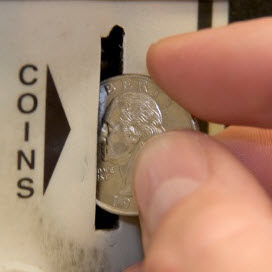
Jeff sells office equipment. He eats, sleeps, and breathes office equipment. His product line is significant – copy machines, postage meters, calculators, file cabinets, laser printers, desks, chairs – you name it, he sells it. Jeff has taken every sales training course known to mankind. He has read every book on selling techniques and attended a gazillion seminars. His lexicon includes words and phrases such as targets, sales funnel, objections, buying signals, gatekeeper, closed-end questions, open-end questions, deal flow, decision maker – you get the picture. And every day Jeff puts into practice what he has learned. But is he successful at what he does? Sure, he makes a decent living but while reaching for the stars, he’s lucky to make it to McDonald’s on the last exit out of town. While not exactly a Willy Loman, Jeff can be classified as a coin-operated salesperson.

The world is full of entrepreneurs who are really just coin-operated salespeople. They all want to be superstars and almost every single one of them will never be. They hew to the traditional basics and fundamentals of sales. The Jeffs of the world will absolutely try and close the deal seven times because that’s what the experts say must be done. They will sweat their quotas and worry that the last deal they did will be the last deal they’ll ever do. Their ultimate goal is to ring the cash register. Move that product in every increasing numbers. Numbers, numbers, numbers! What a shame. It doesn’t have to be this way. Jeff and his ilk could take a much easier road – one that would be far more productive for them and their customers.

First and foremost, real “sales” isn’t about selling. It’s about helping people buy. What’s the distinction you ask? It begins with the real reason for a sales encounter. If that reason is to put money in my pocket as a salesperson, then the motivation is all wrong out of the gate. Instead, we might want to see the sales encounter as an opportunity to help someone else. To do this we need to build a genuine relationship with the customer. We need to understand what the customer needs. Far too many salespeople are unwilling to invest the time and effort that is required to really understand their customers. If they can’t get a sale quickly, they are ready to drop the customer instantly and move on to the next one. After all, they rationalize this behavior because they have a family to feed.

We can hone our entrepreneurial approach to avoid being a coin-operated salesperson. As entrepreneurs, we’re always selling. But if we adopt the attitude that we’re going to help people buy, our mindset will be so different that we’ll avoid the coin-operated traps. For starters, we are customer-centric instead of product-centric. This means that we will do whatever it takes to make sure that we are being of service to our customers. We aren’t going to try and foist our products or services on them if they aren’t interested in buying from us. And yet we’ll continue to work to build a relationship with them over time – even if they aren’t buying today. Relationships are kings of the castle.

Building lasting relationships requires a lot more than what we learn from standard sales training. It taps into our intuition and forces us to “read” people in such a way as to understand them and the complexities of their lives. Building true relationships avoids manipulation. It avoids quid pro quo. We’ll do things for our customers because we are here to serve the relationship – regardless of whether they buy from us. And as I’ve said many times, this is not a Pollyanna-ish concept. I’ve lived my life this way and have countless examples of relationships that I’ve served that never bought anything from me. But great good has come into my life as result of these relationships whether from the referral of other customers, new team members or opportunities of which I would never have been aware. I know that it’s hard not to be a coin-operated salesperson when there’s a mortgage to pay, the kids need braces, and the car is on its last legs. But that’s even more reason to dump the “paint-by-numbers” approach and focus on relationship-building and being customer-centric.

We will have much more success when we help people buy what they need than when we try to sell to them. This requires the long-term process of building and serving relationships. But the payday in the end is far greater than the coin-operated method of selling.

This blog is being written in tandem with my book, “An Entrepreneur’s Words to Live By,” available on Amazon.com in paperback and Kindle (My Book), as well as being available in all of the other major eBook formats.

The World’s Winningest Entrepreneur

We entrepreneurs are winners at heart. Every day is like the Super Bowl or the World Series for us. It kills us when we lose on a last second shot. We train like we’re going into battle. We sweat and bleed and play through the hurt if there’s a chance to score a touchdown. We endure winning streaks that we are convinced will never end and losing streaks that create the lowest of lows. Whenever possible we want the deck to be stacked in our favor. Here are some ideas for doing exactly that.

  1. Admit mistakes. I’ve always said that mistakes are simply unfinished experiments in the laboratory of life. But this can be a trap for entrepreneurs. Why? Because false pride and arrogance can sometimes prevent us from quickly admitting our mistakes. We simply refuse to be wrong. And when it’s painfully obvious to others, we lose our credibility. The moral of the story is this. We admit our mistakes immediately, learn whatever there is to learn and move on. Doing so also garners more respect from our team when they see us take on this mantle of vulnerability.
  2. Always do the right thing. We always do the right thing – even when it’s to our disadvantage. This is all about integrity, which is doing the right thing when no one is looking or will ever notice. This is all about looking in the mirror at the end of each day and knowing that we don’t have any regrets about how we treated other people.
  3. Show appreciation for others. Here’s another trap for us entrepreneurs to avoid. There are times when we can tend to believe that we are all important and singlehandedly carry the day. In the process we may be seen by others as being arrogant. Very rarely is there a situation where the Lone Ranger effect is a reality. Instead, our success is almost always the result of a team effort. As such, it is incumbent upon us to express gratitude and appreciation for the many things that others have done to contribute to our success.
  4. Be humble. I’ve always said that the bigger we become in terms of success and personal profile, the humbler we should be. While showing appreciation for others is part of this, there is much more to it. We do our best to shine the spotlight on others. We are as gracious as we can possibly be. Rather than crashing around with our Type A personalities, we try and walk as softly as we can – almost to the point that others aren’t even aware we are there. We have enough self-confidence and self-awareness to know that we don’t have to be the center of attention to be highly successful.
  5. Always have a positive mindset. I have never encountered a situation where negativity produced a viable solution for anything. Positivity is contagious and is ours to model. When our team members see us remaining truly positive in the face of great adversity, they may be more inclined to do the same. Positive energy propels – negative energy repels. Who among us wants to be around a negative person? When we can adopt the belief that what seems like failure in the moment is an opportunity for something bigger and better, we are well down the road to continued success.
  6. Persevere. The entrepreneurial game is a tough one. We get knocked down a lot. There are plenty of times that nothing seems to be going our way. But we always have a choice. We can throw in the towel, or we can live by Winston Churchill’s famous quote, “Never give in, never give in, never, never, never, never – in nothing, great or small, large or petty – never give in to convictions of honor and good sense.” Endurance becomes our ability to outlast every challenge that comes our way.
  7. Laugh and have fun. We don’t always have to be so serious . . . and we don’t have to take ourselves seriously either. Entrepreneurship is not a life sentence to drudgery and misery. We should savor every breath we take as we walk this incredible planet. Laugh, laugh, and laugh some more. And when we can laugh at ourselves that’s even better. The more our entrepreneurial journey can be fun, the more likely we are to be living our passion.

When put it altogether – admitting mistakes, integrity, appreciation, gratitude, humility, positivity, perseverance, and laughter – we are clearly stacking the deck in our favor. This “extra edge” then sets us up for the success that is ours to claim.

This blog is being written in tandem with my book, “An Entrepreneur’s Words to Live By,” available on Amazon.com in paperback and Kindle (My Book), as well as being available in all of the other major eBook formats.

The 100,000-Foot Entrepreneur

Here’s the typical day for an entrepreneur I know. He arrives at the office and boots up his laptop. The first step is to check e-mail. There are a number to delete and a few that are read but left in the In-Box. Several responses are prepared and sent, and one or two responses are started but saved and remain unsent. Then it’s time to check out the news at one of several news websites. This may be followed by a stop on Facebook and perhaps a scroll through several tweets on Twitter. Then, someone pops into his office for a conversation that lasts ten minutes or so. He then dives into a perplexing HR situation that seems to have taken a life of its own. Then there may be some time spent reviewing the previous month’s financial statement; a quick trip to the restroom; time in the hallway chatting with several members of his team; fielding a phone call and returning others and preparing remarks that he is going to make at a lunch meeting. Before he knows it, half the morning is gone.

I’ll bet this sort of morning sounds familiar. I’ve had many just like it myself. But did you notice what’s missing? What high-yielding opportunity was identified by our entrepreneur for his urgent and immediate focus? I completely understand that we have a business to run on a day-to-day basis, and what was previously described accomplished just that. However, perhaps a closer look is needed to see how this entrepreneur could operate differently – and more effectively.

I used the term “high-yielding opportunity,” but exactly what does that mean? Here’s what I’ve learned over the years. I spent way too much time in the past with “busy” work. Sure, it needed to be done, but was I the best person to do it? Or maybe I should handle it, but it deserved to be less of a priority. While it may seem obvious, as entrepreneurs we should regularly ask the question, “What’s the best use of our time?” After all, the time we have is finite and we’ll never get it back when we squander it. So, our organization is best served when we start our day tackling the big initiatives – initiatives that may generate significant revenues or profits; initiatives that are highly strategic in nature; initiatives that will have a major positive impact for our team or our customers, and initiatives for which we are best suited to prosecute.

Here’s another way to look at this question. At what altitude are you flying? Are you cruising along at 500-feet and down in the weeds all the time? Maybe you’re at 10,000-feet or even 30,000-feet. But wouldn’t it be amazing to stay at 100,000 feet most of the time? For me, 100,000-feet means identifying and working with large-dollar investors that will help fund our apartment acquisition program. It means collaborating with our acquisitions and development teams to refine their respective strategies that are creating the scale we wish to achieve. It means maintaining a constant awareness of the macroeconomic aspects of our industry and determining how our strategies are designed to exploit opportunities in the marketplace. It also means offering innovative ideas to our management team that will move the needle to better serve our customers. And it means developing a holistic view of our culture and spotting potential problem areas that can be addressed before they turn into raging fires.

Each entrepreneur needs to decide what flying at 100,000-feet means for him or her. A great place to start is with the organization’s vision. I like to test what I’m doing against our vision. If I have ten things on my plate, I’m going to pick the top three that are going to make the most difference in contributing to reaching this vision. And it could be a while before items #9 and #10 are addressed at which point, I may eventually figure out who else might be in a better position to handle them in a timelier fashion. My goal is to work on high-yielding initiatives 60 – 75% of the time. I don’t always succeed – it’s easy to get drawn into major time-sucks that don’t add real value – but I’ve become more consistently aware of how I spend my time and now course-correct more easily.

We entrepreneurs can become adept at focusing on high-yielding initiatives if we understand our vision and choose what we do in terms of achieving that vision. Ultimately, understanding how to fly at 100,000 feet is one of the important aspects of leading our organizations.

This blog is being written in tandem with my book, “An Entrepreneur’s Words to Live By,” available on Amazon.com in paperback and Kindle (My Book), as well as being available in all of the other major eBook formats.

The “Opportunities to Fail” Entrepreneur

Some years back we developed an exercise that can be beneficial for every entrepreneur. We all want to manage risk – not take risk. I’ve said it before that taking risk is akin to rolling the dice. Managing risk is an intentional process to minimize or eliminate risk to the greatest extent possible. To this end we created a process called Opportunities to Fail.

Some might say that “Opportunities to Fail” sounds negative and ought to be called something else. But it is named this way on purpose. Why? Because we believe that whether we succeed, or fail is almost totally within our control. Thus, we have the opportunity to succeed or to fail – it’s up to us as entrepreneurs which we choose.

Let’s say that we are considering launching a new division, a new product or service, or embarking upon some other endeavor for which there are numerous risks. The Opportunities to Fail exercise begins with assembling all the stakeholders from the team and beginning a series of brainstorming sessions. The first such session is that of identifying all the different risks that are inherent surrounding whatever we are preparing to do. For this purpose, we developed a simple Excel spreadsheet on which we log the risks. To each, we assign a numerical value on a scale of one to 10 – both in terms of Probability and Impact. We arbitrarily determined that we would weigh Impact 25% higher. So, if a particular risk is assigned a 10 for Probability it means that there’s a high likelihood of this risk being realized. And if that same risk is also a 10 for Impact, it means that if the risk is realized, it could have a very detrimental effect. Thus, the Probability score is 10 and the Impact score is 12.5 (due to the 25% extra weighting) for a total score of 22.5.

Remember that during the first exercise we are only identifying the various risks and assigning Probability and Impact scores – we’re not solving anything yet. Usually, this inventory process takes a couple of hours and there may be as many as 25, 30 or even more risks. When someone says, “An asteroid could drop out of the sky and destroy us,” it’s probably time to wrap it up. We then re-order the risks in the spreadsheet from the highest numerical value to the lowest and circulate it to the stakeholders for a few days of contemplation. Everyone is empowered to offer additional risks during this time frame with their thoughts on scoring.

The second meeting of the group will take place within three or four days of the first and is devoted to risk mitigation. We look at the highest scoring risks and discuss ways that we will prevent the risk from coming to fruition. In addition, wherever possible we also add a contingency plan should somehow the risk “leaks through” our mitigation program. This way if a high-risk item bites us, it doesn’t kill us. We have found that there’s a natural breakpoint in the list. Perhaps there are 17 risks that rank at 14 or higher, and then there’s a gap with the next grouping of risks starting at a score of eight. We generally don’t worry too much about low-scoring risks as their Probability is usually low, and even if they happen, the Impact is minimal. Instead, we spend our time ensuring that we have robust mitigation and contingency plans for the most dangerous risks.

At the end of the second meeting, we ask this simple question – “Are we totally comfortable moving ahead with this endeavor?” If there is still fear and trepidation, then it means that we haven’t sufficiently mitigated one or more of the risks. Or it could mean that there is something nagging in the back of the minds of our team that still needs to be put on the table. It’s at this point that we engage in additional discussion and mitigate further until we have total buy-in; we modify our endeavor to the point that everyone is comfortable, or we determine that should not move forward at all. The ultimate objective is to either move ahead knowing that we aren’t going to fail, or not to move forward at all.

A few days later a third meeting of stakeholders occurs. Each member of the group reaffirms his or her belief that we have adequately mitigated the risks and should proceed. Then we brainstorm for ways to Exploit the Opportunity. This is a lot of fun. We spend our time looking for ways that we can enhance the opportunity and make it even bigger and better than we initially envisioned – without adding new risks. Utilizing the Opportunities to Fail exercise is a liberating experience. It puts us in a position to manage risk rather than take risk and allows us to choose success.

This blog is being written in tandem with my book, “An Entrepreneur’s Words to Live By,” available on Amazon.com in paperback and Kindle (My Book), as well as being available in all of the other major eBook formats.

The “On-It” Entrepreneur

Nathan is an entrepreneur who started a medical device company four years ago. The enterprise is really beginning to scale with 47 employees and top-line revenues that exceed $10 million. Its gross margin is steadily improving, and serious profitability is within sight. With all his success, however, Nathan is finding each day to be more and more frustrating. He is pushed and pulled in many directions and is constantly being hounded by members of his team to make a myriad of decisions. He worries about whether things are beginning to spin out of control, and the go-go nature of his organization is beginning to take its toll.

What Nathan is experiencing is very common for entrepreneurs with companies at this stage of growth. Often, Nathan finds himself enmeshed in the tiniest of details. While it may be satisfying for him to have such a thorough understanding of every aspect of his business, something in the back of his mind tells him that this practice is not sustainable. In the final diagnosis Nathan is spending too much time working IN his business and not enough working ON it.  

I know many entrepreneurs who suffer this condition. I’ve certainly been there myself. We reach a degree of early success in our business by paying close attention to detail. Our focus is laser-like. All of this becomes one of our primary points of differentiation. But maintaining this level of focus on tactics and granularity does not allow us to scale if we continue to be in the center of it all. By the time we are starting to scale on a regular and significant basis, our energies need to shift toward becoming more strategic – that is, working ON our business. Many entrepreneurs want to lead by example. They are proud of the fact that they can go onto the plant floor and operate a machine that produces a thingamajig. In Nathan’s case, he considers it a badge of honor that he has the uncanny ability to design a state-of-the-art medical device from start-to-finish.

Here’s the problem with Nathan’s approach. He may be sending a signal to his team that they are inadequate as product designers even though this may not be true. The team may also develop a tendency to sit back and wait for Nathan to “make his move.” They are thinking, “Why bother, Nathan is going to jump in any way!” Further, there are other pressing issues that Nathan may be leaving unattended – or he may be intentionally avoiding them altogether. Eventually the lack of strategic direction will trap the company in a perpetual state of go-go where everyone feels as though they are on an endless hamster wheel and not getting anywhere.

So, what exactly does work ON the business mean? For Nathan, he needs to create a clear vision for his enterprise and communicate it in an understandable fashion to all 47 of his team members. He needs to work with his senior leaders to establish Key Performance Indicators (KPIs) that he monitors collaboratively with them. Nathan needs to have a deep understanding of his industry, its trends and how he should tweak and refine his operation to take advantage of this knowledge. He will also work with his senior team to develop specific strategies that are designed to deliver on his multi-year vision. Perhaps he’ll call on different customers periodically to learn more about what they think of his company and the products it provides. Nathan should “fly” between 50,000 and 100,000 feet most of the time. But there may be special situations where he swoops down to 500 feet to verify something he’s been told or to share domain expertise for training purposes.

I’ve known (and mentored) entrepreneurs who simply don’t want to move to a model of spending 75% or more of their time working ON their business. Working IN their business is where their heart is and where they are most comfortable. Not only that, but they are also really, really good at what they do. My advice has been to “fire” themselves from their CEO roles and hire someone to handle this function. When they finally get past their ego, they realize that they still own the business and make the final decisions. In Nathan’s case, if he’s truly a superstar medical device designer – and if this is where his passion lies – he’ll be happier (and richer) by hiring someone to work ON his business while he works IN it.

Spending most of our time working ON our business will yield positive results. But if doing so isn’t appealing, we should look in the mirror and say, “You’re fired!” Then we can hire a professional to handle this important function and devote our time and energy to what we do best.

This blog is being written in tandem with my book, “An Entrepreneur’s Words to Live By,” available on Amazon.com in paperback and Kindle (My Book), as well as being available in all of the other major eBook formats.