
Unknown's avatar

About anentrepreneurswords

R. Lee Harris grew up in Manhattan, Kansas and has lived in the Kansas City area since 1977. A 1975 graduate of Kansas State University, Harris began his career with Cohen-Esrey, LLC as an apartment manager two weeks after he graduated. Now president and CEO, he is involved in apartment management, development and investment; construction and tax credit syndication on a nationwide scale. Over the course of his career Harris has overseen the management of more than 27 million square feet of office building, shopping center and industrial space and nearly 60,000 multi-family units. He has started dozens of business enterprises over the past 40+ years. In 1991, Harris wrote a book entitled, The Customer Is King! published by Quality Press of Milwaukee. In 2012 he authored the book, An Entrepreneur's Words to Live By. He has mentored a number of business people over the years and has been a long-time participant in the Helzberg Entrepreneurial Mentoring Program. He and his wife Barb have two grown daughters and one grandson. They are active in their church, community and university.

Fortune Telling

How would you like to be clairvoyant? Think about how amazing it would be to see into the future. Maybe you could even take your act to Vegas or have a television program of your own. Well, I’m here to tell you that you can develop a strong sense of clairvoyance. And as an entrepreneur it will serve you well in your business endeavors and in your life.

What I’m really talking about is the ability to think several steps ahead – I call it logical sequencing. I have a theory that our thoughts and actions have a natural rhythm and follow a pattern of some kind. Understanding this rhythm or pattern enables us to predict what will follow in each step of the process. Assume the following simplistic example. A mother sees the cookie jar on a shelf in the kitchen and she also sees her small son looking at the cookie jar. She immediately concludes that her son is going to want a cookie. Based upon her past experience with the lad, this is a reasonable conclusion and he does not disappoint. He looks around and notices his mother is not in the room. He also knows that he just asked for a cookie a few minutes ago and was told he could not have one. The determined child is enterprising and drags a chair to the counter but realizes that he still can’t reach the shelf. Then he sees a large ball on floor and puts it on the chair presumably to provide an added boost to the cookie jar. You know the rest of the story.

The mother obviously knew that this scenario was not going to end well. We’ll also assume that she intervened to avoid a trip to the emergency room because she could predict the outcome with great certainty. Yes, this is an overly simplistic scenario, but it demonstrates the point I’m making. Now, let’s translate that into a more complex business situation.

Assume that we own a small manufacturing operation with 20 employees. We’ve had a problem with shrinkage – the copper that we use in our manufacturing process is disappearing. Our general manager has decided to crack down and conduct random frisks of employees at the end of each shift. He requires each employee to sign a consent form agreeing to this procedure. Will this solve the problem? Maybe. Could it cause other problems? Most likely. A logical sequencing approach might have allowed for a different solution that would not cause problems.

In our hypothetical example the general manager was simply reacting out of frustration to a serious issue. Instead, he would have been better served to create a decision tree. He would have realized that if he took Step A, he might expect Result A to ensue, which could then cascade to Result B and Result C. Result A might have been all of the employees feeling that they are being unfairly accused of being dishonest. Result B might have been a growing resentment by the employees of the GM, and Result C might have been five of the employees quitting because they don’t want to work for a company that doesn’t trust them.

By using a logical sequencing process and creating a decision tree, we can anticipate the politics of a situation; how people are likely to feel about certain actions, and what the impact of our decisions might be. As entrepreneurs we may make such decisions in a reactive or expeditious manner without fully exploring how the various ramifications may unfold. As you read this you may be thinking, “Master of the Obvious!” But you would be amazed at how many decisions are made in society today where little or no thought is given to the ultimate outcome.

When we adopt a calm and measured approach to making decisions and taking action, we have a greater chance to succeed. Using logical sequencing to predict outcomes can greatly support this process.

This blog is being written in tandem with my book, “An Entrepreneur’s Words to Live By,” available on Amazon.com in paperback and Kindle (My Book), as well as being available in all of the other major eBook formats.


fortuneteller

WUONPS

Have you ever found yourself in what I call a “wired-up overwhelmed near-panic spiral – WUONPS?” You wake up at 3:30 AM with this gnawing feeling – you’re not worried about anything in particular, but that feeling is there. You can’t go back to sleep so you get up and make some coffee. You surf the internet while drinking three cups of coffee. Then you hit the drive-through at Starbucks on the way to work and get a Triple Frappasomething with an extra double shot of cappuccino. It’s been consumed before you reach the first stoplight. By the time you arrive at the office the feeling is welling up. With few more cups of coffee, a glance at 75 new e-mails and a minor crisis dropped in your lap, you’ve now reached the pinnacle of WUONPS. Oh, and it’s only 8:11 AM. What to do?

The first step is to recognize the state that we’re in. The quicker we can do this the faster we can move toward resolution. When we push on without stepping back our feelings cascade and we end up in a spiral. In aviation parlance, we’re now in full-fledged crash and burn mode. When we recognize that we’re headed into WUONPS we need to stop what we’re doing IMMEDIATELY. Then we need to go and find a quiet place for decompression.

Once in our quiet place it’s important to sit with our feet flat on the floor and hands in our lap with our eyes closed. We take a deep breath and let it out slowly. We do it again and again. Focusing on our breathing is a sure-fire method of calming ourselves. Deep breathing delivers increased amounts of oxygen to the brain. Livestrong.com says this: “Breathing slowly and mindfully activates the hypothalamus, connected to the pituitary gland in the brain, to send out neurohormones and trigger a relaxation response in the body. The hypothalamus links the nervous system to the endocrine system, which secretes the hormones that regulate all activities throughout the body.” Scientific explanation or not, this process definitely works.

Once we have begun to “unwire” through deep breathing, we might undertake the ROY G BIV exercise. ROY G BIV is an acronym for the seven colors of the rainbow – red, orange, yellow, green, blue, indigo and violet. In our mind’s eye we see each of the colors of the rainbow traveling from the center of the earth through the bottom of our feet, up our leg, across our midsection, down the other leg and back to the center of the earth. We do this slowly and intentionally with each color of the rainbow. The purpose of ROY G BIV is to ground ourselves. I know that when I’ve been in a state of WUONPS, I have a weird free-floating out-of-control feeling. ROY G BIV eliminates this feeling.

After spending ten or fifteen minutes deep breathing and grounding ourselves we are now ready to move back into the day. But first we should review our goals and objectives for the day. We spend a few moments with our “To Do” list and make sure we are clear on what we intend to accomplish for the rest of the day. Then we move forward with a new purpose and a new attitude. And . . . we avoid any additional caffeine for the rest of the day. We can also eliminate WUONPS altogether if we exercise regularly (daily for me); limit our consumption of caffeine, and maintain a daily practice of meditation or quiet time.

Recognizing WUONPS is critical. Breaking the spiral with deep breathing and ROY G BIV is paramount. Recommitting to the day with a clear understanding of what we intend to accomplish puts us back on the calm and productive path we desire.

This blog is being written in tandem with my book, “An Entrepreneur’s Words to Live By,” available on Amazon.com in paperback and Kindle (My Book), as well as being available in all of the other major eBook formats.

Cheetah_3

Worldly Serious Lessons

Indulge me with this blog posting. The 2014 World Series has just concluded and was one of the most exciting I’ve ever seen. It truly kept us on the edge of our seats until the last out in the bottom of the ninth inning with a Kansas City runner on third base who could have tied the game. Even though my Kansas City Royals did not prevail there are some excellent baseball metaphors that translate into some wonderful entrepreneurial lessons.

The MVP of the World Series was the Giants ace pitcher, Madison Bumgarner. Even though I’m a Royals fan I marveled at this cool, calm and collected 25-year old phenom. He pitched in three games during the Series and limited the Royals to nine hits, one run and one walk in 21 innings. Folks, this is called differentiation. There is no doubt that Bumgarner was the difference maker in the World Series for San Francisco. As entrepreneurs we increase our odds for success the more significantly we can differentiate our products or services.

The 2014 Kansas City Royals are a young team. There are no superstars in this bunch. The Royals didn’t even win their division, making the playoffs instead as a Wild Card entrant. They beat the Oakland Athletics in the Wild Card game; then swept the Los Angeles Angels and Baltimore Orioles to win the American League pennant. A lack of superstars also meant a lack of big egos and prima donnas. The result was a group of young men bonding together as a real team. This was most evident when one of the top hitters took it upon himself to lay down a sacrifice bunt to advance a runner when the Giants least expected it, rather than trying to hit it out of the park. Entrepreneurs succeed more often when we function in a true team fashion rather than as lone wolves.

While I’m gushing about my Royals, let me add another dimension about this team. It was evident that these guys were having fun. Game after game we saw scenes of players laughing, joking and genuinely enjoying themselves. Some of the players Tweeted where they were going to party after the games and bought thousands of dollars of drinks for their fans. What is the point of being an entrepreneur if we can’t have fun doing what we do? I’ve talked to a number of entrepreneurs who appear to be successful but are miserable. This is a dangerous “crash-and-burn” formula.

Finally, it was fascinating to observe the focus displayed by Giants and Royals players alike. When the focus was lost there were strikeouts, errors and walks. When the focus was maintained it was a thing of beauty. There were spectacular catches all over the field. Tough pitches were turned into base hits. Base running was exquisite. In the entrepreneurial world we know the importance of focus. If we “scatter our fire” we strike out more often than not. But when we focus, we create a special energy that serves to deliver the results we want.

Baseball is a sport. Entrepreneurs play for keeps. At the intersection of the two is differentiation, functioning as a true team, having fun and maintaining focus. Play ball!

This blog is being written in tandem with my book, “An Entrepreneur’s Words to Live By,” available on Amazon.com in paperback and Kindle (My Book), as well as being available in all of the other major eBook formats.

baseball

The Anti-Bulldozer

Many of us entrepreneurs have a tendency to be a bit aggressive at times. The appropriate analogy might be something about a bull in a china shop. Speaking for myself I know there have been times when I pushed through a situation and likely ran roughshod over others who were involved. It’s not that we do so intentionally, but we are naturally assertive and want to get things done . . . right now!

Much earlier in my career I was totally oblivious to how others might be reacting to me. I had not yet learned how to “read” people. I thought I was doing things the right way, but apparently was stepping on a lot of toes in the process. When this was pointed out to me I became a bit defensive and thought, “It’s not my problem if others have such thin skins.” Perhaps this was true in a literal sense, but how others feel and perceive us becomes reality – regardless of what we intend. What I didn’t realize is that being the bulldozer caused my colleagues and others to resent me and not want to work with me.

After many years it became apparent that others weren’t going to change – I needed to instead. Fortunately this didn’t require me to compromise my principles. But I realized that not only did I need to understand how others were responding to me, but also that I needed to adjust my approach accordingly. I began to pay close attention to “reading” people and modifying my approach away from a “one-size fits-all.”

Reading people is multi-faceted. It requires us to listen not only to what others say but how they say it. If I am laying out a strategy and asking for feedback, I need to pay attention to voice inflection, pitch, cadence and tone. I need to watch facial features. Does the other person’s jaw clench; is there an eye twitch; does the color change in his or her face, and do the nostrils flair? I must observe other body language tells. Is there a stiffening or turning of the body; do the arms fold or gesture in some way; do the fists clench; does the head raise or drop; is eye contact lost; what do I see in the eyes, and does the person literally shrink in position? How exactly does the person verbally respond? Is there hesitation before speaking? What words are selected by the person in his or her response?

People reads are only part of the sensitivity process. How do I conduct myself when receiving feedback? Is my body language open or closed? Do I keep a smile on my face or do I send signals that I don’t really want to hear what is being said? Am I truly listening or just giving the appearance of doing so? I have found that repeating back what the other person says helps send the message that I am listening. Then it’s important for me to acknowledge what is being said in a positive manner. For example, “I hear you when you tell me that you aren’t in favor of reaching out to the client in the manner I suggested and understand why you feel the way you do. Let’s come up with a different way of handling this.” In the old days I would simply tell the person to “just do it.” Today, it’s become much more important for me to be flexible and help others find different ways to reach the same end goal than just the way I want to do it.

Sensitivity is not a weakness. Instead it is an effective leadership trait. Reading people; listening to them; understanding what they are saying, and making the necessary adjustments engenders the trust and confidence of our team.

This blog is being written in tandem with my book, “An Entrepreneur’s Words to Live By,” available on Amazon.com in paperback and Kindle (My Book), as well as being available in all of the other major eBook formats.

bulldozer

Dealer’s Choice

Here’s the scenario. A situation has arisen in your business that is unexpected and unfavorable. Your only file server has mysteriously crashed and your operation is grinding to a halt. Now what? Do you deal with the situation or do you manage it? This may sound like the splitting of hairs but the difference can be as wide as the Grand Canyon.

Dealing with something connotes a mindset of reaction. Managing a situation involves a proactive mindset. If we deal with the file server crash we attempt to take steps to resolve the issue. But we don’t necessarily do anything more. Managing the file server crash incorporates steps toward resolution but also includes contingency planning in case those steps aren’t successful as well as an in-depth analysis to understand why the problem arose in the first place. And, the process of managing the situation requires making changes to prevent the problem from occurring again.

Then there’s the “string-along” situation. Recently we lost one leg of a 220 power supply in a building on one of our apartment properties. This caused a partial loss of power for the units that were affected. The repairs involved an electrical parts supplier that had to send us a new switch; an electrical contractor to install the switch; the utility company that had to turn the power off and on to allow the contractor to install the switch, and the city which required approval of the switch before it could be installed. The situation became a complete comedy-of-errors. The electrical supplier sent the wrong switch which delayed repairs. The city was in no hurry to grant approval once the right switch was received. The utility deemed the incident a non-emergency and initially scheduled the shut-down and turn-on for three weeks into the future. Fortunately we raised enough cane to get the utility to accelerate its schedule. Through all of this we heard several “next day” promises from various parties involved. And of course the “next day” turned into the “day after” and the “day after that” – you get the picture.

This is a perfect example of the classic “string-along.” We dealt with the situation rather than managed it and our residents (customers) were inconvenienced for a number of days. Had we chosen to manage properly, someone on our team would have stepped up and “owned” the problem and taken charge of getting it resolved from start to finish. Instead our team members bought into the “string-along” and became spectators in the process. Managing this situation would have involved the team member “owning” the problem preparing a contingency plan that would interrupt the “string-along” and implement different measures to ensure the comfort of our residents.

A mindset of managing tough situations can result in a positive experience for all involved when a member of a team steps up and takes ownership of the situation. Choosing to assertively resolve issues rather than simply dealing what is thrown at us generally produces the desired outcome.

This blog is being written in tandem with my book, “An Entrepreneur’s Words to Live By,” available on Amazon.com in paperback and Kindle (My Book), as well as being available in all of the other major eBook formats.
Card Dealer

Master’s Degree

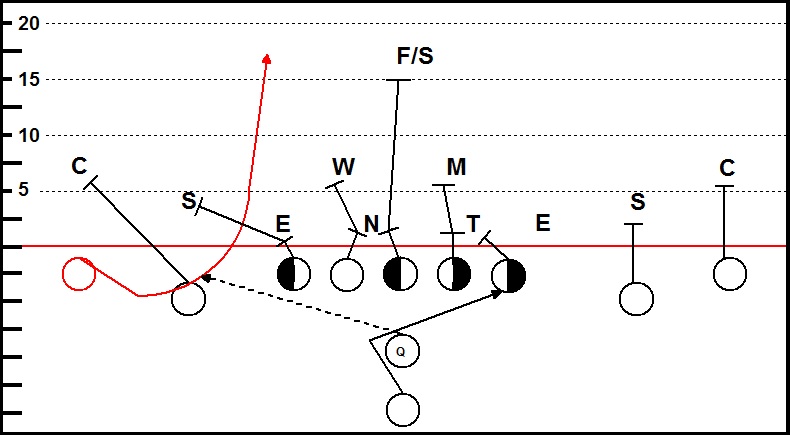
What would you think of an entrepreneur who says that he or she will give his strategy to his/her competition? The sporting metaphor would be the equivalent of a football coach giving away his playbook. Is this total insanity? Why would we lay out our game plan for competitors that are trying to beat our brains out? I’m not advocating that we do this but I do believe that the hype over being secretive about business strategies may be overblown. Why? Because I don’t believe that the strategy itself is as important as the execution of that strategy.

It’s completely true that most entrepreneurs need to spend more time working on their business than in their business. Translation – entrepreneurs need to be more strategic and less tactical, which is not an easy task in small organizations. But what trumps everything is the effective and successful implementation of a strategy. If we lay out our strategy for a competitor, that doesn’t necessarily mean that our competitor will beat us with it. Our strategy was developed with extensive input from a number of stakeholders in our company. It evolved through our culture and is nuanced by a wide range of variables that are specific to our enterprise. It’s highly unlikely that our competitor can implement our strategy as well as we can

So, if it’s principally about execution, how does an entrepreneur ensure that this process achieves success? Execution is a mixture of tangible and intangible factors. First, the team must have confidence in its abilities; in the strategy; in the data that is foundational to the strategy, and in the resources that must be brought to bear to implement the strategy. Hand-in-hand with this confidence is the trust factor. Team members must totally trust each other to fulfill their roles and be accountable accordingly. Without this trust, the execution of a strategy is impossible.

Sound strategies are often developed with the experience of members of the implementing team in mind. A strategy to manufacture and sell a particular type of product assumes that the engineers designing it and the equipment operators on the line have the minimum level of experience needed to turn out a flawless finished product.  In addition to experience there’s an assumption that team members have certain skills that will be married with experience to deliver the product at a cost and level of quality that results in happy customers and a financial profit to the company.

Strategy execution involves a myriad of mechanics. Translation – there’s a well-thought comprehensive process that enables a step-by-step methodology from start to finish. This process encompasses everything from market research, engineering and design, procurement of raw materials (still assuming a manufactured product for illustration purposes), production, quality control, marketing, sales, shipping, customer service, billing and collections . . . the list goes on. The point here is that the mechanics of implementation are vital to successful strategy execution.

Finally, the team must have a winning mindset. This goes beyond confidence. It’s about truly believing that without question the strategy will win. It’s about visualizing success. True believer team members celebrate their impending success on a daily basis. The culture is upbeat and positive. It is focused on honoring the team AND the customer. The winning mindset transcends confidence and envisions the strategy as already implemented in perfect order.

The ability to execute a strategy defines an entrepreneur and his or her organization. Some can and many cannot. Entrepreneurs who can consistently blend all of the right ingredients are masters of implementation.

This blog is being written in tandem with my book, “An Entrepreneur’s Words to Live By,” available on Amazon.com in paperback and Kindle (My Book), as well as being available in all of the other major eBook formats.

Football Playbook

Oh Those Surly Bonds

I’m proud to say that I’m an entrepreneur in a state of denial. And I suggest that you too should be in a similar state of denial. Why you ask, would an entrepreneur want to be in denial? After all, we’re eternal optimists and have a never-say-die approach to everything . . . right? Here’s what I’m in denial about.

I deny fear. I realize that fear freezes me into a state of inertia, or causes me to make irrational decisions. Fear saps my energy and causes me to ride an emotional roller-coaster. Fear robs me of my creativity and my initiative. I will not be afraid.

I deny all thoughts of self-doubt. Self-doubt is my mortal enemy. It causes me to question my instincts and clouds my intuition. I become tentative and worry about making mistakes. Self-doubt destroys my confidence and causes me to question my abilities. I will not allow self-doubt to manifest in my life.

I deny any belief that I’m a victim. There may be times when I feel that I’ve been wronged or believe someone has done something that prevents my success. I realize that when I feel victimized I’m giving away my power to someone else. Playing the victim fills me with negative energy. I will not be a victim to anyone for anything.

I deny all thoughts of lack and limitation. I stop myself when I start to utter phrases such as, “I can’t because,” “I’m not able,” and “if only.” My entrepreneurial spirit is dulled when I think that I am limited in some way. I realize that the only limitations I have are those that I place upon myself. I will not allow thoughts of lack and limitation to creep into my consciousness.

Being in denial about fear, self-doubt, beliefs of victimization, and thoughts of lack and limitation is only the first of two critical steps. It’s not enough to simply deny these negative factors. We must replace them with positive action-oriented affirmations. I deny fear and embrace faith. I deny self-doubt and have total confidence in who I am and what I’m doing. I deny any belief that I’m a victim and take full responsibility for my actions. I deny all thoughts of lack and limitation and know that my opportunities have no bounds.

Denying that which will inhibit me and affirming the positive direction I will take, allows me to release the surly bonds that hold me. And then I can soar to new heights.

This blog is being written in tandem with my book, “An Entrepreneur’s Words to Live By,” available on Amazon.com in paperback and Kindle (My Book), as well as being available in all of the other major eBook formats.
space-shuttle-atlantis

Charm School

I’ve always believed that the more successful we are the more humble we should be. Entrepreneurs have an opportunity to be fabulously successful in many different ways. And sometimes we may be viewed in a negative light by others who envy our success. That’s why it’s important that we not project the least bit of arrogance or haughtiness. One of the best ways to combat this perception is to go out of our way to practice the little courtesies in life.

As I’ve gotten older I’ve come to realize what a positive difference such courtesies can make in the lives of others. It’s one thing to be interacting personally with someone else and say please and thank you. But how well do we use these words in our e-mail conversations? Here’s a suggestion. Look through the recent “Sent Items” in your e-mail account and intentionally look for instances where you could have said “please and thank you.” Did you? Courteously asking someone to provide information or assistance in some way feels better to others than being “commanded” to do so.

My dad taught me to always hold doors open for others. As a kid, I became quite a doorman. This has certainly carried over into my adult life and it feels good to be polite in this manner. This practice doesn’t need to be limited to building doors but also elevator doors. Rather than be the first person on or off the elevator, I prefer to hold the door to make sure others get on or off ahead of me. In this day and age does this really matter? Perhaps it doesn’t make a difference to most people, but for me it’s the right thing to do. My father always had a good sense about the things he taught me and I think his teachings are ageless.

Sometimes we can be so busy and single-minded that we may not even notice others around us and fail to offer them a friendly greeting. Trust me when I say that while we may not notice them, others certainly notice us when we don’t acknowledge them. In my office or wherever I go, I strive to look others in the eye and say hello. A firm handshake also provides a sense of connection and can help to put the recipient at ease.

In the old days there was a saying about Southern charm. And there is something charming about offering compliments to others. I have found that service providers in all walks of life are often overlooked in this regard. We tend to take their service for granted. I’ve made a concerted effort over the past several years of speaking to service providers and when warranted, complimenting them on their service. If a waitperson in a restaurant has served me well, I’ll say something like, “very nice work this evening.” This statement is made at the same time that I look them in the eye, smile and shake their hand. If the service was really great, I find their supervisor and reiterate the compliment to that person. Recently I was in a restaurant where the food was exquisite. I asked my server to send out the chef if he was not too busy. I then proceeded to tell him what a fabulous meal he had prepared – I thought he was going to cry!

Here are a few other little tidbits. Drop a short handwritten thank-you note to someone with whom you’ve met or with whom you’ve dined – especially if you did so in their home or they paid the bill in a restaurant. An e-mail conveying the same message only gets us halfway there. When invited to someone’s home for dinner, don’t forget to take flowers, a bottle of wine, fine hand soap, or some other token of appreciation. I wish every high school senior had to take a Miss Manners class. The world would certainly be a much more polite and courteous place to live.

The last thing in the world we want is to step on someone’s feelings and have them think we’re an arrogant “high and mighty” so-and-so. By putting the needs of others first and being gracious we will have nothing to fear in this regard.

This blog is being written in tandem with my book, “An Entrepreneur’s Words to Live By,” available on Amazon.com in paperback and Kindle (My Book), as well as being available in all of the other major eBook formats.

manners2

Grrrr!

I know someone who always seems to have the worst luck with personal encounters. This person relates harrowing tales of being cut off by other drivers and nearly having an accident on a daily basis. This person is regularly aggrieved by others – slights of all types and magnitude. This person is opinionated and not the least bit shy about sharing views on a wide range of subjects, often causing discomfort for others. In short, this person lives in a constant state of conflict.

Conflict can be a healthy thing if it’s properly managed. But I sure don’t want to live there. Some people dread and avoid conflict as much as others seem to constantly be embroiled in it. As entrepreneurs it’s next to impossible to completely avoid situations where conflict may arise. And trying to do so may damage our relationships if we fail to be genuine and authentic for the sake of what we perceive as “keeping the peace.” So just how should we manage conflict in a healthy manner? I have learned through experience that there are four elements to managing conflict.

First, we must never play the victim. Conflict begins when we give someone else our power by letting our feelings be hurt or believe that we are being taken advantage of in some way. These feelings bubble up and our resentment builds as we buy into this story that we are telling ourselves. It’s critical that we break this cycle before it starts thereby allowing us to avoid wallowing in and exaggerating the fiction that we have created. Of course there may be instances where someone really is trying to hurt us and take advantage of us. But if we don’t give our power away the perpetrator won’t be able to escalate the conflict.

Second, maintaining a positive attitude is critical to successfully managing conflict. After we eliminate any stray feelings of victimization we need to shift into a 100% positive frame of mind as quickly as possible. Our positive energy is vital to creating the end result that we desire. Think about it. Are we more likely to end up in a good place with negative energy or positive energy? The choice is pretty simple.

Third, we stay in “fact mode.” Let’s assume for a moment that the conflict involves an employee who has accused you of showing favoritism to another employee. The accuser is so upset that he has pleaded his case to a number of his co-workers, causing a minor uproar in the organization. You know this guy is flat wrong but you resist the temptation to feel like a victim and take offense that your integrity and leadership is being impugned. You choose to stay positive and move directly into the fact finding mode. You have a calm and non-accusatory conversation with the angry employee to find out specifically why he believes you are showing favoritism. Perhaps the facts lead you to the realization that this person misunderstood a key piece of information that led to his misperception. You are easily able to share the real facts and quickly defuse the situation.

Finally, we must know when to compromise when appropriate. It’s easy when we know we’re right to become entrenched in our position and dig in our heels. And it might be just as easy to say something like, “I’m sorry for the misunderstanding,” even if we truly aren’t at fault. I do not advocate compromising our core values or our principles. But sometimes it’s better to offer the olive branch when neither is at stake. The conflict may quickly de-escalate at that point and our leadership may be admired and respected.

Managing conflict can be a positive opportunity to build relationships. Entrepreneurs should embrace this opportunity by not playing the victim card; staying positive; pursuing the facts and compromising when it makes sense to do so.

This blog is being written in tandem with my book, “An Entrepreneur’s Words to Live By,” available on Amazon.com in paperback and Kindle (My Book), as well as being available in all of the other major eBook formats.

boxing-babies

Beam Me Up Scotty

Did you know that Michael Jordan was cut by his high school basketball team because it was determined that he lacked skill? Babe Ruth struck out 1,330 times in his stellar career. Winston Churchill flunked sixth grade. Elvis Presley was once told that his career was going nowhere and he should drive a truck. Authors Stephen King, John Grisham, Theodore Seuss Giesel and cartoonist Charles Schultz were all rejected more than 85 times before being published.

What do all of these famous people have in common? They all are or were extremely self-confident. Successful entrepreneurs need a healthy dose of self-confidence. Without it the chances to achieve our goals and objectives drop precipitously. We also must guard against misunderstanding confidence for arrogance. Arrogance is actually overcompensation for a lack of confidence.

So how do we go about building self-confidence? Allow me to share my experience with you. Early in my career I struggled in this department. I graduated from college at 21 years of age and immediately began working for the company I’ve been with ever since. I thought I was pretty confident when I was in school but in the real world I discovered a lot of self-doubt. It didn’t help that I was told that I was just a punk kid who didn’t know anything. This statement was reinforced for a number of years – and I let it get inside my head. Eventually I came to realize that with a few years of experience under my belt and some creative successes along the way, I really did know what I was doing.

Here are some ideas. Repetition is extremely important. Identify one or more things that you feel less confident about and do them over and over again. Perhaps it’s public speaking or maybe it’s interacting with lots of other people in a large group setting. Set standards for what you believe to be “good” or “great.” Try and consistently perform to those standards and when you do, congratulate yourself. Own your mistakes and setbacks. Resist the temptation to blame others or play the victim. When we focus on how we can improve and do things differently the next time, we build confidence for our next encounter in a similar situation. When we celebrate the success of others – including our competitors – it’s a demonstration of confidence. When we criticize others – including our competitors – it’s not. When we’re not afraid to be wrong, that’s evidence of self-confidence. Being defensive and making excuses is not. Being positive and humble are definitely traits of self-confident people.

Self-confidence can ebb and flow. Our goal is to be more consistent with our confidence. But just because we have moments of doubt or fear, doesn’t mean we’re losing our mojo. When we can take a deep breath and understand from where the doubt or fear is coming, that’s a way we can regain our confidence.

Self-confidence enables us to eliminate thoughts of lack and limitation and know the truth about ourselves. In so doing, we can shoot for the stars and realize our true potential. Beam me up Scotty.

This blog is being written in tandem with my book, “An Entrepreneur’s Words to Live By,” available on Amazon.com in paperback and Kindle (My Book), as well as being available in all of the other major eBook formats.

Scotty