Unknown's avatar

About anentrepreneurswords

R. Lee Harris grew up in Manhattan, Kansas and has lived in the Kansas City area since 1977. A 1975 graduate of Kansas State University, Harris began his career with Cohen-Esrey, LLC as an apartment manager two weeks after he graduated. Now president and CEO, he is involved in apartment management, development and investment; construction and tax credit syndication on a nationwide scale. Over the course of his career Harris has overseen the management of more than 27 million square feet of office building, shopping center and industrial space and nearly 60,000 multi-family units. He has started dozens of business enterprises over the past 40+ years. In 1991, Harris wrote a book entitled, The Customer Is King! published by Quality Press of Milwaukee. In 2012 he authored the book, An Entrepreneur's Words to Live By. He has mentored a number of business people over the years and has been a long-time participant in the Helzberg Entrepreneurial Mentoring Program. He and his wife Barb have two grown daughters and one grandson. They are active in their church, community and university.

Tick-Tock

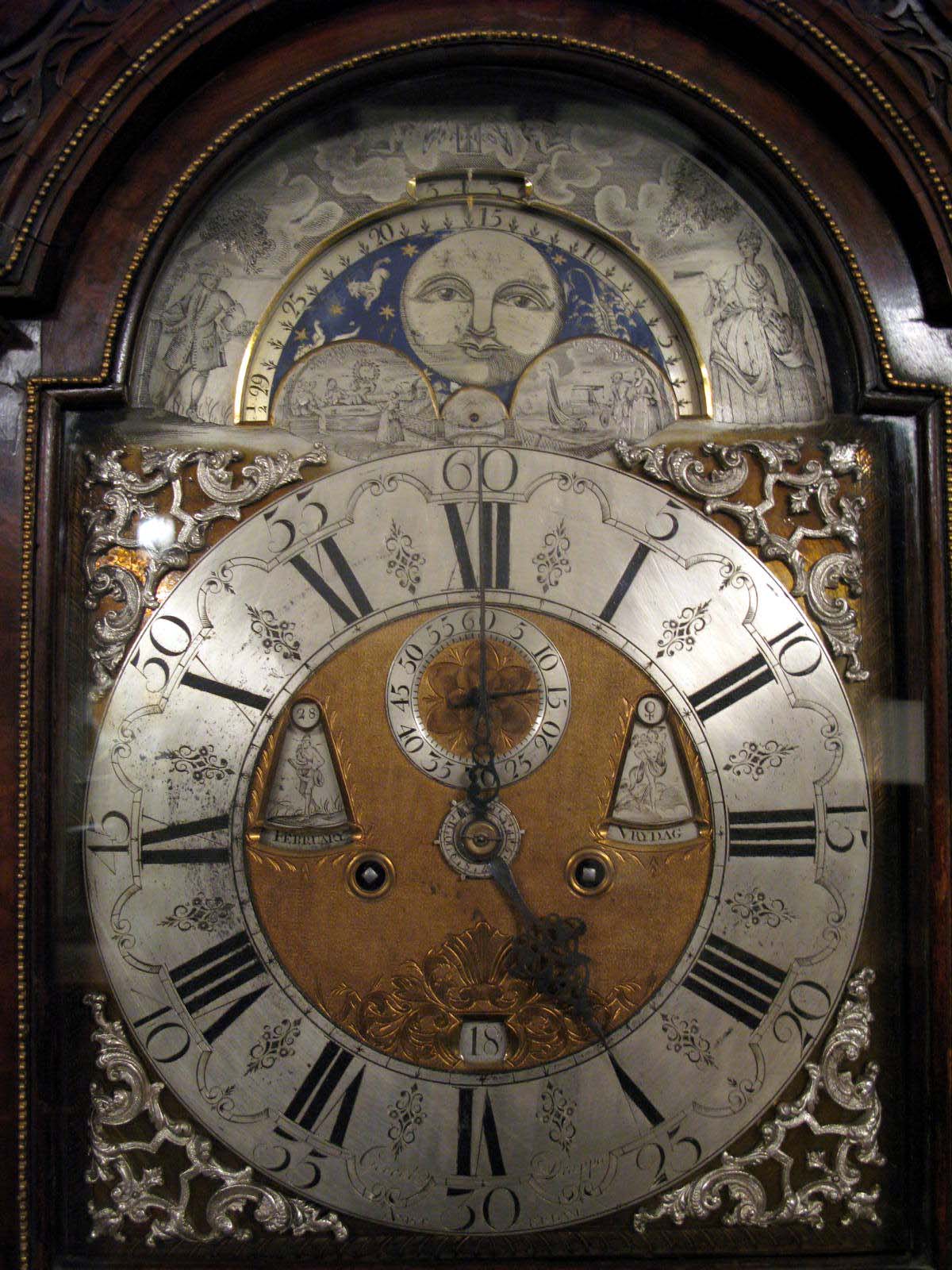
Did you know that the earth is estimated to be 4.54 billion years old? And did you know that the lifespan of a U.S. male is 77.4 years? U.S. women have it better at 82.2 years. Do you realize that if we extrapolated the earth’s age to that of a U.S. male – 77.4 years – the human equivalency would be a mere 41.6 seconds? And for a woman, the human equivalency would be 46.9 seconds. Simply put, we’re but a tiny blip in the overall scheme of the time continuum.

When we contemplate how short our lives really are it brings a new perspective to how we spend our time. When I was in my 20s and 30s, I always had a thought in the back of my mind – “I’m young and there’s plenty of time to do everything I want in life.” Well I’ve done a lot in my life and I know I’m a lot closer to the finish line . . . and yet, there’s still a lot I want to do. We’ve all known people whose existence was cut short unexpectedly and didn’t have the opportunity to live a normal lifespan. And the knowledge that we are a heartbeat away from the same fate is a sobering thought. Thus, I am committed to making every moment a quality experience and let me tell you, I have a lot of work to do to accomplish this!

So, exactly what am I doing to make every moment a quality experience? I’m trying not to get hung up on inconsequential things that don’t really matter one whit. It’s become evident to me that fighting and arguing with others does not fall in the category of a quality experience. Thinking negative thoughts of lack and limitation are no longer in the cards either. Worrying about things is completely taboo. I find myself testing much of what I do by asking myself this question – “Is this a memory I want to make?” Do I want to finish cranking out a document on my computer on a Sunday afternoon at home, or do I spend a few moments and toss the football with my grandson? “Is this a memory I want to make?” Do I watch another mindless show on TV or do I take a walk with my wife? “Is this a memory I want to make?” Do I dwell on how a guy just cut me off with his car, or do I become immersed in the music from my stereo? “Is this a memory I want to make?”

Folks, it’s not easy making every moment a quality experience. But when framing each moment in the context of what kind of a memory we want to make, the task becomes much easier. Of course we still have to do certain things that may not be particularly enjoyable, but we can change our perspective enough to create a memory we want to make through the end result. For example, my mother made me weed our yard as a kid to the point that I was fairly certain that I never wanted to pull another weed as an adult. Yet, today I don’t mind weeding the shrub and flower beds at my home because the end result is beautiful landscaping that makes for wonderful memories.

When we realize that life is far too short, we’ll begin making every moment a quality experience. There’s not a moment to waste. And we’ll create countless pleasant memories in the process.

This blog is being written in tandem with my book, “An Entrepreneur’s Words to Live By,” available on Amazon.com in paperback and Kindle (My Book), as well as being available in all of the other major eBook formats.

grandfather clock

Curious?

How curious are you? This may seem like a curious question (pun intended) for me to be asking. But follow along. Remember when we were in elementary school how the world looked so huge? We were in awe and wonderment of all there was to learn. When my daughters were young the phrase I heard the most was, “Daddy, why ______” – then fill in the blank. Why does the sun come up in the east instead of the west? Why do dogs bark but chickens cluck? And the list goes on forever. The point is, as children we were curious about nearly everything.

As we get older our curiosity changes and our questions are generally more mature. Naturally we’ve learned a lot over the years and sometimes it’s easy to get stuck in a “learning dearth” rut. In other words, we ask fewer questions and seek fewer answers. If we’re not careful we can become very one-dimensional, wrapped in our comfortable cocoon and drifting along on the river of life. I’m not being critical, but as entrepreneurs, we can be more effective and accomplish more if we maintain our curiosity. Asking why often leads to innovation. Why do certain processes exist within our organization? How could a particular product be improved? What could we do to provide better customer service?

There are a number of things that we can do to maintain the curiosity bug. Reading different publications (not just business books) on a regular basis is stimulating. This might include such topics as human interest, hard news, politics, religion, travel, philosophy, humor and sports. The Internet is today’s version of the World Book Encyclopedia – on steroids! Sometimes I’ll simply surf an obscure site just to see what’s there. A walk through Home Depot serves the same purpose. Frequent conversations with friends and colleagues are invaluable in stoking curiosity. Attend sporting events, the theater, concerts, seminars and other live activities. For me, I’m constantly asking the why, what, how, where and when questions in the context of everything I see and do.

We can become more creative and innovative by being intentional about arousing our curiosity. Blend this with some quiet, meditative time, and we find new ideas pouring into our consciousness. This quiet time is critical for it gives us the opportunity to empty our minds of all the clutter that accumulates through the course of the day. And the vacuum that is created opens the way for solutions to problems to emerge and for new opportunities to be born. But curiosity is the beginning of this winning formula.

If you feel like you’ve become a bit stale in the curiosity department, I recommend that you keep a simple journal for a few weeks. Record the things you do each day to stimulate your curiosity. Write down any new ideas that you have. See how many why, what, how, where and when questions you can ask . . . and answer. Don’t forget the quiet time that is needed each day to allow your curious mind to make sense of all of this.

Curiosity, creativity and innovation go hand-in-hand. We’re never too old to recapture that childlike curiosity that we experienced when we were seven.

This blog is being written in tandem with my book, “An Entrepreneur’s Words to Live By,” available on Amazon.com in paperback and Kindle (My Book), as well as being available in all of the other major eBook formats.

encyclopedias

The Kelly Factor

My wife and I ate dinner at an old 1960s vintage diner while on vacation recently. Our server was Kelly and she was absolutely terrific. In fact I told her she should come and work with me. Why was I so impressed with Kelly? She was genuine and authentic. This translated into her being very personable. Not only was she friendly but she clearly was very interested in providing us with the best dining experience possible. Kelly checked on us regularly, was witty and her countenance literally beamed.

It was obvious from the minute we sat down that Kelly was fully invested in her job. She had “skin in the game” so to speak. She greeted every customer that walked in the door, even if she wasn’t their server. And when a customer departed she acknowledged them similarly. There is a great lesson here for us entrepreneurs. When someone throws themself into their job like Kelly did, it not only is obvious but it is infectious. My wife and I both left the diner feeling more upbeat than we did when we walked in.

While sitting in the booth listening to some great old rock and roll tunes (from the 60s of course) I got to thinking about what makes Kelly tick. As Simon Sinek would say, what is her WHY? It was pretty apparent from what she said and her demeanor that Kelly is all about building trust and lasting relationships. Thus, everything she does for her customers is foundational in this respect. At one point she stopped by to see if some barbecue sauce had been delivered – it had not. She ran off to the kitchen and got it. When she returned, she explained that someone else was bringing it and then there was a minor disaster in the kitchen that caused the sauce to get waylaid. The fact that she felt a need to explain what had happened told me that she really wanted to earn our trust.

As entrepreneurs we need to have “skin in the game” as do all of the people we work with. It’s pretty evident when someone is simply going through the motions. While on the same vacation, we ate at another restaurant where our server was nice, but it was obvious she was just doing her job. She made no effort to engage us in conversation and build a relationship of any sort. Our experience in this restaurant and with this server was fine. But it serves in stark contrast with our Kelly experience.

Skin in the game means doing whatever it takes to make the customer happy. Skin in the game means going the extra mile for everyone involved – customer, company and other team members. Skin in the game means taking the wins and losses personally. Skin in the game means sometimes doing something that is less advantageous for us and more advantageous for someone else.

We know when we’ve become fully invested in whatever we’re doing. The results will be evident when we see that everyone involved had the kind of WOW experience that we did with Kelly.

This blog is being written in tandem with my book, “An Entrepreneur’s Words to Live By,” available on Amazon.com in paperback and Kindle (My Book), as well as being available in all of the other major eBook formats.

waitress

The Road to Riches

Early in my career I did a lot of planning – especially financial planning. I had it all figured out that by a certain age I would be earning a certain income and projected how that amount would grow over time. I obsessed over my calculations and created spreadsheets to track my progress. Back in the day this sort of focus was what you did if you wanted to succeed. Or so I thought. Unfortunately I didn’t have anyone to tell me that there was a better way.

Did I achieve my income goals? For the most part the answer is yes. But what I discovered as I got older, more experienced and wiser, is that this approach was actually limiting me. So how you ask, could prudent planning become limiting? And the answer is elegantly simple. By focusing on a specific amount of income that I desired, I was subliminally telling myself that I really didn’t want any more than that amount. My various income-generating strategies were aimed at achieving the target amount and nothing more.

Fast forward to today. I’ve learned a lot. For starters, I no longer accept the limitations created by chasing a specific dollar amount. Instead I’ve learned to be open to all creative possibilities. I’ve learned not to place restrictions on my potential. I now focus on being much more strategic and much less tactical. It’s now more about service to others than others serving me. When the money no longer is the primary focus it’s amazing how much more prosperous we can become. I still look at the money but only as part of a risk-reward equation – something all entrepreneurs should consider.

Here’s something else I learned. Get rich quick schemes lead to disappointment. Playing the lottery or trying to earn a few extra bucks playing cards is not a winning hand in life. Hard work is also overrated when it comes to financial satisfaction – believe me, I’m an expert on the hard work subject. Smart work is more likely to lead to financial security and independence.

So how does one work smarter? I’ve written many times about how important it is for us to know our WHY. Another way of putting this is to understand what we are passionate about. Why do we do what we do? What makes us tick? What do we love to do so much that we’d do it regardless of whether or not we were paid? When we are living our passion we aren’t chasing financial riches. Our focus is on the process of staying in the passion zone. And one of the byproducts of this approach is that monetary rewards will come our way – sometimes effortlessly. If we’re just working to earn a living, that’s all we’ll do. If we’re working because what we’re doing is interwoven with our passion, positive results will flow to us – financial and otherwise.

When we let go of our limiting money dreams and pursue our bigger and grander dreams we are able to live our passion. And when we live our passion, through our creative energy we will discover infinite possibilities for good in our lives.

This blog is being written in tandem with my book, “An Entrepreneur’s Words to Live By,” available on Amazon.com in paperback and Kindle (My Book), as well as being available in all of the other major eBook formats.

wealth

Brick Walls

Let’s count brick walls. They are everywhere. We encounter them at work and at home. We find them in our personal and business relationships. Brick walls seem to be a part of our lives. But do they need to be?

We tend to be great masons and build some very elaborate and impregnable brick walls. The brick walls to which I refer are the limitations that we impose upon ourselves. Sometimes we believe that these limitations are imposed by others but if we really examine them closely, they are more often than not, self-imposed. It is critical for us as entrepreneurs to avoid allowing thoughts of lack or limitation to creep into our psyches.

Let’s look at some of the things we speak to ourselves and say to others. Anytime a sentence contains the words “I can’t,” “I don’t” or “I won’t” there’s a strong possibility that limitations are in play. Certainly there are some limitations that are rational and necessary – I’m not talking about those. Thoughts of lack and limitation that prevent us from achieving our greatest potential and success are what we need to train ourselves to eliminate.

I can recall several times over the course of my career where a rookie entered the commercial real estate business and completed a series of amazing transactions. Everyone looked at each other and said, “How did he do it?” Well, I know how. This rookie didn’t know what he didn’t know. Make sense? In other words, he didn’t know to place limitations on himself that many veterans of the industry had imposed upon themselves. As a result, he made cold calls on clients that others thought to be untouchable or intractable. And guess what? He got deals done.

Why do we limit ourselves in the first place? Often it is the result of fear or a lack of knowledge. Analyze the following statement. “I can’t pursue that business opportunity because I don’t have the money to do so.” This statement contains both the “I can’t” and “I don’t” negative affirmations which will probably result in this person not pursuing the business opportunity. Most likely the underlying reason for the statement is that this person either has a fear about the business opportunity – perhaps it’s a fear of failure – or he/she simply doesn’t know how to find the money needed. Regardless, the opportunity won’t be pursued because this person has built a brick wall around it.

So, what’s the truth? We have a choice to either create reality or face reality. If we choose to create our reality, we can do so by removing all thoughts of lack and limitation. We tap into our creative energy and identify the resources that we need to succeed. We pursue that business opportunity because we find a way to raise the money that is needed. In several of the companies with which I’m involved, we regularly complete apartment developments and acquisitions utilizing very complex financial structures. We’ve rescued many a deal from the scrap heap because we not only have the knowledge to figure out how to make them work, but we also have no fear of failure. Do we fail? Sure we do. But our failures are simply steps toward our ultimate end goal. And we manage our risk so that none of our failures are fatal.

We can go through a life full of brick walls that are of our own making, or we can create our own reality by taking the simple yet powerful step of eliminating thoughts of lack and limitation. Whenever these thoughts start to become a part of our mindset, we recognize them; we release them, and we replace them with the truth of unlimited possibilities.

This blog is being written in tandem with my book, “An Entrepreneur’s Words to Live By,” available on Amazon.com in paperback and Kindle (My Book), as well as being available in all of the other major eBook formats.
brick walls

Chronicles of a Loser

Entrepreneurs absolutely do not like to lose. We’re winners at heart. But there’s one kind of a loss that is actually an enormous win. Give up? Let me give you some background. When I got married in January 1974, I was 19 years old; was 6’4” tall and weighed 150 pounds. It took many years before I “filled out.” But something else happened. The filling out didn’t stop. In August 2012, my weight had ballooned to 289 pounds! I had actually begun to make healthier choices in the years preceding this date and at one point had dropped to 245 pounds. But somehow the pounds I had lost were found again.

Carrying too much weight had a number of unsatisfactory consequences for me. My cholesterol and triglycerides were higher than they should be. My blood sugar was elevated and when I vacationed in the Colorado mountains, I huffed and puffed (and wheezed) just walking into a restaurant. My left knee had been weak for years and the extra weight exacerbated the issue. Finally, my clothes fit tightly and the size of my stomach was an embarrassment. A little voice in my head began screaming, “You are a prime candidate for a heart attack!”

To change a destructive behavior we usually need an “aha” moment. Sometimes it IS a heart attack that provides the wake-up call . . . assuming that we wake up afterwards. In August 2012 my “aha” moment was not so dramatic, but it was just as powerful. My oldest grandson was six years of age at the time and his daddy isn’t in the picture. He definitely needs a father figure in his life – a role that I had been filling. The realization that I might not be around when he needed me most hit me like a sledgehammer. But I knew that a diet would not work. And I knew that if the pounds came off too fast, the weight loss wouldn’t last. Thus I embarked upon a complete lifestyle change that has become permanent.

I have always exercised and in August 2012, I was lifting weights three days each week and about 30-minutes of cardio five days a week. Today, in August 2014, I exercise seven days a week for a total of 10 hours. My cardio consists of walking at a pretty good pace – last week I walked nearly 32 miles. A personal trainer adjusts my weight lifting routine every five weeks – something I still do three days each week. And I’ve become addicted to the Fitbit®, a wearable device that tracks my steps, calorie burn, sleep pattern, etc. The goal is to walk 10,000 steps each day – I’m usually achieving 14,000 – 16,000 steps daily.

I love the way I eat. I gave up sugar in 2006; have eliminated dairy, and am mostly gluten-free. The biggest difference maker was cutting out the carbohydrates – mainly the simple carbs. I eat a lot of protein – a cardiologist told me I could eat as much red meat as I wanted – provided I continued doing everything else I am doing. Thanks to the Fitbit® I am able to log everything I eat into a computer program that calculates the number of calories I am consuming. The awareness of calories in vs. calories out has helped me fine tune my food consumption. And I owe a huge debt of gratitude to a medical professional who specializes in blood chemistry and prescribes an extensive regimen of supplements based upon my blood work every four months.

Today, I now weigh 218 pounds – a loss of 71 pounds in two years. I am within eight pounds of the target weight my doctor and I agreed upon. I feel stronger and healthier than at any time in decades. I’ve made excellent progress with my blood work and have been able to eliminate several prescribed medications. My knee doesn’t hurt anymore. My bank account is smaller as a result of the constant tinkering with my wardrobe – stuff just doesn’t fit – but that’s I problem I can live with. My stomach bulge is nearly gone. People who haven’t seen me for a while tell me that the change in appearance is dramatic. A recent scan showed an exceptionally low plaque build-up in the primary arteries of my heart muscle. I have seemingly dodged the proverbial bullet. And my chances of being around for a long time to support BOTH of my grandsons seem pretty good.

I’m glad I paid attention to my “aha” moment. I’m glad I found the way to be healthy that is just right for me. I’m glad I found the tools that I needed to help me with my journey. There’s no turning back. I’m not the least bit concerned about any backsliding because my LIFE has changed permanently. Perhaps you have something in your life that you want to change permanently. I’m a walking testament to the truth that you absolutely can.

This blog is being written in tandem with my book, “An Entrepreneur’s Words to Live By,” available on Amazon.com in paperback and Kindle (My Book), as well as being available in all of the other major eBook formats.

Konishiki

Visually Unimpaired

What does success look like for you? Is it something material? Is it a relationship or something intangible? What are you doing to achieve this success? How strongly do you believe that you can achieve it? How badly do you want it? What would you say if I told you that you can absolutely stack the deck in your favor? If it sounds like I’m selling swampland think again.

Success is not so much an end result as it is a constant state of mind. When we see success as an end result we may have a tendency to believe that we are less than successful during the time we’re working toward the end result. Think about it this way. Suppose we want to close a really significant transaction and it takes a long time to do so. Perhaps there are a lot of blood, sweat and tears along the way. A natural human reaction might be, “I know this transaction is going to be hard and I’ll make large sacrifices to complete it. But in the end, all the pain and suffering will be worth it.” There is an implication in this statement that we won’t be successful until the transaction is closed. I submit that this does not have to be the case.

We can visualize our success from the outset. Visualization is another form of affirmation and you’ve heard me talk before about how powerful positive affirmations can be. So how does it work? Let’s use the example of a significant transaction described in the preceding paragraph. We begin by sitting quietly and formulating exactly what the desired end result will be. It’s important that we be as specific and detailed as possible. Where will the closing take place? Will other people be there? Is there a specific date and day of the week that this will occur? Once all the details are discovered we are then in a position to begin the visualization process.

“Today, Tuesday, July 22nd, begins with a clear blue sky and bright sunshine. A closing meeting with the buyer is scheduled for 11:00 AM. I am wearing my black pin-striped suit with a purple tie. As I walk into the boardroom I am greeted by James, my attorney; Todd, the attorney for the buyer; Susan, the buyer; Fred, the buyer’s banker; Linda, my banker, and John who is a consultant I work with. All parties have big smiles on their faces. A three-inch pile of documents is neatly stacked on the highly-polished mahogany conference table. We make short work of signing the documents at which point Fred hands me a cashier’s check in the amount of $2,500,000. I hold the check for a moment before sliding it across the table to Linda to deposit in my account. We all shake hands and then depart to the Capitol Grille for a celebratory luncheon.”

By visualizing our success in such vivid detail, we are setting the stage for it to become reality. Before we go to sleep at night, we allow this visualization to permeate our mind and being. When we awaken, we see the same vision. This becomes a pattern that allows us to celebrate our impending success every single day. We feel the joy of closing the transaction a multitude of times – to the point that it is a fait accompli. No longer do we have any doubts about whether it will happen for we’ve already seen it over and over. I challenge you to try this. You can’t stick a toe in the water. You must jump in cannonball-style. Do it with your clothes on! Visualize with abandon and the results will be spectacular.

We are destined to succeed if we believe without condition. And we can believe without condition when we see our success being repeated in our mind’s eye.

This blog is being written in tandem with my book, “An Entrepreneur’s Words to Live By,” available on Amazon.com in paperback and Kindle (My Book), as well as being available in all of the other major eBook formats.

goggles

A Road Less Traveled

I’ve written a lot about mindset and how much it influences our lives. Embracing a positive mindset is empowering but it requires us to establish new thought patterns. I thought it might be helpful to catalog some of the more common things that we may say from time to time, and offer an alternative. I find that when I intentionally pay attention to what I say verbally and silently, I catch myself before I go down the “negative road.” But if I don’t pay attention, it’s easy to end up there.

“I never have enough time.” Each of us has the same amount of time. It’s all about how we prioritize. I now say, “I have time to do what I choose.” Notice that I’m in control now rather than allowing myself to be tugged and pulled along the river of life.

“I just can’t win.” There’s no way we can win if we affirm defeat from the start. How about this instead? “I will continue to do whatever is necessary until I win.” There’s a hint of perseverance in this statement . . . which often is the secret ingredient to winning.

“I’m sick.” We all probably hear this quite often. In fact, we’ve most likely said it once or twice (or more). But again, why would we want to affirm something so negative? Here’s an alternative. “I see myself as healthy and whole.” Perhaps we are feeling a bit under the weather, but aren’t we better off affirming a positive vision of ourselves?

“I’m struggling with my finances and never have any money.” To allow good things to come our way we need to shed all thoughts of lack and limitation. Why? Because they block the flow of the positive energy we need to be prosperous. This statement (said with gusto!) will fully open the fire hydrant of creative energy. “Abundance is mine and I claim it!

“Something bad is going to happen, I just know it.” Hmmm. I know that I’ve been guilty of self-fulfilling prophecies and this one sure qualifies. It’s as simple as this. If we expect something bad to happen, it probably will. “I expect everything to proceed in perfect order and visualize the end result that I am seeking.” There’s no better way to inoculate ourselves from negativity than with a strong positive affirmation such as this.

“I don’t understand why so-and-so is treating me this way. It’s so unfair.” Conflict with others can lead to a feeling of victimization . . . if we let it. The truth is, we’re only victims of our own mindset, and that’s something we can control. When we are willing to take responsibility for our own actions we’ll say, “I am going to make a positive difference in the lives I touch.”

Yes, it’s possible that these positive statements may sound hokey. But here’s the point. The only way to break out of an undesirable mindset is to replace negative thoughts with positive affirmations that we really believe. The best way to accomplish this is to understand exactly what we say that we want to change, and then be prepared with our replacement thoughts. Having practiced this for years, I can tell you that I still catch myself moving in the wrong direction at times. But that’s the key – we catch ourselves and move back into a positive state of mind.

Life is too short to live in anything but a positive mindset. For me the “negative road” has become a road less traveled. I see this as so for you too.

This blog is being written in tandem with my book, “An Entrepreneur’s Words to Live By,” available on Amazon.com in paperback and Kindle (My Book), as well as being available in all of the other major eBook formats.

road

Staying Away From the Cliff

What is your reaction when you hear the word “debate?” Is this code for conflict? Entrepreneurs and humankind in general are inclined to try and persuade others to see their point of view. Unfortunately the art of debate has been stigmatized by what happens in the political arena. Political debate has degenerated into something far removed from the honorable tradition of true debate. Sometimes in our business and daily lives what is being termed as “debate” is also something much less noble.

I remember taking debate classes in school. We were taught to construct factual arguments to support our position on an issue. In college my favorite class of all time was Logic. It was fascinating to listen to the professor walk us through various arguments that were commonplace in society and show us where the logic broke down. To effectively persuade and convince others to make decisions that we want them to make, it is helpful to frame our argument in solid facts and logic. To clarify, I’m not using the term “argument” in the “argumentative” sense but rather in the context of a thesis.

Every time I read an article that might contain an element of controversy, I always think of my old college professor as I read the comments. There is often a lot of emotion on a particular subject which may result in ad hominem attacks, name calling and a loss of decorum. Usually when this happens, the offending party has already lost the debate because he/she can’t offer a logical opposing position supported by facts.

In my opinion, the components of a healthy debate include a willingness to lay out one’s position in logical and factual manner; the ability to listen to and understand a contrary position without interruption; the ability to politely use facts and logic to counter the contrary position, and at the end of the day, the willingness to have respect for the person making the contrary argument. In other words, smile and shake hands when it’s all said and done. We may or may not persuade the other person to see our point of view and vice versa, but we avoided falling off the emotional cliff.

The emotional cliff is a dangerous place to be for entrepreneurs. I would much rather persuade someone to agree with my position on something using facts and logic, than appealing to their emotions. Using emotional appeal is another term for manipulation. Business does this every day through marketing a myriad of products and services. But often the person being persuaded is left dissatisfied with the overall experience when he/she realizes the product or service may not meet his/her needs. The feeling of manipulation has a long shelf-life, whether in a marketing or sales sense, or when making decisions based upon the arguments made in debate.

Debate and persuasion that are fact and logic-based can build positive and lasting relationships. When we aspire to stay above the emotional fray we win every time in so many ways.

This blog is being written in tandem with my book, “An Entrepreneur’s Words to Live By,” available on Amazon.com in paperback and Kindle (My Book), as well as being available in all of the other major eBook formats.

Cliffs

Keep the Change

I once heard a saying that when one door closes another opens . . . but until then it’s hell in the hallway. Doors opening and closing are metaphors representing change. However there’s no discussion in these analogies about who is opening and closing the doors. Perhaps that’s where we ought to start our discussion.

I’m a pretty boring guy. I’ve been married to the same woman since 1974; lived my passion with the same company since 1975, and resided in the same house since 1978. But that’s where the constancy ends. Most of my business life has been about change and much of my personal life has been as well. Where some people see change as foreboding, I wholeheartedly embrace it. Why? Because I’ve generally found that change leads to bigger and better things – whatever they might be – and especially when I’m instigating the change in the first place!

As you might imagine, I’m going to suggest that how change impacts us starts with our mindset. Many see change as the start of a transition from one thing to another. Perhaps a broader view would be to see change as a transformation. To me, transitions are a bit mundane. But transformations are exciting and offer countless possibilities. Think about your own life. Do you want it to be a transition – almost plodding from one circumstance to the next? Or do you want your life to be transformed from something lesser to something greater? Assuming we only go around once in this amazing journey, don’t we want the experience to be as expansive as possible?

I’m not advocating change for change sake. But I am suggesting that seeing change as an opportunity for transformation has many inherent rewards. It inspires us to think much more creatively than we would if we are seeing change in a transitional manner. It nudges us out of our comfort zone which adds to the richness of our lives. It allows us to move past some of the fears that have been holding us back. And transformation immerses us in multi-dimensional options and alternatives from which to choose. Lest you think this is an exercise in the abstract, allow me to illustrate it in more concrete terms.

Let’s suppose that you are an entrepreneur with a product that has seen a steady decline in sales over the past few years. You sell other products that do fine, but this particular item just isn’t cutting it. Your team has pushed all the right buttons but the needle isn’t moving. The transitional approach might be to simply dump the product and move on. This would represent a change from the status quo – a sad, but common footnote in the history of products that eventually failed. On the other hand, a transformational approach might be to acknowledge the failure of the product, but to use it as a springboard to look at your overall product line from top-to-bottom. Could the same fate befall any of your other product items? Why exactly did this particular product fail? What is the lesson to be learned from its failure and how can that be translated into something positive for the rest of your products? In the end, this single product failure could become the catalyst for a complete transformation of your entire product offering, making your company stronger and able to gain additional market share.

Change can be viewed as a transition or a transformation. We make the choice to pick which path we want to follow.

This blog is being written in tandem with my book, “An Entrepreneur’s Words to Live By,” available on Amazon.com in paperback and Kindle (My Book), as well as being available in all of the other major eBook formats.

Butterfly-Transformation