
Unknown's avatar

About anentrepreneurswords

R. Lee Harris grew up in Manhattan, Kansas and has lived in the Kansas City area since 1977. A 1975 graduate of Kansas State University, Harris began his career with Cohen-Esrey, LLC as an apartment manager two weeks after he graduated. Now president and CEO, he is involved in apartment management, development and investment; construction and tax credit syndication on a nationwide scale. Over the course of his career Harris has overseen the management of more than 27 million square feet of office building, shopping center and industrial space and nearly 60,000 multi-family units. He has started dozens of business enterprises over the past 40+ years. In 1991, Harris wrote a book entitled, The Customer Is King! published by Quality Press of Milwaukee. In 2012 he authored the book, An Entrepreneur's Words to Live By. He has mentored a number of business people over the years and has been a long-time participant in the Helzberg Entrepreneurial Mentoring Program. He and his wife Barb have two grown daughters and one grandson. They are active in their church, community and university.

Super-Duper Extended-Life Batteries

Question: When I take a vacation I can’t seem to stop thinking about work. We go to fun places but my mind is in overdrive about work things and I don’t really enjoy my downtime. How do I change this?

Answer: It sounds like I used to be you. I can remember a number of vacations early in my career where I would actually feel guilty for being gone. We’d be engaged in vacation activities and I’d have to stop and call the office to see what was “blowing up.” I would worry whether or not something so monumental might happen that I’d be fired the moment I jumped back in the trenches. My vacations weren’t particularly fun because I would return with my stomach tied up in knots. As a result, I took fewer vacations because I thought I’d score points with my boss and I wouldn’t have to deal with the agony of being gone. Sounds messed up – right?

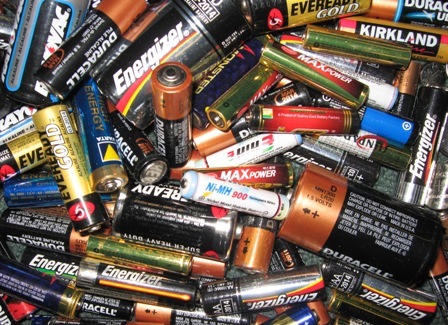
I don’t think anyone will argue with the fact that we need time to re-charge our batteries periodically. But our batteries aren’t like those of a car. When a car is being driven, the battery is being continuously charged. Our batteries are like that of a small appliance. Plug us in; charge us up; unplug us, and we’ll go for quite a while. And think about the car analogy for a moment – eventually the car battery wears out and simply dies. Then it has to be replaced. We don’t have the luxury of replacing our “batteries” because we die too.

Life balance is the key. Of course it’s the new buzzword but it’s absolutely a valid concept. We simply cannot do our best and be the best that we can be if our lives are one-dimensional. Vacations are critical to helping develop the balance we need. It doesn’t matter if it’s a series of short mini-vacations or a few longer ones, the whole point is to get away from the regular routine. I take several vacations each year where I spend time on the computer and phone but put it all on hold for a fun activity of some sort during the course of each day. Then once a year I “drop out” for a couple of weeks. We go to a tropical island and just play. No phone, no computer, no TV, no newspaper – just sun, fun and togetherness time with my bride. And the minute I sit down on the airplane, I turn off all aspects of work.

To get the most of a vacation we need to give ourselves permission to have fun. Think about this. As entrepreneurs we’re driven all of the time. So it’s time to lighten up and enjoy!

This blog is being written in tandem with my book, “An Entrepreneur’s Words to Live By,” available on Amazon.com in paperback and Kindle (My Book), as well as being available in all of the other major eBook formats.

batteries

Spike It

Question: I see people who appear to be very successful that have very large egos. How much ego is too much?

Answer: I remember one of the best football players to ever play the game was Marcus Allen. He was a running back for the Oakland Raiders and later, the Kansas City Chiefs. Every time he scored a touchdown (145 of them) he simply handed the ball to the referee and trotted off the field. I never saw him spike the ball in the end zone or do some sort of “look at me” dance that is so prevalent today. It seems like professional athletes in most sports celebrate in ways that may indicate ego issues.

Perhaps ego displays in the business world don’t equal the level that we see on the gridiron or hardwood courts, but they are on display nonetheless. There are those who will say that this is really about demonstrating one’s pride. Nilton Bonder, a Brazilian rabbi said this, “Many people believe that humility is the opposite of pride, when, in fact, it is a point of equilibrium. The opposite of pride is actually a lack of self-esteem.”

Have you heard the term “ego drive?” Ego drive has been defined as the inner need to persuade others as a means of gaining personal gratification. It’s all about getting someone else to say “yes” and the satisfaction derived from this act. Ego drive is generally a healthy trait as opposed to egotism which is closely related to narcissism.

I’ve always believed that the “bigger” you become the more humble you should be. With success comes the need for less arrogance; less pomposity; more sensitivity and more empathy. Here’s a small way you can practice this. Every time you compose an e-mail or verbally speak to someone else, see how often you can eliminate the reference to “I” and “my” and replace them with “we” and “us.” The more we can think in terms of crediting others with helping us achieve success the more humility we gain.

To the extent that we can be comfortable with who we are on the inside, the more likely it is that we will become a genuinely humble person. And at that point the respect and admiration of others will come naturally and effortlessly because it will have been truly earned.

This blog is being written in tandem with my book, “An Entrepreneur’s Words to Live By,” available on Amazon.com in paperback and Kindle (My Book), as well as being available in all of the other major eBook formats.
Football Spiking

The Ear and the Brain

Question: I’m struggling to communicate with a co-worker. How do I get him to listen to me?

Answer: This question sure hits home. The mind of an entrepreneur is racing at 100 miles per hour. We juggle balls of all shapes and sizes. Frequently we are on the move at warp speed. People think we listen . . . and WE think we listen. But sometimes there are complicating factors.

If I say “hello” to you, usually you will say “hello” back to me. Does that mean that I listened to you? Maybe. But it’s for certain that I heard you. Listening is more complicated than the simple act of hearing. Let’s assume that you come into my office and tell me that there’s an issue with a particular client. You describe a course of action that you want me to approve to resolve this issue. I nod. I may murmur, “uh-huh.” And you leave believing that you have my consent. A week later you tell me that the matter was taken care of although there was some fallout with the client. I give you a blank stare at which point you say, “I told you about this last week!” You get another blank stare from me at which point I might suggest how you could have resolved the issue without the fallout. In the end you are irritated because of this outcome. What happened here?

This is a real life classic example of hearing and not listening. Members of my team who read this are nodding their heads so hard right now that they’re going to get whiplash. When you came into my office I had just finished a phone conversation and was still processing the gist of it. A thought also popped into my head about a related matter, and I needed to leave for a lunch meeting. I certainly heard you but didn’t have the presence of mind to slow down and listen to what you were saying.

There are several solutions. The easiest is to make certain that I am in a listening mode. Ask me if now is a good time to chat. I may ask if we could do it later and set an appointment with you. Or, if I have time, I’ll talk then. After you are finished telling me what you have to say, ask me for specific feedback – pros and cons or other thoughts I might have. Once a course of action is determined, ask me to summarize what I understand is going to happen. This can be done by you simply saying, “I want to make sure I do this the way we have agreed. Would you mind summarizing what you understand that I am to do?”

We all know that clear communications is paramount to success. It’s critical that we make certain that the people with whom we are communicating are truly listening to us and not just hearing what we say. Ultimately it’s our responsibility to make this happen.

This blog is being written in tandem with my book, “An Entrepreneur’s Words to Live By,” available on Amazon.com in paperback and Kindle (My Book), as well as being available in all of the other major eBook formats.
ears

The High-Wire Act

Question: What do you think about employment contracts and non-compete agreements?

Answer: My perspective on this subject has changed over the years. Earlier in my career I believed in these documents and what they represent. I also looked for ways to create “golden handcuffs” for employees and associates which are basically incentives for keeping people from leaving. No longer.

I have now adopted the philosophy that I don’t want to coerce anyone to work in our various companies. They either want to be there or they don’t. No longer do I obsess over whether people come and go. I decided that I need to do everything possible to create value for our team – so much value that team members can’t go anywhere else and receive as much. Gone are the employment contracts and non-competes. We do use employment letters and independent contractor agreements to simply provide a written record of compensation and other important elements that need to be clearly understood. Non-disclosure agreements also seem reasonable if there is highly proprietary information at stake.

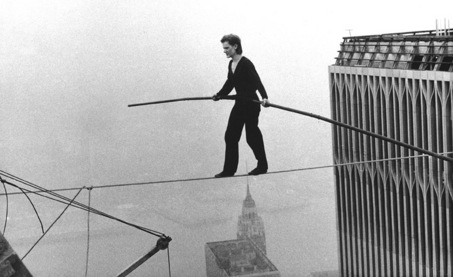
The whole premise of creating value for the team has produced a high-wire act for me – one which I wholeheartedly embrace. I can’t spend one minute resting on my laurels or kicking into a coasting mode. Instead, I must constantly be creative and innovative. I have to constantly be a coach and a mentor. I have to be strategic and visionary on a daily basis. Doesn’t this create unbelievable pressure? NO! It pushes me to be better every minute of every day. If I fail to perform, my teammates will look to see if there is a better value proposition elsewhere. And I don’t blame them.

I’ve been asked what prevents someone from coming on board with the intent to ultimately leave and start his or her own business. And my response is . . . so what? I revert to my initial statement. I’m passionate about providing more value for our team than they can get in another venue – including their own. Perhaps we can accommodate someone who has a goal of owning/running their own business; after all we have eight companies under our umbrella. We’ll happily partner with a budding entrepreneur in our midst that has a good solid idea for a business venture. And if someone has his or her heart set on striking out on their own, we have made a great friend; received value from that individual during their tenure, and may have an opportunity to cross paths again.

The high-wire act requires a great deal of confidence and a complete lack of fear. It has taken me years to get there, but I can testify to the amazing results that are being produced from this mindset.

This blog is being written in tandem with my book, “An Entrepreneur’s Words to Live By,” available on Amazon.com in paperback and Kindle (My Book), as well as being available in all of the other major eBook formats.
NY100445

Time Masters

Question: I am so busy I meet myself coming and going. There isn’t a spare moment for anything. I need more hours in the day!

Answer: Each one of us has the same number of hours in the day. And yet some people seem to get more done with less hassle. Their secret isn’t on the face of a clock. The key to stretching the day starts in the mind.

When we make the statement, “there just isn’t enough time,” we are making a powerful affirmation of limitation. This becomes a mindset – a belief actually. I’ve said many times that what we believe in our minds will become reality and I’ve proven this to myself over and over. Thus, I have expunged this statement from my vocabulary – I want to create a “limitation-free zone” around myself.

I have found that once I establish a positive mindset about time, the rest comes fairly easily. Every evening before I go to bed, I plan my next day. Getting older means we’ve accumulated more mind clutter. To keep everything straight I maintain a comprehensive task list of everything that I have to do. The items to which I need to attend the following day are prioritized for that day. I use my task list and my calendar in tandem – both are electronic which makes it so much easier to function in today’s fast-paced world. The process of spending a few moments reviewing my calendar; my task list, and plotting a course of action for the next day gives me total peace of mind. I don’t wake up in the middle of the night wondering what I’m forgetting that is important.

Armed with a plan, I’m able to move through each day with a clear purpose. I block out certain times for phone calls, reviewing e-mails, and other routine functions. There’s a little sense of victory every time I’m able to “check off” a task as complete which keeps me upbeat about the progress I am making.

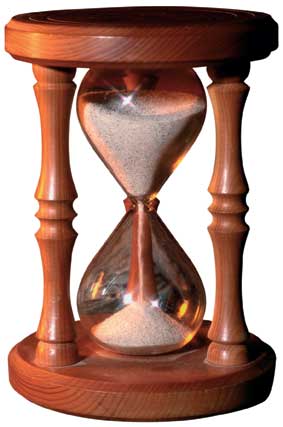
To become time masters, we must start with the right frame of mind and avoid putting limitations on ourselves. Then with a combination of process, purpose and focus, we move effortlessly through each day, savoring the fact that we are able to enjoy every second of it.

This blog is being written in tandem with my book, “An Entrepreneur’s Words to Live By,” available on Amazon.com in paperback and Kindle (My Book), as well as being available in all of the other major eBook formats.

Hourglass

Why?

Question: I was asked recently to explain why my company does what it does. The answer I gave was somewhat superficial but got me to thinking about this question. How would you answer if asked, “why?”

Answer: A friend of mine loaned me a terrific book by Simon Sinek called Start With Why. Sinek’s premise is that the leaders of too many companies don’t have a real clear idea why their companies exist. Of course they’ll say that the WHY is to provide outstanding customer service or to deliver great value to their shareholders. But how inspiring is that? He cites companies like Apple and Southwest Airlines that built their business around the WHY.

Customers can be inspired to buy a product. Employees can be inspired to work for a company. In both cases the source of this inspiration is a genuine understanding of WHY. Many companies stress the WHAT or even the HOW, but not the WHY. An excellent example of a company that epitomizes the WHY is TOMS Shoes. TOMS is a phenomenal success story about Blake Mycoskie, a young entrepreneur who visited Argentina and liked the simple shoes he saw so much that he made a deal with local craftsmen to make a supply of them in a variety of colors and styles. Then he brought them to the United States and sold them. Sounds good, right? But the most important part of the story is the WHY. Mycoskie’s business plan from the start in 2006 was to donate a pair of shoes to a poor child in another country for every pair of shoes that was sold. Through 2012, TOMS has given away more than one million pairs of shoes.

People who buy shoes from TOMS like the design, simplicity and the reasonable cost. But there are many shoe companies that sell shoes that are attractively designed, simple and reasonably priced. The difference-maker for TOMS’ customers is the WHY – the fact that a for-profit company is actually willing to give away its product to children in need, and at the same ratio as what it sells.

Whether you own your own business, or are an aspiring entrepreneur working for someone else, see if you can answer the WHY question. Sinek says that the WHY is just a belief. The HOW is the action you take to realize that belief. And the WHAT is the result of those actions – everything you say and do; your products, services, marketing, PR, culture and whom you hire.

When we are able to answer the WHY question about our businesses and even ourselves; our customers, employees and everyone with whom we associate will be more inspired to become enthusiastic advocates for us.

This blog is being written in tandem with my book, “An Entrepreneur’s Words to Live By,” available on Amazon.com in paperback and Kindle (My Book), as well as being available in all of the other major eBook formats.

question marks

Bridges

Question: Sometimes I get so angry with people that I want to tell them exactly how I feel about them. Don’t you think that such honesty is always the best policy?

Answer: Well, yes and no. We have to evaluate how the other person will react to our “honesty” and we also need to understand whether we are really being constructive with our comments or simply seeking the satisfaction of telling someone off.

There have been many times over my career that I’ve felt wronged by someone and wanted to lambaste them for what they did. I can’t tell you how many letters I’ve written to such people; put them in the drawer; “slept on it,” and then never mailed the letters (or hit the Send button for an e-mail). I guess writing the letters and e-mails was therapeutic but a little voice kept telling me not to follow-through and send them.

Recently a former investor of ours was in my office visiting from another city. Toward the end of our relationship with his firm things became a bit strained. We had gone above and beyond our contractual obligations with his company and yet there was no “give” on his part. However, we went out of our way to keep things businesslike and cordial. He commented during his recent meeting with me that he respected the way we handled the situation. He pointed out that he was in our office talking to us about doing another deal with his firm because we did not burn bridges with him.

Reacting emotionally and burning bridges may feel good at the time. But in the long run it costs us relationships, friendships and money. I still get irritated with people that don’t adhere to my business principles and values. However, I’ve come to realize that making the choice to protect the relationship is much more important and I quickly moderate my emotions. Sure it’s hard to smile and keep an even tone – but we never know when that person who has caused the irritation may become our best client or even our best friend.

I’ve said for years that one of my objectives as an entrepreneur is to collect and serve as many relationships as I possibly can over the course of my career. A lot of time and effort is invested in doing this – so why would I want to throw this all away by burning a bridge with one of these relationships? Perhaps when a bridge becomes shaky or weak, the best course of action is to work to strengthen it rather than burning it.

This blog is being written in tandem with my book, “An Entrepreneur’s Words to Live By,” available on Amazon.com in paperback and Kindle (My Book), as well as being available in all of the other major eBook formats.

burning-bridge

Resolved

Question: What’s the best New Year’s resolution for an entrepreneur?

Answer: While many great ideas come to mind, there is one that is elegantly simple and it goes like this. I resolve to embrace entrepreneurship as a lifestyle of choice and responsibility. Doesn’t this statement epitomize entrepreneurship?

One of the greatest things about being an entrepreneur is the fact that we are free to make our own choices. While this is true for everyone – entrepreneurs and non-entrepreneurs alike – to succeed as an entrepreneur it is imperative that we understand the concept of choice. No one else makes our choices for us. We can choose to make rational decisions or irrational ones. We can choose to be positive or negative. We can choose to be creative; we can choose to be philanthropic; it’s our choice to win or lose, and we choose whether or not to be happy and prosper.

Choice is perfectly symmetrical with responsibility. We make our choices and then we take responsibility for the consequences of those choices. If we make rational choices we will succeed and if we make irrational choices we will fail. And we accept responsibility for this. If we choose to be positive, our life will be rewarding in countless ways. And if we choose to be negative, our life will be full of stress and strife. Above all, we accept responsibility for these choices. We are never victims of anything or anyone.

The power of choice and responsibility is one of the most liberating aspects of our lives. An entrepreneur who completely understands choice and responsibility can live a life absolutely free of fear for he or she is in control of his or her own destiny. I’m not a big resolution-maker as each year comes to a close. But from a big picture standpoint, I remind myself that what happens in my life – every single thing – is the result of a choice I made. I fully understand the results that stem from each choice. And if I don’t have this understanding it’s because I didn’t choose to do the necessary research in the first place to reach a full understanding.

Thus, it is my resolve to make the best choices I possibly can using the best possible information I can gather, and then let the chips fall where they may. But at the end of the day they are my choices and my responsibility. Happy New Year.

This blog is being written in tandem with my book, “An Entrepreneur’s Words to Live By,” available on Amazon.com in paperback and Kindle (My Book), as well as being available in all of the other major eBook formats.

new year images

Quiet

Question: I find that when I go to bed at night I have a hundred thoughts running through my head. Sometimes it’s hard to get to sleep. I know that I’m a busy person but is this normal?

Answer: Busy people – especially entrepreneurs – process a lot of information on a continual basis. According to a variety of sources, the average brain has 70,000 thoughts a day. I’m not sure how this was measured but it’s clear that there’s a lot floating around in our brains. So it’s not hard to see how we can become overwhelmed by mind-clutter. We need to find a way to somehow turn it all off.

There is a way. The concept involves spending a few minutes each day in quiet contemplation. Some call this meditation. But it need not be construed as having religious overtones. Instead, consider meditation as a time to block out the hustle and bustle of the world around us and sharpen the focus of our mind. I find that there are times when my emotional state is not in sync with my mental state. I use meditation to align my heart and my head.

I used to schedule this time of quiet right after I got out of bed each day. But I found that I would become too relaxed and fall asleep. What works best for me is to complete my morning exercise routine and then spend seven to ten minutes in solitude.

Here’s the process I use. I sit in a chair with my feet flat on the floor, close my eyes and put my hands in my lap. I concentrate on my breathing, slowly bringing the breaths from diaphragm. Then I visualize the Horizontal Situation Indicator that is an instrument on the control panel of an aircraft. The HSI displays a bifurcated vertical bar with an arrow on top. When flying an instrument approach, the pilot attempts to fly so that the vertical bar and the arrow become one. For me, this is the way I see my head and my heart becoming aligned. Finally, I clear away the constant stream of thoughts in my mind and create a void. When one or more thoughts creep into my consciousness, I gently push them out to once again create a void.

By calming our minds and pushing out all thoughts, we become open and receptive to the powerful flow of positive and creative energy that comes rushing into the void. And we can see the successful results through new ideas and solutions to problems we are working that present themselves throughout the day.

This blog is being written in tandem with my book, “An Entrepreneur’s Words to Live By,” available on Amazon.com in paperback and Kindle (My Book), as well as being available in all of the other major eBook formats.

HSI

A Bucket of Blue Leaves

Question: It seems like everywhere I turn there is more bureaucratic nonsense to deal with. I have to fill out endless forms and jump through hoops to get anything done. What can I do to bring down my blood pressure?

Answer: People who know me will attest to the fact that bureaucracy makes me crazy too. And over the years I could have easily filled 100 volumes of books the length of War and Peace with my rantings about mindless, spirit-crushing bureaucracy. But recently a friend of mine told a story at a business conference we were attending. He called it “a Bucket of Blue Leaves.”

It seems as though he had experienced many of the same frustrations as had I, with a particular federal agency. Someone told him he needed to get a Bucket of Blue Leaves. He of course said, “There is no such thing as this. Blue Leaves don’t exist.” But after thinking for a moment he realized that all he needed to do was go to the Home Depot and buy a bucket and some blue spray paint. Then he would simply find some leaves and paint them blue. Ultimately he delivered this “Bucket of Blue Leaves” to the federal agency and got what he wanted.

What a perfect metaphor. We can do as I have done in the past which is to fight, stew, get angry and undoubtedly make other people mad. Or, we can be smart and figure out how we can deliver exactly what is being requested regardless of how ridiculous we believe the requirements to be. Often, what is being requested in such situations may seem completely illogical. We entrepreneurs generally want everything to be neat, orderly and logical. When this doesn’t happen our world can turn upside down. But it doesn’t have to.

I’m still working on this one. When things get in my way – especially bureaucrats – I want to bulldoze over them. However I’m now realizing that the idea of getting past an obstacle doesn’t always mean I have to go through it. So every time I have an encounter with another bureaucrat, before I get mad I get a Bucket of Blue Leaves. I suppose if this doesn’t work I’ll have to get a Bucket of Purple Leaves . . .

This blog is being written in tandem with my book, “An Entrepreneur’s Words to Live By,” available on Amazon.com in paperback and Kindle (My Book), as well as being available in all of the other major eBook formats.