
Toe-Stepping

We live in a hypersensitive society today. It seems as though every time we turn around someone is being offended by something. It may be words, actions, facial expressions or even the way someone looks. The whole notion of being offended stems from a belief that we are somehow victims. Victims of what, I’m not really sure. But our culture is at a point where it promotes victimhood and all that goes with it. This is a very dangerous place for entrepreneurs to be.

Many of us Baby Boomers raised our children in an environment where everybody wins and there were no losers. I remember sporting events in which our daughters participated and each child received a ribbon or a small trophy. Obviously in the real world there are winners and losers yet somehow, losing has become linked with victimization. I’m not saying that this is the sole reason for the hypersensitivity we are experiencing but it may be a contributing factor.

Entrepreneurs are in a tough spot. On the one hand we want to be sufficiently sensitive to saying or doing things that others could perceive as a slight. And yet we are in a rough and tumble business world that takes no prisoners. Unfortunately it’s not enough to simply treat others as we would like to be treated. I’ve grown pretty thick skin over the years and as others will attest, it’s pretty hard to offend me. A few years ago I took a computerized test that measured resilience among a number of traits and tendencies. My score was 97 out of 100 which I’m told indicates that I have very strong self-acceptance. My point in sharing is to demonstrate that I may be somewhat oblivious to attempts by others to offend me. So what to do?

First, we need to measure our intent when we are interacting with others. Do we say certain things to another person because we want to make them feel inferior? Do we take certain actions because we want to “send a message” to a specific individual that we expect could result in hurt feelings? A compassionate leader will communicate honestly and openly while doing so with sufficient empathy. His or her ego will be totally eliminated from the interaction. If our intent is pure and we’ve separated from our ego then it is unlikely that we will offend someone.

Second, it’s important to understand what behavior is unacceptable. This is especially challenging from a generational perspective. A young female colleague of mine was at a luncheon recently. She shared that she sat next to an older man (Boomer generation) who was nice but commented as they were leaving that he was pleased to have been able to sit next to such an attractive young woman. My colleague was not offended but related that she thought the comment was unnecessary and inappropriate. What was intended as a compliment by an older man was interpreted as mild condescension by a younger woman. While I doubt that it was his intent to be condescending, it was clear that he has not learned that you just don’t say things like this.

I’m not advocating for political correctness. We’ve gone completely overboard with PC and it’s causing huge problems in our country. But I do think that we need to pay closer attention to how we might be perceived by others. And let’s do our own gut check. Do we find ourselves being offended with any frequency? If so, we might benefit from exploring what we see when we look in the mirror. Do we have a positive or negative self-image? Are we preoccupied with conflict or feelings of inferiority? If so, we may be prone to being easily offended.

As entrepreneurs we must develop thick skin through a strongly positive self-image. At the same time, we need to measure our intent when interacting with others as well as understand what is unacceptable to society. Doing so will minimize the likelihood that we will offend others.

This blog is being written in tandem with my book, “An Entrepreneur’s Words to Live By,” available on Amazon.com in paperback and Kindle (My Book), as well as being available in all of the other major eBook formats.
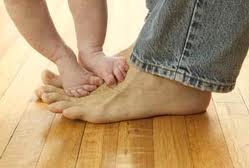
toe stepping

Keep the Line Moving

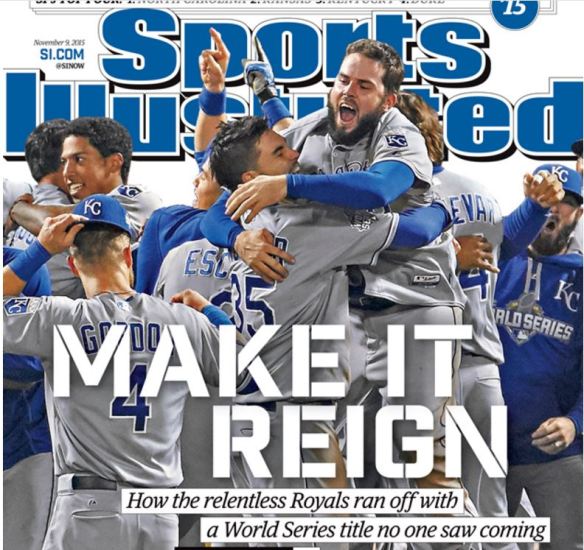
In November 2014, I wrote a blog about the Kansas City Royals major league baseball team and its losing effort in the World Series. A year later I’m pleased to once again write about the Kansas City Royals and the World Series . . . but this time the outcome is different because the Royals won the Series in five games. There’s a real symmetry with the parallels between how the Royals won and how entrepreneurs can win.

The 2015 Kansas City Royals was not a team of superstars. They were not a team of power hitters swinging for the fences and hitting the ball out of the park. In fact, Kansas City only hit two home runs during the World Series, and one was inside-the-park. The Royals won for a combination of reasons. First, all of the players bought into the culture and the plan that was conceived during spring training to win the championship. The players were aggressive at the plate and simply aspired to hit the ball and put it in play. They were intentional about trying to make contact with the ball and send it through the gaps. Once a player was on base the mantra became “keep the line moving.” In other words, the key to producing runs was to generate singles, doubles, walks – whatever it took for the next player to get on base and advance runners across home plate.

Kansas City players and coaches spent considerable time doing research on their opponents. But it didn’t stop there. They also analyzed data on the umpires to understand how strike zones were being maintained. They watched how certain infielders threw the ball to first base; how quickly outfielders got the ball back into the infield and the tendencies of pitchers with their windup motions. The Royals used this information to decide when to stretch singles into doubles – or when Eric Hosmer decided to make a mad dash from third base to home on a ball hit to the third baseman in Game 5. This was a team that hustled. This was a team where it was obvious that all of the players were having fun and enjoyed playing the game. Probably the most amazing trait of the Kansas City Royals was their ability to come back from being behind in the later innings of a game and win. Seven times in the postseason they came from multiple runs behind to win, and outscored their opponents 55 – 11 after the sixth inning. Every player believed that no matter what the odds, they would win and they literally willed it so.

Each of our entrepreneurial endeavors would be well served to use the 2015 Royals as a model. Do we have superstars in our midst who require the feeding of big egos? Do they sulk or create drama when things don’t go their way? Are we focused on hitting the big time, or do we work hard to apply the basics and fundamentals that produce the singles (and sometimes a double) in our everyday business lives? Have we developed a winning culture within our organization that values the contribution of every team member? Christian Colón, a Royals backup infielder, hadn’t played a single game in the post season. And yet he was asked to bat in the 12th inning of the final Game 5 against the Mets. Down in the count with two strikes he proceeded to hit the go-ahead run that led to the championship. Manager Ned Yost trusted Colón to bat as a backup just as he trusted every starting player on the team.

Are we sticklers for diving in and digging up data, then translating it into the myriad of ways that will help us win? Is our team all about hustle and having fun? Do our team members have resilience and a comeback mindset? When the chips are down do they give up or do they truly believe that they can cobble together whatever it takes to put a W on the scoreboard? Sports often offer a plethora of wonderful metaphors that correlate with the business world. But the winning ways of the 2015 Kansas City Royals may be the ultimate example in this respect.

“Keep the line moving” is both an aspirational and an inspirational business concept. It certainly worked for the Royals and is a winning notion for us as entrepreneurs.

This blog is being written in tandem with my book, “An Entrepreneur’s Words to Live By,” available on Amazon.com in paperback and Kindle (My Book), as well as being available in all of the other major eBook formats.
Royals World Series

Comfortable Skin

How’s your skin? Does it fit comfortably? How thick is it? There are a couple of things to know about the skin of successful entrepreneurs. They are usually very comfortable in it and it’s thick as rhinoceros hide. Let’s explore what all of this means.

Our behavior, especially the way we treat other people, is a pretty good indicator of how comfortable we are in our own skin. We’ve all seen the caricature of a hard-driving take-no-prisoners Type A boss. He berates others and makes unreasonable demands. He is completely insensitive to the feelings of those around him and is often loud and boorish. I’m painting a pretty negative picture of this individual to dramatize my point. Such people are often deeply insecure. I’ve gotten to know several people like this. Every one of them has been a good person at heart, but they live in constant fear which adversely impacts their personality. They are afraid of being “found out” – they think that maybe they aren’t as qualified or “together” as the image they are trying to project. They are afraid that at any given moment they might fail at whatever endeavor they are tackling. The tough guy act overcompensates for these insecurities.

We all experience varying degrees of insecurity, but it’s how we deal with it that truly counts. I’ve had many friends and mentees over time that confided that they may be nervous about a particular situation and want my advice on how to handle it. As a seasoned pro when it comes to anxiety, I am able to boost their confidence by saying three simple words . . . “just be yourself.” And what I really mean is just be your true self. Not the mask that is worn and shown to others. Now you might say that this seems like overly simplistic advice. I agree. Just being ourselves is pretty simple. We try to overcomplicate things but it all boils down to this simple premise. I’ve learned how to overcome my anxiety and just be myself by pondering the following question. “Is this a life or death situation?” Fortunately I’ve always been able to answer “no.” Putting things in this perspective allows me to melt away the insecurity and just be who I am. As long as I’m being myself and maintaining my core values, I really don’t care what others may think. And then the pressure is off.

This brings me to my second “skin” point. Our insecurities mirror the manner in which we are affected by our interactions with others. When we allow ourselves to be hurt, feel slighted or victimized by someone else, it’s a reflection of how secure we are in our own skin. We take a lot of body blows as entrepreneurs. We may or may not get the credit when things go right, but we’re definitely the focal point when things go wrong – our fault or not. The business world is ultra-competitive and not everyone plays fairly. Conflict may erupt within our own organization and it’s up to us to resolve it. Bottom line – there’s a lot of opportunity to personalize the constant hammering to which we are subjected. We develop that suit of armor that gets us through the wars when we are totally comfortable with whom we are. I suppose in a way it’s more like a suit of Teflon™ that deflects the attacks. And perhaps they aren’t really attacks at all if we don’t perceive them as such . . . right?

Being comfortable in our own skin accomplishes two objectives. It enables us to treat others with dignity and respect and it inoculates us from allowing ourselves to be hurt by others. This is a pretty good twofer in my book.

 This blog is being written in tandem with my book, “An Entrepreneur’s Words to Live By,” available on Amazon.com in paperback and Kindle (My Book), as well as being available in all of the other major eBook formats.

mask

A Punch in the Mouth

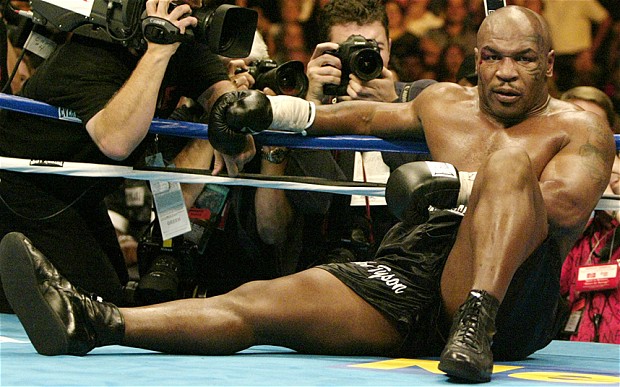
The boxer Mike Tyson is credited with once saying, “Everyone has a plan ‘till they get punched in the mouth.” This is actually a pretty profound statement even considering the source. I’ve written extensively before about resilience after getting knocked down. But let’s take another look at this subject from a different perspective. Simply put – what’s your Plan B?

It’s our nature as entrepreneurs to optimistically create a plan and work it with the full expectation that we will achieve our desired outcome. Sometimes these plans can be quite comprehensive and well-thought. And while it’s always in the back of our mind that things probably won’t go entirely as expected, we generally are confident enough in our abilities that we’ll be able to avoid running off the track. Perhaps we’ve been able to “dodge the bullet” for years with this approach. But at some point when we least expect it, that “punch in the mouth” may stagger us and as our head begins to clear we ask the question, “Now, what do I do?”

This question can be avoided entirely if we create a contingency plan prior to embarking upon whatever endeavor we are pursuing. Resilience is having the will to keep on keeping on. But to what end? We may have the resolve to never be beaten, but if something hasn’t worked we must be able to try a different way. Suppose we started a business that relies heavily on outside sales and we have a topnotch salesperson that is crushing it. Her sales volume is off the charts and our business has become very profitable. Then the unthinkable happens. Our superstar salesperson decides to leave and start her own business in another field. When we hear the news we are in a panic. Who will we ever find to replace her? How long will it take? Will the next salesperson be as strong and effective?

Alternatively, we have already contemplated that this could happen and developed a contingency plan that we implemented the day our key salesperson started. In this case, we consciously chose to build as many relationships as we could with other salespeople in a multitude of industries. Our plan directed us to make a certain number of “touches” every month with talented people who would come to know and respect us – maybe even clamor to come and work for us. Then when our superstar walked out the door we already had a list of well-vetted replacements in our hip pocket. At this point there’s no freak-out. We reach out to the top name(s) on our list and within a short period of time we are able to announce the hiring of a new salesperson.

Of course this all sounds very simple and practical. But let me ask this question. How many of us really have a well-designed Plan B for each of the numerous “punches in the mouth” that we could encounter? Better yet, how many of us have actually documented our Plan B’s; work them, and review them periodically? Contingency planning isn’t necessarily pleasant. To have a Plan B may feel like we don’t really believe that our Plan A will work in the first place. Isn’t this the kind of negative thinking that could doom our success? Not at all. The key is that we know the truth – the truth that we will succeed. We may not get to the finish line exactly the way we had anticipated, but we will win the race.

Having a contingency plan allows us to plunge ahead in a worry-free manner. We can then concentrate our energy and focus on the steps necessary to the positive results that we desire.

This blog is being written in tandem with my book, “An Entrepreneur’s Words to Live By,” available on Amazon.com in paperback and Kindle (My Book), as well as being available in all of the other major eBook formats.
mike-tyson_

Grrrrrrreat!

Question: Is there a secret formula for “greatness?” Some people seem to be destined that way. The rest of us . . . I’m not so sure sometimes.

Answer: Think about the people who you might consider being great – they can be living or dead. Who do you include? Albert Einstein? George Washington? Jonas Salk? Mother Teresa? What do all of these people have in common? They were all human beings, just like you and me. Each of them faced trials and tribulations similar to our own. None of them set out to be great. So just how did they rise to the level of respect and achievement that they did?

Each of these great people worked hard to live to their full potential. No one actually does this completely. But some people seem to get closer than others. So what does this say about mankind? We all are meant to do great things. When I was a child my parents pushed me hard to be better. My teachers did the same. On the basketball court my coaches rode me hard. There were times when I resented this but as an adult I realize that each parent, teacher and coach saw that I had potential and wanted me to achieve it. I attribute some of my success to having these people believe in me and encourage me to reach for the stars.

Some of us weren’t pushed as hard during our formative years as was I. So how do we do great things? Here’s the formula:

(Big Dreams + Risk Something) + (Resilience + Perseverance) + Positivity = Greatness

We can’t do great things if we don’t dream big dreams. Why don’t more people dream bigger? Because often there is risk involved or they don’t believe they can realize their dreams. But when we dream big and we put ourselves at risk, then we have a chance to make a real difference. And there’s no doubt that when we do both of these things we may not always succeed immediately. So it’s imperative that we bounce back and keep on trying. In the immortal words of Winston Churchill – we never, ever, ever, ever, ever give up. Finally we must maintain a positive outlook on everything we’re doing. Negativity blocks the flow of positive energy that we need to make the formula work. There’s one word that describes all of this . . . mindset. Great people who do great things have a great mindset.

You and I can have a great mindset. It requires practice every single day. Our DNA is programmed for us to do great things. When our mindset is in the right place, our greatness will manifest.

This blog is being written in tandem with my book, “An Entrepreneur’s Words to Live By,” available on Amazon.com in paperback and Kindle (My Book), as well as being available in all of the other major eBook formats.
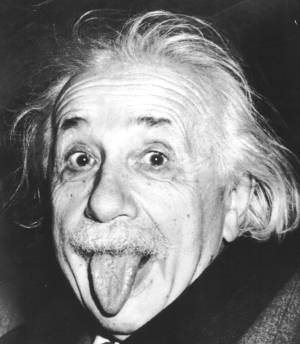
Einstein

The “F” Word

Question: Recently I’ve been unsuccessful with several things in my life including a relationship, a business initiative and with an attempt to buy a house. How do I stop feeling like such a loser?

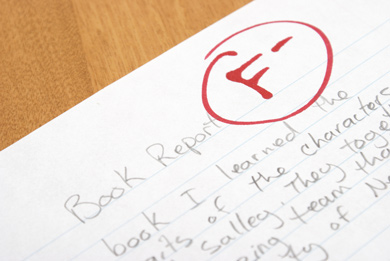
Answer: You are referring to a concept that most of us call failure. And you can take comfort in knowing that all of us encounter it periodically. Everyone. How each of us deals with failure is another matter. In my book, An Entrepreneur’s Words to Live By, I wrote a chapter in which I say that “Mistakes are simply unfinished experiments in the laboratory of life.” I believe that the same statement can be made about failure.

If we look at failure as a finite experience it can be profoundly negative. But if we see failure as merely a step in a process, then there is hope. And hope is generally a positive emotion. It all boils down to how we choose to view what the world might typically deem a failure. The process of failure is actually a process of elimination . . . what works and what doesn’t. We tend to get caught up in the emotions surrounding failure and may be unable to see the good that can come from it. These emotions run the gamut from frustration, embarrassment and inadequacy to anger, despair and blame.

We owe Thomas A. Edison a huge debt of gratitude (as well as a number of other inventors over the centuries). He made 1,000 unsuccessful attempts to invent the light bulb but when asked about this by a reporter, he responded, “I didn’t fail 1,000 times. The light bulb was an invention with 1,000 steps.” Imagine the emotional control he must have had. But rather than giving up and accepting each “step” as a failure, he learned how to make little tweaks that eventually led to success.

Perhaps if we look at our failures in a more scientific manner – as part of a discovery process – we can overcome the negative emotion that often is associated with apparent setbacks. This along with a good dose of perseverance, resilience, a positive mindset and coupled with an expectation of good results, can propel us to the success we seek. This is a powerful recipe that all boils down to how we choose to think.

When we choose to learn from our experiences the “steps” toward success are infinitely good. As entrepreneurs and human beings we can then embrace this process as part of the richness and fullness of life.

This blog is being written in tandem with my book, “An Entrepreneur’s Words to Live By,” available on Amazon.com in paperback and Kindle (My Book), as well as being available in all of the other major eBook formats.
Test Score