
Unknown's avatar

About anentrepreneurswords

R. Lee Harris grew up in Manhattan, Kansas and has lived in the Kansas City area since 1977. A 1975 graduate of Kansas State University, Harris began his career with Cohen-Esrey, LLC as an apartment manager two weeks after he graduated. Now president and CEO, he is involved in apartment management, development and investment; construction and tax credit syndication on a nationwide scale. Over the course of his career Harris has overseen the management of more than 27 million square feet of office building, shopping center and industrial space and nearly 60,000 multi-family units. He has started dozens of business enterprises over the past 40+ years. In 1991, Harris wrote a book entitled, The Customer Is King! published by Quality Press of Milwaukee. In 2012 he authored the book, An Entrepreneur's Words to Live By. He has mentored a number of business people over the years and has been a long-time participant in the Helzberg Entrepreneurial Mentoring Program. He and his wife Barb have two grown daughters and one grandson. They are active in their church, community and university.

Not a Fairy Tale

Once upon a time there was a prince who traveled to the far reaches of the kingdom. He spied a young woman who was the most magnificent creature he had ever seen. The prince spoke to her and rather than being demure, she was witty and charming in her reply. They conversed for nearly an hour over a chalice of wine and the prince hurried back to the castle in a state of euphoria. He just knew that he was going to take this woman to be his wife. After telling his father and mother about his encounter, he set about making plans for the wedding. The royal florist was summoned as was the baker. The wedding was going to be an elaborate affair with only the finest of materials for the bride’s gown. Special jewelry was to be made for the soon-to-be-bride, and the prince had a long conversation with the priest about the ceremony. He also cast about to find the perfect location for a new home to be constructed inside the castle walls and met several times with the royal furniture and cabinet makers.

Everything was going to be perfect . . . or so thought the prince . . . except for one thing. The woman with whom the young prince was smitten was already married. In his eagerness to move forward with a wedding and a life with a new wife, the prince ignored the first step in developing a plan. He forgot to get the facts first.

It’s easy to fall into this trap whether we’re entrepreneurs or not. We become so enamored with an idea that we immediately want to plunge into developing a plan to make it a reality. Then we either pay lip service to the facts, or we just blow right on by this step. Fact Finding should always be Step One for any planning process.

Suppose we have an idea to scale our business. We’ve been sailing along making a reasonable profit, but believe that we could really make it big if we could only grow much larger and capture a wide range of efficiencies in our processes and cost structure. Our experience in the industry is extensive and we think we’re tuned in to the nuances of the market. We begin to look at all of the different options for expansion. The owner of a competitor is rumored to be retiring and perhaps we could acquire his company. There’s a sharp woman in another city that we’ve been recruiting for quite some time – she could open an operation for us in that city. Our production line has been running at full capacity for over a year. Maybe we could invest in a second production line that would allow us to ramp-up even further. Lots of ideas are swirling around and suddenly we’ve entered the Danger Zone. Why? Without some serious Fact Finding we could make a number of mistakes with our expansion – some of which could be fatal.

For starters, even though we think we know the market like the back of our hand, there may be subtle shifts that we haven’t noticed. When is the last time we calculated our market share and that of our competitors? What is the longer term outlook for our product? Maybe it’s going great guns right now, but in two years it will be obsolete because a better mousetrap is in the offing. Do we have more than anecdotal evidence that there’s demand for a second production line?

The Fact Finding step should take a “fresh eyes” approach to all aspects of our business and the market. It’s as though we are entering the business for the first time. No matter how much we think we know; no matter how experienced we think we are, looking at everything with a fresh and detailed perspective is critical to our success and maybe even our survival.

Great ideas need to be fleshed out in a careful and systematic fashion. While we don’t want to be frozen in analysis paralysis, performing adequate Fact Finding should always be the first step when creating an implementation plan.

You can also listen to a weekly audio podcast of my blog. What you hear will be different than what you read in this blog. Subscribe on iTunes or wherever you get your podcasts. You can also click on this link – Click here to listen to Audio Episode 44.

This blog is being written in tandem with my book, “An Entrepreneur’s Words to Live By,” available on Amazon.com in paperback and Kindle (My Book), as well as being available in all of the other major eBook formats.


Chicken Feed

What do sandpaper, tiny bits of stone and gravel, a 1969 John Wayne movie and successful people – especially entrepreneurs – have in common? The one-word answer is . . . grit. I’ve written before about perseverance, but grit takes this idea a step beyond. It’s one thing to keep on keeping on, but grit adds a special dimension to the notion of resolve. But before we dive in, let’s go back to the opening sentence for some context. Sandpaper has a very rough surface that is referred to as grit. This grit can be very coarse or very fine depending upon the project at hand. Chickens eat tiny bits of stone and gravel to help them digest their food. These small particles are also called grit. And who can forget the classic John Wayne movie called True Grit, in which a young teenage girl works in tandem with a drunken U.S. marshal to track down her father’s killer.

Many of us call it quits too early when something isn’t going the way we had envisioned. As entrepreneurs we are told that we must persevere and eventually things will turn out the way we want. So we slog on and keep fighting the good fight. However, this isn’t grit. Remember the earlier mention of sandpaper. Everyone knows that if we rub sandpaper on our skin we can draw blood. Grit does this metaphorically. We invest more of ourselves in whatever we are pursuing than just time and stick-to-it-ness. In the process we may get a little bloodied. We may get a black eye or a broken nose. But in the end we win.

So just how does grit manifest in more concrete terms? Let’s look at some people who have demonstrated “true grit” in exemplary fashion. Singer/songwriter Dolly Parton grew up dirt poor as she describes it, in the Great Smoky Mountains of Tennessee. Even so, she maintained a cheerful and positive mindset throughout her childhood that has served her well during her long and illustrious career. Today, at age 71, she has amassed a fortune worth more than $500 million. She claims she had more “guts than talent.” But I think it was her optimism and sunny disposition that helped her overcome the obstacles she faced along the way.

Next, there’s the amazing success of Jeff Bezos, founder of Amazon. Bezos graduated from Princeton in 1986 and went to work on Wall Street. He enjoyed a fairly lucrative career in the investment world but he had a dream. He saw that the Internet was going to dominate the future and gave up his hedge fund job to start Amazon in 1994. The catalyst for him was his passion for that which was scientific and technological.

Finally most of us know the story of J. K. Rowling. Divorced, on welfare and struggling to provide for her baby, she was nearly out of options in 1994. In spite of these challenges she wrote the first Harry Potter book, Harry Potter and the Philosopher’s Stone. The manuscript was rejected by 12 different publishers before finding one that would print it. And in several cases, the rejections weren’t very kind. But Rowling had no choice but to bounce back and keep trying – it was either that or she would never be able to climb out of the deep hole she was in. Her resilience made all the difference – and of course the rest is history with 400 million copies of the Potter books being sold.

There are many other elements that can be included when defining grit – courage, bravery, pluck, mettle, backbone, spirit, strength of character, strength of will, moral fiber, steel, nerve, fortitude, toughness, hardiness, determination, tenacity, guts and spunk, to name a few. I’m partial to a combination of optimism, passion and resilience that accompany persistence and endurance.

Call it what you will, grit is essential for moving beyond perseverance to the successful outcomes we desire. And yes, there will be blood, sweat and tears along the way. But they are merely proof that we have invested our heart and soul in the arduous and exhilarating process of fulfilling our vision.

You can also listen to a weekly audio podcast of my blog. What you hear will be different than what you read in this blog. Subscribe on iTunes or wherever you get your podcasts. You can also click on this link – Click here to listen to Audio Episode 43 – Lincoln vs. Douglas.

This blog is being written in tandem with my book, “An Entrepreneur’s Words to Live By,” available on Amazon.com in paperback and Kindle (My Book), as well as being available in all of the other major eBook formats.

Was Jimmy Styks a Pirate?

If you strive to be a successful entrepreneur it’s incumbent upon you to be able to persuade others to buy from you whether it’s a product, a service, and idea or whatever. The same goes for you even if you aren’t an entrepreneur. Somewhere along the line you must convince someone else to say “yes” to you. With that as the backdrop, consider the following pitches for the same product.

Scenario #1: The Jimmy Styks Apex Hybrid 114 Stand-Up Paddle Board is one of the best paddle boards on the market today. This paddle board is 11’4” in length, 32” in width and amazingly light at 33 pounds with a thickness of only 4.8”. The 5” nose rocker and the 3” tail rocker offer tremendous stability for this sleek wave runner. And its rugged design will accommodate an NFL-sized bruiser of up to 260-pounds. Real bamboo inlays provide superior strength, and utility tie-downs keep your gear in place while you paddle. The board is camera mount ready and a carry handle is included for easy transport to and from the water. This is a top-of-the-line model and will give you years of pleasure on the water.

Scenario #2: I went on a journey the other day. But it wasn’t the kind of journey with which you might be familiar. The ocean was like glass and I could see to the bottom 40 feet below. Fish were swimming everywhere and I saw a baby octopus poke out from between two rocks. My Jimmy Styks Stand-Up Paddle Board was my constant companion as I glided effortlessly across the surface. After about 20 minutes something glistening caught my eye. The sun was bright overhead and I stopped to look. There it was again! Something was definitely on the bottom and was shining in such a way as though it was beckoning to me. I dove to the bottom and gently brushed back the sand. Yes! It was a Spanish gold doubloon. I brought it to the surface for closer inspection and found it to be in perfect condition with a mint stamp of 1798. Wow! I dove back to the same spot and there, waiting for me, were five more doubloons – a truly amazing find. Thankfully my Jimmy Styks comes equipped with a carrying case into which I stashed my treasure and utilized the built-in gear tie-downs.

Since that first journey I’ve taken many others to the same spot. Fortunately my Jimmy Styks can hold a lot of weight, up to 260-pounds actually. I only weigh 180 so I was able to haul a lot more treasure from that spot with each visit. I mounted a GoPro camera on the board to record my recovery effort and was gratified that my bamboo-constructed Jimmy Styks was so stable, even with the weight of shifting gold, diamonds and emeralds. Yes – I also found exquisite baubles on the ocean floor as well; a real pirate’s treasure. In all, there was 100 pounds of the stuff. And I was able to quit my job and now live the life of leisure thanks to my Jimmy Styks Apex Hybrid 114 Stand-Up Paddle Board.

Far too often we try to persuade others with facts and figures. While important, facts and figures don’t tell the whole story. And that’s just the point. Storytelling is a much more powerful method to help someone buy something. I don’t know about you, but I would be much more inclined to have an interest in purchasing a Jimmy Styks Stand Up Paddle Board after listening to the story in Scenario #2. The recitation of facts in Scenario #1 was fine, but I wasn’t particularly inspired. Customers are more likely persuaded to buy from us when we inspire them in some fashion.

Storytelling is an effective way to help others buy from us. Painting a picture that someone can envision is more inspiring than simply pointing out facts and features.

You can also listen to a weekly audio podcast of my blog. What you hear will be different than what you read in this blog. Subscribe on iTunes or wherever you get your podcasts. You can also click on this link – Click here to listen to Audio Episode 42 – On It or In It?

This blog is being written in tandem with my book, “An Entrepreneur’s Words to Live By,” available on Amazon.com in paperback and Kindle (My Book), as well as being available in all of the other major eBook formats.

Death, Taxes and . . .

We’ve always been told that there are no guarantees in life except death and taxes. I submit that there is one more guarantee that’s much more pleasant. We can be guaranteed that every day will be a good day . . . if we make it so. How? Read on.

Whether our day is good or bad depends upon our state of mind. By extension, we make the choice as to whether or not we will generally be happy in life. Being an entrepreneur is a tough gig. There are plenty of obstacles – way too many to list here. We can allow these obstacles to eventually overwhelm us, or we can look at them as opportunities for growth and success. But how do we get our mind right to look at our challenges this way? Here are some ideas that work for me in guaranteeing that every day is going to be a good day and that I’m able to be happy about my life overall.

Smile before answering or making a phone call. Smiling helps to release neuropeptides that counteract stress. Also, dopamine, endorphins and serotonin all go to work when we smile. So there is a positive physiological reaction to smiling that can’t be ignored. And no doubt the conversation will be more pleasant and may result in a positive outcome – all because of a smile.

You know all those e-mails we send every day? We probably send too many because it’s such an efficient way to communicate. Yet, I find life can be pretty dull if we just keep to ourselves. I like to convert some of my e-mail conversations into face-to-face meetings or phone calls. I also find it hard to build relationships exclusively via e-mail. Thus, I build stronger relationships with the personal touch and it makes me feel good to have human interaction throughout the day.

Express gratitude every single day. We have so much for which to be thankful. My day is more fulfilling when I tell someone how much I appreciate them and what they are doing. Gratitude helps me to feel more optimistic and contributes to building stronger interpersonal relationships.

Become centered. Life moves at warp speed for most of us. It’s easy to get caught up in the whirlwind and all of a sudden things can spin out of control. Spending a few moments from time-to-time with deep breathing and visualization exercises helps to ground me and restores my calm.

I was a Boy Scout and we committed to doing a good deed every day. I know it’s going to be a good day when I do something for someone else and am rewarded with their smile. This can be as little as holding the door for another person or helping someone put their bag in the overhead compartment on an airplane.

If exercise isn’t part of your daily routine it’s certainly worthy of consideration. A good morning workout and long walk set a pattern for the day. I feel great after sweating and burning calories. I’m able to control my weight as well as ward off stress through physical activity.

Don’t take yourself too seriously. One of the healthiest things we can do – multiple times each day – is to laugh. And if we can laugh at ourselves, that’s even better. As with smiling, laughing offers innumerable health benefits and it’s usually the result of something funny. When we take ourselves too seriously we may become self-conscious and begin to doubt ourselves.

Do at least one creative thing every day. But I’m not a creative person you say. That’s beside the point. We all have the ability to be creative at some level. Find something large or small where we can stretch our minds in a creative fashion. And guess what, you’ll find a nugget of good somewhere in the process.

Finally, be present. This can be very hard for us as entrepreneurs when we’re caught up in the fast-paced life we lead. It’s been my experience that I make fewer mistakes (that can erode the feelings of a good day) when I focus on the moment. Maybe that’s concentrating on a task at hand or something as simple as giving my full attention to someone with whom I’m meeting.

Yes, every day is guaranteed to be a good day if we take the necessary steps to make it happen. I can’t wait for my feet to hit the floor each morning because I’m stacking the deck in favor of this guarantee!

You can also listen to a weekly audio podcast of my blog. What you hear will be different than what you read in this blog. Subscribe on iTunes or wherever you get your podcasts. You can also click on this link – Click here to listen to Audio Episode 41 – To Proposition or Not to Proposition?

This blog is being written in tandem with my book, “An Entrepreneur’s Words to Live By,” available on Amazon.com in paperback and Kindle (My Book), as well as being available in all of the other major eBook formats.
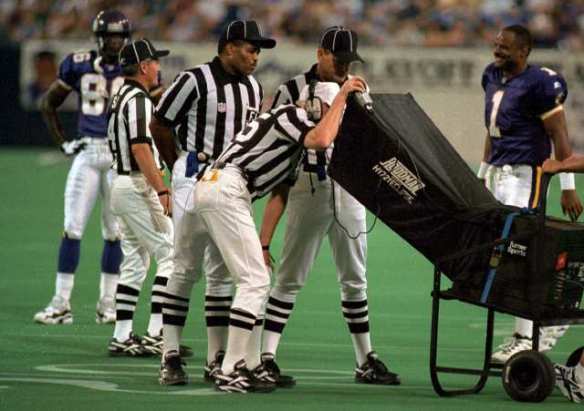
Replay Rules

The other day I was speaking with a man who was miserable in his job. He was feeling very stifled and unappreciated. He told me about several decisions his boss had made that proved costly to the company and impacted his bonus on a personal level. He was particularly incensed that the boss shielded his superiors from the rest of the troops – and thus the higher-ups in the organization were unaware of the screw-ups and incompetence that were evident. Going over the boss’ head would be suicide. Have you ever heard this before? Perhaps you’ve even experienced it yourself.

We might be tempted to simply dismiss this as a classic case of job dissatisfaction, which it is – but . . . For 20 minutes this person went over and over the issues with which he had been dealing. He was intense. He was angry. This individual had a passion for what he had been doing and felt as though this passion had been stolen from him. Without a doubt he was grieving over what was obviously a loss for him. And to make matters worse, he felt powerless to do anything about it.

I recounted to him what he had told me and followed up with this statement, “So, it sounds like you’re done, right?” After a brief pause he said, “Yeah, I guess so.” And then he repeated it a bit more emphatically. He was so mired in misery that he hadn’t really come to grips with the fact that he had already made up his mind to make a change. At this point I redirected the conversation and began to ask a series of questions intended to stimulate his vision for the future and what he’d like to do. Yet, he continued to re-hash what he was encountering in his present position. Finally I asked his permission and then offered him the following advice, “You’ve already walked through the gate. Close it; don’t look back, and move on.”

I realize that this advice may sound trite and overly simplistic. But if you’ve ever been in a similar situation you’ll understand how easy it is to become trapped in a vicious cycle of “replays.” This is where we replay blow-by-blow how we’ve been wronged. Somehow we’re transformed from savvy entrepreneurs into finger-pointing victims. What to do?

Intuitively we know that the replays must stop and we have to move on. It’s also true that we may not necessarily have someone around who will shake us out of our funk. It’s a fact that the negative energy expended with the replays has never solved the problem for anyone. So we have a choice to make, and there’s really only one choice. Remaining locked into the status quo isn’t an option. And we’ll assume that there’s nothing we can do to improve the status quo.

I recommend taking the following steps. First, we affirm that we are ready to move on. The best affirmation is to quit whatever situation is no longer tenable. But that might not be immediately possible. If it’s a job or a partnership, it may be necessary to map out an alternative before making a move. But emphatically making the decision is vital. Second, we set a timetable for moving on, especially if it’s going to take a while to plot our course. Third – and this one is really important – we create a vision of our future. If there were no obstacles in our way, what would we be doing five years from now? I always suggest painting the grandest picture possible and then work backwards to the present. This can be an exhilarating exercise and helps create a positive mindset for moving forward to make our vision a reality. Putting this vision in writing is critical along with identifying the process we will undertake to get from here to there.

Being stuck in replay mode when we’re mired in a hopeless situation does nothing more than make us miserable. Affirming that we’re done with the negative circumstances; committing to a timetable, and creating a vision for our future are the steps needed to move forward.

You can also listen to a weekly audio podcast of my blog. What you hear will be different than what you read in this blog. Subscribe on iTunes or wherever you get your podcasts. You can also click on this link – Click here to listen to Audio Episode 40 – Hero or Not?

This blog is being written in tandem with my book, “An Entrepreneur’s Words to Live By,” available on Amazon.com in paperback and Kindle (My Book), as well as being available in all of the other major eBook formats.

Oops . . .

I’ve said many times that mistakes are simply unfinished experiments in the laboratory of life. Too often we beat ourselves up over the mistakes that we make. Innovative forward-thinking entrepreneurs make a lot of mistakes. This is normal and necessary to some extent. It’s when the same mistake is made repeatedly that there’s real cause for concern.

Understanding how mistakes are made can be helpful in eliminating their repetition. Simply shrugging off a mistake as “an unfinished experiment” is a missed opportunity to gain deeper insight into why it happened and what can be learned. This also must be tempered in the other direction. We’ve all seen sports teams that play not to lose. Often this ends badly. We can become tentative and overly-focused on avoiding mistakes. And what happens then? We actually end up making even more mistakes.

I’ve learned quite a bit about mistake-making over the course of my life and career. Many were silly. Some were more significant. Fortunately none were ever life or death. Here’s what I’ve learned.

A number of my mistakes occurred because I failed to Plan. I shot from the hip or simply jumped into the water without any forethought. Plotting a course doesn’t mean having a 40-page business plan. But it’s important to think through the different steps that will be taken to reach the ultimate objective. In the process we also look for possible hiccups that might be encountered and determine what can be done to avoid or mitigate them.

With a plan in hand we make sure we have sufficient resources to effectively implement it. Further, we also determine if we (and/or our team) are adequately Educated on what we will need to do to succeed. A large percentage of mistakes are made because those implementing the plan aren’t fully up-to-speed on how to do so. Failure to be sufficiently educated on the “how” and to understand the context of a particular situation can have deadly consequences. Think about an auto mechanic who isn’t properly trained on how to re-connect a brake line on a particular model of car. Uh oh.

Following a plan and being educated on the “how” doesn’t guarantee a mistake-free execution if Process is ignored. On June 1, 2009, Air France Flight 447 from Rio de Janeiro to Paris crashed into the Atlantic Ocean killing all aboard. The report by the French Aviation agency, BEA, stated, “Temporary inconsistency between the measured airspeeds likely following the obstruction of the pitot probes by ice crystals that led in particular to autopilot disconnection and a reconfiguration to alternate law,” and “inappropriate control inputs that destabilized the flight path.” In other words, the pilots failed to follow the prescribed process for such conditions.

Here’s a cause for mistakes that happens more often to me than I care to admit. It’s called Distraction. I’ll be cranking away on a project and the phone will ring; someone stops by my office, or I need to dash off to an appointment. Unfortunately my project was interrupted and so was my train of thought. When I pick up where I left off I’m in the danger zone. Invariably there’s a gap that I can pinpoint as the root cause of whatever mistake ensues. More recently I’ve been trying to make some notes to myself before tending to the distraction.

Information Failure is usually referenced in the field of economics. But I think it can be broadened in more general terms to include mistakes that are made from bad information, bad facts and/or bad conclusions. There have been times that the data was old and I hadn’t bothered to make sure that it was current. And, there’s no doubt that I’ve drawn the wrong conclusion as a result of incomplete information.

We all want to minimize our mistakes. Understanding what causes them is the first step in this process. For me a failure to plan, be educated, follow process, becoming distracted and using bad or incomplete information are usually the reasons for my mistakes.

You can also listen to a weekly audio podcast of my blog. What you hear will be different than what you read in this blog. Subscribe on iTunes or wherever you get your podcasts. You can also click on this link – Click here to listen to Audio Episode 39 – The Enemy.

This blog is being written in tandem with my book, “An Entrepreneur’s Words to Live By,” available on Amazon.com in paperback and Kindle (My Book), as well as being available in all of the other major eBook formats.

thenuttyprofessor

Quicksand

It’s time for a touchy subject. I’ve been thinking about it for quite some time and have been very reluctant to take the plunge. But as time has passed I feel obliged to weigh-in. The subject is politics. Don’t worry – I’m not taking sides here. Instead I’d like to pass along some observations that I hope will be thought-provoking.

For starters I think we can agree that society has become polarized to an extent never seen before in our lifetimes. It used to be that certain political figures were despised. Now this hatred extends to those who support the politicians. The media and especially social media are ablaze with inflammatory rhetoric and shrill commentary – all of which spans the political spectrum. Echo chambers have emerged with like-minded people egging each other on. Here are my basic questions. Exactly what is this accomplishing? What problem is actually being solved? Is the conversation (if we can call it that) lessening the polarization that we are witnessing?

For entrepreneurs (and others too) this is quicksand territory. When we spew forth on Facebook, Twitter, LinkedIn or some other platform we run the risk of alienating others – that’s obvious. I’ve heard a lot of talk about “being unafraid to speak up for our values and principles.” OK, fine. But to what end? Do our customers want to do more business with us because of our public proclamations? How does this affect our team members? And what about our friends? I made the decision long ago not to participate in political dialogue on public forums. Those who know me well are certainly aware of my political leanings. But the last thing I want is for my persona to be wrapped in political packaging.

A number of high profile CEOs and entrepreneurs have chosen recently to make political statements. In one instance a business leader purportedly said that team members who supported a certain political candidate weren’t welcome in his company. In other cases customers have supposedly been told that their patronage is not desired if they subscribe to a specific ideology. Without judging the merits of this discourse, I simply wonder what is to be gained by such messaging.

I’m the last person to subscribe to political correctness as a reason for raising this issue. And it goes beyond angering customers and team members. What’s really at stake is the health and well-being of our society. The polarization path we are on is not in our mutual best interest. The notion that anti-anything or anyone is productive is puzzling. We need positive energy to advance our entrepreneurial endeavors. And we certainly need positive energy as human beings to live vibrant and fulfilling lives. I submit that handwringing and negative social media posts do nothing to achieve that which we desire.

Part of the polarization problem we are experiencing may stem from the tribalistic nature of our society. There’s a lot of talk about open-mindedness but the fact that many of us function within monolithic “tribes” prevents a diversity of ideas and a true desire to gain understanding of other perspectives. This is not a condemnation but merely an observation.

What has been happening in this politically charged environment is a wake-up call for me. Rather than join the fray and “one-up” the argument, I am choosing to measure my words and actions against a standard of positivity and productivity. I’ll stand up for my principles in the voting booth and with my checkbook. My public conversations are about how I can serve and help others meet their needs and find success. I am striving for my customer and team members to see me as a positive force in their lives. I want to be for something rather than against. My brand of entrepreneurship is politics-free.

We need to work together to end the polarization in our society. We can start by taking a positive stance on social media and in our other public dealings.

You can also listen to a weekly audio podcast of my blog. What you hear will be different than what you read in this blog. Subscribe on iTunes or wherever you get your podcasts. You can also click on this link – Click here to listen to Audio Episode 38 – Reality Superstar.

This blog is being written in tandem with my book, “An Entrepreneur’s Words to Live By,” available on Amazon.com in paperback and Kindle (My Book), as well as being available in all of the other major eBook formats.

quicksand

Apologies to Rodney

Successful entrepreneurs display many different leadership traits. But there’s at least one aspect of leadership that an entrepreneur cannot just automatically possess – instead it must be earned. Of course I’m talking about Respect. Many believe that respect should be granted simply due to a station in life or perhaps a position that is held. Certainly there may be some truth to this but true respect is not something that is simply bestowed. Yes, the Queen of England, the President of the United States and other heads of state command respect. But it’s for the office and not necessarily the individual.

Rodney Dangerfield made a living as a comedian with his trademark phrase, “I don’t get no respect.” With apologies to Rodney, respect is no laughing matter. It should be viewed with the utmost of seriousness because it can be a life or death factor for businesses and organizations of all sizes. When CEOs misbehave not only is the individual disgraced but the company he or she represents is shamed as well. On September 28, 2015, the EPA announced an order to recall Volkswagen cars built from 2009 – 2015 due to software that was programmed to cheat on emissions testing. Two days later the company admitted to this malfeasance and on September 23 the CEO resigned. As of this writing, Volkswagen faces enormous financial penalties and long-lasting reputational damage that would bankrupt smaller firms. Rebuilding the respect of the public for the VW brand will be a long and arduous process. And who knows if the former CEO will ever again be truly respected.

Earning respect doesn’t just happen. There is an intentional process that is required and it consists of multiple facets. From my perspective it all starts with integrity. Do we always do the right thing even if it’s seemingly detrimental to our best interests? And do we always do the right thing even when no one is watching? Integrity cannot be turned on and off on a whim. Either it’s there or it’s not. Our team members, customers, suppliers – everyone is watching. If we keep our moral compass centered we will have taken a giant step toward the pinnacle of respect.

Hand-in-hand with integrity is authenticity. It’s impossible to be authentic and genuine without integrity. Are we comfortable enough in our own skin to be ourselves? We’ve all seen others who are struggling with inner demons and insecurities. They “put on airs” and engage in bragging and blowhard behavior. It’s pretty hard to respect someone who is living in disguise and can’t deal productively with his or her personal issues.

Entrepreneurs who have empathy and genuinely care about others are more likely to earn respect than an insensitive tyrant. Think about this. An individual is completely honest; does everything in an above board and straight forward manner; is totally authentic – but he’s also a flaming asshole. How much respect do you suppose those people with whom he interacts have for him? Treating people poorly is a fast way to lose the respect of others. The leader who is courteous and thoughtful is earning respect. The leader who shows a real interest in others and their welfare is earning respect. The leader who subordinates his needs or desires to the wishes of another, is earning respect. When a leader enjoys success but publicly gives the credit to members of his team, he is earning respect.

Consistency is the final ingredient in this recipe for respect. We can’t be hit or miss with our integrity, authenticity or in the way we treat people. Inconsistency sows seeds of doubt about our real motives. In a worst case scenario others see us as being manipulative and conniving. Clearly when we stay true to our principles we have no problem remaining consistent.

Earning respect takes time and once achieved the quest to maintain it should be sacred. Earning and keeping respect is best accomplished through integrity, authenticity, empathy and consistency.

You can also listen to a weekly audio podcast of my blog. What you hear will be different than what you read in this blog. Subscribe on iTunes or wherever you get your podcasts. You can also click on this link – Click here to listen to Audio Episode 37 – Master’s Degree.

This blog is being written in tandem with my book, “An Entrepreneur’s Words to Live By,” available on Amazon.com in paperback and Kindle (My Book), as well as being available in all of the other major eBook formats.

rodney-dangerfield

The Few, The Proud . . .

The U.S. Marine Corps is well known for taking raw young men and women and transforming them into lean, mean fighting machines (or so goes the saying). The process they use is fascinating and very instructive. It involves breaking down an individual and then building them back up. Legendary drill instructors use a variety of physical, mental and emotional techniques to accomplish this. There’s a lot of yelling and screaming. Recruits are pushed to their limits and beyond. After weeks of training a recruit who was 45 pounds overweight can climb a thirty-foot rope with one hand or run three miles in 19 minutes.

How does any of this apply to us as entrepreneurs? There was a statement in the preceding paragraph that is the key. “Recruits are pushed to their limits and beyond.” Many of these future Marines never dreamed that they could perform some of the physical tasks required. They never knew they had the mental fortitude and emotional stamina to endure. But here’s the truth – they totally underestimated themselves.

As entrepreneurs we may also have a tendency to underestimate ourselves. We fail to see our full capabilities and understand our greatness. Sometimes this is due to a lack of confidence. But it may also be because we just don’t think big enough. And there’s a lot of societal noise that is difficult to listen through. Remember when we were children and an adult asked us what we wanted to be when we grew up? Some of us answered an astronaut, movie star or even the President of the United States! Then something happened and we didn’t become astronauts, movie stars and U.S. presidents. Certainly our interests changed, but we also felt pressure to be more “realistic” with our expectations. We were herded into more “achievable” chutes and we eventually conformed to generally understood limitations. All of this imprinted upon us as adults and we lost the desire to dream in a large way.

Almost every one of us has the potential to be more and to do more. This is evidenced every time we learn something new. I don’t think I’ve ever met anyone who has reached his or her full capacity to achieve. And yet we sometimes sell ourselves short. We tell ourselves in different ways that we’re not smart enough or persistent enough or creative enough to do something. “Where are we going to get the money to pursue this new idea,” we ask. Then we answer, “I don’t have the right contacts to do it.” This may be a true statement at a particular moment in time. So what are we going to do about it? We can avoid underestimating ourselves when we take intentional “I can” steps.

The first step is to reject the societal noise that tries to impose limitations on us. I’ve learned to catch myself when I start to think or say, “I can’t do that.” I replace this with the thought or statement, “How can I do that?” This sets a whole new tone and puts me in a problem-solving mode from the outset.

The “How Can I” notion will be the trigger that releases a creative stream into which we can tap. By throwing off our mental shackles we are shaping a mindset that is receptive to this creative flow. We explore a multitude of ideas and begin to see a path that leads us to that which we want to achieve. We don’t worry about our ideas being judged as stupid or crazy for we’re looking at all kinds of possibilities. I find the process of discovery to be exciting and challenging, and I thrive on the mental stretch that ensues.

The final step is that of visualizing the successful outcome we are seeking. Visualization is a powerful tool and cements our objective into our conscious and subconscious minds. What started out as the question, “How can I raise money for this idea,” now is revealed as complete. The idea has been implemented and boy is it amazing!

We can avoid underestimating ourselves by asking the question, “How can I” rather than affirming “I can’t.” Then we let the creative juices flow to figure out “How I can.” Ultimately we visualize the end result in grand fashion and move decisively to make it happen.

You can also listen to a weekly audio podcast of my blog. What you hear will be different than what you read in this blog. Subscribe on iTunes or wherever you get your podcasts. You can also click on this link – Click here to listen to Audio Episode 36 – Not My Job-itis

This blog is being written in tandem with my book, “An Entrepreneur’s Words to Live By,” available on Amazon.com in paperback and Kindle (My Book), as well as being available in all of the other major eBook formats.

rope-climb-the-marines-way

Bears in Trash Bins

Here are several scenarios. Tell me what’s missing. A manufacturing operation is experiencing an alarming increase in the number of product rejections. A child chronically fails to turn in his homework assignments. Monthly financial reports for a company seem to always be delivered at least two weeks late and sometimes more. Customer service ratings for a particular business are abysmally low. Bears are constantly getting into trash bins in a neighborhood and making an incredible mess.

So what is it? What’s missing? It’s a concept that can sometimes be elusive in entrepreneurial environments and often in our personal lives as well. It’s called . . . accountability. Accountability has four basic components – understanding, commitment, responsibility and consequences.

A failure to understand what is expected can obviously lead to an overall failure in whatever operation is being performed. The manufacturing rejects could very well have been caused by a machine operator not understanding a critical step in his or her process. It’s pretty hard to hold this person accountable if there was a lack of training to ensure a full understanding of the process.

Without commitment full accountability is impossible. The child must not only understand how important it is to submit his homework but he must also be committed to the notion as well. If he refuses to commit to turn in his work, then he will refrain doing so. While it’s true we can hold him accountable for his actions, it’s unlikely that we’ll achieve the desired result.

The path to accountability involves a willingness to take responsibility. “It’s mine (or ours) to do” becomes the mantra. In unhealthy organizations there may be a great deal of finger pointing. “It’s the fault of Marketing.” “No, Sales screwed up!” No one seems willing to step up and claim whatever “it” is. Taking responsibility is a sign of integrity and sacrifice, especially if things go wrong.

Finally there are consequences. We may think of consequences in a negative sense but of course consequences can also be positive. The accountant who finally figures out how to deliver the financial reports on time may benefit from positive consequences in the form of a bonus. On the other hand, the customer service department that gets consistently poor ratings might suffer the consequences of being terminated. It’s important to note that for negative consequences to be administered fairly, the individual(s) in question must have a clear understanding of what they are supposed to do. One of the most common mistakes that is made in the accountability process is firing someone for their failures that are really the result of their not clearly understanding how to perform their role.

So let’s put it all together in a positive scenario. Mike and Susan are a two-person team employed by Newco, a tech start-up. For the first week after they are hired they undergo intensive training that provides them with the knowledge and understanding they need to undertake the functions assigned to them. The second week they work with “buddies” that scrutinize their work and ensure the finished product meets quality standards.

At the beginning of the third week the company founder sits down with Mike and Susan and asks them a number of questions about the work they are doing. He inquires as to whether or not they are clear on what they are supposed to do and how to do it. When they answer affirmatively, the founder asks if they are fully committed to do their part as a team in delivering a flawless product to the customer. Mike and Susan now have understanding and commitment.

One day a customer complained that two of the units she had purchased were defective. Upon further investigation Mike realized that he had missed a step in the production process. He wrote a note to the customer offering his apology and made sure the founder knew that the error was totally his and not Susan’s fault. Thus, he took responsibility.

Over the course of a year, Mike and Susan performed in exemplary fashion. They were accountable to each other, to their company and to their customers. As a result they were both promoted to supervisory positions and received generous raises. All in all the consequences were positive.

When we have understanding, commitment, responsibility and consequences we have full accountability. And that’s how we keep the bears out of the trash bins.

You can also listen to a weekly audio podcast of my blog. What you hear will be different than what you read in this blog. Subscribe on iTunes or wherever you get your podcasts. You can also click on this link – Click here to listen to Audio Episode 35 – Tick Tock.

This blog is being written in tandem with my book, “An Entrepreneur’s Words to Live By,” available on Amazon.com in paperback and Kindle (My Book), as well as being available in all of the other major eBook formats.

bear_in_trash