
Unknown's avatar

About anentrepreneurswords

R. Lee Harris grew up in Manhattan, Kansas and has lived in the Kansas City area since 1977. A 1975 graduate of Kansas State University, Harris began his career with Cohen-Esrey, LLC as an apartment manager two weeks after he graduated. Now president and CEO, he is involved in apartment management, development and investment; construction and tax credit syndication on a nationwide scale. Over the course of his career Harris has overseen the management of more than 27 million square feet of office building, shopping center and industrial space and nearly 60,000 multi-family units. He has started dozens of business enterprises over the past 40+ years. In 1991, Harris wrote a book entitled, The Customer Is King! published by Quality Press of Milwaukee. In 2012 he authored the book, An Entrepreneur's Words to Live By. He has mentored a number of business people over the years and has been a long-time participant in the Helzberg Entrepreneurial Mentoring Program. He and his wife Barb have two grown daughters and one grandson. They are active in their church, community and university.

Is It Really a Struggle?

How many times have you heard that entrepreneurship is a struggle? Heck, we’ve all heard how life in general can be a struggle. But is it really? I think it’s worth exploring the notion of “struggling.” Various definitions of the word “struggle” reference adversaries, opposing forces, bodily effort, fight, conflict or contest. I’m just not feeling it.

Let’s paint a picture. Three years ago, Entrepreneur Ed launched his new enterprise. He has encountered many interesting issues along the way. There have been untimely resignations of key team members; nail-biting moments when it was questionable whether he would make payroll; a patent infringement lawsuit; shortages of raw materials that were critical in producing Ed’s product; brutal competition resulting in a price war; cancellation of a liability insurance policy, and the loss of a key customer. Many might say that the last three years have been a “struggle” for Entrepreneur Ed, after all, it appears that he has faced a great deal of adversity. But Ed doesn’t see it that way.

Here is Ed’s perspective. What others see as negative experiences Ed sees as puzzles to solve. Challenging – sure! But Ed believes that what doesn’t kill him will make him stronger and smarter. The utopian view would have us sail along on calm seas growing our businesses from 8 to 5, then going home to play with the kids and spend weekends at the beach. Uh, sorry, it doesn’t work that way. What matters most is the mindset we have as we move through the course of each day. Do we feel like we’re on a perpetual treadmill, grinding away and being attacked from all sides? Do we wonder when the proverbial “other shoe” is going to drop? Perhaps we have become totally overwhelmed to the point of depression. It doesn’t have to be.

Here’s the antidote to the “struggle.” We know we’ve signed on for an adventure – both in the entrepreneurial world and for life in general. That adventure is going to be whatever we make it. If we are fearful and expect disaster . . . we’re likely to find ourselves with a front row seat on the deck of the Titanic as it slowly sinks into the North Atlantic. However, every challenge does not need to end in catastrophe.

We have been rapidly scaling our companies for the past few years. There have been many moments when someone looking in from the outside might believe we were seconds from colliding with a massive iceberg (sorry, I can’t seem to shake out of the Titanic metaphor). I have never believed for a moment that we were on the wrong course. I’ve seen each challenge as a positive opportunity for creativity and growth. And guess what? It’s working! Every time we think we’re flirting with disaster we seem to pull a rabbit out of a hat – except there’s really nothing magical about it at all. Instead, we have a well-thought plan and we have an extremely positive mindset. We know there will be detours along the way. Sometimes we’ll have to backtrack to find the trail, but we are never lost, and we are always focused on our vision.

As I write this, it’s worth noting that I’ve been with the same company and on the same quest for 44 years. I can now look back and realize how incredible the ride has been. Did it ever seem like a struggle? There definitely were times early in my career where I wondered if we were going to survive. But the older (and maybe wiser) I’ve become, the more I’ve come to understand that success comes from within us. While there may be some external influences, it’s really all about how we see the world when we get up in the morning; how we choose to look at each experience throughout the day, and the impression with which we are left when our head hits the pillow at night. In other words, we’ll struggle if we believe we are struggling. Or, we’ll see the incredibly short time we are riding this planet as a golden opportunity for experimentation, innovation, mastery and joy.

We throw off the chains of “struggle” when we embrace a life filled with positive energy and gratitude. And then we can pursue our purposeful vision with confidence.

This blog is being written in tandem with my book, “An Entrepreneur’s Words to Live By,” available on Amazon.com in paperback and Kindle (My Book), as well as being available in all of the other major eBook formats.

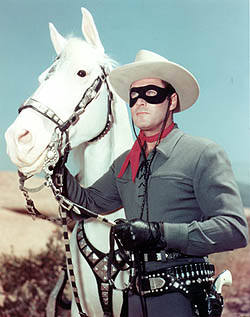
The Lone Ranger Entrepreneur

One of the businesses with which I’m involved is in the venture capital space. We identify, evaluate, vet and fund startup companies in the animal health, agribusiness and human health verticals. As you might imagine, we see everything under the sun. Founders present some pretty unique ideas along with financial projections that are pretty concrete on one end of the scale, to total pie in the sky on the other; slide decks that range from extremely good to extremely poor; business plans that might be exquisite or often are ridiculous; and valuations that are mostly “are you kidding?” though there are a few that are quite reasonable.

We really dig into the details, ask a lot of questions and look at a lot of documents. We pay close attention to whether the founder has the right passion and temperament as well as what kind of a problem his or her idea solves. It’s a good sign if the founder has some skin in the game and a vision that goes beyond simply cashing out down the road. And then we get to one of the central Go vs. No-Go questions – is the founder the Lone Ranger or is there a strong team in place?

Believe me when I tell you that there are some amazingly brilliant entrepreneurs out there. These people are scary smart and have world-changing ideas . . . but many won’t get funded because they haven’t (or won’t) put together a world-class team. The risk is too great from an investor’s perspective to make a bet on a Lone Ranger. Growing a business to any scalable level requires some very talented human capital. And the founder that says, “Invest in me now and I’ll go out and hire the talent,” just doesn’t understand. As investors we want to know who is going to be on the team from the get-go. It’s important for us to know if the chemistry is right; if everyone is committed; if the necessary principal skillsets are covered, and if all members of the team are on the same page.

There’s an obvious parallel here between startups looking for funding and our own entrepreneurial endeavors. In fact, we should step back and take a hard look at our own organizations as though we are presenting to venture capitalists. And here’s the hardball question we must ask. If we are hit by the proverbial bus today will our team be able to carry on tomorrow? Will our company survive and thrive, or will it die? I know many entrepreneurs who believe their businesses are too small to justify a world-class team. To manage the risks that are inherent in entrepreneurship I think we need to scale to a size where such a team is a must-have. But can we afford not to have such a team in place as we push to scale? Think about it this way. It’s kind of like walking on thin ice across a lake. We hope with every step that we can make it to the other side without falling in. And if the ice breaks and we fall through we’re dead without the team. On the other hand, if the team is in place, it can pull us out of the water should we take the icy plunge.

Some of us may be Lone Rangers because we think we can do it better than anyone else. In other cases, we may know we need to build a team but don’t know how to find the right people. And there may yet be other instances where we don’t believe we can afford to hire the team at the present time. My response to all these reasons is a repeat of my previously posed question, “If I’m hit by the bus today, will my company survive and thrive tomorrow?” If the answer is no, then it’s probably time to get busy with developing and implementing a strategy to build a strong team as quickly as possible.

While the Lone Ranger was a beloved fictional character from a different era, it isn’t a concept well-suited for a growing company. Building a world-class team is a solid way to manage risk in today’s entrepreneurial environment.

This blog is being written in tandem with my book, “An Entrepreneur’s Words to Live By,” available on Amazon.com in paperback and Kindle (My Book), as well as being available in all of the other major eBook formats.This blog is being written in tandem with my book, “An Entrepreneur’s Words to Live By,” available on Amazon.com in paperback and Kindle (My Book), as well as being available in all of the other major eBook formats.

The “We” Entrepreneur

Entrepreneurship is a team sport. Successful organizations are built on the collective effort of many talented and dedicated people. As leaders, we need to look for every opportunity to acknowledge the contribution of others. I’ve seen study after study that tells us that recognition and appreciation is very important to the culture that we are building – in some cases it is valued as highly as compensation and benefits. And yet there are countless instances where leaders shine the spotlight on themselves and take the credit for a successful endeavor. How does this manifest?

A business leader has been asked by a reporter how his company competed for and won a very large piece of business. Listen to how this statement sounds. “I have had a long-term relationship with the client and have worked for years to get to this point. I developed an innovative strategy that worked just as I thought it would. It’s all queued up so that all my employees have to do is execute.” A more thoughtful leader might have said it this way. “We have had a long-term relationship with the client, and our team worked hard to develop and implement an innovative strategy that was spot-on. Our entire organization had a hand in this success, and we are grateful to each and every team member for their contribution. We especially want to thank Alice Doe and John Smith who led the effort.” Notice the second statements did not contain the word “I” a single time? It was filled with the words “we” and “our.” It acknowledged the entire team and focused the spotlight on those team members who were at the forefront of the initiative.

What does it take to become a “We” Entrepreneur? First and foremost, we must have a genuine and authentic attitude about who gets the credit. If we are secure enough in our own skin, we check our ego at the door and do whatever we can to shine the spotlight on the good work provided by members of our team. This means that we must reverse some of the patterning we received as children. When I was young and attending school, we were praised for properly answering a question posed by the teacher. While there was nothing wrong with this, it did create an attention-craving atmosphere for some students. We wanted to receive the approval from an adult which was our proof that we were worthy of their accolades. Parents, teachers, coaches and a host of other adults were a party to this endless cycle.

Breaking out of the childhood approval-and-acceptance-seeking mode to become an authentic “We” Entrepreneur requires a couple of steps. First, we need to come to a deep understanding within ourselves that we are worthy. In the early years of my career this was a difficult concept because I had little to no experience. I felt a compelling need to prove to the world that I belonged in the big leagues. Eventually I found that when I excelled, my actions spoke louder than chest-beating. In other words, we develop the understanding of worthiness by challenging ourselves and steadily performing at high levels.

Once we have developed a strong sense of self-worth, we look for ways to focus on the accomplishments of others and celebrate when they occur. In other words, we fix the “inner” (me) first and then move to the “outer” (others). This will take practice. We won’t become adept at the “We” concept overnight as I, me, my and mine will creep in to our consciousness periodically. Here’s something that helped me and I still do to this day. When I write an e-mail, a text message, a letter or any other form of written communications, I review it before sending and remove any I, me, my and mine references and replace them with we, our and us, wherever that it makes sense. This approach helps keep me mindful of my mission to be a “We” Entrepreneur and spills over into my verbal communications as well. And after doing this for an extended period of time, it will be more than just a communications tool – you’ll really believe it! We will see the value in the contribution of others and be truly grateful. At that point our acknowledgement will become a genuine part of our persona.

The “We” Entrepreneur is gracious and unassuming. He or she is always appreciative of what others contribute to the success of the team and makes a special effort to shine the spotlight accordingly.

This blog is being written in tandem with my book, “An Entrepreneur’s Words to Live By,” available on Amazon.com in paperback and Kindle (My Book), as well as being available in all of the other major eBook formats.

Who is Riding the Bus?

Here’s a scenario. Sales are flat. The product development team is feuding with the marketing folks. Production is lagging and customer complaints are trending in the wrong direction. Sounds like a nightmare situation – right? It’s at a time like this that makes us wonder why we became entrepreneurs in the first place! As we try to sort out this mess, something becomes quickly apparent. We have the wrong people on the bus.

The whole problem wouldn’t even exist if we had selected the right people in the first place. But for most of us, we are where we are and must deal with an unwise hire here and a hopeful hire there. Rarely do we make the right hiring decisions from the get-go and find smooth sailing forevermore. Something I’ve grappled with for decades is when to change out the people on the bus – and sometimes the bus driver to boot! The mistake I’ve made over and over has been to give people too many chances and believe that if I just find the “right slot” for someone, that I can “save” him or her. In recent times I’ve come to realize that we’re not in the business of doing social work and it does no favor to someone who is miscast to continue to try and salvage them.

Most of us have a level of empathy that prevents us from being the type of person who simply says, “You’re fired!” But there’s undoubtedly a middle ground. We don’t have to have a hair trigger and instantly terminate someone who is beginning to struggle. And we also don’t need to continue to enable someone for months or even years who can’t get the job done.

As with much about entrepreneurship, there is a process that can make the decision to invite someone off the bus both humane and timely. We start with clear written roles and accountabilities. It’s imperative that our team members truly understand what is expected of them. Roles and accountabilities should be quite comprehensive, and they must be measurable. We also must make sure that our team members understand how to perform their roles and accountabilities and that they have the proper resources to succeed. If I tell a non-pilot that he is responsible for flying a passenger jet from New York to LA I can be very clear about this. But if he’s not trained to fly the plane, then it will either fail to get off the ground or if it does, well, what happens might not be pretty. I realize that this is a bit of an exaggeration, but it illustrates the point.

Hand-in-hand come key performance indicators. These are the metrics by which we determine if the roles and accountabilities are being sufficiently executed. Ongoing performance reviews are also an important element of ensuring that the right people are on the bus. Some companies do an annual performance review. This may be fine in a formal sense, but team members need a continual feedback loop. Then there will be no surprises when the annual review is performed. It’s also helpful (and often judicious) to offer a written assessment as part of the continual feedback process. It’s not so much to build the file as it is to make sure that everyone is on the same page regarding where improvement is needed.

Often when things are going poorly, it’s the result of a lack of roles and accountabilities; or a lack of training; or a lack of proper resources to get the job done; or a lack of measuring results; or a lack of providing team member feedback, or all of the above. When this happens and we must make a change in personnel, we dread having to take action. Why? Because we know deep inside that we probably didn’t do everything necessary to be completely fair with our team member.

Ensuring that we have the right people on the bus is a strong step toward building a successful culture and producing the results we desire. And following a well-designed process to invite people off the bus who aren’t the right fit will allow us to act objectively and at the right pace.

This blog is being written in tandem with my book, “An Entrepreneur’s Words to Live By,” available on Amazon.com in paperback and Kindle (My Book), as well as being available in all of the other major eBook formats.
Tell Me What You See

When you look at me, what do you see? When you look at others, what do you see? Am I judged by my appearance? Are you skeptical or wary? These thoughts offer an interesting commentary on our society in general and on entrepreneurship in particular. Here’s what I have observed – about others and sometimes about myself. Are we actually looking for the good in our fellow man, or are we focused on finding fault? The political situation has disproportionately magnified this concern. Our country is so divided and partisan that it’s easy to instantly brand another person based upon what we perceive to be their ideology. Rightly or wrongly, if they are branded as a liberal or conservative; a Democrat or Republican, we may automatically draw conclusions that don’t serve us well.

I am renewing my efforts to work harder to see the good in others; to help build others up, rather than tearing them down. Does this sound trite? Think about it for a moment. Jonathan is negotiating to purchase a piece of equipment for his factory. There are major dollars involved and he has located the item that is only slightly used. Jonathan’s first thought is, “I wonder how I’m going to get screwed by the seller?” Right out of the blocks he’s telling the universe that he expects to be taken advantage of. He knows nothing about the individual who is selling the equipment. When asked why he feels this way, he responds, “Well, you can’t trust anyone these days.” Wow! We’ve all heard this before. But why would we set expectations this way? The transaction is immediately infused with negative energy from the start.

Here’s another one. Molly is the 28-year of vice-president of marketing at a consumer products company. While interacting with a prospective client who is in his sixties, he makes a rather inartful comment. Molly is immediately triggered into thinking that she is being harassed. The comment was harmless to the client from a generational perspective, but Molly now sees him as a horrible person. From this point forward, everything he says and does is seen by Molly in a negative light.

Here’s the last example. Henry is interviewing candidates to fill a software development position. One individual had a very pronounced southern accent and was slightly overweight. These traits were off-putting to Henry and he scratched the candidate from consideration. This was a classic case of “judging a book by its cover.”

Now let’s look at the flip side of these encounters. For Jonathan, he had no idea that the company selling the used piece of equipment had a new piece of equipment arriving within two weeks and needed to quickly remove the old piece. To accomplish this, the company marked down the price significantly in order to move it.  The equipment had been maintained in pristine condition and was truly a bargain. Instead of her knee-jerk reaction to the older client, Molly might have chalked it up as a comment that was not intended to be offensive and watched to see if there was any other behavior that warranted concern. Finally, had Henry tested his candidate, he might have found a brilliant mind hiding inside that southern good old boy.

Ronald Reagan once used the term, “trust but verify” when answering a question about nuclear disarmament. This concept remains as viable today as it did back in the 1980s. Rather than thinking the worst about others, we instead genuinely think the best about them and through our interactions, verify that they deserve our positive feelings and goodwill. Instead of being on guard all the time, we embrace others and reject the notion that they intend to do us harm. If at some point it is clear they are intentionally breaking our trust, then we change our feelings toward them.

Our entrepreneurial endeavors are enhanced when we see the best in others. When we establish our relationships in a positive manner they will flourish. When we help build others up, both parties will be the beneficiaries. I recently had the opportunity to begin working with an individual that represents a company with which we’ve done business for years. Another member of our team had previously dealt with him numerous times and had fairly negative things to say about their encounters. I chose not to have preconceived notions about this individual and after several e-mails and conversations, found him to be most pleasant and helpful. He conducted himself honorably and while a little slow with his responses, always managed to follow through. I believe that if I had bought into my teammates feelings, my interactions might have been less positive.

When we adopt the trust but verify attitude, we can build strong and lasting relationships that will flourish over time. Thus, when you ask me what I see, I say that it’s all good.

This blog is being written in tandem with my book, “An Entrepreneur’s Words to Live By,” available on Amazon.com in paperback and Kindle (My Book), as well as being available in all of the other major eBook formats.

Un-Stale Leadership Ideas

There’s an interesting article by Stefan Stern from the Financial Times publication dated November 10, 2008. “While cleaning out his attic, a British business leader stumbled upon some typewritten notes on leadership from the 1950s. ‘Leadership is the art of influencing a body of people to follow a certain course of action, the art of controlling them and getting the best out of them.’” Sounds kind of old-fashioned, doesn’t it? The art of controlling them? That’s an attitude that’s not likely to win many awards in this day and age. The article and this statement in particular got me to thinking about leadership. And because I’ve lived long enough, I’ve had the good fortune to experience many different leadership styles. So, here are some personal observations that have helped me develop my own leadership style.

Entrepreneurs are often “quick on the draw.” A team member asks a question or brings us a problem and our instinct is to provide the answer or solve the problem. Then we move on . . . quickly. In the old days, that would probably have been considered “leadership.” One of my goals is to develop a sustainable organization that is no longer dependent solely upon me. If I answer every question and offer every solution, how does this support others in their quest to step-up and become leaders in their own right? I believe that leadership involves leading people to answers and solutions rather than simply telling them.

I’ve heard certain pro athletes and a number of entrepreneurs who says it’s not their job to be role models. It seems to me that anyone who has the megaphone ought to savor the opportunity to set an example for others. Doing so also enables us to become more accountable to our team. Back to the sustainable organization concept for a moment – do I want to display anger; yell at people; exhibit boorish behavior, and generally put my ego front and center? When I model this way, what message does it send to up-and-coming leaders? Here’s the simple truth for me. I don’t want to show any sort of negative behavior for which I should apologize.

One of the toughest aspects of being an entrepreneur is communicating our vision to our team. Most of us have a vision of some sort locked away in our brains. I was asked for years by my teammates for my vision, but never could figure out how to articulate it clearly until recently. Having a vision and communicating that vision are two entirely different things. When I mentor other entrepreneurs, I ask them a very basic question. What does it look like when we get there? Focusing on this question eliminates the psycho-babble and gets to the heart of the matter. In plain English it requires that we paint a word picture that everyone can understand. We should never forget that people are drawn to leaders who can express a strong and powerful vision.

As a leader, how much time do you spend working on your business rather than in your business? I can tell you that I love doing complicated real estate deals. Without question, that’s working in my business. It would be very easy (and profitable) for me to focus all of my time and energy on buying and owning apartment properties. But that doesn’t advance the cause for the sustainable organization that I have envisioned. Thus, I must spend significant time working on my business. This involves developing a wide range of strategic initiatives, cultivating and educating team members, and helping to define our mission. A great leader will spend far more time working on his or her business than working in it.

While there are many other modern leadership traits to be explored, the last one on which I want to focus is that of attitude. Leaders with negative attitudes generally produce negative results. Over the past four-plus decades I think I’ve become more and more positive and optimistic. I realized that it’s not much fun to work in a negative environment. And as a leader, if I’m down-in-the-mouth it’s pretty hard for that attitude not to become contagious. I’ve come to realize that there’s always a silver lining in every situation and it’s my aim to find it. This doesn’t mean that negative things won’t happen – they do. But the faster we can move on and regain positive footing, the faster we’ll get back on track. It’s my goal to be a positive and optimistic leader every second of the day.

Modern leadership still embodies ageless basics and fundamentals that unlike bread, never grow stale. But there are some “new age” twists that help propel us to new heights of success and create sustainable organizations in the process.

This blog is being written in tandem with my book, “An Entrepreneur’s Words to Live By,” available on Amazon.com in paperback and Kindle (My Book), as well as being available in all of the other major eBook formats.

Winning

“Just concentrate on throwing the ball over the plate rather than breaking the sound barrier and be more varied and selective with your pitches.” That’s the advice catcher Norm Sherry gave to future Hall of Fame pitcher, Sandy Koufax, in 1961. Prior to that Koufax had labored through several seasons of mediocre pitching. Once he solved his control problem, he became nearly unhittable striking out 2,396 batters in his relatively short career. Koufax retired from the game in 1967 at age 30. Without a doubt, he went out a winner.

When we think of winning, what comes to mind? Most of us would say that we have achieved the success of victory – that’s the obvious answer. But when we’re asked how we won, the answer becomes a bit murkier. So, exactly how do we win? Do we simply throw the ball harder than anyone else? Or is there something deeper?

As we study great winners in sports and other walks of life one thing becomes abundantly clear. Great winners are fanatical about the basics and fundamentals of what they do. We’ve all heard how the basics and fundamentals are the foundational elements to success. And yet many times we just want to swing hard and hit the ball into the left field seats. The result is that we often strikeout. Lesson #1 – we’ll strikeout less and win more if we pay attention to how well we are executing the basics and fundamentals of our game. In business, perhaps we have enjoyed a winning streak lately. Human nature may cause us to take our foot off the accelerator and start enjoying the ride. What happens then? Maybe our winning streak comes to an end. We haven’t spent the time and energy continuing to cultivate relationships. We aren’t making the follow-up calls that we used to make. And we aren’t doing the homework necessary to understand what our customers really need and want.

Sandy Koufax would be an anomaly in today’s sports environment. He shunned the spotlight and stayed out of the public eye. He loved violin music – it’s said that Mendelsohn was one of his favorite composers. He chose not to chase the money and quit the game rather than risk further injury to an ailing arm. He was his own man which in itself is a special mindset. Lesson #2 – ignoring the noise in the world around us and maintaining our focus puts us on the path to winning.

Winning is seemingly about competing – right? Well, yes and no. If we are out to “beat” someone else the chances are higher that we won’t. In other words, if we become fixated on how to beat the competition, we’re really ceding our power to someone else. Why? Because our focus has shifted away from what we need to do to execute in the necessary fashion, and we’re now conjuring a methodology that we think will give us a competitive advantage. Unfortunately, we’ve forgotten that the way we win is to ignore the noise around us and execute our game plan in a flawless manner. Lesson #3 – don’t allow our competition to dictate the terms and conditions for winning.

Zig Ziglar famously said, “You were born to win, but to be a winner, you must plan to win, prepare to win, and expect to win.” I used the term “special mindset” in this blog. The only thing special is the absolute, 100% core belief that we deserve to win, and we will win. But there’s one more piece to this puzzle. We must relax into winning. If our intensity is too great, we can easily deviate from the basics and fundamentals and overcompensate. I’ve seen terrific baseball pitchers that start losing because they are so amped up that they try to “throw” the ball and over-control it, rather than relaxing and “pitching” the way they know how. Lesson #4 – to win, we must believe that we will and we must remain relaxed while doing so.

Winning is a relatively simple formula that involves always executing the basics and fundamentals; ignoring all the noise that is going on around us; playing our game and not trying to beat the competition and believing without any doubt that we’ll win. Oh, and yes, relax. Putting it altogether ensures that we’ll be Hall of Famers in our own right.

This blog is being written in tandem with my book, “An Entrepreneur’s Words to Live By,” available on Amazon.com in paperback and Kindle (My Book), as well as being available in all of the other major eBook formats.

Mom Was a Genius

There’s sure a lot of noise in the world these days. Unfortunately, much of the noise is angry. Social media eruptions occur continuously. People attack each other as human beings – maybe more so than they argue ideas with which they disagree. Twitter, Facebook, e-mails and text messages can be toxic and dripping with vitriol. And once a meme goes viral the crowd frenzy snowballs with everyone piling on. It’s no wonder that stress levels are high, and unhappiness has reached similar proportions. This is a dangerous environment for entrepreneurs (and everyone else for that matter).

I find it interesting that when those who yell the loudest find themselves in a room, one-on-one with someone who is their target, their demeanor changes. Suddenly there is a living and breathing individual – much like themselves – sitting across the table in a face-to-face setting. For some reason the bellicosity and histrionics melt away. One-on-one, civility emerges, and a rational conversation may occur. I call this the “talking tough behind the locked screen door” syndrome. Many people seem to be less inhibited when they aren’t having to personally interact with the individual with whom they disagree. They are easily triggered and react instantly and in an amplified manner. The one-dimensional aspect of communicating in a written format seems to be emboldening. Add the mob mentality to the equation and it quickly becomes a powder keg that could explode (and often does) without any notice.

As a youngster growing up my mother had a simple technique for dealing with anger. I’ll bet your mother used the same technique. When I got spun up about something and was ready to lash out, she would say, “Lee, count slowly to ten.” Most of the time it worked. By the time I reached ten, my frustration had defused somewhat, and I was becoming calmer and more rational. My mom was a genius back in the day! Either mothers today aren’t teaching the 10-Count Rule, or it’s been forgotten.

As an entrepreneur here’s something I’ve learned. I don’t enter into any discussion on social media that could become contentious. There’s nothing whatsoever to be gained and I’m not going to change anyone’s mind utilizing this format. I also have learned not to engage via e-mail in subject matter that could result in conflict. Think about it. We receive an e-mail – perhaps from an external source – that we may perceive as accusatory. Our immediate impulse may be to fire off a response that is defensive and lobs a few grenades in the other direction as well. We are indignant that someone attacked us in an e-mail, and we are going to fight back and “win” the argument with our prose. But does this really work? Are we changing minds or are we simply contributing to the entrenchment of each other’s positions?

The minute I smell conflict in a written communication, I typically short-circuit it with a face-to-face conversation (most preferable); a video call (next most preferable) or a phone call (least preferable). I like to be physically present for the ensuing conversation so that I can “read” the other person and show authentic empathy. I’m not interested in fighting but seek resolution. I’m not interested in escalation but seek common ground. We still may disagree, but we can do so respectfully and avoid hard feelings.

Even in face-to-face situations there may still be times when tempers flare and personal accusations boil over. This is a perfect time for Mom’s 10-Count Rule. I prefer to let the other person finish their rant and then become still and quiet for a moment (counting to at least 10 in my head). I may say something like, “I hear your frustration and think I understand where we disagree.” But I’m not about to engage in emotional dialogue and will likely ignore the personal attacks. I will speak in a quiet and deliberate voice and review the facts of the situation. Ultimately, we may agree to disagree, but at least I have avoided belittling the other person and making them feel even worse. Some may think that this is manipulation. I think it’s simply the concept of “it takes two to tango,” and I’m not going to be one of the two.

The 10-Count Rule isn’t about knocking the other person out of the argument. Instead it’s about maintaining our composure and self-control to dial back confrontation in order to reach an acceptable resolution for all parties.

This blog is being written in tandem with my book, “An Entrepreneur’s Words to Live By,” available on Amazon.com in paperback and Kindle (My Book), as well as being available in all of the other major eBook formats.

The Panicked Entrepreneur

The mind is an amazing organism. It can move from a euphoric state to a panicked state in a millisecond. All of us – entrepreneurs and non-entrepreneurs alike – are continually challenged to manage our thought processes. That said, have you ever found yourself in what I call a “wired-up overwhelmed near-panic spiral?” You wake up at 3:30 AM with this gnawing feeling – you’re not worried about anything in particular, but that feeling is there. You can’t go back to sleep so you get up and make some coffee. You surf the internet while drinking three cups of coffee. Then you hit the drive-through at Starbucks on the way to work and get a Triple Frappasomething with an extra double shot of cappuccino. It’s been consumed before you reach the first stoplight. By the time you arrive at the office the feeling is welling up. With few more cups of coffee, a glance at 75 new e-mails and a minor crisis dropped in your lap, you’ve now reached the pinnacle of classic panic. Oh, and it’s only 8:11 AM. What to do?

The first step is to recognize the state that we’re in. The quicker we can do this the faster we can move toward resolution. When we push on without stepping back our feelings cascade and we end up in a spiral. In aviation parlance, we’re now in full-fledged crash and burn mode. When we recognize that we’re headed into a state panic we need to stop what we’re doing IMMEDIATELY. Then we need to go and find a quiet place for decompression.

Once in our quiet place it’s important to sit with our feet flat on the floor and hands in our lap with our eyes closed. We take a deep breath and let it out slowly. We do it again and again. Focusing on our breathing is a sure-fire method of calming ourselves. Deep breathing delivers increased amounts of oxygen to the brain. Livestrong.com says this: “Breathing slowly and mindfully activates the hypothalamus, connected to the pituitary gland in the brain, to send out neurohormones and trigger a relaxation response in the body. The hypothalamus links the nervous system to the endocrine system, which secretes the hormones that regulate all activities throughout the body.” Scientific explanation or not, this process definitely works.

Once we have begun to “unwire” through deep breathing, we might undertake the ROY G BIV exercise. ROY G BIV is an acronym for the seven colors of the rainbow – red, orange, yellow, green, blue, indigo and violet. In our mind’s eye we see each of the colors of the rainbow traveling from the center of the earth through the bottom of our feet, up our leg, across our midsection, down the other leg and back to the center of the earth. We do this slowly and intentionally with each color of the rainbow. The purpose of ROY G BIV is to ground ourselves. I know that when I’ve been in a state of panic, I have a weird free-floating out-of-control feeling. ROY G BIV eliminates this feeling.

After spending ten or fifteen minutes deep breathing and grounding ourselves, we are now ready to move back into the day. But first we should review our goals and objectives for the day. We spend a few moments with our “To Do” list and make sure we are clear on what we intend to accomplish for the rest of the day. Then we move forward with a new purpose and a new attitude. And . . . we avoid any additional caffeine for the rest of the day. We can also eliminate panic altogether if we exercise regularly (daily for me); limit our consumption of caffeine and maintain a daily practice of meditation or quiet time.

One more thought. The older I’ve become the more I realize how I tend to allow my mind to blow things out of proportion. Almost always, what I’m imagining isn’t nearly as bad as reality. And sometimes my imagination doesn’t even reflect reality at all. Bottom line – I’m learning not to take everything so seriously which also helps to eliminate the panic that I may have felt in the past.

Recognizing that we are heading into panic mode is critical. Breaking the spiral with deep breathing and ROY G BIV is paramount. Recommitting to the day with a clear understanding of what we intend to accomplish puts us back on the calm and productive path we desire.

This blog is being written in tandem with my book, “An Entrepreneur’s Words to Live By,” available on Amazon.com in paperback and Kindle (My Book), as well as being available in all of the other major eBook formats.
Difficult Conversations

It’s a fact of life that there will be times when we must communicate with someone else about something that may make both parties uncomfortable. Yes, we all will have many difficult conversations over the course of our lives – personally and professionally. And while no one looks forward to such conversations, it is important that they not be avoided. I can’t tell you the number of times I’ve seen situations where two people just need to have that hard conversation to get back on the same page. Instead, they avoid each other entirely for a while. Then if by happenstance they are thrown together, there are awkward moments galore. I’ve seen friendships end and business partnerships blow up, simply because two people can’t come to grips with the fact that they need to clear the air and “talk it out.”

Why are these conversations so hard to have in the first place? Often it evolves from one of three places. First, we may perceive the encounter to be one where conflict will be present, and we are highly allergic to conflict. Second, we may have let ourselves be hurt and just can’t stand the thought of interacting with the person who allegedly hurt us. Or third, we may be concerned that our conversation with the other person may be hurtful to them and we don’t want to be the one to play that role. So, we suffer in silence . . . or maybe not. Rather than addressing the issue with the other person, we may have a tendency to talk to everyone else about the situation – friends, family, colleagues – often wringing our hands in despair and playing the tape(s) over and over for them. Here’s the bottom-line question. Did taking this tack make us feel any better? Probably not. Did it solve the problem? Definitely not. Were others around us unnecessarily drawn into the negativity of the situation. Almost always.

Refraining from having an honest conversation about a difficult matter does a disservice to our relationships. Now assume that we have finally decided to address the issue. Let’s talk rules of engagement. Should we have these conversations one-on-one or should a third-party be present? While there are exceptions to the rule, I think we need to have the guts to deal directly with the other person. While it may help our courage to have a wingman, the person with whom we are trying to resolve an issue may not feel comfortable putting all his or her cards on the table. Do we have the conversation in private, or do it in a public place? I’ve witnessed situations where one person wants to meet with the other in a restaurant “to avoid a meltdown.” This could be perceived by the other party as being manipulative and further strains the relationship. I’m always in favor of meeting in private and behind closed doors if possible.

Our body language is critical to the success of the encounter. We should be as open and relaxed as we possibly can. Sitting with our body turned away from the other person and our arms folded doesn’t send the message that we want to resolve anything. Keeping palms open, smiling and making eye contact will help put the other person at ease. How direct do we want the conversation to be? In my book, directness is fine, but we need to use warm candor instead of brutal honesty. We don’t need to sugarcoat our dialogue, but we must be sensitive to the other person’s feelings. If we’re there to score points and prove that we are right and they are wrong, then by all means, rub their nose in it. But if we really want resolution, we are gentle with our words while still making certain that there is no ambiguity in what we are saying.

I’ve also found that sticking to the facts is a good practice. That said, we must remember that the reason the conversation may be difficult in the first place could be due to emotions that ran amuck. Thus, we need to have empathy for the emotional factor but keep the discussion in the logical realm. And sometimes, rehashing the disagreement isn’t necessarily productive – it may be best to just apologize and move on (if an apology is warranted).

Difficult conversations are necessary and will generally be successful by adhering to this simple principle. I will treat the other person the same way I want to be treated.

This blog is being written in tandem with my book, “An Entrepreneur’s Words to Live By,” available on Amazon.com in paperback and Kindle (My Book), as well as being available in all of the other major eBook formats.