
The FOMO Entrepreneur

We live in an age of acronyms. I guess they are a form of shorthand. LOL, YOLO, DIY, IMHO, SMH, MTFBWY, FUTAB and ROTFL. If you guessed them all correctly you are in the mainstream of cool. And for those of us who are a bit more advanced in years, here’s the translation in order – Laughing Out Loud (LOL); You Only Live Once (YOLO); Do It Yourself (DIY); In My Humble Opinion (IMHO); Shaking My Head (SMH); May the Force Be with You (MTFBWY); Feet Up, Take a Break (FUTAB), and Rolling On the Floor Laughing (ROTFL).

There’s another acronym I’d like to explore today – FOMO. Give up? It’s the Fear of Missing Out and it can be deadly for entrepreneurs. One of the best examples of the FOMO concept is the crypto currency craze and more specifically, Bitcoin. It’s not important to understand the basics of Bitcoin. What’s more instructive is to understand what has happened in the marketplace. On August 15, 2010, the value of one Bitcoin was $.07. By August 1, 2015, the value of one Bitcoin had risen to $283.04. On November 9, 2016, right after the Presidential election, the value of one Bitcoin had increased to $726.36. On August 1, 2017, a single Bitcoin was worth $2,787.85. By December 20, 2017, the “value” had jumped to $18,486.51, and by February 4, 2018, the value had plummeted back to $8,922.61. Incredibly, in November 2021, Bitcoin soared to more than $67,000, then cratered to below $20,000 in the summer of 2022. Riding a roller coaster at Cedar Point would be considered like a leisurely stroll in the park compared to the volatility of Bitcoin.

Unfortunately, there are hundreds of thousands if not millions of individuals who have jumped into Bitcoin worldwide. Some have used their life savings to buy a stake. Many think they are investing. Most hear the siren song of making a quick buck without truly understanding the risk profile or even the basics of how crypto currencies function. What drove some people to plunk down $18,486.51 for a single Bitcoin on December 20, 2017, and within 46 days, see their position shrink to $8,922.61? When examining the case studies, it’s apparent that many people were motivated by the Fear of Missing Out.

FOMO is dangerous because it’s an emotional reaction. We work hard to build our businesses, and much of our success comes from analyzing data and making decisions based upon fact – even when it comes to understanding consumer sentiment (which may be emotional in itself). FOMO is impulsive in nature and flies in the face of logical decision making. We face this dilemma every day in one of our business units that is focused on acquiring market-rate apartments across the country. Apartment investments have been hot for the past few years and the fundamentals have been strong. As a result, prices have been driven higher and returns are lower. Press releases abound announcing acquisition after acquisition. It’s easy to feel the pressure to adjust our investment thesis to keep up the pace of our own acquisition initiative. But experience has taught us to resist this temptation.

The first step in avoiding the pitfalls of FOMO is recognizing our susceptibility to it in the first place. This can happen if we have a clear set of standards that guide our approach to the way we operate. Without these standards we are very vulnerable to being tugged or pulled to follow whatever hot trend happens to emerge now. With standards, we can test against that trend to see if there is alignment. If there’s not, we must have the discipline to resist pursuing it. 

The second step is to carefully analyze the risks associated with pursuing the trend. This should be a rigorous exercise that identifies all the possible ways things could go wrong and what sort of impact would be felt. Take Bitcoin for example. I’m positive that many Bitcoin buyers have done no risk analysis and really believe they are “investing.” They are just gambling. It’s one thing to speculate with money that one can afford to lose. It’s another thing to put half your life savings on Red 32.  

Finally, FOMO can be avoided when we eliminate the emotion of envy. I doubt many Bitcoin investors believe they have been driven by envy. But when they see others “making” huge amounts of money on their Bitcoin “investments” they want to get in on the action too. When I was 10 and another kid had ice cream, I wanted ice cream. I secretly envied the other kid with the cone. FOMO to some extent is the same thing. When others are doing well, let’s rejoice in their good fortune without having any feelings that we are somewhat inferior if we don’t experience the same good fortune.

This blog is being written in tandem with my book, “An Entrepreneur’s Words to Live By,” available on Amazon.com in paperback and Kindle (My Book), as well as being available in all of the other major eBook formats.


The Forgiving Entrepreneur

I met a guy who presents an interesting case study for entrepreneurs – we’ll call him Seth, though that’s not his real name. Earlier in life, he was a successful entrepreneur running his own company. He had a wife and kids and money in the bank. Then everything blew up. His wife divorced him and took a substantial amount of their assets including the dream house that they had built. Unfortunately, this is a story that plays out every single day across America. There is a myriad of causes for such break-ups – infidelity, money issues, alcoholism and drug use, physical abuse, and general incompatibility, are just a few of the more common reasons. Divorce is often a major life setback for most of those involved. But this blog isn’t about divorce, it’s about what happens next when a major negative life-changing experience occurs.

Seth became despondent and bitter. He felt that his marital problems were the fault of his ex-wife who in his opinion had become mentally unstable. He spent three years fighting her in court and when he lost, he appealed the decision. Seth spent a fortune on legal fees only to lose again and ended up paying her more than if he had accepted the original decree. He was convinced that he got a raw deal and day-by-day his obsession with his plight grew to massive proportions. When he was with his friends, all he could talk about was how badly he had been screwed by his ex and the court. Seth was consumed with his bitterness and hatred. At one point, he purchased the lot next door to his ex-wife’s house and planned to build an even larger “dream house” as an “in-your-face” gesture.

What did all of this accomplish for Seth? He lost his business and contracted cancer which fortunately he beat, but not after many rounds of chemotherapy and painful surgeries. He developed debilitating back issues and suffered with chronic ear and eye problems. For Seth, his life pretty much ended up in the toilet. While it’s not my intent to judge him, I think Seth’s hard road can serve as a wake-up call for entrepreneurs and non-entrepreneurs alike. It’s my belief that wallowing in negative energy for days, months and years, attracts negative experiences to our lives. There is scientific evidence that such negativity has an adverse impact on our immune systems and is akin to drinking pure poison.

Adversity is a fact of life. Sometimes it may be more significant than at other times. But when we choose to focus on it; obsess over it; and keep replaying it in an endless loop, we generate more adversity and negativity. Breaking out of this cycle is imperative. One of the key elements to avoiding this trap in the first place is to understand and practice forgiveness. Merriam-Webster defines forgiveness as: “to cease to feel resentment against an offender; to pardon.”

It’s quite possible that Seth could have avoided many of his problems by committing to the act of forgiveness when it was clear that his wife wanted a divorce. He would have avoided spending large amounts of money on lawyers and would have had to pay her less at the end of the day. He may have been able to avoid many (or all) of his health challenges. Had he moved on and focused positive energy on building his business, he may have been able to prosper rather than losing the company that he started years earlier. The forgiveness to which I refer was not just for the ex-wife – but also for Seth himself. Somewhere in his subconscious mind, Seth likely knows that he contributed to the demise of their marriage. While the anger and bitterness that he exhibited appeared to be directed at her, likely he was acting out some of his own guilt as well. When we forgive someone else, we may want to forgive ourselves too, for it usually takes two to tango as the saying goes.

Bitterness, anger, and hatred are the equivalent of drinking pure poison. The antidote is the act of forgiveness of others and for us.

This blog is being written in tandem with my book, “An Entrepreneur’s Words to Live By,” available on Amazon.com in paperback and Kindle (My Book), as well as being available in all of the other major eBook formats.

The 100% TPR Entrepreneur

At the U.S. Military Academy in West Point, New York, all cadets learn many valuable lessons about life. One in particular seems extra important in this day and age. When something goes wrong – anything at all – a cadet is expected to state to a superior officer, “It was my mistake, Sir, and I take full and total responsibility. I made the mistake because . . .” It matters not that someone or something else may have caused things to go awry. Cadets are taught from the very beginning to own the results of whatever may be happening around them. I call this 100% Total Personal Responsibility – 100% TPR.  

Think about how much finger pointing occurs in our daily lives. The excuse factory is operating 24/7 and works at full capacity to produce victim after victim. Few people are willing to stand up and proclaim 100% TPR. Thus, it’s refreshing to see that young men and women, who are choosing a career in the Army, are doing so with a mindset of personal responsibility. They truly own their lives. Entrepreneurs should take notice of this concept to understand how to become effective leaders.

Think about a variety of everyday scenarios where we witness the blame game being played. A basketball team with a losing score believes that the officiating has been too one-sided. “It’s hard to win an “eight-on-five” game,” some of the players exclaim. There’s no doubt that blown calls are a fact of life in sports. Players that have 100% TPR aren’t going to point the finger at the referees though. Instead, they will stand up tall and say, “It’s my responsibility that we lost because I didn’t execute on offense like I should, and I allowed my opponent to get past me to the basket too many times.”

A small business is competing for a contract and loses. The vice president of sales is visibly angry and says, “The playing field wasn’t level. We should have won, but our competitor had an unfair advantage by making promises they won’t be able to keep!” Conversely, the entrepreneur with 100% TPR says, “We lost because we didn’t do a sufficient job of differentiating our product from the competition. I take full responsibility for that.”

The whole point is that as adults, we NEVER blame someone or something for our failures. We ALWAYS take 100% Total Personal Responsibility for everything that happens. You may be thinking that there must be circumstances that are out of our control where we shouldn’t be held responsible. For example, what about the guy who steps off the curb after checking for traffic and a crazy drunk driver mows him down at 90 miles per hour? How can that guy be at 100% TPR? Here’s the thing. That guy made the choice to be in that place at that time. That’s not to say that the choice was right or wrong – just that’s the choice he made. Perhaps he could have looked further down the street to see the drunk driver barreling toward the intersection and waited until the car passed. And don’t misunderstand – this isn’t to say that the drunk driver wasn’t responsible – he was absolutely the one at fault. But when we are at 100% TPR, we aren’t worrying about anyone else because we have 100% ownership of our lives.

Eliminating any and all thoughts of victimization is critical to living a life of 100% ownership. It liberates and empowers us, allowing for constant self-improvement and growth. When we blame others, we interrupt this improvement and growth process. In my business and in my life, I want to evaluate the risks and rewards and proceed based upon the information I have gathered. The choices that I make may be right or they may be wrong, but they are my choices and I own them, regardless of the outcome.

We can practice the concept of 100% TPR by stopping ourselves when we are in situations where blame might normally be the default thinking. Instead, we say, “I take 100% Total Personal Responsibility for what has happened. It happened because . . .” This affords critical analysis to determine the root cause for a failure and gives us the opportunity to learn how we can make different choices in the future. And remember, taking 100% TPR isn’t enough unless the second part of the idea is explored – “It happened because . . .” We must know what we could and should have done differently.

Success can come through failure if we are willing to take 100% Total Personal Responsibility. It can also allow us to model great leadership for the benefit of others.    

This blog is being written in tandem with my book, “An Entrepreneur’s Words to Live By,” available on Amazon.com in paperback and Kindle (My Book), as well as being available in all of the other major eBook formats.

How to Become a Great Entrepreneur

I am part of a group of investors that formed a funding platform for early-stage companies. Some might call us angel investors. We look at a lot of start-up companies and evaluate their founders and product or service ideas. Over the years we’ve identified several founder attributes that are needed for entrepreneurial success in the start-up world. So, what traits and tendencies does the ideal founder possess?

A clear vision is at the top of the list. I’ve said before that vision is what it looks like when we get there. A great entrepreneur can articulate with clarity what the future looks like for his or her company and the products/services that it provides. For example, here’s an example of a clear vision statement – “To become the world’s most loved, most flown, and most profitable airline.” It’s clear what it looks like when Southwest Airlines “gets there.” Of course, the appropriate metrics can be layered onto this vision to quantify it.

Not only must a great entrepreneur be able to explain the vision for the company, but he or she should be able to constantly communicate clearly and effectively across a wide range of topics. We’ve funded some promising companies that have high potential for success. Unfortunately, the founders are tone deaf when it comes to staying in touch with their investors. We must always think about what others need to know. You’ll go a long way to building confidence with us if you communicate proactively and we don’t have to chase you for status updates.

We are reluctant to fund solo founders. There’s simply too much risk when betting on a single individual to grow a business and make all the right decisions. Instead, we are looking for a founding team that offers strong domain expertise and business acumen. A great entrepreneur can assemble such a team and retain them to build a great company.

The entrepreneurial world is a rough and tumble business. Setbacks are experienced every single day and can really take a toll on morale over time. We’re looking for founders that can get off the ground, brush themselves off and get back on the horse. An almost stubborn resilience is highly valued and is requisite for another quality – perseverance. Patience does not come easy for entrepreneurs – we want things to happen yesterday. As an angel investor, we need to know that not only will a founder be able to bounce back from adversity but will also stick to his/her plan over the long haul.

Great entrepreneurs have high levels of energy. Their energy is palpable and contagious. Moreover, they are indefatigable and can outwork everyone. Entrepreneurship requires a great deal of stamina, and you’ll never hear a top-flight founder say that there aren’t enough hours in the day. He or she simply figures out a way to manufacture more hours!

There’s no question that passion is a quality that is a mandatory element of success. When we’re listening to a founder’s pitch, it’s obvious if there’s passion. He or she exudes confidence and is inspirational when explaining the product or service. This enthusiasm is powerful in persuading customers, investors, and other stakeholders to say yes.

Finally, we’re looking for entrepreneurs that know their stuff. They have mastered the facts and avoid the B.S. I remember one pitch session where a founder was asked about his projections and how he justified capturing such a large market share. His response was, “We’ve studied the market and don’t see much competition. So, we think we can hit our target.” This was a classic B.S. response unsupported by any factual evidence. Needless to say, he didn’t get funded. Contrast this with a similar response from another founder who answered the same question. She walked us through the various factual assumptions that built to a market share that felt realistic to us. It was quite clear she had done her homework.

Great entrepreneurs – whether they are founders or not – possess traits and tendencies that constitute a winning formula. A clear vision; clear communications; the ability to assemble and retain a team; resilience; perseverance; energy and indefatigable spirit; passion; mastery of the facts, and avoiding B.S., are what we look for when interviewing great entrepreneurs.    

This blog is being written in tandem with my book, “An Entrepreneur’s Words to Live By,” available on Amazon.com in paperback and Kindle (My Book), as well as being available in all of the other major eBook formats.
An Entrepreneur’s Guideposts

Here are 13 concepts by which I live. They are my guideposts and serve as an Entrepreneur’s Primer. They’ve worked well for me, and I’d like to share them with you.

  1. Live today like you’re going to die tomorrow. It’s impossible to know when our “number” will be called. Why waste a single moment on that which is unproductive? And make sure to appreciate those whom you love – you will have regrets after they are gone if you take them for granted.
  2. What you think, will become reality. People who always have a positive mindset produce positive results and live a happy life. We can stack the deck in our favor if we train ourselves to reject negativity. Just as importantly, we don’t allow negative people to be a part of our lives. Our mind is more powerful than we can imagine, and we can use it to shape an amazing present and future.
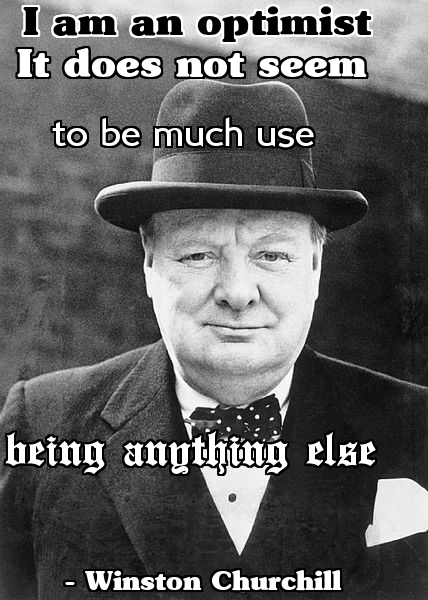
  3. Never, ever, ever, ever, ever, ever give up. These are the famous words of Winston Churchill, and they ring true as much today as they did in the darkest hours of World War II. The key to perseverance is to make constant tweaks and pivots until what we are striving to accomplish manifests.
  4. Don’t take risk . . . manage risk. Taking risk is like gambling. Our businesses and our lives are too valuable to be betting the farm on Red 32. Instead, we identify the risks and create strategies to contain and mitigate them. Then we can proceed to launch new initiatives without fear.
  5. Laugh every chance you get . . . especially at yourself. It has been proven scientifically that laughter is healthy. Laughing many times every day is good for establishing a positive mindset. When we laugh at ourselves and can be self-deprecating, we show others that we are comfortable in our own skin.
  6. What you give will come back to you in amazing ways. We give because it makes others feel good and us too. And when we give without quid pro quo for the simple joy of giving, our life is fuller and richer. We also remember that gratitude is part of this equation and express our thanks to many people as often as we can.
  7. March to your own tune but do so with purpose. We avoid the herd mentality and are proud of our individuality. But we don’t do so simply to be different. We do so because we have a strong set of core values and a clear vision for our future. We aren’t worried about what others think so long as we aren’t stepping on their toes.
  8. Mistakes are simply the unfinished experiments in the laboratory of life. I love this one! There’s no way to know if we are on the right track unless mistakes are made. If everything is too perfect, then it’s likely we aren’t stretching ourselves to be better. Rather than obsess over our mistakes, we figure out what there is to learn from them and then start a new experiment.
  9. Creativity is a way to express your passion. And passion allows you to see in color. Each of us has a creative streak – it may be buried deeper in some of us, but we all can innovate in some way. Amazing and wonderful things can come about because of the creative process and it’s likely that our passion will be stoked. Life is full of sunshine and light when our creativity is off-the-charts.
  10. The success of a career can be measured in the number of lasting relationships that have been collected and nurtured. I see relationship building as an opportunity to serve. When we are always looking to help others in a genuine manner without the thought of receiving anything in return, we move beyond the transactional aspects of an acquaintance into a true relationship. Putting Good out into the world through service is the Law of Attraction – and in turn, we will attract Good into our lives.
  11. Balance your life – emotionally, intellectually, financially, physically, spiritually and with your family. This one can be tough, especially if we really, really love our entrepreneurial adventure. Here’s a secret. Having this sort of balance has a giant payday. It helps us to avoid burnout and sets the foundation for greater stimulation of our creativity. Besides, who wants to be around a one-dimensional person anyway?
  12. Help others buy your ideas. Do we sell our products and services, or do we help others buy them? There is a massive distinction between the two. Helping someone buy is “customer-centric” and selling to someone is “product-centric.” We will have much more success if we focus on the customer and his or her needs. It’s quite possible our product or service isn’t right for him/her – and that’s just fine. We can then move on to help someone else with the buying decision.
  13. You can’t do this all by yourself. Develop a support network of colleagues, friends, and family. Being an entrepreneur can be a lonely proposition. Being able to share success and failure with others is important to our mental and emotional health. Our friends and family provide safe refuge to which we can turn whenever needed. There is nothing gained by being the macho Lone Ranger . . . except loneliness.

This blog is being written in tandem with my book, “An Entrepreneur’s Words to Live By,” available on Amazon.com in paperback and Kindle (My Book), as well as being available in all of the other major eBook formats.

The Tunnel Vision Entrepreneur

During the days when I was flying an airplane, I learned a very important entrepreneurial lesson. I’d be approaching a large airport and the situation became very busy. I had Approach Control giving me vectors and altitudes which required regular attention to the instrument panel. I had a landing checklist to review. If there were passengers, I needed to make sure they were buckled in, and loose objects were secure in the cockpit. I also had to dial in the radio frequency for the airport tower to be ready for the hand-off from Air Traffic control. Whew! With all this activity it was easy to forget to do one very critical thing – and that was to get my head up and look outside the airplane. Pretty obvious, right? You have no idea how even the most experienced pilots can make this mistake. We’re focused on everything else – and yes, we are looking straight out in front of us to line up with the runway. But there are other objects in the sky – aircraft that might be unaware of our presence, radio towers, drones, birds, etc. I quickly came to understand (under the penalty of death) that I needed to avoid Tunnel Vision at all costs.

What does Tunnel Vision look like in the entrepreneurial world? Here’s a hypothetical example. Jeff owns a three-year old company that provides IT services to small and medium-sized businesses. He has 27 members on his team and his top line has been growing at 60% annually. Jeff is crazy busy right now. He’s up at the crack of dawn and after a quick workout he heads to the office. Many nights he’s not home until after 9:00. At work he’s consumed with an endless stream of team members who catch him for a wide variety of reasons. He attends meeting after meeting. E-mails pile up and phone messages go unanswered. During the few moments Jeff has to breathe he wonders why time is flying by so fast and why it seems that he has accomplished so little.

You probably already know the rest of the story. Jeff and his team are so consumed with trying to keep up with their meteoric growth that a competitor sneaks in and steals some of their best clients. Instead of focusing on the customer, Jeff and his company have fallen victim to Tunnel Vision – and what they are seeing are systems, processes, recruiting, hiring, training, HR issues, accounts receivable, accounts payable – everything except the customer.

There are several ways we can be vigilant about keeping Tunnel Vision at bay. First, we need to make certain that every member of the organization has well defined written Roles and Accountabilities – let’s call them R&As. The R&As need to be of sufficient detail to identify all the areas on which each of us should be focused. It’s kind of like a position description on steroids. Next, we should regularly review our R&A. I recommend that this be done at least once each week. Perhaps we have an “accountability buddy” with whom we review our respective R&As. I have gotten into the habit of doing this at least weekly and can see how easy it is to fall into a rut by just paying attention to one or two specific roles, sometimes to the exclusion of others. Part of this review is determining what I’m going to do during the coming week that involves each of my R&As. This helps keep me from falling into the ruts in the road.

As leaders, we must model how to avoid Tunnel Vision. After doing this for ourselves, we then need to encourage others to follow the same process. Often when Tunnel Vision is prevalent, I hear the same refrain – “there’s just not enough time in the day!” What this means is that we have lost control of our schedule and are allowing ourselves to be pushed and pulled by others. Tunnel Vision is inevitable when this is happening. Regaining control of our schedules is paramount and can be accomplished by planning what we are going to do rather than reacting. Ultimately, this planning initiates the R&A review and subsequent determination of our actions to be juggled in all areas.

Tunnel Vision can have fatal consequences for an organization. It can be avoided by reviewing Roles and Accountabilities at least once a week, and planning action steps that impact all areas for which we are accountable.

This blog is being written in tandem with my book, “An Entrepreneur’s Words to Live By,” available on Amazon.com in paperback and Kindle (My Book), as well as being available in all of the other major eBook formats.

The Up and to the Right Entrepreneur

Damon is an entrepreneur. He runs a small but growing company that recycles old computer equipment. Damon is very frustrated right now. Stephanie is a stay-at-home mom. She has two small children under the age of five and produces marketing materials for three companies, working from a spare bedroom. Stephanie is very frustrated right now. Why are Damon and Stephanie so frustrated?

Damon’s company has been growing at a rate of 25% a year for the past three years. He’s doubled the size of his team and his margins are increasing. If you looked at a graph depicting his business, the line would be up and to the right.

Stephanie has two beautiful and healthy children. Her husband is a physician, and the family is financially secure. Her marketing venture is flourishing. She’s landed a new client each of the last three years and the type of work has become much more substantive. By all measures, Stephanie’s graph looks the same as Damon’s – up and to the right.

Why in the world would these two individuals be so frustrated? Damon has chosen to reinvest a major portion of his profits back into his company. As a result, he hasn’t seen his personal cash flow increase in any meaningful way. Intellectually he knows he’s doing fine, but it still rankles him that his bank balance has remained fairly static.

Stephanie loves her marketing business, and she is ecstatic over motherhood. She worries that her two primary roles may someday collide (at times they already do) and she feels guilty that she may fail to do justice with either. Stephanie wonders how she can possibly achieve her personal and professional goals with the juggling act that she is managing. 

Here’s a simple but powerful truth. Damon and Stephanie have not yet learned how to celebrate their success. To those of us looking in from the outside these two are ideally situated. Everything seems “up and to the right” for them and yet they are frustrated. Damon and Stephanie are trapped in the tunnel of limited thinking. They have set lofty expectations for themselves – both in terms of what they want to achieve and how quickly this will happen. How many entrepreneurs and non-entrepreneurs do you know who are suffering the same plight? What can be done to break this negative-mind cycle?

If we were coaching Damon and Stephanie, we would tell them to become quiet for a few minutes and clear their minds. Then we would suggest that they “go to gratitude.” That would involve creating an inventory of all that in their lives for which they are grateful. Going to gratitude helps them get out of themselves and see beyond the tunnel walls of their frustration. And it’s a way to re-set the mind in a positive manner. In fact, we would advise Damon and Stephanie to use the gratitude exercise in the future whenever they feel frustration welling up.

As armchair coaches we would next encourage Tyler and Stephanie to discover how to celebrate their successes – no matter how large or small. Sometimes we tend to singularly focus only on the BHAGs – Big Hairy Audacious Goals – that we have set, and we fail to see the progress we are making along the way. Damon and Stephanie need to re-pattern their thinking to be able to see the smaller achievements that occur every day and intentionally celebrate them. One of Damon’s team members earned a difficult industry certification. Damon celebrated this success with a pizza party and some congratulatory remarks. When his company recycled its 10,000th CPU, he walked into the middle of the warehouse and rang a big brass bell. He left the bell there to be used as future milestones are realized.

When Stephanie’s four-year-old daughter read her first book Stephanie took her out for a special lunch and lavished her daughter with praise and encouragement. One of Stephanie’s clients entered her brochure in a regional marketing contest, and it won first place. Stephanie celebrated her accomplishment by laminating the brochure cover onto a plaque along with her award. She hung it in her home office to remind her that she does really fine work.

We all need to learn to celebrate our successes no matter the size. And going to gratitude helps us to break out of the tunnel of limited thinking. This puts us on the path to appreciate each and every day as one filled with joy and promise.

This blog is being written in tandem with my book, “An Entrepreneur’s Words to Live By,” available on Amazon.com in paperback and Kindle (My Book), as well as being available in all of the other major eBook formats.

The Remote Entrepreneur

OK – this is an interesting and somewhat touchy subject. I’m going to tackle it anyway. There is a lot of buzz right now about remote work. During COVID-19, we learned that it’s possible for many people to work from home (or elsewhere) and be reasonably productive. In some instances, employees were more productive than when they were at their place of employment – and there are other examples of where this was not the case. Now that society is gradually returning to a state of normalcy there is much discussion about employees who want to continue working remotely. Many large companies are reducing their office footprint and even offering remote work as a perk. I have some concerns about this trend.

We have had a rather unique experience with remote work over the past 50+ years. Our organization has multiple business units that are engaged in the development, acquisition, and management of apartment communities – an operation that now spans 20 states and growing. Development Directors and Development Managers are scattered across different locations by design. They need to be on the ground in the regions where they are researching and identifying development sites. Ditto for Regional Managers in our property management unit. Our headquarters team works from our corporate office though there are a handful of team members who work in a hybrid fashion due to the nature of their positions. Now, here’s where it gets more challenging. At any given time, we have 90 to 100 apartment communities that we manage throughout the country. These properties could be small with only two team members, or they could be very large with as many as 12 to 14 team members. They are all “remote” relative to our headquarters operations.

Several years ago, we became much more intentional about our culture and have worked tirelessly to build an environment where we empower people to thrive. This entails a set of core values, collaboration, celebrating success, and holding each other accountable. The corporate office culture is very strong and is usually hitting on all cylinders. Getting a two-person team in Kentucky or Wisconsin to integrate with our overall corporate culture has been a tougher mountain to climb. Our properties typically have developed their own cultures which we support and attempt to mirror with the overall culture. Video conferencing is helpful but not the end all – and we have been video conferencing for many years – long before COVID. We do everything we can to weave our culture throughout the various business units and properties, but some days it’s two steps forward and three steps back.

This brings me to the issue at hand and my biggest concern about remote work. How do companies maintain their culture (assuming they have an intentional and positive culture in the first place) when many if not all their employees are working remotely? I fully understand the desire by many who wish to work from home. There are childcare issues, skyrocketing gas prices, the prohibitive cost of living in some parts of the country, long commutes, etc. And yet, the question still remains – how does a company build a strong culture when a team is not physically together?

We have recently had a few members of our team depart because they went to companies that offered remote work (and a significant boost in pay). I am very concerned for them. They met each other in the first place because they physically were together in our corporate office. Working remotely, how are they going to differentiate themselves going forward? How will they fare over the long haul without the kind of social interaction they would experience in an office? When the day comes that their company needs to layoff employees will they be more vulnerable because they are essentially faceless cogs in the corporate wheel? And how will they stand out to gain future promotions in this faceless environment they have chosen?

Remote work is not a panacea from the perspective of both employer and employee. A company that chooses to go in this direction needs to have a serious plan in place to maintain and strengthen its culture in this new dimension. Most companies are simply reacting to the marketplace rather than adapting in a thoughtful way that will have long-term benefits for all parties. Entrepreneurs will be well served to be very cautious and strategic as they create remote-work policies.

This blog is being written in tandem with my book, “An Entrepreneur’s Words to Live By,” available on Amazon.com in paperback and Kindle (My Book), as well as being available in all of the other major eBook formats.

The Celebrating Entrepreneur

What and when do you celebrate? An odd question you think? Here’s the backdrop. Humans and their organizations like to celebrate. It’s positive, it’s fun and it’s great for morale. Unfortunately, entrepreneurs don’t do enough of it. We are so focused on problems to solve, people to hire and products (or services) to create that there may be long periods of time where we don’t even realize that we’ve enjoyed some success along the way. And no, this isn’t a blog about stopping to smell the roses. Sure, that’s important too, but this is about something more intentional.

I’ve been with the same company for almost five decades. I can tell you that we have been pretty successful over that time frame, but until recently, we really haven’t practiced what I’m about to preach – though we are starting to do so now. In the past, we might have closed a big deal at some point and slapped each other on the back, but we really didn’t stop and truly celebrate a major accomplishment. And it would be pretty safe to say that we never celebrated minor successes. Why? Because that’s just the go-go nature of entrepreneurial endeavors. But I’ve come to realize that we’ve been missing a golden opportunity and I’m pleased to say that we are now celebrating in ways that are meaningful to our whole team. Maybe you’ll step back and come to the same conclusion.

When we stop to celebrate it’s more than just party time. It can also be a great time for reflection. We look for the elements that created our success which reinforces the need to continue to implement those same elements in the future. Think about it. Let’s suppose that our company just landed a major contract to sell our product to a very large buyer. Before we pop the cork on the champagne, we gather the team and map-out the steps that led to the signing of the contract. We also identify what didn’t work so well and what we might have done differently. By undertaking this exercise, everyone is reminded of what we did to win.

The accolades, praise and expressions of gratitude all help to build and strengthen our culture. Our team members – especially those who were directly linked to the success – want to feel valued and appreciated. I realize that there may be financial incentives that have helped drive the success, but there’s no question that formal recognition is almost always a strong motivator as well.

So, if we are inclined to celebrate major successes, why not do so for minor achievements too? I’m sure someone is thinking, “If we celebrate everything, doesn’t it cheapen the process and lessen the impact?” This can certainly happen if we’re not careful. But most leaders can figure out what is worthy of celebration and what is not. Perhaps a team member completed the coursework to receive a professional designation. Or maybe the accounting team had a perfect quarter in terms of accomplishing all tasks on time and with 100% accuracy – paying bills, processing receipts, producing financial statements, etc. Finally, imagine each member of the sales team making 25 new cold calls a week for a month. These may be occurrences that in the past were viewed as routine or something that was expected. “Finally, this person or that team actually did their job(s)! Why do we want to celebrate that?” But remember that the celebration process begins with analyzing what worked and what didn’t work. Don’t we want to take advantage of the opportunity to understand what we want to replicate in the future?

Finally, the “party” piece of celebration may take many forms. Certainly, gathering everyone for a toast may be one of the more common methods. Trophies, medals, commendations, certificates, plaques, and other memorabilia are great forms of recognition. All-company e-mails, newsletters, websites, and social media (Facebook, Twitter, etc.) can be effective tools for celebrating. I like to hand write notes to members of our team for large and small achievements. In one of our business units, they ring a bell and make an announcement when something happens that is worthy of a celebration.

The intentional celebration of achievements and success is an opportunity to reinforce what worked and improve on what didn’t. It’s also a chance to recognize members of the team for their commitment and ingenuity to deliver the positive results.

This blog is being written in tandem with my book, “An Entrepreneur’s Words to Live By,” available on Amazon.com in paperback and Kindle (My Book), as well as being available in all of the other major eBook formats.

The A-hole Entrepreneur

We entrepreneurs have some interesting personality traits. Many of us are particularly hard charging. We are generally assertive and often have aggressive tendencies as well. Other descriptors might include a high sense of urgency, a less than accommodating nature and low empathy. We’re on a mission and we have no time to waste. We don’t have time for nonsense, and no patience for incompetence or perceived laziness. Here’s the danger with this combination of behaviors. We can sometimes become total, unadulterated a-holes.

Some entrepreneurs wear this moniker as a badge of honor. I don’t and I’ll bet you don’t want too either. Unfortunately, we may be in a position where our colleagues aren’t comfortable pointing out our “a-holeness.” So, here’s an A-hole Self-Test that we can perform to make certain we aren’t becoming one.

  1. Do I berate people – especially in front of others? This is an easy one. A-holes in this category can be screamers. They have a hair trigger and are easily infuriated. Rather than calmly having a conversation to solve the problem, they become loud and personalize their displeasure. Everyone who witnesses an incident like this wants to sink through the floor – whether they are the focus of the a-hole’s ire or not.
  2. Do I ignore people and fail to show sufficient appreciation? A-holes are ingrates. People do things for them without as much as a please or a thank-you. They have an entitlement mentality and can totally ignore those around them. Other accurate terms are self-centered and self-absorbed.
  3. Am I overly demanding and unreasonable with my expectations? There’s nothing wrong with pushing our team to excel. Stretch goals are fine and can be quite healthy. A-holes go above and beyond in this category – way beyond. Think about the boss that demands that his team work late on Friday night and all weekend to complete a project – but he goes home early and is nowhere to be found all weekend.
  4. Am I a backstabber? Backstabbers are sweet to our faces and then say and do terrible things behind our backs. Joe says to Tony, “I think you did a great job landing the Acme contract!” Then later he says to Isabel, “Tony got all the credit for the Acme contract, but he really didn’t have to work very hard to land it.” Why can’t Joe be gracious and have praise for Tony when he’s talking to Isabel and others?
  5. Am I insulting? A-holes seem to enjoy being mean and insulting. They make snide and cutting remarks. They run people down and tend to be cynical, taking pleasure in the misfortunes of others. I used to watch Don Imus on television. He had a morning show that could be funny. But he was one of the most insulting characters I’ve ever seen. He had no filter whatsoever and didn’t seem to care whether he hurt someone’s feelings with his comments.
  6. Do I take credit for the accomplishments of others? The best entrepreneurial leaders are quick to celebrate the accomplishments of their team members. They are gracious and acknowledge the contributions of others. A-holes will take credit for every positive result that occurs and point fingers at others when something less than positive happens.
  7. Am I condescending, rude and arrogant? The late Leona Helmsley was a wealthy real estate magnate in New York. She was known as the Queen of Mean and her infamous statement has become the national anthem for a-holes, “We don’t pay taxes. Only the little people pay taxes.” Do I think I’m better than everyone else and do I let others know?
  8. Am I conniving and constantly on the lookout for ways to screw other people? Yeah, you know the type. This person is always scheming and not in a nice way. A common statement might be, “You’ll never believe what I pulled off! I spoke with an ex-employee of our closest competitor and found out that the CEO has cancer. I dropped the hint to one of their customers that the company might be in trouble if the CEO must step down. I think they are going to move their business to us!” There’s going to be a special seat at the table for this guy in a very warm place one of these days!

Well, how did you do? Thankfully a-holes are few and far between and they are easy to spot. As we strive to build our organizations it’s always smart to beware of a-hole tendencies that can creep into our behavior. When this begins to occur, we need to immediately come to a screeching halt, turn around and run as fast as we can in the other direction.  

This blog is being written in tandem with my book, “An Entrepreneur’s Words to Live By,” available on Amazon.com in paperback and Kindle (My Book), as well as being available in all of the other major eBook formats.